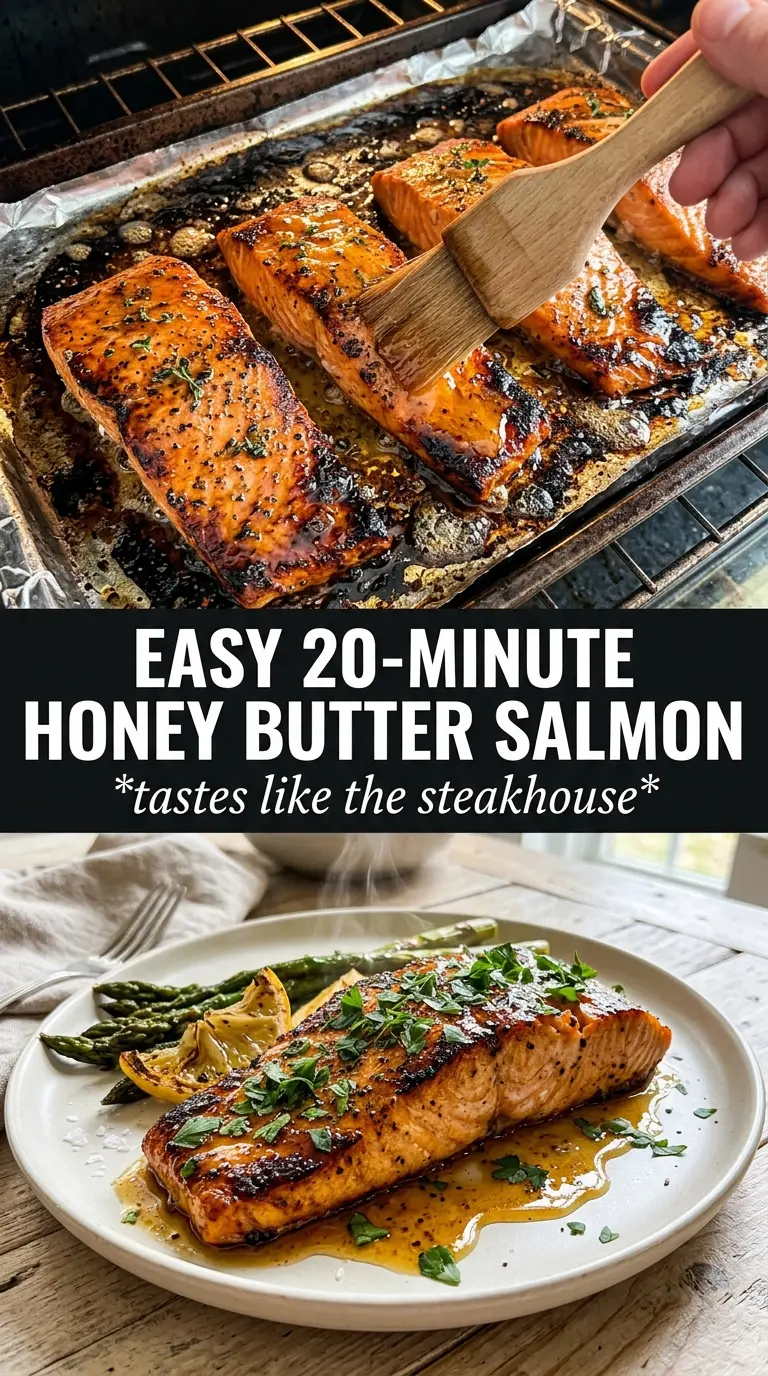
Flaky salmon with a glossy honey mustard glaze earns its place on the dinner rotation fast. The fish stays tender inside while the outside picks up a golden sear, and that sweet-tangy finish gives it the same steakhouse feel people remember from the restaurant version. It tastes like you spent a lot more time on it than you did.
What makes this copycat work is the balance in the glaze. Honey brings the shine, Dijon brings the bite, and a little lemon juice keeps the whole thing from leaning sticky or flat. Brushing part of the sauce on near the end lets it cling to the salmon without burning, then the last coat goes on off the heat so the flavor stays bright.
Below, I’ll walk through the part that matters most: getting the salmon cooked through without drying it out and keeping the glaze smooth instead of scorched. There’s also a note on what to swap if you need a dairy-free version or want to use a different cut of fish.
The salmon got that beautiful golden crust, and the honey mustard glaze stayed glossy instead of burning in the pan. My husband kept saying it tasted just like the restaurant and wanted it again the next night.
Love this Texas Roadhouse Salmon with its glossy honey mustard finish? Save it to Pinterest for the nights when you want a 20-minute dinner that tastes straight from the steakhouse.
The Reason the Glaze Waits Until the End
Salmon can go from silky to dry in a minute if the heat stays too high for too long. The glaze is the part that makes this feel like the steakhouse version, but it also contains honey, which will scorch if it gets too much direct heat too early. That’s why half of it goes on in the last minute, when the salmon is already nearly cooked and the glaze only needs to cling and warm through.
Another thing that matters here is the pan. A hot skillet gives you that browned edge without overcooking the center. If the salmon sticks when you try to turn it, it usually needs another 30 seconds; once it has a seared crust, it will release cleanly on its own.
What Each Ingredient Is Actually Doing in This Dish
- Salmon fillets — Use center-cut fillets if you can. They cook more evenly than thin tail pieces, which helps keep the glaze from over-reducing before the fish is done.
- Dijon mustard — This is the sharp, savory backbone of the glaze. Regular yellow mustard is too blunt here and won’t give the same restaurant-style bite.
- Honey — It brings shine and helps the glaze cling to the salmon. If yours is very thick, warm it slightly so it whisks in smoothly.
- Lemon juice — A small amount keeps the glaze from tasting heavy. Fresh lemon is better than bottled because the flavor stays brighter and less metallic.
- Butter — It rounds out the glaze and gives it a softer finish. If you need to skip it, the salmon still works, but the sauce will taste a little leaner.
- Olive oil — This protects the fish during the sear and helps the skinless side brown evenly. You can use avocado oil if you want a higher smoke point.
Getting the Sear Right Before the Glaze Goes On
Season the fish first
Pat the salmon dry, then season it with salt and pepper on both sides. Dry surface equals better browning; wet fish steams in the pan and leaves you with pale salmon and a loose glaze. Let it sit while you whisk the sauce so the seasoning has a minute to start working.
Build the glaze in one bowl
Whisk the honey, Dijon, lemon juice, and melted butter until the mixture looks smooth and a little loose. If the butter is hot enough to cook the mustard, the glaze can separate, so let it cool for a minute before you stir it together. You want something brushable, not thick like peanut butter.
Sear until the color changes at the edges
Heat the oil in a large skillet over medium-high heat until it shimmers. Lay the salmon in the pan and leave it alone for about 4 minutes so the crust can develop. The top should turn opaque around the sides, and when you lift a corner, it should release without tearing.
Finish with a light hand
Brush on half the glaze during the last minute of cooking, then turn the heat off and add the rest once the salmon comes out of the pan. That second coat keeps the honey from burning and gives you the glossy finish people expect from this dish. Sprinkle with parsley right before serving so it stays fresh and bright.
Three Ways to Make This Copycat Salmon Work for Your Kitchen
Dairy-Free Version
Skip the butter and add 1 extra teaspoon of olive oil to the glaze. You’ll lose a little richness, but the honey mustard flavor stays strong and the sauce still coats the salmon well.
Baked Instead of Pan-Seared
Bake the seasoned salmon at 400°F until it flakes easily, then brush on the glaze near the end and again after it comes out. You won’t get the same crust, but the fish stays tender and the glaze still tastes like the restaurant version.
Using Another Fish
Trout or steelhead work well here because they handle the sweet-tangy glaze without falling apart. Thinner fillets will cook faster, so start checking early and pull them the moment the center turns opaque.
Storage and Reheating
- Refrigerator: Store leftovers in an airtight container for up to 2 days. The glaze stays tasty, but the salmon will firm up a bit after chilling.
- Freezer: It freezes, but the texture is better fresh. If you do freeze it, wrap the salmon tightly and thaw in the fridge before reheating.
- Reheating: Warm gently in a skillet over low heat or in a 300°F oven until just heated through. High heat dries the fish out fast and can make the honey glaze sticky in the wrong way.
Answers to the Questions Worth Asking

Texas Roadhouse Salmon
Ingredients
Equipment
Method
- Season the salmon fillets evenly with kosher salt and black pepper.
- Whisk together the honey, Dijon mustard, lemon juice, and melted butter until smooth to make the honey mustard glaze.
- Heat the olive oil in a large cast iron skillet over medium-high heat until shimmering.
- Sear the salmon for 4 minutes per side, until the edges turn golden and the center is nearly cooked through.
- Brush half the honey mustard glaze over the salmon during the last 1 minute of cooking.
- Remove the skillet from heat and brush with the remaining glaze to coat the tops.
- Garnish with fresh parsley and serve immediately while the salmon is hot and flaky.