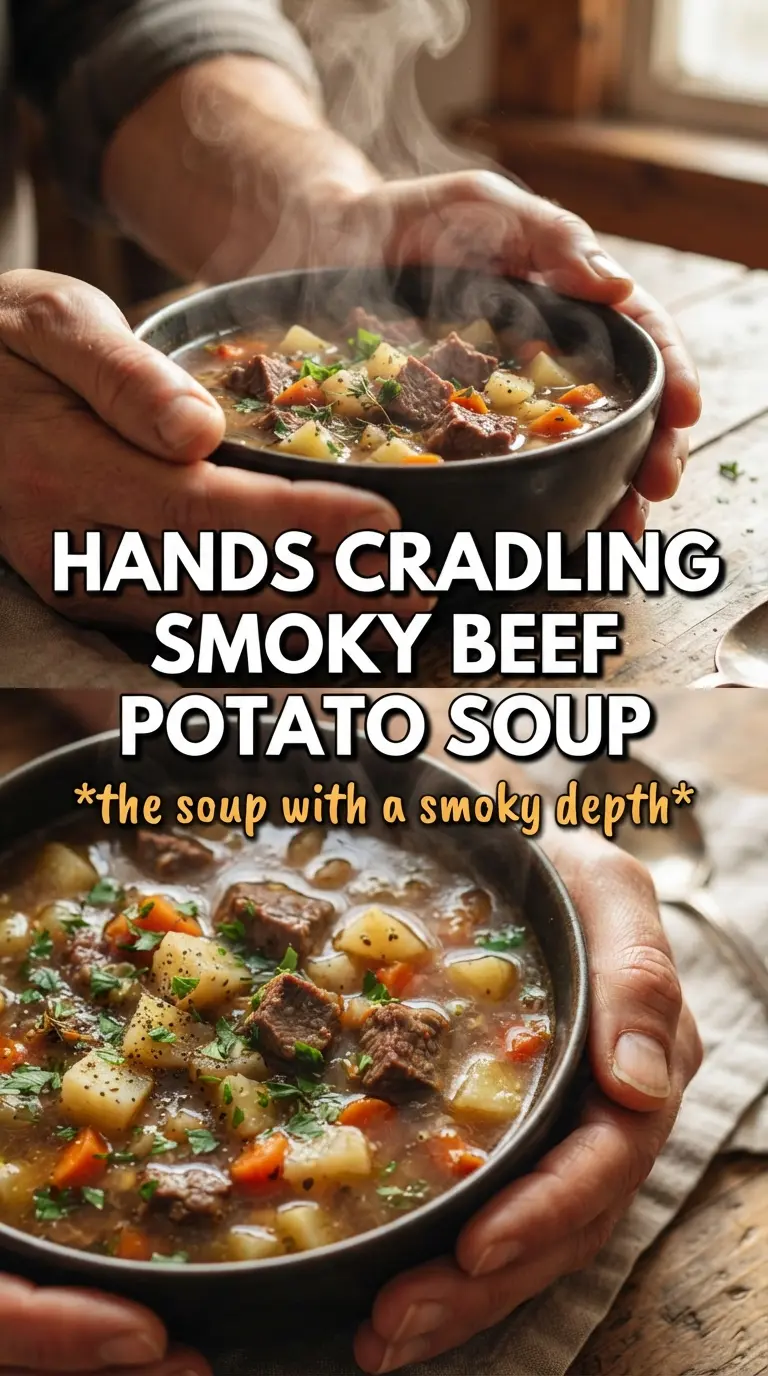
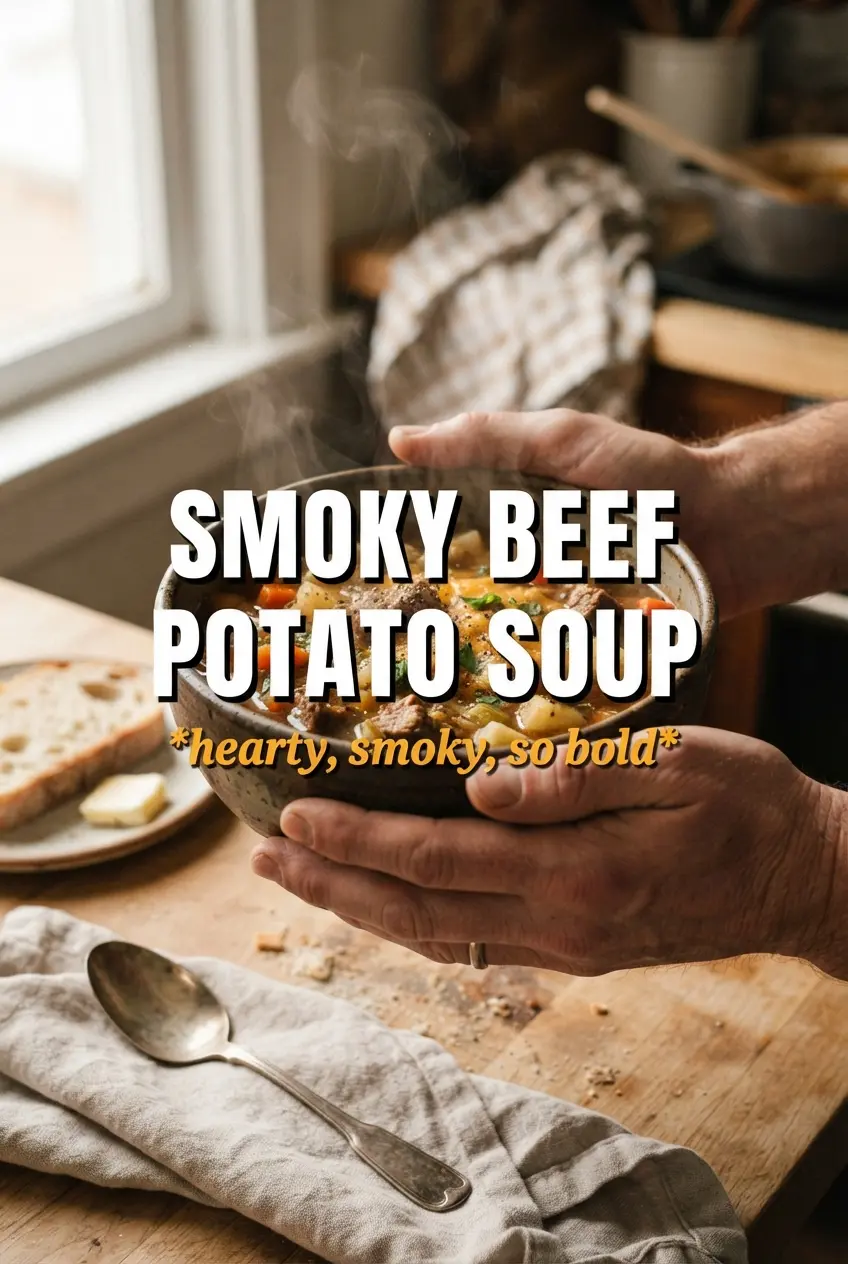
Smoky beef potato soup lands in the bowl with a deep, savory broth, tender chunks of beef, and potatoes that hold their shape just enough to make every spoonful feel substantial. The smoked paprika gives it a warmth that tastes slow-cooked even though the pot moves along in under an hour once the beef is browned. It’s the kind of soup that eats like a full meal, not a starter.
The difference here is in the layering. Browning the beef first builds the backbone, and the fire-roasted tomatoes add body without turning the broth into tomato soup. Smoked paprika, cumin, and a little chipotle powder work together, but none of them should take over; you want a dark, rounded heat that supports the beef instead of hiding it. Yukon gold potatoes are the right choice because they soften into the broth without collapsing into starchy mush.
Below, I’m walking through the part that matters most: getting real color on the beef and keeping the soup brothy instead of heavy. I’ve also included a few practical swaps and storage notes, because this one reheats well and tastes even better the next day.
The broth got this deep smoky color from the paprika and the beef browned beautifully. I used Yukon golds like suggested, and they stayed tender without falling apart even after reheating the next day.
Like this smoky beef potato soup? Save it to Pinterest for the nights when you want a hearty bowl with tender beef, paprika warmth, and barely any cleanup.
The Browning Step That Gives This Soup Its Depth
If the beef goes into the pot too crowded, it steams instead of sears, and the soup loses the dark, savory edge that makes it taste like it simmered all afternoon. Work in batches and wait for each piece to release before turning it; that crust is where the flavor starts. The same rule applies when you add the paprika and spices. Let them toast briefly in the oil and drippings before the liquid goes in, or they’ll taste flat and dusty instead of warm and smoky.
The potatoes go in later on purpose. If you add them at the beginning, they’ll break down too far while the beef is still tenderizing, and the broth will turn cloudy and heavy. Staggering them keeps the texture cleaner: the meat gets the time it needs, and the potatoes finish at the point where a knife slips through easily without collapsing the cubes.
What Each Ingredient Is Actually Doing in This Bowl
- Beef stew meat or chuck — Chuck is ideal because it has enough connective tissue to turn tender in the simmer without drying out. If you use pre-cut stew meat, check the pieces for even size so they cook at the same rate; uneven chunks mean some pieces go stringy before others are ready.
- Yukon gold potatoes — These hold their shape better than russets and give the soup a naturally creamy feel without extra thickeners. If all you have are russets, cut them a little larger so they don’t disappear into the broth.
- Fire-roasted tomatoes — They add body, color, and a little charred sweetness that makes the broth taste deeper. Plain diced tomatoes work in a pinch, but the soup will lose some of its smoky backbone.
- Smoked paprika, cumin, and chipotle powder — This is the flavor engine. Smoked paprika brings the main note, cumin gives the soup a round earthiness, and chipotle adds heat without making it taste sharp. If you’re sensitive to spice, cut the chipotle in half rather than dropping it entirely.
- Worcestershire sauce — It’s a small amount, but it boosts the beefiness and makes the broth taste more finished. There isn’t a great substitute for that exact savory tang, though soy sauce can stand in if that’s what you have, used sparingly.
Building the Soup in the Right Order
Getting Color on the Beef
Season the beef before it hits the pot, then sear it in hot oil until the surfaces are deeply browned, not gray. That color is not cosmetic; it’s the base of the soup’s flavor. If the meat crowds the pan, lower the heat will not save it. Work in batches and leave space between the pieces so they sear instead of sweating.
Softening the Vegetables Without Browning Them
Once the beef comes out, the onion, carrots, and celery go into the same pot to pick up the browned bits left behind. Cook them until the onion turns translucent and the carrots just start to soften. Garlic goes in last and only needs a minute. If it starts to brown hard, the soup can pick up a bitter edge.
Letting the Broth Do the Rest
After the spices bloom, add the broth, tomatoes, Worcestershire, and browned beef, then simmer gently. A hard boil makes the meat tough and can turn the broth ragged around the edges. Keep it at a steady bubble, then add the potatoes once the beef has had a head start. They’re done when they’re tender through the center and the beef gives easily with a fork.
How to Adapt This for a Different Pantry or a Different Weeknight
Make it dairy-free as written
This soup already leans naturally dairy-free, which is one reason it’s easy to serve a crowd. Keep it that way by finishing with parsley instead of cream or cheese, and you’ll preserve the broth’s clean, smoky flavor.
Use russet potatoes when that’s what you have
Russets will make the broth thicker because they break down more than Yukon golds. That works if you want a heartier, more rustic soup, but expect a softer texture and less distinct potato pieces.
Turn up the heat without changing the base
Add a little extra chipotle powder or a diced jalapeño with the onions if you want more burn. Keep the smoked paprika the same so the soup stays balanced; too much heat without enough smoke makes it taste sharp instead of rich.
Stretch it for a bigger pot
Add an extra cup of broth and another potato if you need to feed more people, but don’t double the spices blindly. Taste after simmering and adjust the smoked paprika and salt at the end so the soup stays bold without becoming dusty.
Storage and Reheating
- Refrigerator: Store covered for up to 4 days. The broth thickens a little as it sits, and the potatoes absorb some liquid, so expect a stew-like texture by day two.
- Freezer: It freezes well for up to 3 months, though the potatoes will soften a bit more after thawing. Cool it completely first and leave a little room in the container for expansion.
- Reheating: Warm it gently on the stovetop over medium-low heat until steaming. If it boils hard, the potatoes can break down and the beef can turn stringy, so keep the heat calm and stir often.
Answers to the Questions Worth Asking
Smoky Beef Potato Soup
Ingredients
Equipment
Method
- Season the beef with salt, pepper, and 1 tablespoon smoked paprika. Heat 2 tablespoons olive oil in a Dutch oven over high heat and sear the beef until deeply browned on all sides, about 5 minutes total, then remove.
- Sauté the onion, carrots, and celery in the same pot until softened, about 5 minutes. Add the garlic and cook 1 minute, stirring, until fragrant with a glossy look.
- Stir in the remaining smoked paprika, cumin, and chipotle powder and cook 1 minute. Cook until the spices darken slightly and smell toasted.
- Add the beef broth, fire-roasted tomatoes, Worcestershire sauce, and browned beef, then bring everything to a boil over high heat. You should see steady bubbling across the surface.
- Reduce the heat and simmer for 25-30 minutes. Keep it at a gentle simmer, with small bubbles consistently breaking the surface.
- Add the potatoes and simmer for 20 more minutes, until the beef and potatoes are tender. Look for potatoes that yield easily when pressed.
- Season with salt and pepper to taste. Give the soup a final stir until the seasoning is fully integrated.
- Garnish with fresh parsley before serving. Add it right at the end so it stays bright green.