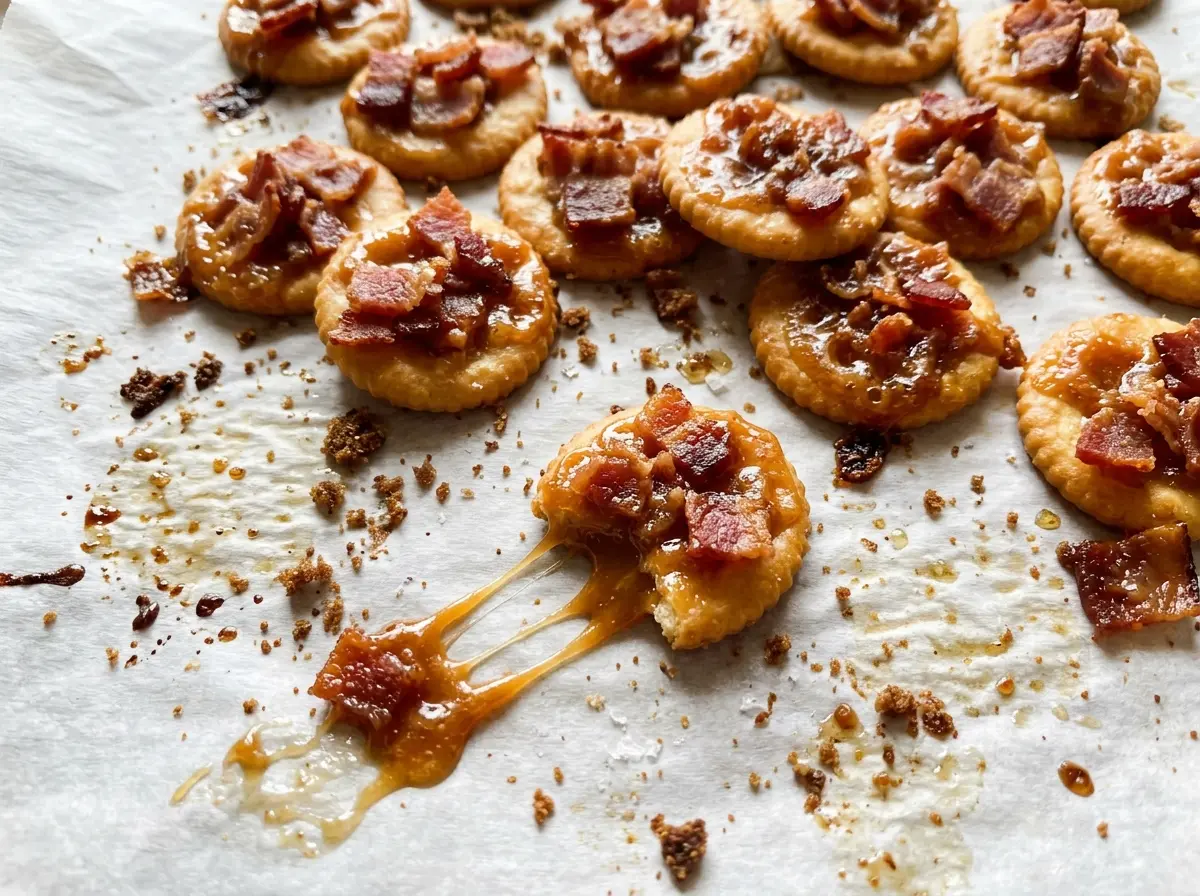
The caramel bubbles across the pan, and the saltines disappear under a shiny layer that smells like butter and maple. That’s the moment I watch for with Maple Caramel Bacon Crack Bites: every cracker should have a coating, not just a few caramel-heavy patches. Crisp bacon on top gives each bite a savory edge against the brown-sugar sweetness.
The crackers need to sit close together on the sheet so the caramel has a connected base to cover. I cook the butter, brown sugar, maple syrup, and salt until they reach a full boil, then keep the mixture boiling for three minutes before pouring. That short, steady stretch is what turns separate pantry ingredients into a cohesive topping. Once the bacon is scattered over the caramel, the oven takes over; the bites are ready to cool when the caramel is bubbling across the pan.
Kitchen Note
Let the pan cool completely before you break the crackers apart; warm caramel still moves and can pull the layers out of place. I give it about an hour on the baking sheet, then break it into bite-size pieces.
Save Maple Caramel Bacon Crack Bites for a sweet-salty snack with crisp bacon, buttery maple caramel, and a crunchy saltine base.
Why the Caramel Needs a Full Three-Minute Boil
Butter and brown sugar look combined before they have had much time to cook together. I bring the mixture to a full boil over medium heat, stirring until the butter has melted and everything looks cohesive, then keep it boiling for three minutes while stirring constantly. That timed boil gives the caramel a consistent cooking stage before it meets the crackers; stopping as soon as the butter melts can leave the topping softer and more likely to run.
Use the clock rather than waiting for a dramatic color change. The mixture needs to stay at a boil for the full three minutes, and constant stirring keeps it moving around the saucepan instead of sitting in one spot. Have the cracker-lined sheet close by before you start. When the time is up, pour the caramel over the crackers right away and spread it while it’s still fluid. The oven finishes the coating, so the caramel doesn’t need to be cooked until it looks dark in the saucepan.
This is also why the saucepan size matters: a 2-quart pan gives you room to stir a boiling mixture without crowding it. Take a second to gather the bacon and prepare the sheet before you start cooking the caramel. You’ll have a clear path from saucepan to crackers, with no pause while the topping thickens.
What the Saltines, Maple, and Bacon Each Bring to the Pan

- Thick-cut bacon — Its smoky, savory bite stands up to the sweet topping, and finely chopping it helps spread bacon through the pieces instead of leaving a few oversized strips. Cook it until crisp, then let it cool enough to handle before chopping.
- Saltine crackers — Their thin, crisp shape makes a flat base for the caramel, while their salt balances the brown sugar and maple. Keep them in a single layer and fit them close together; thicker crackers would change the texture and the way the caramel covers the base, so I stick with saltines here.
- Light brown sugar — Packed light brown sugar gives the caramel its familiar brown-sugar depth. It’s the ingredient that makes this topping taste more like caramel than a plain buttery syrup, so I wouldn’t replace it with white sugar for the same result.
- Pure maple syrup — The maple flavor is easy to notice against the buttery sugar, which is why pure maple syrup earns its place in this small amount. Pancake syrup won’t give the same maple taste; there isn’t a direct swap that keeps this recipe’s defining note.
- Unsalted butter and kosher salt — Unsalted butter lets the measured kosher salt and the saltines provide the seasoning without the final bite becoming unpredictable. Standard unsalted butter works well; there’s no need to choose a specialty butter for a caramel that’s boiled and spread over crackers.
From Crisp Bacon to a Pan of Bubbling Caramel Crack
Cook the Bacon Until It Holds Its Crispness
Cook the thick-cut bacon in a large skillet over medium heat, turning it as needed, until crisp; this takes 8 to 12 minutes. The slices should feel crisp rather than bendy when lifted, because the oven time is for bubbling the caramel, not for finishing soft bacon. Drain the slices on paper towels to remove excess grease. Once they’re cool enough to handle, chop them finely so the topping scatters evenly.
Fit the Saltines Closely on the Sheet
Heat the oven to 350°F, then line a rimmed 13×18-inch baking sheet with foil and grease the foil. Arrange the 40 saltines in one layer, fitting them closely together across the pan. Gaps leave bare areas where the caramel can collect instead of sitting over a cracker. A close, level base also makes it easier to spread the topping without nudging the crackers out of place.
Boil and Spread the Maple Caramel
Combine the butter, packed light brown sugar, pure maple syrup, and kosher salt in a 2-quart saucepan over medium heat. Stir as the butter melts and the mixture comes together, then bring it to a full boil. Keep stirring as it boils for three minutes; don’t step away during this stage. Pour it over the crackers immediately afterward and spread it evenly, working from the center toward the edges while it’s still easy to move.
Bake Until the Caramel Bubbles Across the Pan
Scatter the finely chopped bacon evenly over the caramel-coated crackers, then bake for 8 to 10 minutes. Look for bubbles across the pan, not just at the edges; that’s the visual cue that the caramel has heated through on the cracker base. Take the baking sheet out and leave it undisturbed until completely cool, about 1 hour. Break the set sheet into bite-size pieces once the caramel has firmed up.
Three Ways to Change the Bites Without Losing Their Crunch
Make a Bacon-Free, Meat-Free Tray
Leave off the bacon and make the saltines with maple caramel as a meat-free version. The pieces will taste sweeter and less savory, with the saltine’s own salt giving the caramel some contrast. The rest of the method stays the same.
Give One Side a Bacon-Heavy Finish
Scatter the chopped bacon over one half of the caramel-coated crackers instead of distributing it across the full pan. You’ll get a clear contrast between the bacon-forward pieces and the plain maple-caramel pieces, while using the same ingredients and keeping everything on one sheet.
Break It Into Bigger Brittle Pieces
For a more dramatic, brittle-like presentation, break the cooled sheet into larger shards rather than bite-size pieces. The flavor and ingredients stay the same, but each piece has more uninterrupted cracker and caramel, so it feels less like a small snack bite.
Storage and Reheating
- Refrigerator: Keep the completely cooled pieces in an airtight container for up to 3 days. The crackers may soften a little as they sit.
- Freezer: I don’t recommend freezing them; the cracker layer is likely to lose its crisp texture as it thaws.
- Reheating: No reheating is needed. Eat them chilled or let a portion lose its chill briefly, and return the rest to the refrigerator within 2 hours; microwaving can make the caramel dangerously hot and sticky.
Questions That Come Up While Making Maple Caramel Bacon Crack Bites
Maple Caramel Bacon Crack Bites
Ingredients
Equipment
Method
- Cook the bacon in a large skillet over medium heat, turning as needed, until crisp, 8 to 12 minutes.
- Drain the bacon on paper towels.
- Once cool enough to handle, chop the bacon finely.
- Heat the oven to 350°F.
- Line a rimmed 13x18-inch baking sheet with foil.
- Grease the foil.
- Arrange the saltine crackers in a single layer on the prepared baking sheet, fitting them closely together.
- Combine the butter, brown sugar, maple syrup, and salt in a 2-quart saucepan.
- Bring the mixture to a full boil over medium heat, stirring until the butter melts and the mixture is combined.
- Boil for 3 minutes, stirring constantly.
- Immediately pour the caramel over the crackers.
- Spread the caramel evenly over the crackers.
- Sprinkle the chopped bacon evenly over the caramel-coated crackers.
- Bake for 8 to 10 minutes, until the caramel is bubbling across the pan.
- Cool completely on the baking sheet, about 1 hour.
- Break into bite-size pieces.