The beef should sizzle as soon as it hits the hot Dutch oven. If it releases liquid and turns gray, the pot is crowded; browning in batches gives each piece room to develop a deep, savory crust. That first layer of flavor carries through every bowl of this vegetable beef soup, which makes a generous pot for eight.
I let the beef simmer until it’s fork-tender before adding the vegetables. That timing matters more than it might seem: potatoes and green beans need a short simmer, while chuck needs time to soften. The corn and peas go in right at the end, so they keep their color and don’t disappear into the broth. You’ll get tender beef, vegetables that still hold their shape, and a broth full of the browned bits scraped from the bottom of the pot.
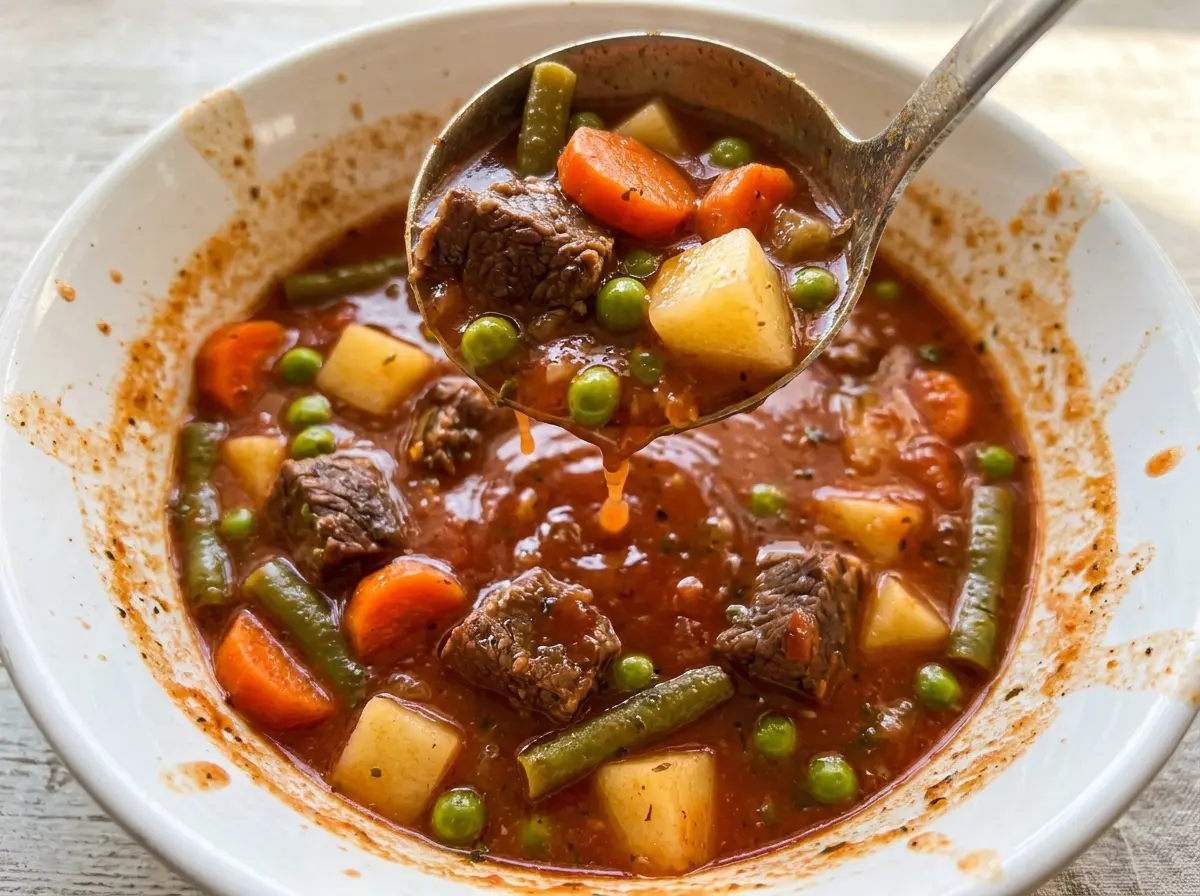
Kitchen Note
Pat the beef dry before it goes into the pot. Moisture on the surface slows browning, so a quick blot helps the cubes color instead of steaming.
Save this vegetable beef soup for a cozy, filling dinner with fork-tender chuck and vegetables that keep their shape.
Why the Vegetables Don’t Go Into the Pot with the Beef
Chuck roast needs a long, gentle simmer to become tender. Potatoes, carrots, celery, and green beans don’t need anything close to that much time. If they simmer alongside the beef from the start, they’ll soften long before the meat is ready and may lose their shape by the time dinner’s on the table.
Giving the beef its own head start lets you match the cooking time to each ingredient. The potatoes and carrots go in once the beef is tender, where they can cook through without turning to mush. Corn and peas need even less time, so they join for the final few minutes. That last addition keeps the smaller vegetables distinct and gives the finished soup a fresher look.
This is a broth-based soup, not a thick stew, and the vegetables should be easy to recognize in the bowl. Cut the potatoes into even cubes and the carrots into even slices so they become tender at a similar pace. If one piece is much larger than the others, it can stay firm while the rest are ready.
What the Chuck, Broth, and Vegetables Bring to the Pot
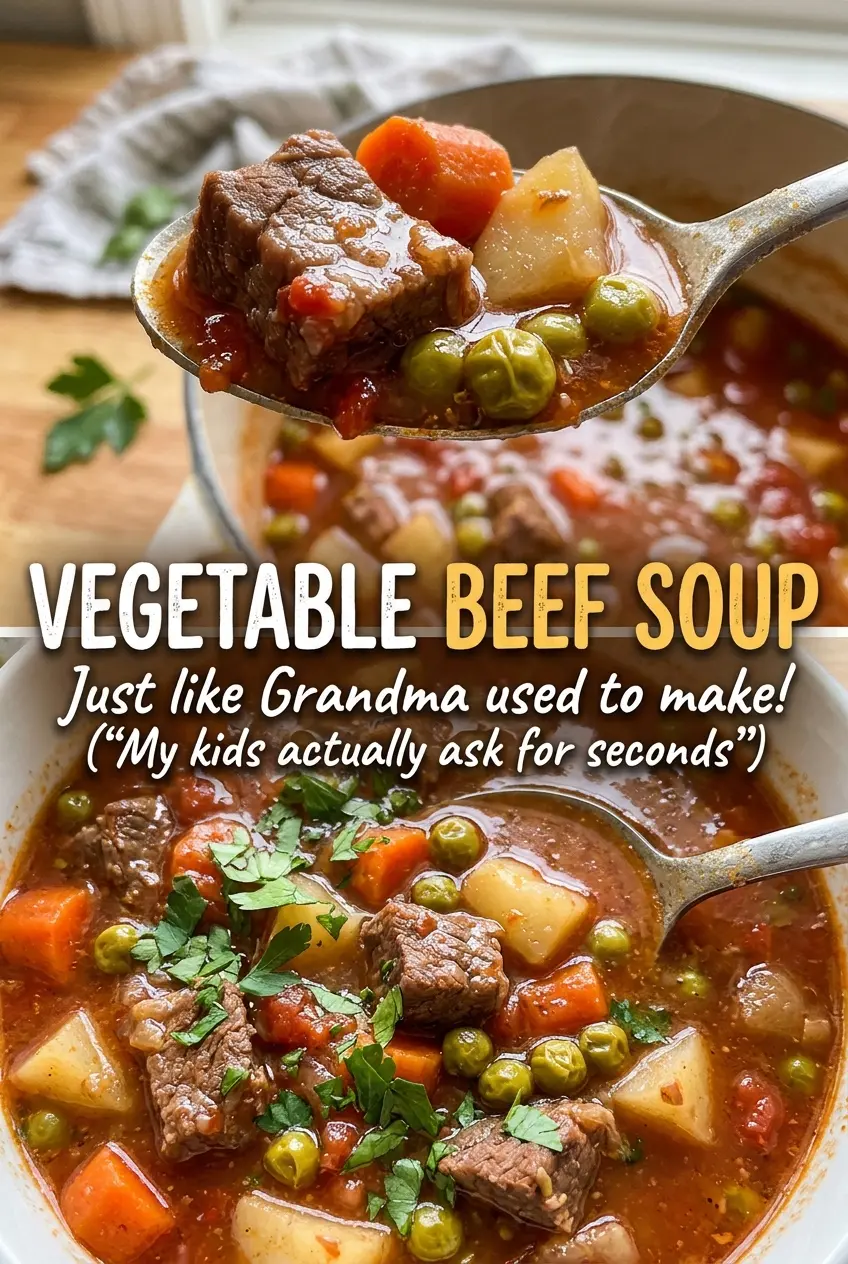
- Beef chuck roast — Chuck has enough connective tissue to turn tender during a long simmer and gives the broth a beefy richness. Cut it into evenly sized cubes so it cooks consistently; already-cut stew beef works too if the pieces are close to the same size.
- Low-sodium beef broth — This is the soup’s main savory base, and choosing low-sodium broth leaves room for the seasoning from the beef and tomatoes without making the finished pot too salty. A good everyday carton works well here; a strongly flavored broth can take over the vegetables.
- Diced tomatoes — Canned tomatoes bring acidity and body to the broth, and their liquid belongs in the pot along with the tomatoes. The canned version is convenient because it adds tomato flavor and consistent moisture without extra chopping.
- Potatoes and carrots — These make the soup hearty and bring a mild sweetness as they simmer. Russet potatoes tend to break down more than waxier varieties; if you want cubes that hold their shape, use a waxy potato such as Yukon Gold.
- Green beans, corn, and peas — Green beans add a firmer bite, while the frozen corn and peas are easy to stir in near the finish. Keep the corn and peas frozen until you add them; there’s no need to thaw them first.
- Thyme and bay leaf — Dried thyme seasons the broth throughout the simmer, and the bay leaf adds a quiet herbal note. If you don’t have a bay leaf, leave it out rather than trying to replace it with a different amount of another herb.
Build the Broth First, Then Cook the Vegetables Just Until Tender
Brown the Beef in Uncrowded Batches
Season the dry beef with the kosher salt and black pepper. Heat the vegetable oil in a 6-quart Dutch oven or stockpot over medium-high heat, then brown the beef in batches for 5–7 minutes per batch, turning as needed. Leave space between the cubes; if the pot is packed, the beef will steam and won’t develop much color. Transfer each browned batch to a plate.
Soften the Onion and Wake Up the Garlic
Add the chopped onion to the same pot and cook over medium heat for 4–5 minutes, stirring occasionally, until softened. Scrape and stir as it cooks so the onion picks up the browned bits left behind. Add the minced garlic and cook for 30 seconds; it should smell fragrant, not toasted. Garlic can turn bitter if it sits against the hot pot for too long.
Simmer the Beef Until a Fork Slides In Easily
Pour in the beef broth and diced tomatoes, then add the bay leaf and dried thyme. Scrape the bottom of the pot to loosen the browned bits, return the beef and any juices on the plate, and bring everything to a boil. Cover the pot, reduce the heat to low, and simmer for 1 1/2–2 hours, until the beef is fork-tender. Keep the heat low enough for a gentle simmer rather than a rolling boil.
Add the Vegetables in Two Stages
Stir in the potatoes, carrots, celery, and green beans, then cover and simmer for 20–25 minutes, until the potatoes and carrots are tender. A fork should pass through a potato cube without it crumbling. Stir in the frozen corn and peas and simmer uncovered for 5 minutes. Fish out and discard the bay leaf before serving.
Two Useful Ways to Adapt This Pot of Vegetable Beef Soup
Make It Lower in Carbohydrates with Cauliflower
Replace the potatoes with cauliflower florets cut into bite-size pieces. Add them with the carrots, celery, and green beans, and simmer until the cauliflower is tender. The broth will be less starchy, and the florets will give the soup a softer, more delicate texture.
Keep It Gluten-Free with a Broth Swap
Use an equal amount of low-sodium beef broth labeled gluten-free in place of the standard low-sodium beef broth. The rest of the soup stays the same, with no flour or other thickener needed. The broth brand can affect the final saltiness, so taste the soup before serving.
Storage and Reheating
- Refrigerator: Store covered for 3–4 days. The potatoes will soften a little as they sit in the broth.
- Freezer: Freeze in airtight containers for up to 3 months. The soup freezes safely, though potatoes may become softer after thawing.
- Reheating: Warm on the stovetop over medium-low heat, stirring occasionally, until steaming hot throughout. Avoid a hard boil, which can break up the potatoes and vegetables.
Questions I Get Asked About Vegetable Beef Soup
Vegetable Beef Soup
Ingredients
Equipment
Method
- Season the beef with the salt and pepper.
- Heat the oil in a 6-quart Dutch oven or stockpot over medium-high heat and brown the beef in batches, turning as needed, for 5–7 minutes per batch; transfer to a plate.
- Add the onion to the pot and cook over medium heat for 4–5 minutes, stirring occasionally, until softened.
- Add the garlic and cook for 30 seconds.
- Add the broth, tomatoes, bay leaf, and thyme, scraping up the browned bits from the bottom of the pot.
- Return the beef and any accumulated juices and bring to a boil.
- Cover, reduce the heat to low, and simmer for 1 1/2–2 hours, until the beef is fork-tender.
- Stir in the potatoes, carrots, celery, and green beans; cover and simmer for 20–25 minutes, until the potatoes and carrots are tender.
- Stir in the corn and peas and simmer uncovered for 5 minutes.
- Remove and discard the bay leaf before serving.