Silky carrot potato soup lands with a kind of quiet comfort that makes a bowl disappear fast. The carrots bring sweetness, the Yukon gold potatoes make it naturally creamy, and the coconut milk gives the whole pot a lush finish without any dairy at all. A little ginger, turmeric, and cumin keep it from tasting flat, so every spoonful feels warm, balanced, and clean.
What makes this version work is the order. The spices bloom in the oil before any liquid goes in, which wakes them up and keeps the soup from tasting like boiled vegetables. Then the potatoes and carrots simmer until they’re falling apart tender, so the blender doesn’t have to work hard to turn everything smooth. The lemon at the end matters too; it pulls the sweetness back into balance and keeps the soup bright instead of heavy.
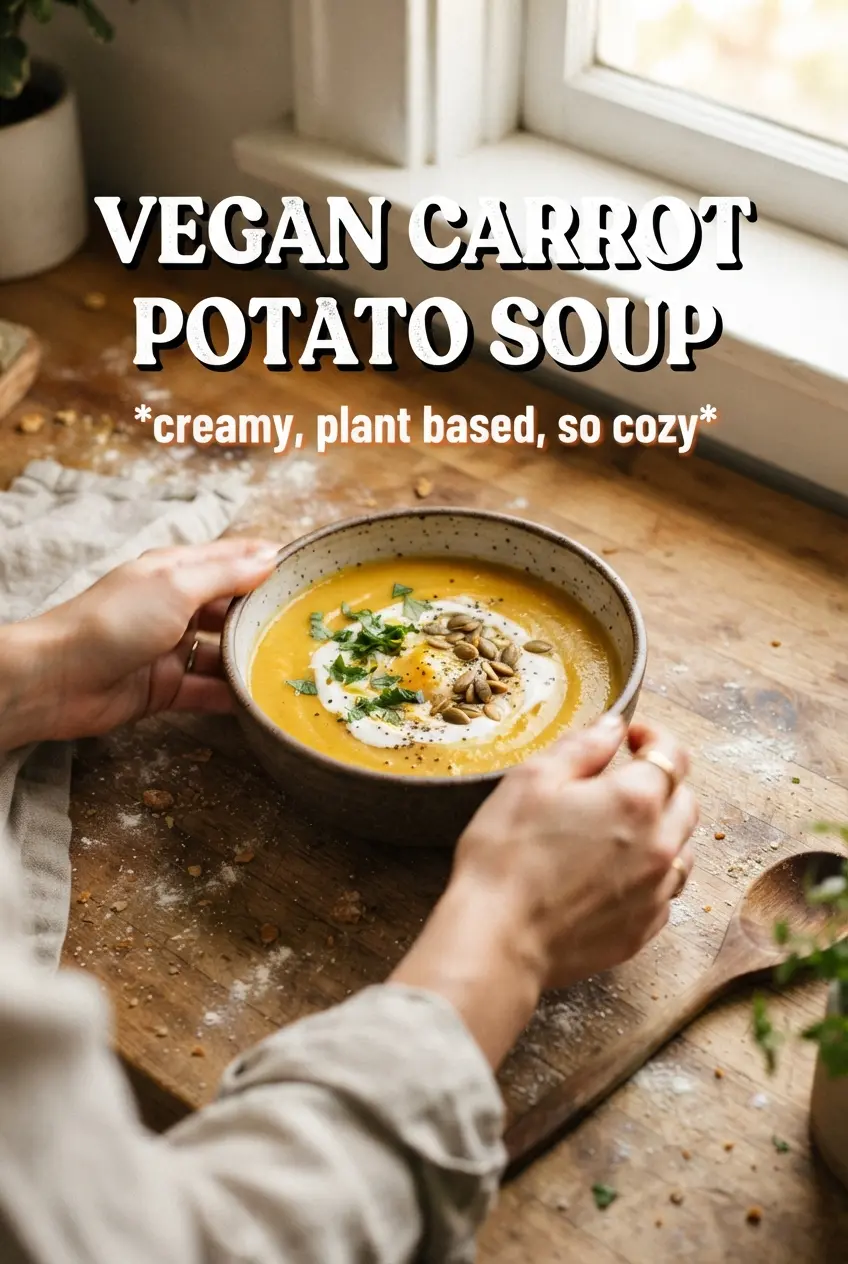
Below, I’ve included the small details that make this soup dependable, from the right texture cues to the best way to adjust the thickness if you want it looser or more substantial. There’s also a note on garnishes, because pepitas and chives aren’t just there for looks — they give the bowl a little crunch and freshness that the puréed soup really needs.
The soup blended up completely smooth, and the lemon at the end kept it from tasting too sweet. My kids asked for seconds, and the pepitas on top were a nice crunch.
Save this vegan carrot potato soup for the nights when you want a smooth, coconut-kissed bowl with a bright lemon finish.
The Difference Between Velvety Soup and a Bland Purée
The biggest mistake in a blended vegetable soup is treating the vegetables like they can do all the work on their own. Carrots and potatoes need seasoning at two points: first when the spices hit the oil, and again after blending when the lemon and salt sharpen everything up. If you wait until the end for all the seasoning, the soup tastes one-note, even if the texture is perfect.
The second thing that matters is tenderness. The vegetables need to be soft enough that the blender turns them into a smooth, glossy soup without grainy bits hiding in the middle. If your potatoes are still firm, the soup will stay slightly chalky no matter how long you blend it. Let them go until they mash easily against the side of the pot with a spoon.
- Carrots — Peel them and cut them into rough, even pieces so they cook at the same pace as the potatoes. Bigger chunks slow the soup down and leave you waiting for the carrots to catch up.
- Yukon gold potatoes — These are the reason the soup feels creamy without flour or a roux. Russets work in a pinch, but they can taste a little starchier and less buttery.
- Coconut milk — Use the full-fat version here if you want the soup to taste rounded and silky. Light coconut milk will work, but the soup will be thinner and less rich.
- Ginger and turmeric — Fresh ginger brings a clean heat, while turmeric gives the soup its color and a gentle earthiness. Ground ginger won’t deliver the same brightness, so if you can, keep the fresh ginger.
- Lemon juice — Don’t skip this. It wakes up the carrots after blending and keeps the coconut milk from making the soup feel heavy.
What Each Ingredient Is Actually Doing in This Recipe

- Primary ingredient (the star) — Quality matters most. Choose the best you can find.
- Cooking medium (oil, butter, or broth) — This carries flavors and prevents dryness.
- Seasonings (salt, pepper, spices, herbs) — Layer flavors so nothing overpowers. Build depth gradually.
- Aromatics (garlic, onion, herbs) — Cook with fat to bloom flavors. Become the foundation.
- Supporting ingredients — Complement the main ingredient without overpowering it.
- Sauce or liquid (if applicable) — Brings flavors together. Balance richness with acid.
- Acid (lemon, vinegar, wine, or other) — Brightens and prevents flat-tasting results.
- Final finish (garnish, glaze, or sauce) — Prevents one-dimensional taste and adds visual appeal.
Building the Flavor Before the Pot Simmers
Softening the Onion
Cook the diced onion in olive oil over medium heat until it turns translucent and starts to smell sweet, about 5 minutes. You’re not looking for color here. If the onion browns too fast, the soup can taste sharp instead of mellow, and that usually means the heat was too high or the pot was too crowded.
Blooming the Spices
Add the garlic, ginger, turmeric, cumin, smoked paprika, and cayenne and cook for about a minute, just until fragrant. The spices should smell toasty and a little deeper, not burnt. This short step pulls more flavor out of the spices and keeps them from tasting dusty in the finished soup.
Simmering Until the Vegetables Collapse
Stir in the carrots, potatoes, coconut milk, and broth, then bring the pot to a boil before lowering it to a steady simmer. Cook until the vegetables break apart easily with a spoon, 25 to 30 minutes. If the potatoes are even a little firm, blend time goes up and the soup can turn pasty instead of smooth.
Blending and Finishing
Blend the soup completely smooth with an immersion blender. Keep the blender head submerged so it doesn’t splatter hot soup everywhere, and work patiently until the texture turns glossy and even. Stir in the lemon juice after blending, then taste and add salt and pepper until the sweetness from the carrots feels balanced.
How to Adapt This Soup for Different Kitchens and Different Needs
Make it thicker and more filling
Use a little less broth, or simmer the soup uncovered for the last 10 minutes before blending. That concentrates the flavor and gives you a denser, spoon-coating texture that eats more like a main dish.
Dairy-free the right way
The recipe is already dairy-free, so the only thing to watch is the coconut milk you choose. Full-fat coconut milk gives the soup a velvet finish; cartons of coconut beverage won’t do the same job and can make the soup taste thin.
Swap the spice level up or down
Leave out the cayenne for a gentler bowl, or add an extra pinch if you want more heat. The ginger already gives the soup warmth, so you don’t need much cayenne to notice the difference.
What to do if you only have an upright blender
Blend in batches and never fill the jar more than halfway with hot soup. Remove the center cap and cover the opening with a folded towel so steam can escape, or the pressure can blow the lid off.
Storage and Reheating
- Refrigerator: Store in an airtight container for up to 4 days. It may thicken as it sits, which is normal for a potato-based soup.
- Freezer: Freezes well for up to 2 months. Cool it completely first, then freeze in portions and leave a little room in the container for expansion.
- Reheating: Warm gently on the stove over low heat and stir often. If it gets too thick, add a splash of broth or water; boiling can dull the coconut flavor and make the texture less smooth.
Answers to the Questions Worth Asking
Vegan Carrot Potato Soup
Ingredients
Equipment
Method
- Heat olive oil in a large pot over medium heat, then sauté onion for 5 minutes until soft and translucent.
- Add garlic and ginger, then cook for 1-2 minutes until fragrant.
- Stir in turmeric, cumin, smoked paprika, and cayenne, then cook for 1 minute to bloom the spices.
- Add carrots, potatoes, coconut milk, and broth, then bring the mixture to a boil.
- Reduce to a simmer and cook for 25-30 minutes until carrots and potatoes are completely tender.
- Blend completely smooth with an immersion blender, scraping down the pot as needed.
- Stir in the lemon juice, then season with salt and pepper to taste.
- Ladle into bowls and garnish with pepitas and chives.