The potato skins are sturdy when they come out of the oven, but they can split if you scoop too close to the peel. I leave a thin layer of potato inside each one, then pile the creamy filling back into those shells for twice baked mashed potatoes with crisp bacon, sharp cheddar, and green onion in every bite.
Russets are the right fit here: they bake up fluffy, and their skins are roomy enough to hold the filling for a second trip through the oven. The filling gets its creamy texture from butter, sour cream, and whole milk, while the cheddar and bacon go in after the potatoes are mashed so you get little pockets of both instead of a uniform paste. Once the tops are lightly browned, the centers are hot and the edges have a bit of bite.
They’re a good make-ahead side for a dinner that needs something hearty, and each half is easy to serve straight from the baking sheet. You get the comfort of mashed potatoes with the browned cheese and bacon on top, all tucked into a potato skin.
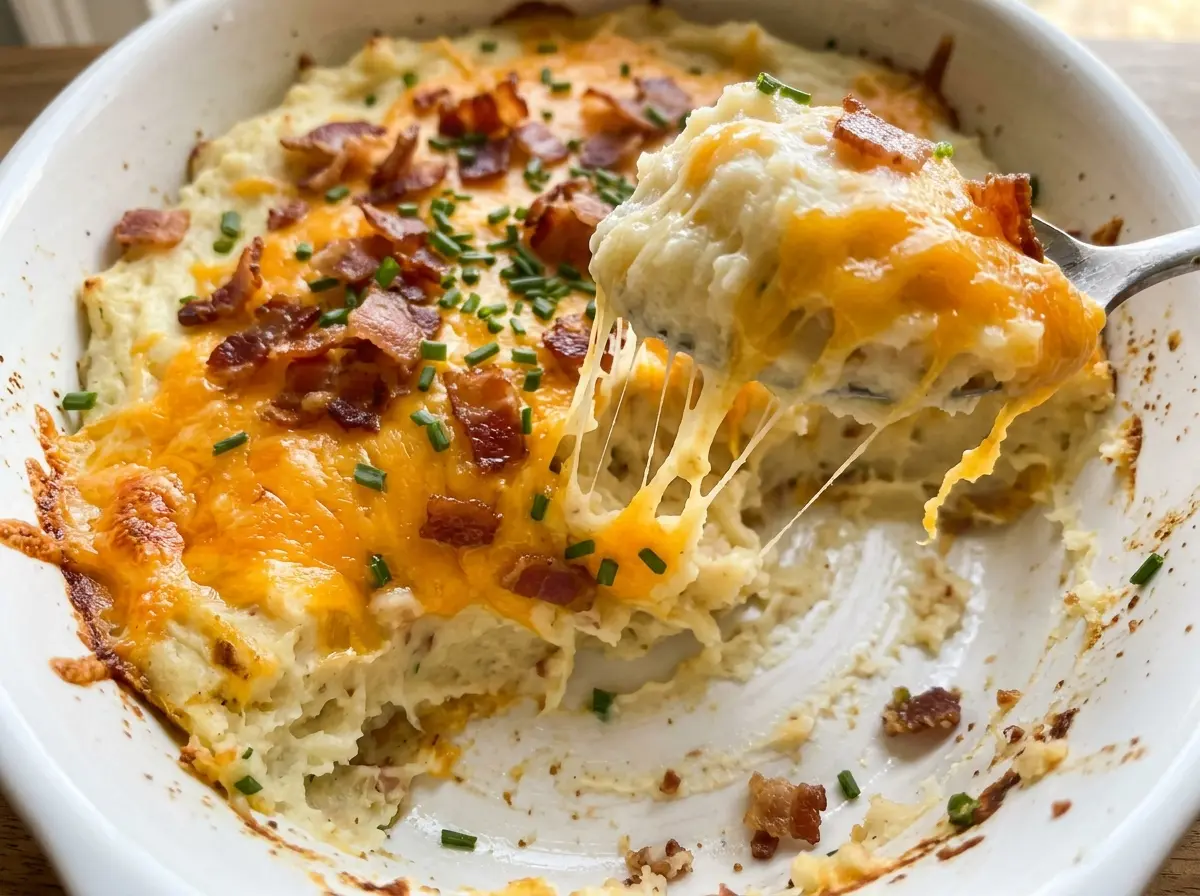
Kitchen Note
Mash the potato with the butter, sour cream, and milk until creamy before folding in the cheddar, bacon, and green onion. That last gentle fold keeps the filling from turning into one uniform mixture, so you still get distinct bites of cheese and bacon.
Save these Twice Baked Mashed Potatoes for creamy cheddar filling, crisp bacon, and lightly browned tops tucked into russet shells.
Why the Potato Needs to Be Fully Tender Before You Scoop
A potato that feels almost done is still a problem here. The flesh needs to be soft all the way through so it mashes smoothly with the butter and dairy; a firm center leaves lumps that are hard to work out without overworking the rest of the filling. Since large russets vary, the knife test is more useful than expecting every potato to finish at the same minute.
Slide a knife into the center of each potato. When it passes through easily, the flesh is ready to scoop and mash. If you feel resistance, give the potatoes more time in the oven rather than trying to compensate with extra milk later. More liquid can loosen the filling, but it won’t turn undercooked potato into a creamy mash.
The other detail that makes this format work is keeping the skins intact. A 1/4-inch layer of potato left inside each half gives the shell enough structure to hold the filling as you spoon it back in and bake it again. Scoop carefully, especially near the ends, where the skin is easiest to puncture.
Why Russets, Sour Cream, and Sharp Cheddar Fit These Potato Shells
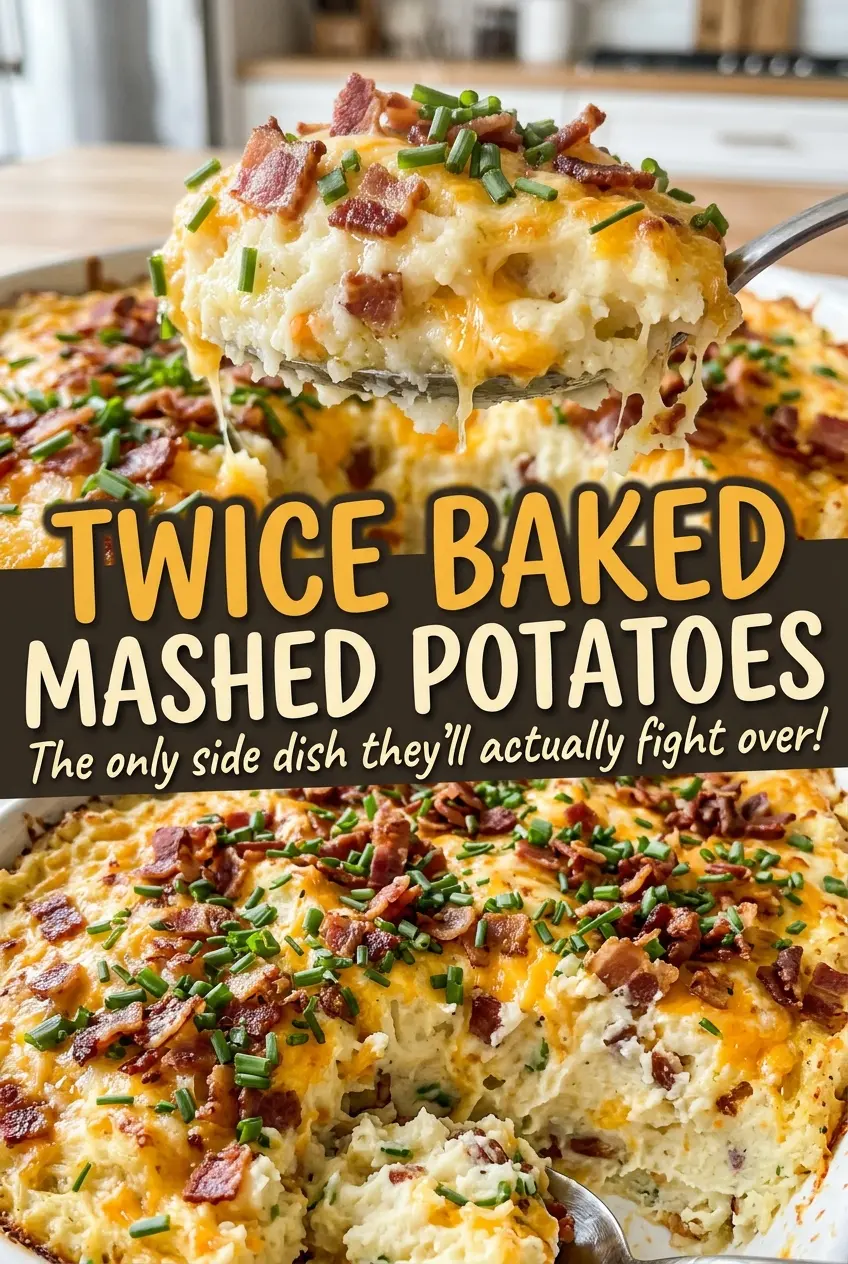
- Russet potatoes — Their fluffy flesh mashes easily, and the baked skins make useful little serving shells. Choose potatoes that are close in size so they’re likely to finish baking at a similar pace; scrub and dry them before oiling so the skins bake without a coating of grit or water.
- Butter, sour cream, and whole milk — Together they make the potato filling creamy without hiding the potato flavor. Sour cream brings a gentle tang that plain milk alone can’t provide. Use fresh dairy and let the butter soften into the hot potato as you mash; the source ingredients don’t offer a like-for-like dairy-free swap without changing the dish.
- Sharp cheddar — Its pronounced flavor stands up to the potato and bacon, and it melts over the tops for a browned finish. Shred it yourself from a block if you have time; pre-shredded cheddar is convenient, though its coating can make it melt less smoothly. Keep some for the topping rather than mixing it all into the filling.
- Bacon — Cooking it crisp before crumbling gives the filling little savory pieces and keeps the topping from turning soft. Let the cooked bacon cool enough to crumble, and save a portion for the top so it stays visible after baking.
- Green onions — Their mild onion flavor gives the rich filling a fresh edge. Slice them thinly so they distribute evenly, and reserve some for the topping instead of stirring both onions into the mash.
- Vegetable oil — A light rub over the scrubbed, dried potatoes helps the skins bake well. Use a neutral vegetable oil; a strongly flavored oil would distract from the cheddar and bacon.
Getting Tender Centers, Intact Shells, and Browned Tops
Bake the Russets Until a Knife Slides In Easily
Heat the oven to 400°F with a rack in the center. Scrub and dry the potatoes, rub them with vegetable oil, and set them on a rimmed baking sheet. Bake for 55 to 75 minutes, checking that a knife slides easily into the center rather than relying on the clock alone. Let them rest for 10 minutes, or until they’re cool enough to handle.
Scoop Carefully and Keep the Shells Sturdy
Cut each potato in half lengthwise once it’s comfortable to hold. Scoop the flesh into a large bowl, leaving about a 1/4-inch layer inside each skin. If you scrape down to the peel, the shell is more likely to tear when you fill it. Set the empty halves back on the rimmed baking sheet so they’re ready to fill.
Mash Until Creamy, Then Fold in the Good Bits
Mash the potato flesh with the butter, sour cream, whole milk, kosher salt, and black pepper until creamy. Stop once the texture is smooth enough to spoon; prolonged mashing can make potatoes gluey. Fold in the filling portion of cheddar, bacon, and sliced green onion after mashing. The mixture should hold its shape on a spoon without feeling dry.
Fill the Skins and Bake Until the Cheese Browns
Spoon the filling evenly into the potato shells, then scatter the reserved cheddar, bacon, and green onion over the tops. Bake on the rimmed baking sheet for 15 to 20 minutes. Look for hot filling and melted cheese with light browning; if the tops are still pale at the start of that window, keep an eye on them as the bake continues. Serve once the centers are hot and the cheese has melted.
Easy Ways to Adapt These Twice-Baked Potato Shells
A Bacon-Free Filling
Leave the bacon out of both the mash and the topping for a meat-free take. The cheddar and green onion still bring plenty of savory character, though you’ll lose the smoky, crisp pieces that bacon adds. For a vegetarian version, use cheddar made with vegetarian rennet.
A More Cheese-Forward Top
Keep the same total amount of cheddar but shift a little more from the filling to the topping. You’ll get a more pronounced melted-cheese layer and slightly less cheddar threaded through the potato. Keep some cheese in the filling so it still has that sharp, savory note inside.
A Gluten-Free Version
The potato, dairy, cheddar, and green onion fit a gluten-free version; choose bacon that’s labeled gluten-free, since bacon seasonings and processing can vary. The filling and baking method stay the same, with no change to the creamy texture or cheesy top.
Storage and Reheating
- Refrigerator: Store leftovers covered for 3 to 4 days. The skins soften in the fridge, but the filling stays creamy.
- Freezer: Freeze cooled potato halves in an airtight container for up to 1 month. The sour cream can make the filling a little less smooth after thawing, so the texture won’t be quite as fresh.
- Reheating: Microwave a serving until steaming hot throughout, or warm the halves in the oven until the center reaches 165°F. Avoid overheating; the filling can dry out around the edges.
Questions That Come Up When Making Twice-Baked Potatoes
Twice Baked Mashed Potatoes
Ingredients
Equipment
Method
- Preheat the oven to 400°F and set a rack in the center.
- Scrub the potatoes.
- Dry the potatoes.
- Rub the potatoes with the oil.
- Place the potatoes on a rimmed baking sheet.
- Bake for 55 to 75 minutes, until a knife slides easily into the center.
- Let the potatoes rest for 10 minutes, or until cool enough to handle.
- Cut each potato in half lengthwise.
- Scoop the flesh into a large bowl, leaving a 1/4-inch layer inside each skin.
- Mash the potato flesh with the butter, sour cream, milk, salt, and pepper until creamy.
- Fold in 1 cup of the cheddar, 4 slices of the bacon, and 1 sliced green onion.
- Spoon the filling evenly into the potato skins.
- Top with the remaining 1/2 cup cheddar, 2 slices of bacon, and 1 sliced green onion.
- Bake on the baking sheet for 15 to 20 minutes, until the filling is hot and the cheese is melted and lightly browned.