As the cranberries simmer, they start popping one by one, and the liquid shifts from clear to a deep ruby red. The first time I made this sugar free cranberry sauce, I expected it to look just like a version made with sugar while it was still hot. It didn’t—and that’s completely normal. The berries need time to soften and release their own pectin before the sauce takes on its familiar spoonable texture.
Granulated allulose keeps the sauce free of added sugar, but it doesn’t behave exactly like a traditional sugar syrup. I let the cranberries do the thickening, then give the sauce a full chill before serving. That simple change in expectations makes this an easy stovetop side with a bright, tart cranberry flavor and a glossy finish.
Kitchen Note
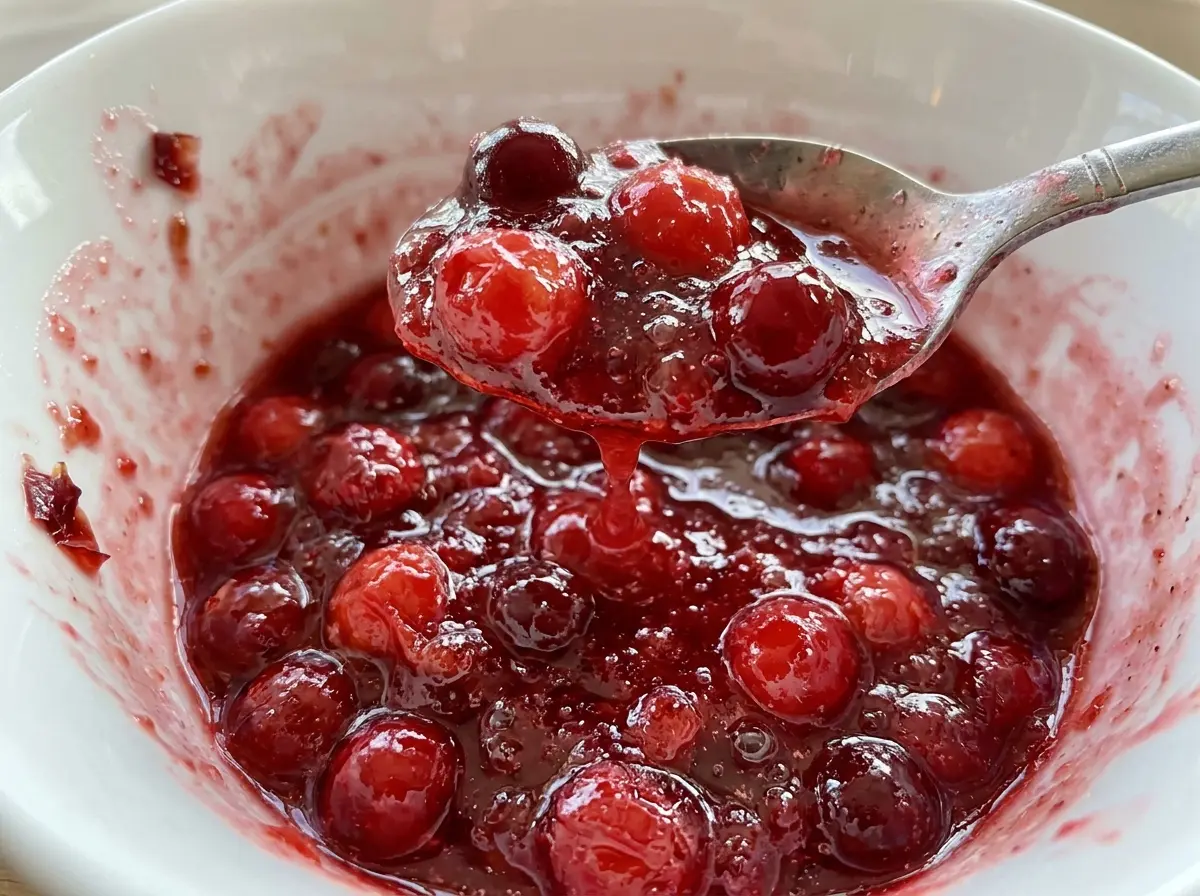
Don’t judge the thickness straight from the pan. After the 20-minute cool-down, the sauce still looks loose; the refrigerator chill is what gives it time to settle into a spoonable consistency.
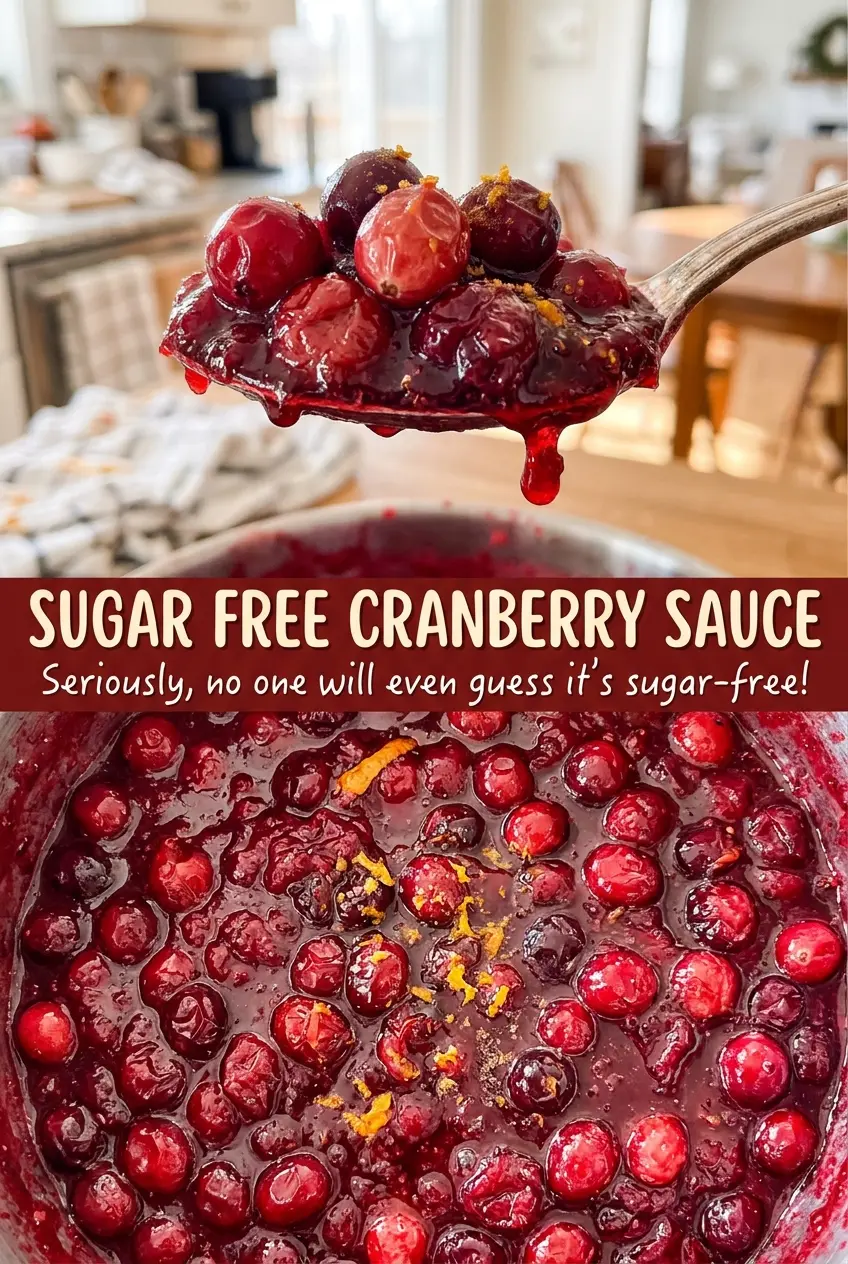
Save this sugar free cranberry sauce for a bright, tart make-ahead side with a glossy berry finish and no added sugar.
Why This Sauce Thickens Differently Without Sugar
Traditional cranberry sauce often gets body from both the berries and a concentrated sugar syrup. Here, the cranberries do most of the structural work. As they burst, their pulp and natural pectin thicken the cooking liquid; allulose provides sweetness, but it won’t make the same syrupy finish as granulated sugar. That difference is why a hot spoonful can seem thinner than you expect.
Cook until most of the berries have burst and the sauce has visibly thickened, rather than waiting for every berry to disappear or for the pan to look like a firm gel. A few whole berries are welcome: they give the finished sauce a little texture. The final consistency develops as it cools and chills, so extending the simmer just to imitate a sugar-sweetened sauce can leave you with a thicker, more broken-down result than you wanted.
Allulose also keeps the sweetness from taking over the fruit. Cranberries are naturally sharp, and that tart edge is part of what makes this side work alongside a rich meal. If you’re tasting it warm, remember that the chilled sauce will feel more settled and the berry flavor will come through differently.
What the Allulose and Cranberries Each Bring to the Pan
- Granulated allulose — Use a granulated form so it dissolves into the water as the mixture heats. It sweetens without adding sugar, but it doesn’t set the sauce the way a concentrated sugar syrup can. Keep it sealed between uses so it stays dry and free-flowing; a liquid sweetener changes the starting balance of water in the pan.
- Fresh cranberries — Look for firm berries with smooth skins, and pick out any that are shriveled or soft before rinsing. Fresh berries give you the tart flavor and burst-open texture this sauce is built around. If you’re using a bag that’s been sitting in the refrigerator, sort through it carefully rather than assuming every berry is in good shape.
- Water — It gives the allulose room to dissolve and keeps the berries from scorching before they release their juice. There’s no need to use anything special; plain tap water is fine. Don’t reduce it at the start, because the berries need that liquid as they begin to heat and pop.
From Dissolved Allulose to Chilled, Spoonable Sauce
Dissolve the Sweetener Before the Berries Go In
Combine the water and granulated allulose in a medium saucepan over medium heat, stirring until the allulose dissolves and the mixture comes to a simmer. Keep the heat at medium so the sweetener has time to dissolve without the liquid boiling hard. Look for a clear, evenly mixed liquid with small bubbles around the surface. If you can still feel granules on the bottom when you stir, give them more time before adding the cranberries.
Simmer Until Most of the Berries Pop
Stir in the rinsed cranberries and bring the pan back to a simmer. Cook uncovered for 10 to 15 minutes, stirring occasionally, until most of the berries have burst and the sauce has thickened. You’ll hear soft pops as the skins split, and the mixture will turn a deep red as the fruit softens. Don’t wait for every berry to break down; a few whole berries keep the sauce pleasantly textured.
Give the Sauce Its First Cool-Down
Take the saucepan off the heat and let the sauce cool for 20 minutes. It will continue to settle as the bubbling stops, so don’t try to judge its final thickness while it’s piping hot. This pause also makes it easier to transfer the sauce without trapping as much steam in the container. Move it to a covered container after that cool-down.
Chill Before Serving
Cover the container and refrigerate the sauce for at least 2 hours before serving. After chilling, the berry pulp gives the sauce a more cohesive, spoonable consistency than it had in the saucepan. If you’re planning a meal around it, leave enough time for this refrigerator rest rather than trying to rush the cooling stage. Serve it cold from the refrigerator.
Small Changes for a Different Kind of Cranberry Sauce
Add a Fresh Citrus Lift
Stir finely grated orange zest into the finished sauce for a fragrant citrus note that rounds out the tart cranberries. Add it after cooking so the fresh aroma stays bright. This keeps the sauce sugar-free, though it gives the fruit a more citrus-forward taste.
Bring in a Gentle Warm Spice
Simmer a cinnamon stick with the cranberries, then remove it before transferring the sauce to its container. The spice adds warmth without changing the berry-forward base; leaving it in during the chill gives the sauce a stronger cinnamon aroma.
Make It More Tart
For a sharper, less sweet version, use less granulated allulose while keeping the water and cranberries unchanged. The fruit will stand out more, and you may notice the tartness more strongly once the sauce is cold. Make a modest adjustment the first time, since cranberry batches vary in how sharp they taste.
Storage and Reheating
- Refrigerator: Keep the sauce covered and refrigerated for 3 to 4 days. It may become a little firmer as it sits.
- Freezer: Freeze it in an airtight, freezer-safe container for up to 2 months. Thaw it in the refrigerator; the texture may be slightly softer after thawing.
- Reheating: This sauce is meant to be served chilled, so reheating isn’t necessary. If you prefer it warm, heat it gently in a small saucepan over low heat, stirring often; avoid a hard boil, which can make the sauce break down further.
Questions I Get Asked About This Sugar Free Cranberry Sauce
Sugar Free Cranberry Sauce
Ingredients
Method
- Combine the water and allulose in a medium saucepan over medium heat, stirring until the allulose dissolves and the mixture comes to a simmer.
- Stir in the cranberries and return to a simmer.
- Cook uncovered for 10 to 15 minutes, stirring occasionally, until most of the berries have burst and the sauce has thickened.
- Remove from the heat and cool for 20 minutes.
- Transfer to a covered container.
- Refrigerate for at least 2 hours before serving.