Spicy lasagna soup hits the bowl with all the things people actually want from lasagna: a rich tomato base, tender noodles, and that creamy cheese finish that cools everything down just enough to keep you going back for another spoonful. The broth stays brothy, not thick like a stew, so every bite feels lighter than baked lasagna but still full of the same familiar comfort.
What makes this version work is the layering. The sausage browns first for a deep savory base, then the tomato paste cooks long enough to lose its raw edge before the tomatoes and broth go in. The jalapeño, red pepper flakes, cayenne, and smoked paprika build heat in stages instead of all at once, which keeps the soup spicy without flattening the rest of the flavor.
Below, I’ll show you how to keep the noodles from going mushy, how to balance the heat with the ricotta topping, and a few simple ways to adjust the spice level without losing what makes this soup good in the first place.
The broth had such a deep tomato flavor, and the ricotta topping cooled the heat just enough. My noodles stayed perfectly tender instead of turning to mush, which is usually where soup versions of lasagna go wrong for me.
Love the spicy tomato broth and creamy ricotta topping? Save this Spicy Lasagna Soup for the nights when you want lasagna flavor without layering a pan.
The Heat Gets Loud Fast, So Build It in Layers
With a soup like this, the mistake is dumping all the heat in at the beginning and hoping the broth will smooth it out. It won’t. Red pepper flakes, cayenne, jalapeño, and spicy sausage all bring different kinds of heat, and if you throw them in at once without cooking them in fat first, the soup tastes sharp instead of rounded.
The better move is to let the sausage render first, then bloom the tomato paste and spices in the same pot. That does two things: it takes the raw edge off the tomato paste, and it gives the spices a chance to bloom in the fat so the broth tastes deeper, not just hotter. If the bottom of the pot looks a little stained after the sausage browns, that’s what you want. Those browned bits dissolve into the broth and carry a lot of the flavor.
What Each Ingredient Is Actually Doing in This Bowl
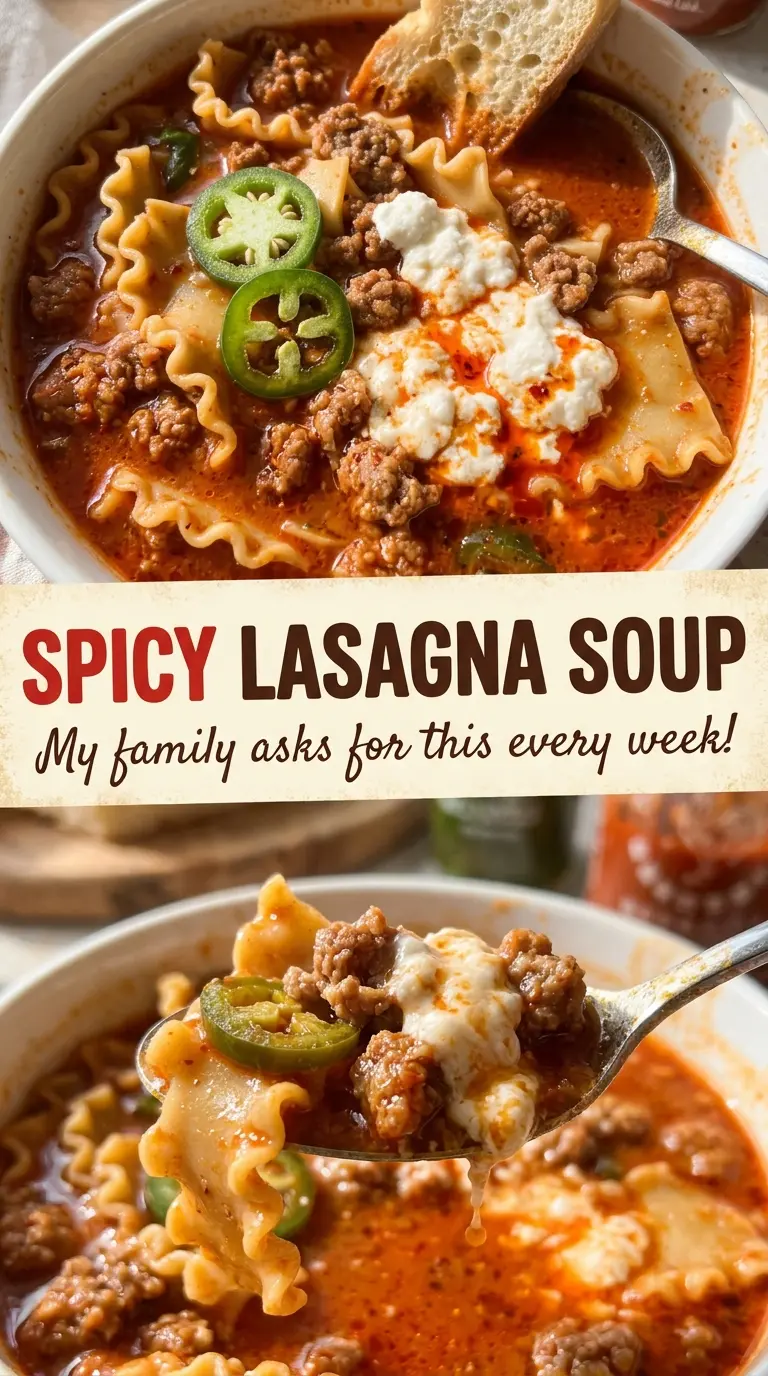
- Hot Italian sausage — This is the backbone of the soup. It gives you fat, seasoning, and a built-in layer of spice without needing a long simmer. If you only have mild sausage, add an extra pinch of red pepper flakes and a little more smoked paprika to close the gap.
- Tomato paste — This is the ingredient that makes the broth taste cooked instead of thin and canned. Let it darken slightly in the pot for a minute or two before adding liquid; if you skip that step, the soup can taste flat and a little metallic.
- Crushed tomatoes plus fire-roasted diced tomatoes — The crushed tomatoes thicken the broth just enough, while the fire-roasted tomatoes add smoky depth and little pockets of texture. If you only have regular diced tomatoes, the soup still works, but you’ll lose some of that slow-cooked edge.
- Ricotta, mozzarella, and parmesan — This topping is the cooling contrast that makes the spice work. Ricotta brings softness, mozzarella adds stretch, and parmesan gives the top a salty finish. Stir them together at the last minute so the mixture stays thick and spoonable.
- Broken lasagna noodles — Use regular lasagna noodles, not no-boil, if you can. They hold their shape better in broth and give the soup that familiar layered pasta feel. Break them into rough pieces so they cook unevenly in a good way, with some edges soft and some still a little chewy.
- Chili oil — This is the finishing move, not an afterthought. A small drizzle wakes up the broth and gives the top of the soup a glossy, peppery finish. Use more or less depending on how much heat you want in each bowl.
The 20 Minutes That Actually Matter
Browning the Sausage
Cook the sausage in a large pot until it’s deeply browned and no longer pink, then drain off the excess fat if there’s a lot pooling in the pot. You want caramelized bits on the bottom, not steamed meat. If the sausage looks pale, the soup will taste pale too. Break it up into crumbles as it cooks so every spoonful gets a little of that seasoned meat.
Cooking the Aromatics and Tomato Paste
Add the onion and cook until it turns translucent and starts to soften at the edges, then stir in the garlic, jalapeño, and tomato paste. The paste should darken slightly and smell sweet, not raw. If the garlic starts browning fast, lower the heat; burnt garlic will carry through the entire pot. This stage is where the broth gets its foundation, so don’t rush it.
Blooming the Spices
Stir in the red pepper flakes, smoked paprika, cayenne, and Italian seasoning and let them cook for about a minute. The mixture should smell fragrant and a little smoky before you add the liquid. That quick toast wakes the spices up and keeps the finished soup from tasting like plain tomato broth with heat dumped into it at the end.
Simmering the Noodles
Pour in the tomatoes and broth, bring the soup to a boil, then add the broken lasagna noodles and reduce to a steady simmer. Cook until the noodles are tender but still hold their shape, usually 10 to 12 minutes. If you let them go too long, they’ll swell and start to break apart, which makes the broth cloudy and heavy. Stir occasionally so they don’t stick to the bottom.
Make It Milder Without Losing the Point
Use mild Italian sausage, skip the cayenne, and start with just one jalapeño after removing the seeds. You’ll still get a warm, spiced tomato soup with enough background heat to feel lively, but it won’t hit as hard. The chili oil can stay on the table so each bowl can be adjusted individually.
Turn It Dairy-Free
Skip the ricotta-mozzarella topping and finish each bowl with a spoonful of dairy-free cream cheese or a plain cashew cream. The soup itself already has plenty of body from the tomatoes and sausage, so you’re not losing structure — just the cooling cheese finish. A little basil still helps soften the heat.
Make It Gluten-Free
Use your favorite gluten-free lasagna noodles, but check them early because they can go from tender to fragile faster than wheat pasta. If they start to fall apart, pull the pot off the heat a minute sooner than you think you need to. The broth will still keep cooking them for a bit after the burner is off.
Stretch It for a Bigger Crowd
Add another cup of broth and another handful of broken noodles if you need to feed more people, but don’t add too much extra pasta or the soup will turn dense as it sits. Keep the ricotta topping separate until serving so every bowl still gets that cool, creamy contrast.
Storage and Reheating
- Refrigerator: 3 to 4 days. The noodles will keep soaking up broth, so expect the soup to thicken as it sits.
- Freezer: It freezes best before adding the noodles. If you want to freeze it fully cooked, know that the pasta will soften more after thawing, so the texture won’t be as clean.
- Reheating: Warm it gently on the stove over medium-low with a splash of broth to loosen it back up. The common mistake is boiling it hard, which can split the broth and overcook the noodles at the same time.
Answers to the Questions Worth Asking
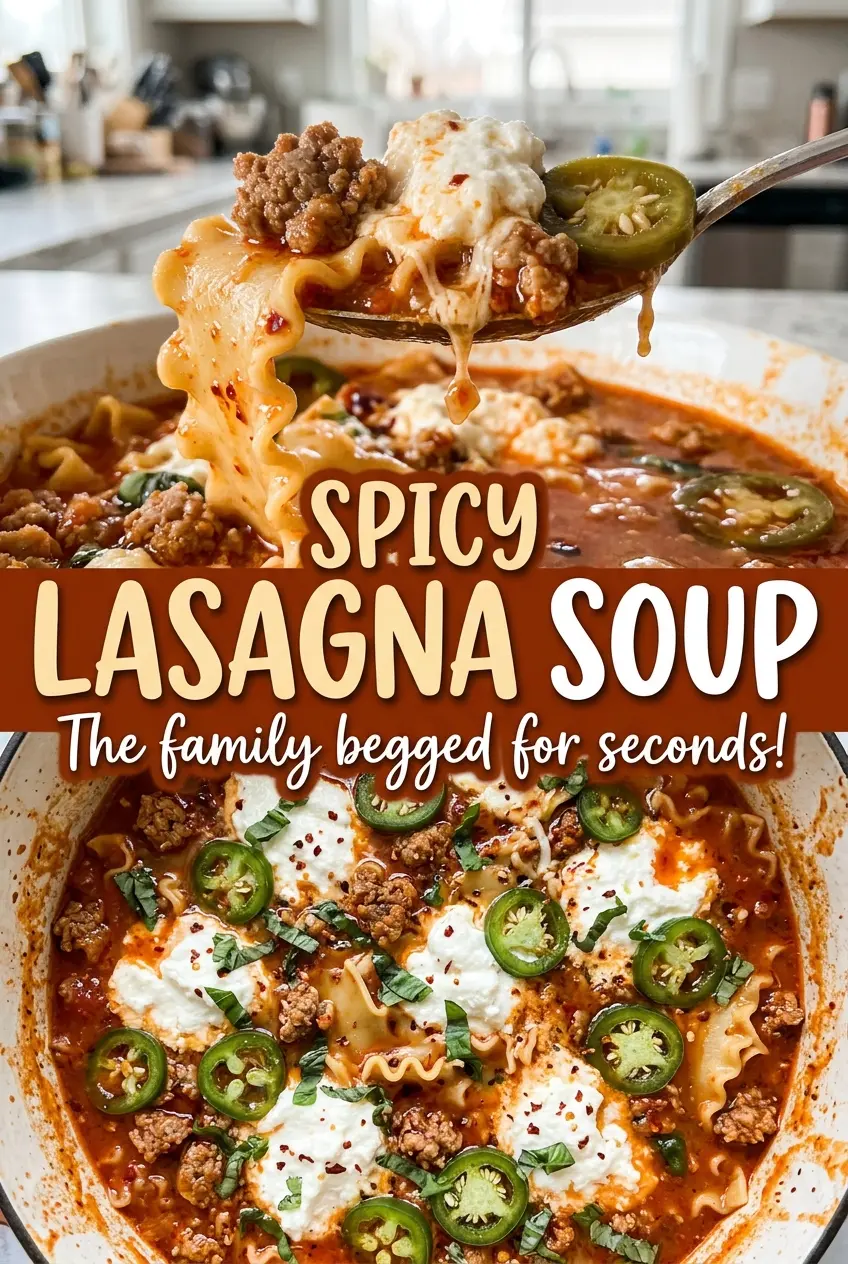
Spicy Lasagna Soup
Ingredients
Equipment
Method
- Brown hot Italian sausage in a large pot over medium-high heat, then drain excess fat. Keep browning until sausage is cooked through and crumbly.
- Sauté diced onion for 4 minutes, stirring, until softened. Add minced garlic, minced jalapeños, and tomato paste, then cook 2 minutes.
- Stir in red pepper flakes, smoked paprika, and cayenne, then cook for 1 minute. The mixture should look fragrant and slightly darker.
- Add crushed tomatoes, diced fire-roasted tomatoes, chicken broth, and Italian seasoning, then bring to a boil. Keep the pot at a steady boil before the next step.
- Add broken lasagna noodles and simmer for 10-12 minutes, stirring occasionally, until tender. The soup should thicken slightly as the noodles soften.
- Season the soup with salt and pepper to taste. Adjust heat by tasting the broth before serving.
- Mix ricotta, mozzarella, parmesan, and fresh basil to make a cooling cheese dollop. Serve each bowl with a drizzle of chili oil and the cooling ricotta dollop on top.