The beef should hiss when it hits the hot Dutch oven, then develop a deep brown crust before you turn it. If the pieces are damp or crowded, they steam instead, and the finished broth misses that savory depth. I brown the chuck in batches for this Scottish Beef Stew, then build the onion-and-broth base right in the same pot.
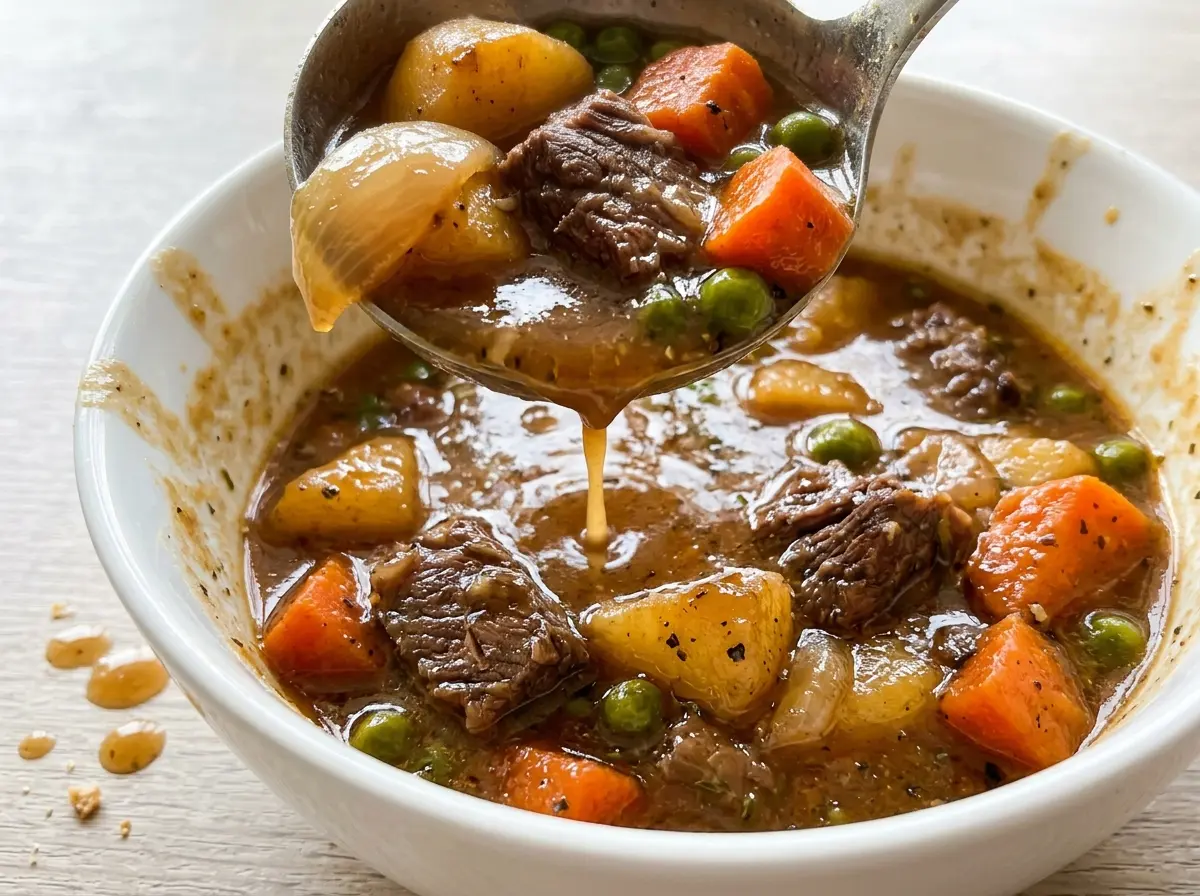
Cooking the flour briefly with the onions gives the broth body without leaving a raw, floury taste. I stir the broth in gradually and scrape up the browned bits as I go; they dissolve into the liquid and give every spoonful a slow-cooked, beefy richness. With barley, potatoes, carrots, and rutabaga tucked into the pot, it’s a full, warming bowl with tender beef and a broth that clings to the vegetables.
Kitchen Note
Rinse the pearl barley before it goes into the pot. It clears away loose surface starch, so the broth thickens gradually as the barley cooks instead of turning pasty.
Save this Scottish Beef Stew for a cold evening when you want tender chuck, chewy barley, and a rich broth from one pot.
Why the Potatoes Go In After the Barley
Barley and potatoes need different amounts of time in the pot. The barley joins the carrots and rutabaga first, then simmers for 20 to 25 minutes before the potatoes go in. That gives the grains time to soften without asking the potatoes to sit through the entire cook and collapse into the broth.
Adding the potatoes for their own final 20 to 25 minutes helps them stay in distinct chunks while still turning tender. It also gives you two useful checks on the stew: the barley should be tender, not chalky in the center, and the potatoes should yield when pierced without breaking apart at a touch. Keep the pot covered and at a gentle simmer through both stages. A hard boil can knock the edges off the potatoes and make the broth cloudier than it needs to be.
This staggered timing matters because the stew has more than one kind of “done.” The beef needs the long, slow simmer to relax; the barley needs enough time to soften; the potatoes need only the last stretch. Let each ingredient have its turn, and the finished bowl keeps its hearty mix of tender pieces rather than becoming one thick, indistinct pot.
Why Chuck, Pearl Barley, and Rutabaga Belong in the Same Pot
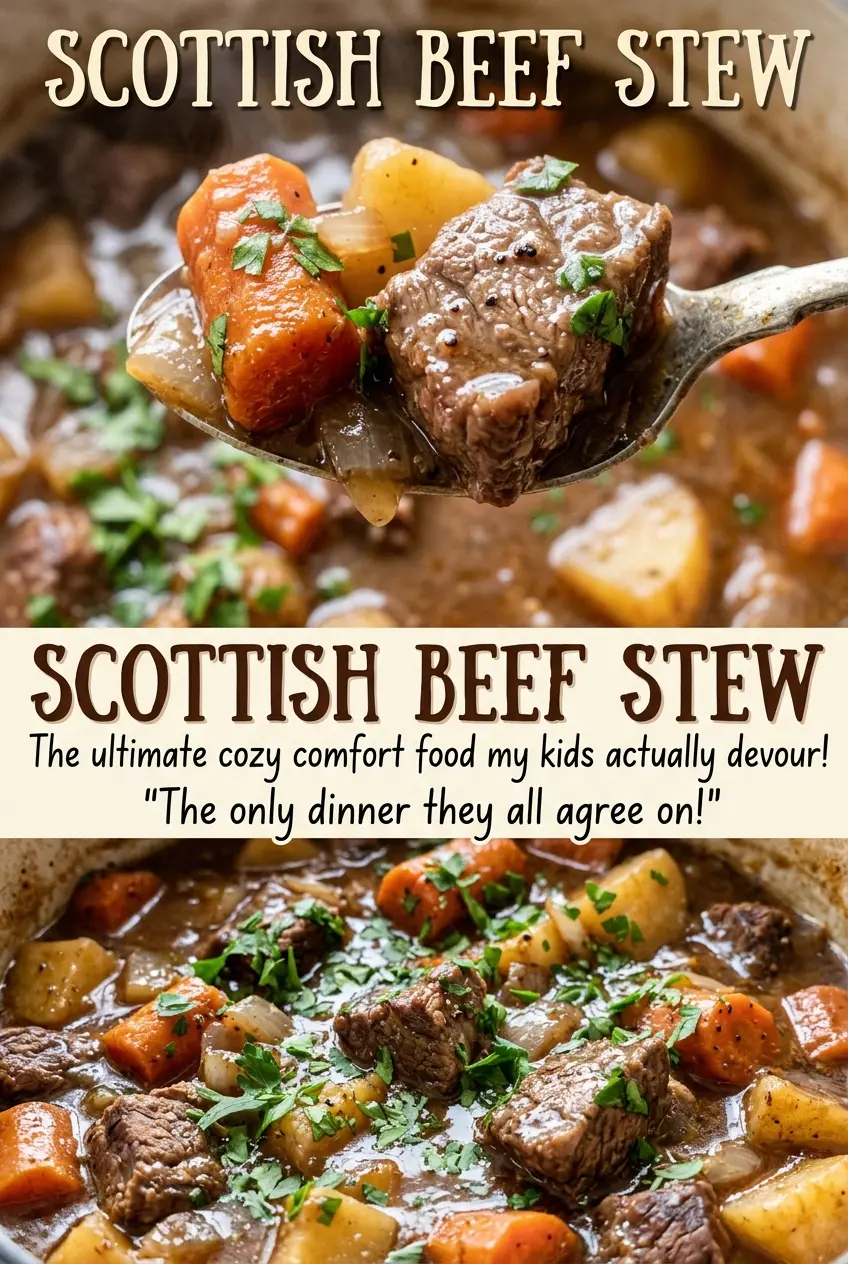
- Beef chuck — Chuck has connective tissue and enough fat to turn tender during a long, gentle simmer, while also giving the broth a deep beef flavor. Choose pieces with some marbling rather than very lean cubes. Boneless short ribs cut into similarly sized chunks are a rich substitute, though they’ll make the broth fattier.
- Pearl barley — Pearl barley brings a pleasantly chewy bite and releases enough starch to give the broth a little more body. Use pearl barley rather than hulled barley; hulled barley takes longer to soften and won’t follow the same timing. You can leave the barley out, but the stew will have a thinner broth and no grainy, tender bites.
- Rutabaga — Its mild sweetness and earthy flavor balance the beef, and its firm flesh holds up through a long simmer. Pick one that feels heavy for its size, peel it well, and cut it evenly so the pieces cook at the same pace. If you can’t find rutabaga, use peeled parsnip in one-inch pieces and add it with the potatoes; it’s sweeter and will be softer.
- Yukon Gold potatoes — Yukon Golds soften into creamy centers but generally keep their shape in a stew. Red potatoes are a reliable swap; cut them into the same-size chunks and use the same timing for a slightly firmer, waxier bite. Avoid tiny pieces, which can break down before the barley is tender.
- Flour and beef broth — The flour thickens the broth, while low-sodium beef broth lets you control the seasoning. A 1:1 gluten-free flour blend works in place of the all-purpose flour, and unsalted beef stock can replace the broth at the same volume if that’s what you have.
Building the Broth Before the Long Simmer
Browning the Chuck in Batches
Pat the beef dry, then season it with 1 teaspoon of the salt and the black pepper. Heat the vegetable oil in a 6-quart Dutch oven over medium-high heat, and brown the beef in batches for about 8–10 minutes total. Look for browned surfaces rather than gray, wet-looking meat. Transfer each batch to a plate as you go.
Turning the Onion into a Stew Base
Add the chopped onion to the pot and cook over medium heat for 5–6 minutes, stirring occasionally. It should soften and pick up some color from the pot, not scorch. Sprinkle in the flour and stir for 1 minute so it coats the onion. Gradually stir in the broth, scraping the browned bits from the bottom until they’re loosened into the liquid.
Letting the Chuck Soften First
Return the beef and any accumulated juices to the pot, then stir in the remaining ½ teaspoon salt, thyme, and bay leaves. Bring the liquid to a gentle simmer over medium heat; it should bubble lightly rather than boil hard. Cover the pot, reduce the heat to low, and simmer for 1½–2 hours, until the beef is nearly fork-tender. Stir in the barley, carrots, and rutabaga, cover again, and simmer over low heat for 20–25 minutes.
Finishing with Potatoes
Add the potato chunks, cover, and simmer over low heat for another 20–25 minutes. The potatoes and barley should be tender, and the beef should yield easily to a fork. If the potatoes still feel firm, give them a little more time over low heat rather than turning up the burner. Remove the bay leaves and let the stew rest off the heat for 10 minutes before serving.
Two Ways to Adapt This Pot of Stew
Make the Stew Gluten-Free
Use a 1:1 gluten-free flour blend in place of the all-purpose flour, choose gluten-free beef broth, and leave out the pearl barley. The stew keeps its beef-and-root-vegetable character, but the broth will be less thick and you’ll lose the barley’s chewy texture.
Use Red Potatoes for a Firmer Bite
Replace the Yukon Gold potatoes with red potatoes cut into the same-size chunks. Their waxier texture holds together well in the broth, so the finished stew has more distinct potato pieces and a slightly firmer bite.
Storage and Reheating
- Refrigerator: Store in a covered container for 3–4 days. The barley will continue to absorb broth, so the stew will thicken as it sits.
- Freezer: Freeze in airtight portions for up to 3 months. The potatoes may be softer or slightly grainy after thawing, but the stew remains good to eat.
- Reheating: Warm gently on the stovetop, stirring now and then, and add a splash of broth if it’s too thick. Reheat leftovers to 165°F; avoid a hard boil, which can break up the potatoes.
Questions That Come Up While the Stew Simmeres
Scottish Beef Stew
Ingredients
Equipment
Method
- Pat the beef dry and season it with 1 teaspoon salt and the pepper.
- Heat the oil in a 6-quart Dutch oven over medium-high heat and brown the beef in batches, about 8–10 minutes total; transfer it to a plate.
- Add the onion to the pot and cook over medium heat for 5–6 minutes, stirring occasionally.
- Sprinkle in the flour and cook, stirring, for 1 minute.
- Gradually stir in the broth, scraping up the browned bits.
- Add the beef and any accumulated juices, the remaining 1/2 teaspoon salt, thyme, and bay leaves.
- Bring to a gentle simmer over medium heat.
- Cover the pot, reduce the heat to low, and simmer for 1 1/2–2 hours, until the beef is nearly fork-tender.
- Stir in the barley, carrots, and rutabaga.
- Cover and simmer over low heat for 20–25 minutes.
- Add the potatoes and cover.
- Simmer for 20–25 minutes, until the potatoes and barley are tender and the beef is fork-tender.
- Remove the bay leaves and let the stew rest off the heat for 10 minutes before serving.