The top of pumpkin cornbread can look ready before the center has finished setting, and that soft middle is part of what makes this version tender instead of dry. I wanted a square that still tastes like cornbread, not pumpkin cake, with the pumpkin keeping the crumb moist and cinnamon and nutmeg adding a gentle warmth. The result is lightly sweet, golden on top, and easy to cut into nine hearty pieces.
I keep the flavors quiet enough that the cornmeal still comes through. A little brown sugar rounds out the earthy pumpkin without turning the whole pan into dessert. I like a piece alongside a bowl of chili or soup, but it’s just as good warm from the pan with its tender, lightly grainy crumb.
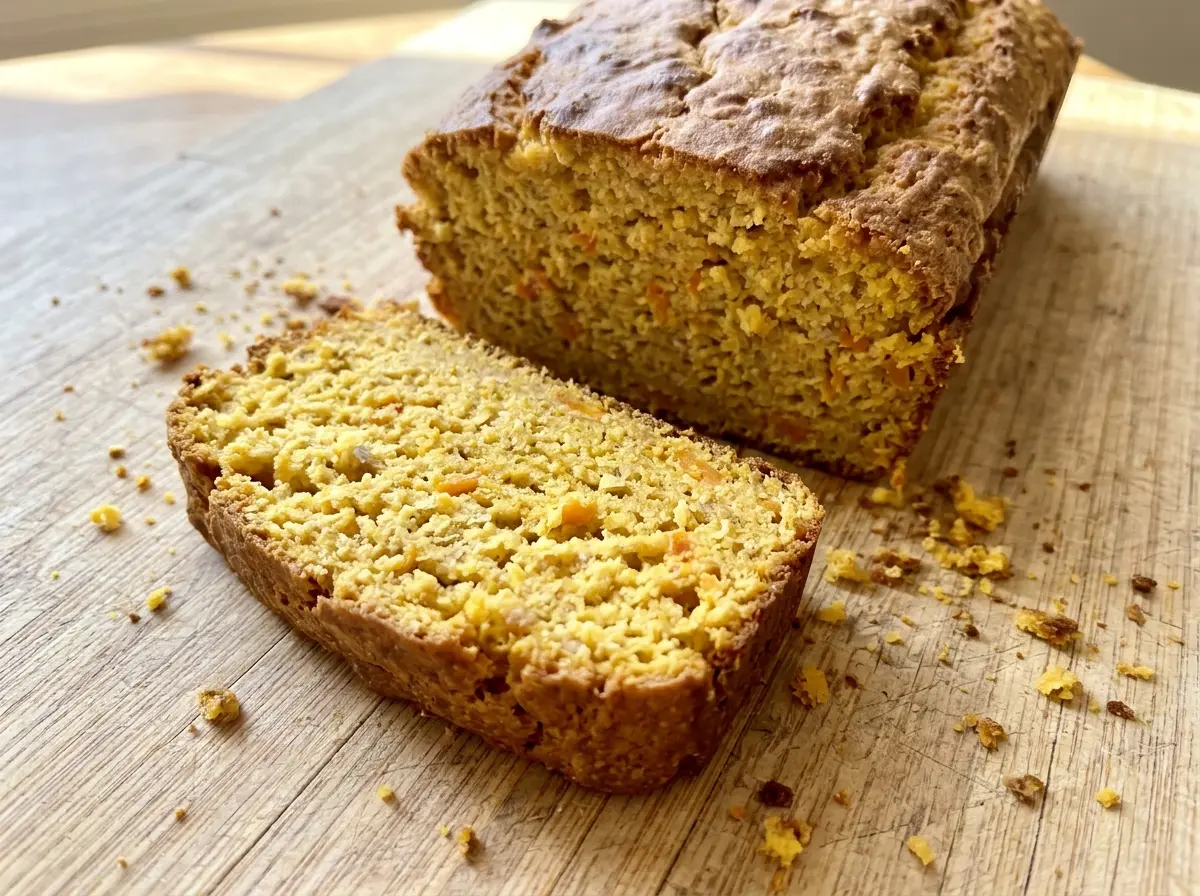
Kitchen Note
Let the melted butter cool until it’s just warm before whisking it with the eggs. Butter that’s still hot can partially cook the eggs, leaving little flecks in a mixture that should be smooth.
Save this pumpkin cornbread for a golden, tender square with a gentle cinnamon-and-nutmeg warmth.
Why Brown Sugar Keeps Pumpkin Cornbread From Tasting Like Cake
Pumpkin and cornmeal can pull the texture in opposite directions. Pumpkin brings moisture and a soft, earthy quality, while cornmeal gives the bite its familiar grain. Brown sugar helps the two meet in the middle: its molasses notes add a little depth and keep the sweetness warm rather than sharp. The goal isn’t a fluffy pumpkin cake with cornmeal stirred through it; it’s cornbread with a softer crumb and a quiet hint of spice.
That balance is why I don’t push the sugar or spices too hard. Cinnamon and nutmeg should register as warmth, not take over the corn flavor. The brown sugar also adds enough sweetness to make the pumpkin feel at home without making the squares taste like a breakfast cake. Keep the flavor proportions steady if you want the cornmeal to remain the first thing you notice.
What Pumpkin, Cornmeal, and Buttermilk Each Bring to the Batter
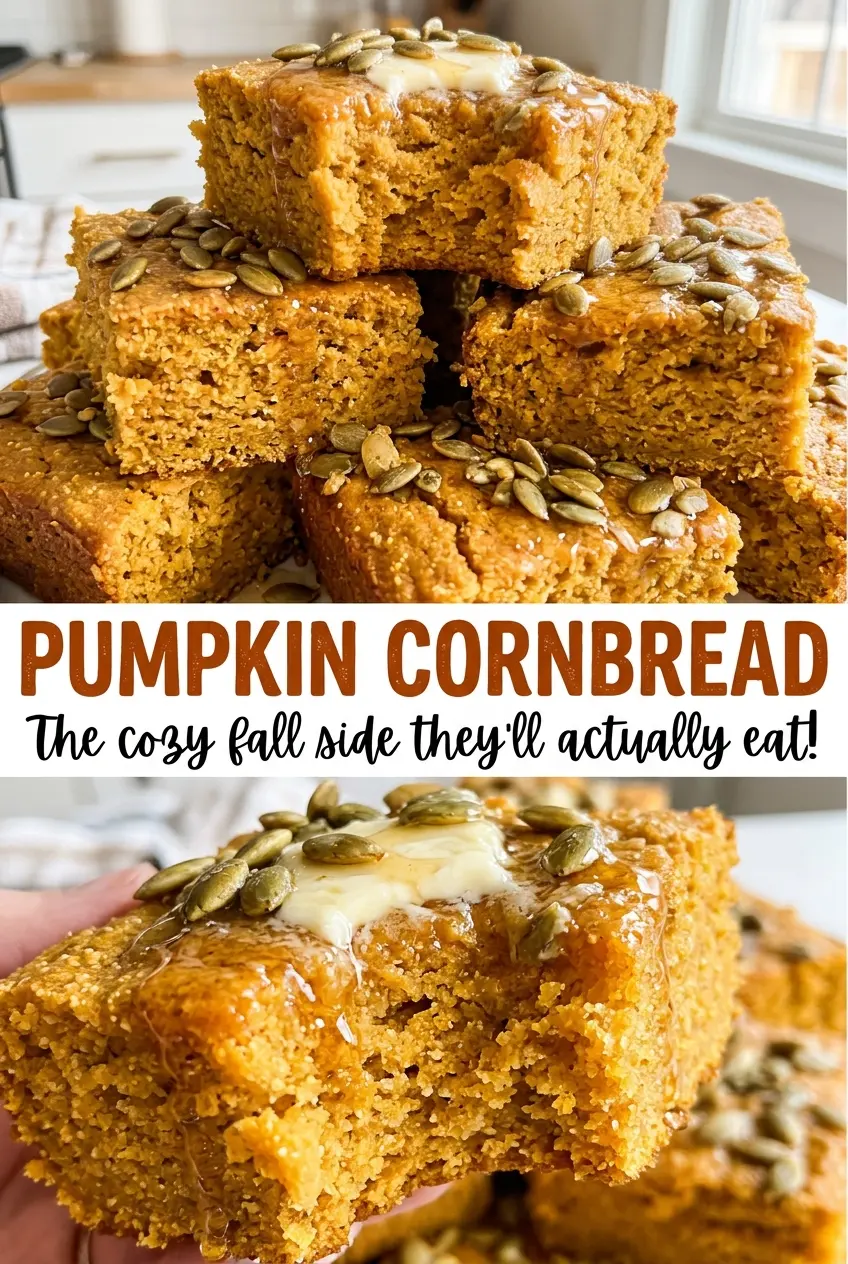
- Yellow cornmeal — It gives the squares their distinct corn flavor and lightly grainy bite. A standard grocery-store cornmeal is fine; white cornmeal works in the same quantity if that’s what you have, though the baked color will be paler.
- Canned pumpkin puree — Pumpkin adds moisture and earthy flavor, so choose a thick, plain puree rather than a watery one. Plain sweet potato puree can stand in at the same volume; it makes the flavor sweeter and less distinctly pumpkin.
- Buttermilk — Its acidity reacts with the baking soda and helps keep the crumb tender. If you’re out, acidify regular milk with lemon juice at about one tablespoon per cup, let it stand until slightly curdled, then use the same volume as the buttermilk.
- All-purpose flour — Flour gives the batter enough structure to hold together around the cornmeal and pumpkin. It’s doing a different job from the cornmeal, so swapping in more cornmeal won’t give you the same soft, cohesive crumb.
- Eggs and unsalted butter — The eggs help the squares set, while butter adds richness. A regular supermarket unsalted butter works well here; there’s no need for a specialty butter. Eggs don’t have a clean swap that keeps this same texture, so I wouldn’t count on an egg replacer to produce an identical crumb.
Mixing and Baking Pumpkin Cornbread Without a Heavy Center
Whisk the dry ingredients evenly
Heat the oven to 400°F and coat a 9-inch square baking pan with nonstick cooking spray. In a large bowl, whisk together the flour, cornmeal, brown sugar, baking powder, baking soda, salt, cinnamon, and nutmeg. Break up any brown sugar clumps as you whisk so they don’t leave concentrated sweet spots in the finished squares. A thorough dry mix also spreads the leaveners and spices through the batter before any liquid goes in.
Bring the wet mixture together, then stop stirring
In a medium bowl, whisk the eggs, pumpkin puree, buttermilk, and slightly cooled melted butter until smooth. Pour that mixture into the dry ingredients and stir just until no dry streaks remain. Don’t keep working the batter to make it perfectly smooth; a few small lumps are better than a tough, overmixed crumb. Spread the batter evenly in the prepared pan so it bakes at a consistent pace from edge to center.
Bake for a golden top and moist crumbs
Bake for 25 to 30 minutes, until the top is golden and a toothpick inserted in the center comes out with a few moist crumbs. A toothpick coated in wet batter means the center needs more time; check again after a short interval rather than pulling the pan early. Once it’s baked, cool the cornbread in the pan for 10 minutes before cutting. That brief rest lets the tender crumb settle enough to slice cleanly.
Three Simple Ways to Change the Flavor or Make It Dairy-Free
A dairy-free pumpkin cornbread
Replace the buttermilk with 1/2 cup unsweetened soy milk mixed with 1 1/2 teaspoons lemon juice; let it stand for 5 minutes before using. Replace the melted butter with the same amount of melted vegan butter. The crumb stays tender, though it has a slightly less buttery flavor.
A deeper molasses note
Use dark brown sugar in place of the light brown sugar, keeping the quantity the same. The squares will taste a little richer and more molasses-forward, with a slightly deeper color.
Swap nutmeg for ground ginger
Replace the nutmeg with the same amount of ground ginger for a brighter, sharper spice note. Cinnamon still gives the cornbread warmth, while ginger makes the pumpkin taste a little more pronounced.
Storage and Reheating
- Refrigerator: Keep the cornbread in an airtight container for up to 4 days. The crumb firms up when chilled.
- Freezer: Once completely cool, wrap individual pieces and freeze for up to 2 months. Thaw a piece in the refrigerator or at room temperature.
- Reheating: Warm a piece in the microwave in short bursts until just warm. Heating it too long dries the tender crumb.
Questions That Come Up When Baking Pumpkin Cornbread
Pumpkin Cornbread
Ingredients
Equipment
Method
- Heat the oven to 400°F.
- Coat a 9-inch square baking pan with nonstick cooking spray.
- In a large bowl, whisk the flour, cornmeal, brown sugar, baking powder, baking soda, salt, cinnamon, and nutmeg.
- In a medium bowl, whisk the eggs, pumpkin puree, buttermilk, and melted butter until smooth.
- Pour the pumpkin mixture into the flour mixture and stir just until no dry streaks remain.
- Spread the batter evenly in the prepared pan.
- Bake for 25 to 30 minutes, until the top is golden and a toothpick inserted in the center comes out with a few moist crumbs.
- Cool in the pan for 10 minutes before cutting and serving.