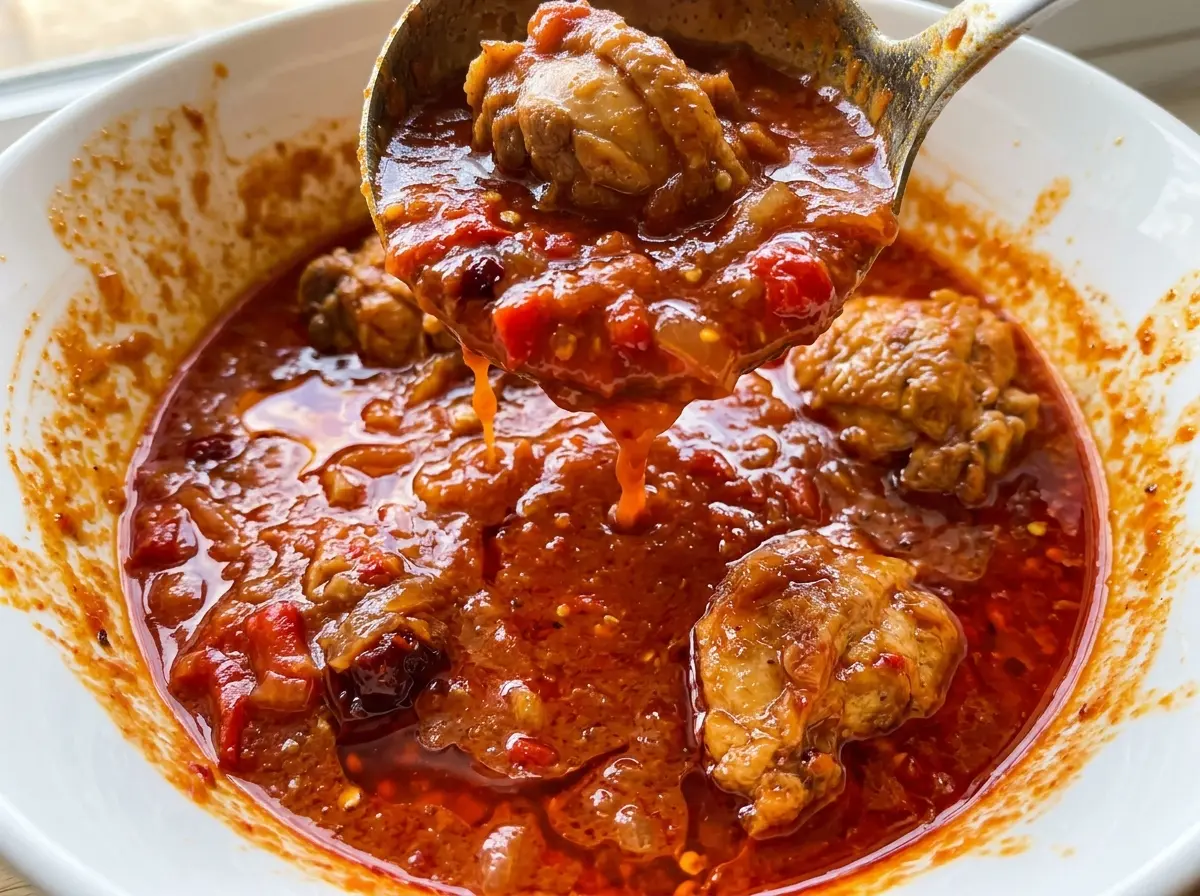
When the blended tomato and pepper mixture first lands in hot oil, it sputters and looks far too loose to coat anything. That’s the part of Nigerian Chicken Stew that asks for patience: the vegetables need time in the Dutch oven before the chicken returns. Once the sauce thickens, the oil peeks around its edges, and each piece gets a deep red coating, the pot has the texture I want—not soup, not thin gravy.
Bone-in thighs and drumsticks give the stew a savory base, while curry powder and thyme bring warmth without hiding the tomato and pepper. I simmer the chicken first, then use a measured portion of its cooking liquid to finish the sauce. The skin softens as it cooks, and the finished stew is rich enough to cling to the chicken. This makes six servings for a table that wants something hearty and full of character.
Kitchen Note
The skin won’t stay crisp in this stew; it softens during the covered simmer and the sauce finish. I leave it on because it adds richness to the cooking liquid and helps keep the chicken pieces intact.
Save Nigerian Chicken Stew for a night when you want tender chicken tucked into a thick, warmly spiced tomato-pepper sauce.
Why the Chicken Broth Waits Until the Tomato Base Is Thick
Fresh Roma tomatoes and red bell peppers carry plenty of water, and blending breaks them down all at once. If the chicken and its cooking liquid go into the pot while that puree is still loose, the base has to reduce around them and the finished stew can stay thin. I cook the puree on its own first, until it has thickened and the oil begins to show at the edges.
That edge of oil is a useful cue, not a problem to fix. It tells you the vegetable mixture has cooked down enough to make a concentrated sauce. The clock helps, but produce and burners vary; look for a slower-moving puree that no longer looks watery. Add the chicken and reserved liquid after that change, and the final simmer brings the sauce and meat together without asking the tomatoes to do all their reducing at the end.
Stirring as the base cooks keeps the bottom from scorching while the surface loses moisture. If you rush this stage, you can end up with a thinner sauce and a sharper, less rounded tomato taste. The long, uncovered cook is what turns the blended vegetables into the stew’s coating sauce.
The Ingredients That Build Nigerian Chicken Stew’s Red, Full-Bodied Base

- Bone-in chicken thighs and drumsticks — These pieces hold up through both simmering stages and contribute body to the cooking liquid. Choose fresh pieces, but there’s no need to pay extra for a particular brand; the bone-in cut matters more here than premium packaging.
- Roma tomatoes — Their firm flesh gives the blended base a good starting point for reduction. Use ripe tomatoes without soft or spoiled spots. Canned tomatoes have a different texture and amount of liquid, so fresh Roma tomatoes are the dependable choice for this method.
- Red bell peppers — They round out the tomato’s acidity and give the sauce its red color and natural sweetness. Use firm peppers and remove the stems and seeds before blending; roughly chopped pieces are all you need.
- Scotch bonnet or habanero — Either pepper brings the distinct heat that sets this stew apart. The recipe uses a stemmed, seeded pepper, so remove both before blending; choose between the two based on which variety you have available.
- Curry powder and dried thyme — These season both the chicken and the sauce, so the flavor carries through the whole pot. Fresh, fragrant spices are worth choosing, but an everyday curry powder works well; there’s no need for an expensive specialty blend.
- Canola oil and tomato paste — Canola oil gives the vegetable base a neutral cooking fat, while tomato paste deepens its tomato character. Use a fresh, smoothly blended paste rather than one that has dried out in an open container.
How to Cook the Chicken First and Reduce the Stew Base
Season and Gently Simmer the Chicken
Put the chicken in a 6-quart Dutch oven and season it with 1 teaspoon kosher salt, 1 teaspoon curry powder, 1/2 teaspoon dried thyme, and 1/2 teaspoon black pepper. Add half the onion and 1 cup water, then bring the pot to a simmer over medium-high heat. Cover and simmer gently for 30 to 35 minutes, until the thickest pieces reach 165°F. If the liquid starts bubbling hard, lower the heat so the chicken cooks at a gentle simmer.
Strain the Broth and Blend the Vegetables
Transfer the chicken to a plate and strain the cooking liquid into a measuring cup. Discard the cooked onion, then measure 3/4 cup of the liquid for the stew; set it aside. Blend the Roma tomatoes, red bell peppers, stemmed and seeded Scotch bonnet or habanero, and remaining onion until smooth. A smooth puree cooks evenly and gives the finished sauce a consistent texture.
Cook the Tomato Paste and Reduce the Puree
Heat 1/3 cup canola oil in the Dutch oven over medium heat, stir in 2 tablespoons tomato paste, and cook for 1 minute. Carefully add the blended mixture, keeping your face and hands back as it meets the hot oil. Cook uncovered for 25 to 35 minutes, stirring every 5 minutes, until thickened and the oil begins to show at the edges. Keep the stirring pattern steady so the base cooks down without scorching on the bottom.
Finish the Stew Until the Sauce Clings
Stir in the remaining 1/2 teaspoon kosher salt, 1 teaspoon curry powder, 1/2 teaspoon dried thyme, 1/2 teaspoon black pepper, the bay leaf, the chicken, and the reserved cooking liquid. Simmer uncovered for 15 to 20 minutes, turning the chicken once. The sauce should finish thick enough to cling to the pieces rather than run off immediately. Remove the bay leaf before serving.
Ways to Adjust the Heat and Fit This Stew to Your Table
Leave Out the Hot Pepper for a Milder Pot
For a gentler stew, omit the Scotch bonnet or habanero rather than replacing it with another hot pepper. You’ll lose that sharp chile heat, while the tomato and red bell pepper base still makes a full-flavored sauce.
Choose Habanero Instead of Scotch Bonnet
Use a habanero in place of the Scotch bonnet for a slightly fruitier chile note with plenty of heat. Keep the pepper stemmed and seeded, just as you would with the Scotch bonnet, so the preparation stays the same.
Make It with Gluten-Free Curry Powder
Replace the curry powder with the same amount of a curry powder labeled gluten-free. The method stays unchanged, and the spice blend still seasons both the chicken and the tomato base.
Storage and Reheating
- Refrigerator: Cool the stew in shallow containers and refrigerate within 2 hours. Keep it covered for 3 to 4 days; the sauce may thicken as it chills.
- Freezer: Freeze in airtight containers for up to 3 months. Thaw overnight in the refrigerator before reheating.
- Reheating: Warm gently in a covered saucepan, turning the chicken and stirring the sauce until hot throughout. Avoid a hard boil, which can make the chicken tough and cause the sauce to catch on the bottom.
Questions That Come Up When Making Nigerian Chicken Stew
Nigerian Chicken Stew
Ingredients
Equipment
Method
- Put the chicken in a 6-quart Dutch oven and season with 1 teaspoon salt, 1 teaspoon curry powder, 1/2 teaspoon thyme, and 1/2 teaspoon black pepper.
- Add half the onion and the water, bring to a simmer over medium-high heat, then cover and simmer gently for 30 to 35 minutes, until the thickest pieces reach 165°F.
- Transfer the chicken to a plate and strain the cooking liquid into a measuring cup; discard the cooked onion and measure out 3/4 cup liquid for the stew.
- Blend the tomatoes, bell peppers, Scotch bonnet, and remaining onion until smooth.
- Heat the oil in the Dutch oven over medium heat, stir in the tomato paste, and cook for 1 minute.
- Carefully add the blended mixture and cook uncovered for 25 to 35 minutes, stirring every 5 minutes, until thickened and the oil begins to show at the edges.
- Stir in the remaining 1/2 teaspoon salt, 1 teaspoon curry powder, 1/2 teaspoon thyme, 1/2 teaspoon black pepper, bay leaf, chicken, and reserved cooking liquid.
- Simmer uncovered for 15 to 20 minutes, turning the chicken once, until the sauce is thick and clings to the chicken.