The beef gives a quiet hiss when it hits the hot Dutch oven, and the browned bits left behind are worth keeping. They loosen into the broth later, giving Mulligan Stew its deep, savory base instead of leaving all that flavor stuck to the pot. I brown the chuck in two batches so the pieces have room to color rather than steam against one another.
This is a stew built for vegetables that cook at different speeds. The potatoes, carrots, and celery get a head start; green beans and corn join later, and the peas go in right at the end. That order keeps the potatoes tender without letting the peas turn dull and soft. After a short rest, the broth settles around fork-tender beef and vegetables that still hold their shape.
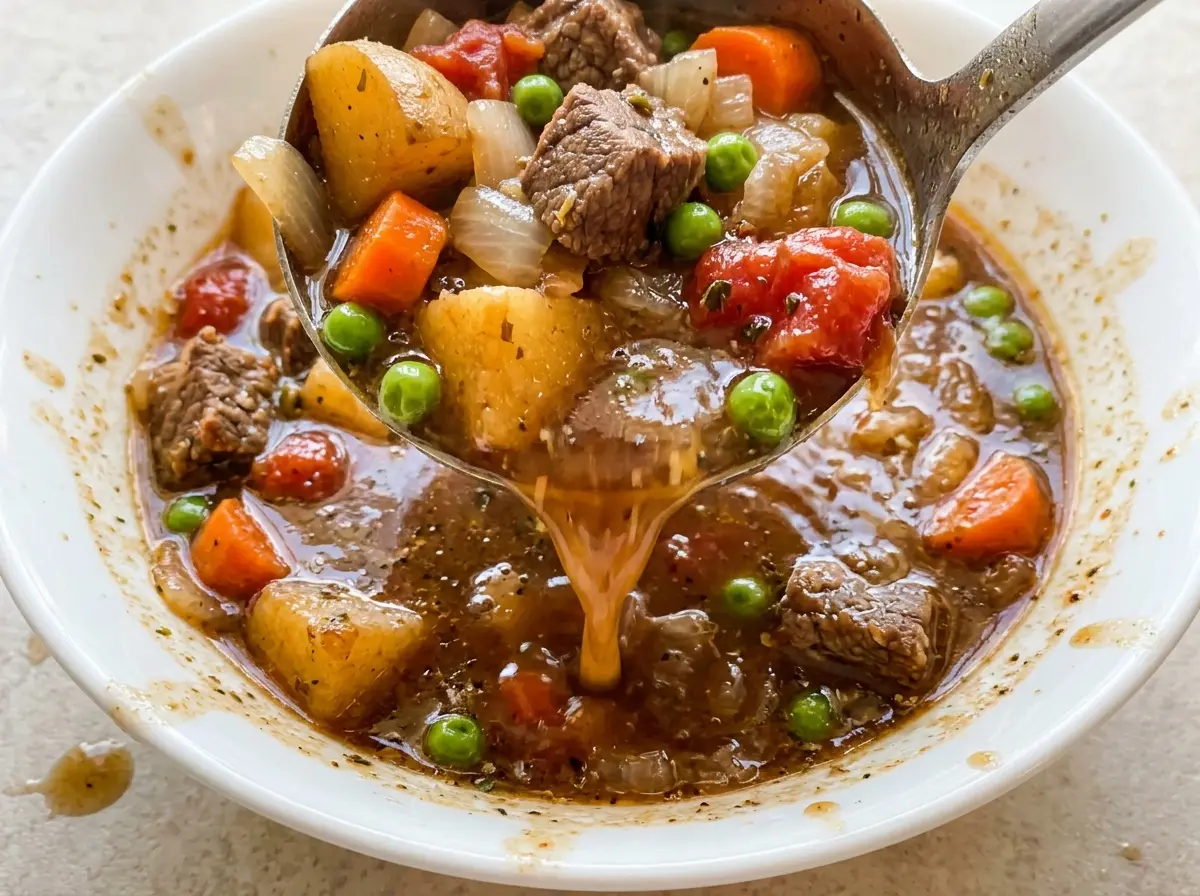
Kitchen Note
Give the finished stew its full 5-minute stand before serving. It gives the broth a moment to settle around the beef and vegetables, and the first ladleful comes out less hurried and splashy.
Save Mulligan Stew for a night when a pot of tender beef and vegetables sounds just right.
Why Mulligan Stew’s Vegetables Can’t All Go In at Once
A pot of stew makes it tempting to add every vegetable together and let them cook until the beef is ready. That’s how you end up choosing between underdone potatoes and peas that have cooked into the broth. These vegetables need different amounts of time: potatoes, carrots, and celery are sturdy enough to simmer first, while green beans and corn need a shorter stretch. Frozen peas need the least time of all.
The beef also has its own schedule. Chuck turns tender during a slow, covered simmer, and that can take longer than the vegetables need. Keeping the beef in the pot by itself with the broth lets it soften without asking the vegetables to wait through the whole cooking time. Once it’s fork-tender, the vegetables go in according to how quickly they cook. You get a stew where each piece is recognizable, instead of a pot that tastes good but has lost all its texture.
The Ingredients That Build Mulligan Stew’s Beefy Broth

- Beef chuck — Its connective tissue softens during the long simmer, giving you tender chunks and a fuller broth. Cut the beef into even 1-inch cubes so the pieces cook at a similar pace. There isn’t a like-for-like substitute among the other ingredients, and there’s no need to buy an expensive steak for a stew that simmers this long.
- Flour and tomato paste — The flour gives the broth body, while tomato paste brings concentrated tomato flavor that a can of diced tomatoes alone won’t provide. Store-brand tomato paste works well here. Stir both into the softened onion before adding liquid so they coat the base instead of leaving floury pockets in the finished stew.
- Beef broth and diced tomatoes — The broth carries the browned beef flavor, and the tomatoes add acidity and texture. Use the juices from the can along with the tomatoes; draining them would leave out part of the liquid and tomato flavor. A standard store-brand beef broth is fine.
- Yukon Gold potatoes — Their creamy texture suits the thick, spoonable broth, and their shape holds up through simmering better than a potato that quickly breaks down. Cut the pieces evenly so they soften together. The stew doesn’t include another ingredient that can do the same job as the potatoes.
- Green beans, corn, and peas — The mix gives the stew different textures and a little sweetness against the beefy broth. Frozen corn and peas are convenient and work as listed; the peas go in at the end so they warm through without spending the whole simmer in the pot. If you’d rather skip peas, leave them out rather than adding an ingredient that changes the stew’s balance.
Building Mulligan Stew in the Right Order
Brown the Chuck in Two Batches
Season the beef with kosher salt and black pepper. Heat 1 tablespoon of vegetable oil in a 6-quart Dutch oven over medium-high heat, then brown half the beef for 4 to 5 minutes, turning it to color several sides. Transfer it to a plate, add the remaining oil and beef, and brown that batch for 4 to 5 minutes before moving it to the plate. If the pot is crowded, the beef won’t brown as well, so keep the batches separate.
Soften the Onion and Build the Base
Add the diced onion to the pot and cook over medium heat for 4 to 5 minutes, stirring occasionally, until softened. Stir in the garlic and cook for 30 seconds, then sprinkle in the flour and stir for 1 minute. Stir in the tomato paste and cook for 1 minute; the mixture should look thick and brick-red, not dusty. Gradually stir in the beef broth, scraping up the browned bits from the bottom as the liquid loosens them.
Simmer Until the Beef Turns Tender
Add the diced tomatoes with their juices, Worcestershire sauce, bay leaf, browned beef, and any juices collected on the plate. Bring the pot to a boil over medium-high heat, then reduce the heat to low and cover it. Simmer for 1 to 1 1/2 hours, stirring occasionally, until the beef is fork-tender. Keep the heat low enough for a gentle simmer; a hard boil can make the liquid reduce too quickly before the beef softens.
Add the Vegetables in Stages
Stir in the potatoes, carrots, and celery, cover the pot, and simmer for 15 to 20 minutes, until the potatoes are beginning to soften. Add the green beans and corn, cover again, and cook for 8 to 10 minutes, until the vegetables are tender. Stir in the frozen peas and simmer uncovered for 5 minutes, until heated through. Remove the bay leaf before serving.
Simple Ways to Change the Vegetable Mix or Broth
A Lower-Starch Bowl
For a lower-starch version, leave out the potatoes and corn. The broth will feel less full-bodied without the potatoes, and you’ll have fewer sweet vegetable bites, but the beef, carrots, celery, green beans, and peas still make a hearty stew.
A Green-Bean-Forward Pot
Replace the frozen peas with an equal amount of cut green beans from the ingredient list. Add those extra beans with the original green beans so they have time to become tender. The result is less sweet and a little firmer than the version with peas.
A Lighter, Looser Broth
Leave out the flour if you prefer a thinner broth. You’ll lose some of the stew’s body, but the tomato paste and slow-simmered beef still give the liquid plenty of savory character. Don’t sprinkle flour straight into the finished pot; it won’t blend in as smoothly as it does when stirred into the onion mixture.
Storage and Reheating
- Refrigerator: Store leftovers in a covered container for 3 to 4 days. The potatoes may soften a little more as they sit.
- Freezer: Freeze in airtight containers for up to 3 months. The beef freezes well, though the potatoes may be softer after thawing.
- Reheating: Warm gently on the stovetop, stirring occasionally, until the stew reaches 165°F. Avoid a hard boil, which can break up the vegetables.
Questions That Come Up While Mulligan Stew Simmer
Mulligan Stew
Ingredients
Equipment
Method
- Season the beef with the kosher salt and black pepper.
- Heat 1 tablespoon of the oil in a 6-quart Dutch oven over medium-high heat.
- Brown half the beef for 4 to 5 minutes, turning to brown several sides.
- Transfer the beef to a plate.
- Add the remaining oil and beef, and brown for 4 to 5 minutes.
- Transfer the beef to the plate.
- Add the onion to the pot and cook over medium heat for 4 to 5 minutes, stirring occasionally, until softened.
- Add the garlic and cook for 30 seconds.
- Sprinkle the flour over the onion mixture and stir for 1 minute.
- Stir in the tomato paste and cook for 1 minute.
- Gradually stir in the beef broth, scraping up browned bits from the bottom of the pot.
- Add the diced tomatoes with their juices, Worcestershire sauce, bay leaf, beef, and any accumulated juices.
- Bring to a boil over medium-high heat.
- Reduce the heat to low, cover, and simmer for 1 to 1 1/2 hours, stirring occasionally, until the beef is fork-tender.
- Stir in the potatoes, carrots, and celery.
- Cover and simmer for 15 to 20 minutes, until the potatoes are beginning to soften.
- Stir in the green beans and corn.
- Cover and simmer for 8 to 10 minutes, until the vegetables are tender.
- Stir in the frozen peas and simmer uncovered for 5 minutes, until heated through.
- Remove the bay leaf.
- Let the stew stand for 5 minutes before serving.