Flaky salmon and a rich sun-dried tomato cream sauce make the kind of dinner that disappears fast and gets talked about the next day. The salmon stays tender under a glossy, savory sauce that clings to every bite, and the whole dish lands somewhere between weeknight practical and date-night special. It tastes polished without asking for much time, which is exactly why it earns a permanent place in the rotation.
What makes this version work is the sequence. The salmon gets a hard sear first, so you build color and flavor before the sauce ever hits the pan. Then the same skillet carries the garlic, cream, broth, Parmesan, and chopped sun-dried tomatoes, which means the sauce picks up every bit of seasoning left behind from the fish. That little bit of browned fond is where the depth comes from.
Below, I’ll walk through the part that matters most: keeping the salmon from overcooking while the sauce thickens enough to spoon over the top. I’ve also included the swaps that still keep the sauce balanced if you need a dairy-free or lighter variation.
The salmon stayed flaky and the sauce thickened up right in the skillet without breaking. My husband scraped the pan clean and asked if I could make it again next week.
Save Marry Me Salmon for a restaurant-style dinner with flaky fish, sun-dried tomatoes, and a silky Parmesan cream sauce.
The Trick to Keeping the Salmon Tender While the Sauce Finishes
The biggest mistake in salmon with cream sauce is letting the fish sit in the pan too long after the sauce is done. Salmon keeps cooking from residual heat, and once it goes from just-done to dry, there’s no fixing it. Pull it from the skillet when it flakes at the edges but still looks glossy in the center, then let the sauce do the last minute or two of warming through.
The other place people go wrong is rushing the sauce over high heat. Cream, broth, and Parmesan need a calm simmer, not a boil. High heat can separate the dairy and turn the texture grainy instead of silky. A gentle simmer thickens the sauce enough to coat a spoon and cling to the salmon without getting heavy.
- Salmon fillets — Use fillets that are similar in thickness so they finish at the same time. Skin-on or skinless both work, but skin-on gives you a little more protection if your skillet runs hot.
- Sun-dried tomatoes — These bring concentrated sweetness and tang that fresh tomatoes can’t match here. If yours are packed in oil, drain them well so the sauce doesn’t turn greasy.
- Heavy cream — This is what gives the sauce its body and keeps it from splitting. Half-and-half can work in a pinch, but the sauce will be thinner and a little less forgiving.
- Parmesan — Grated Parmesan melts into the sauce and sharpens the flavor. Buy a block and grate it yourself if you can; pre-shredded cheese often has anti-caking agents that make the sauce less smooth.
Getting the Sear Before the Cream Goes In
Seasoning and Searing the Salmon
Pat the salmon dry before seasoning it. Moisture on the surface is what keeps it from browning, and browning is what gives you that savory crust. Heat the oil until it shimmers, then lay the fillets in the pan and leave them alone long enough to form a golden crust. If they stick when you try to turn them, they’re not ready yet.
Building the Sauce in the Same Skillet
Once the salmon comes out, lower the heat and add the garlic for only about 30 seconds. Any longer and it can turn bitter in the residual heat. Pour in the cream and broth, scrape up the browned bits from the bottom, then stir in the tomatoes, Parmesan, Italian seasoning, and the rest of the salt and pepper. The sauce should bubble gently and thicken enough to coat the back of a spoon.
Finishing Without Overcooking the Fish
Return the salmon to the pan and spoon the sauce over the top. You only need a minute or two here, just long enough for the fish to warm back through. If the salmon was already fully cooked when you removed it, this finish is about reconnecting it with the sauce, not cooking it again. Basil goes on at the very end so it stays bright instead of turning dark in the heat.
Three Ways to Make It Fit What You’ve Got
Dairy-Free Version
Swap the heavy cream for full-fat coconut cream and use a dairy-free Parmesan-style cheese or leave the cheese out entirely. The sauce will taste a little different, with a subtle coconut note if you use coconut cream, but it still turns rich and spoonable.
Lighter Sauce, Still Creamy
Use half-and-half instead of heavy cream if you want something a little lighter. Keep the heat low and let it simmer a touch longer so it thickens enough to cling to the salmon; if you rush it, the sauce stays thin.
Gluten-Free by Default
This recipe is naturally gluten-free as written, as long as your broth is certified gluten-free. That’s the only ingredient I’d double-check if you’re cooking for someone with celiac disease.
Turn It Into a Pasta Dinner
Serve the salmon and sauce over linguine, fettuccine, or even orzo. A splash of pasta water helps the sauce coat the noodles, and the extra starch gives the whole dish a silkier finish.
Storage and Reheating
- Refrigerator: Store leftovers in an airtight container for up to 2 days. The salmon will firm up a bit, but the sauce still tastes great.
- Freezer: I don’t recommend freezing this one. Cream sauces can separate after thawing, and the salmon texture gets dry.
- Reheating: Warm gently in a covered skillet over low heat with a splash of broth or cream. Skip the microwave if you can; it tends to overcook the fish and split the sauce.
Answers to the Questions Worth Asking
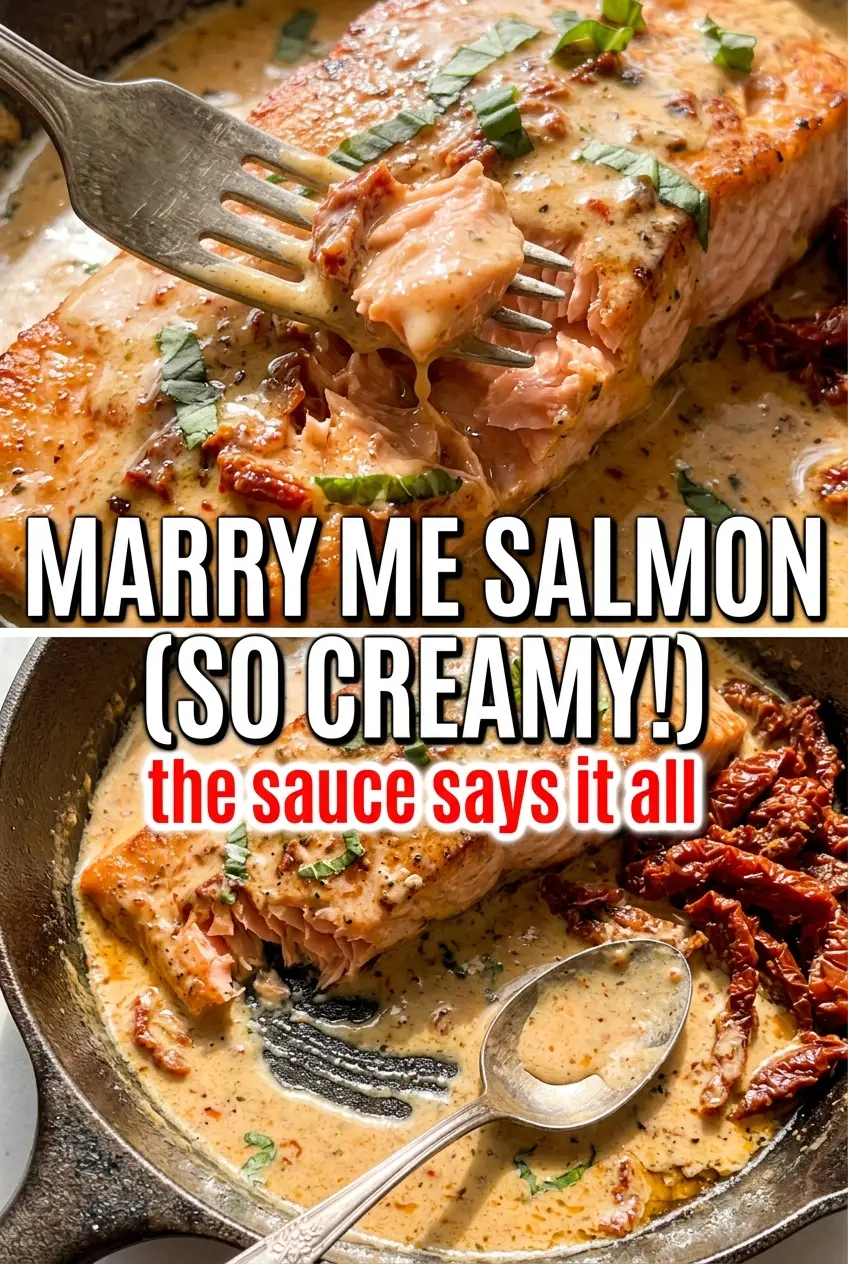
Marry Me Salmon
Ingredients
Equipment
Method
- Season the salmon fillets with half the kosher salt and half the black pepper. Heat the olive oil in a large skillet over medium-high heat until shimmering.
- Sear the salmon for 4 minutes per side, until golden and flaky, then remove and set aside. Keep the juices on the plate—don’t rinse the fish.
- In the same skillet, sauté the minced garlic for 30 seconds. Stir constantly until fragrant, not browned.
- Pour in the heavy cream and chicken broth, scraping up any browned bits. Bring to a gentle simmer.
- Stir in the chopped sun-dried tomatoes, grated Parmesan, Italian seasoning, and the remaining kosher salt and black pepper. Simmer for 3–4 minutes, until thickened and glossy.
- Return the salmon fillets to the skillet and spoon the sauce over the top. Make sure each piece is partially covered with sauce.
- Simmer for 1–2 more minutes, until the salmon is warmed through. Use gentle pressure to check that it flakes easily.
- Garnish with chopped fresh basil and serve immediately. Spoon extra sauce from the skillet over the fish.