A baked russet is ready when a knife slips through the middle without catching, but the payoff comes when you split it open: the fluffy center gives the toppings somewhere to settle without turning into a dense pile. I bake the potatoes right on the oven rack and cook the bacon while they’re in the oven, so both parts are underway together. The steak gets its own very hot skillet and cooks in batches, giving each cube room to brown instead of steam. These loaded baked potatoes with steak bites turn a familiar side into a full, knife-and-fork dinner.
The potatoes go straight onto the rack, not into foil, and the steak gets a quick sear rather than a long cook. Once the potatoes are open, butter and cheddar go onto the warm insides first; sour cream and the savory toppings follow. That order lets the cheese soften against the hot potato, with cool sour cream and crisp bacon in every bite. The finished potato is hearty without feeling like a jumble of toppings.
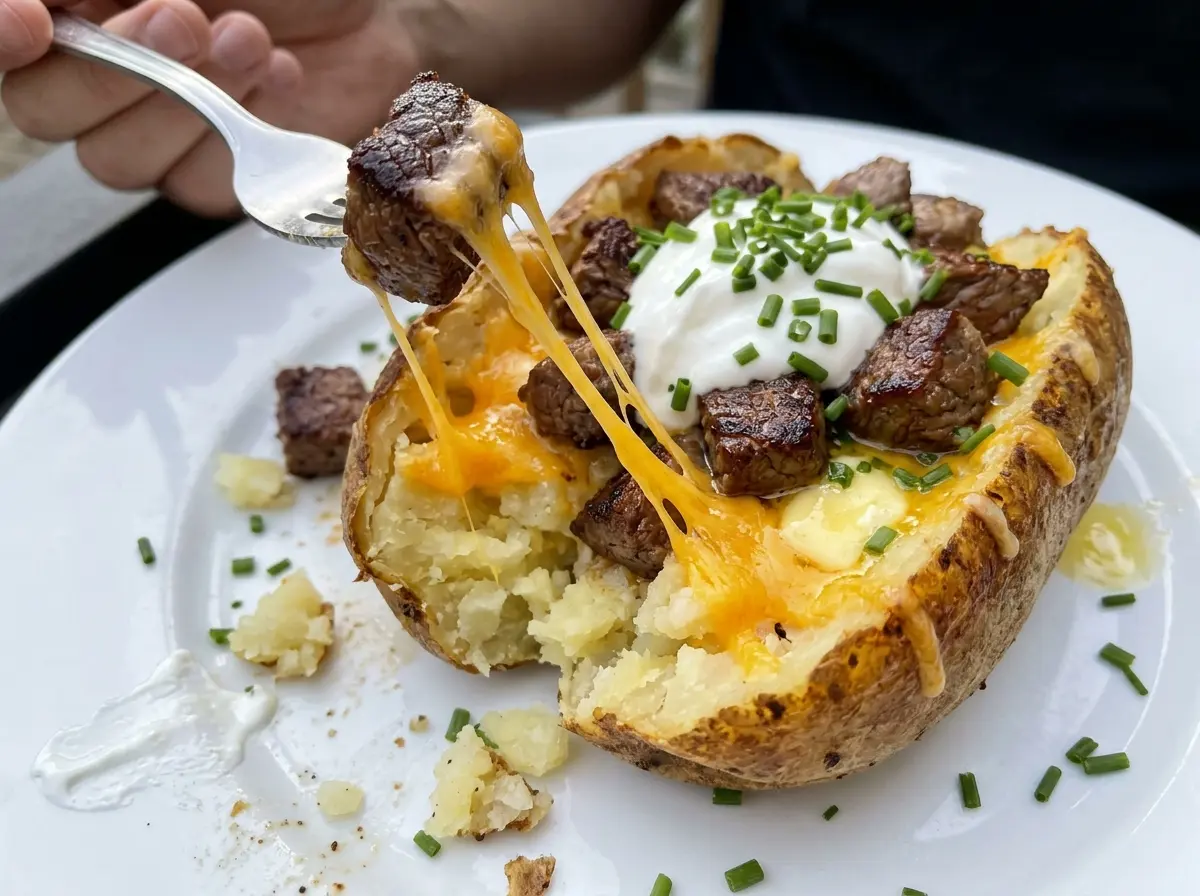
Kitchen Note
Put the butter and cheddar onto the potato as soon as you’ve fluffed the center. The heat softens the cheese before the cooler sour cream goes on, so the toppings stay distinct instead of blending into one heavy layer.
Save these loaded baked potatoes with steak bites for a dinner built around fluffy russets, seared sirloin, sharp cheddar, and crisp bacon.
Why the Russet’s Skin Needs Air Around It
A russet is a good match for a loaded potato because its starchy interior bakes up fluffy and gives butter, cheese, and sour cream room to mingle. A waxier potato tends to have a firmer, denser middle, so the finished dish won’t have quite the same soft contrast with the steak and bacon.
Putting the potatoes directly on the oven rack lets hot air circulate around each one. The skin can dry and bake rather than sitting against a pan, while the inside cooks through. That makes the potato easier to split and fluff, and gives the skin enough structure to support a generous topping without becoming the focus of the meal.
There’s also a practical reason to bake the potatoes whole: the center stays protected as it softens. Prick each potato all over before it goes into the oven, then let the oven do the slow work while you prepare the bacon and steak. A large russet takes longer than a small one, so use the knife test rather than relying on the clock alone. When the knife slides easily into the center, it’s ready for the toppings.
What Russets, Sirloin, and Sharp Cheddar Bring to the Load
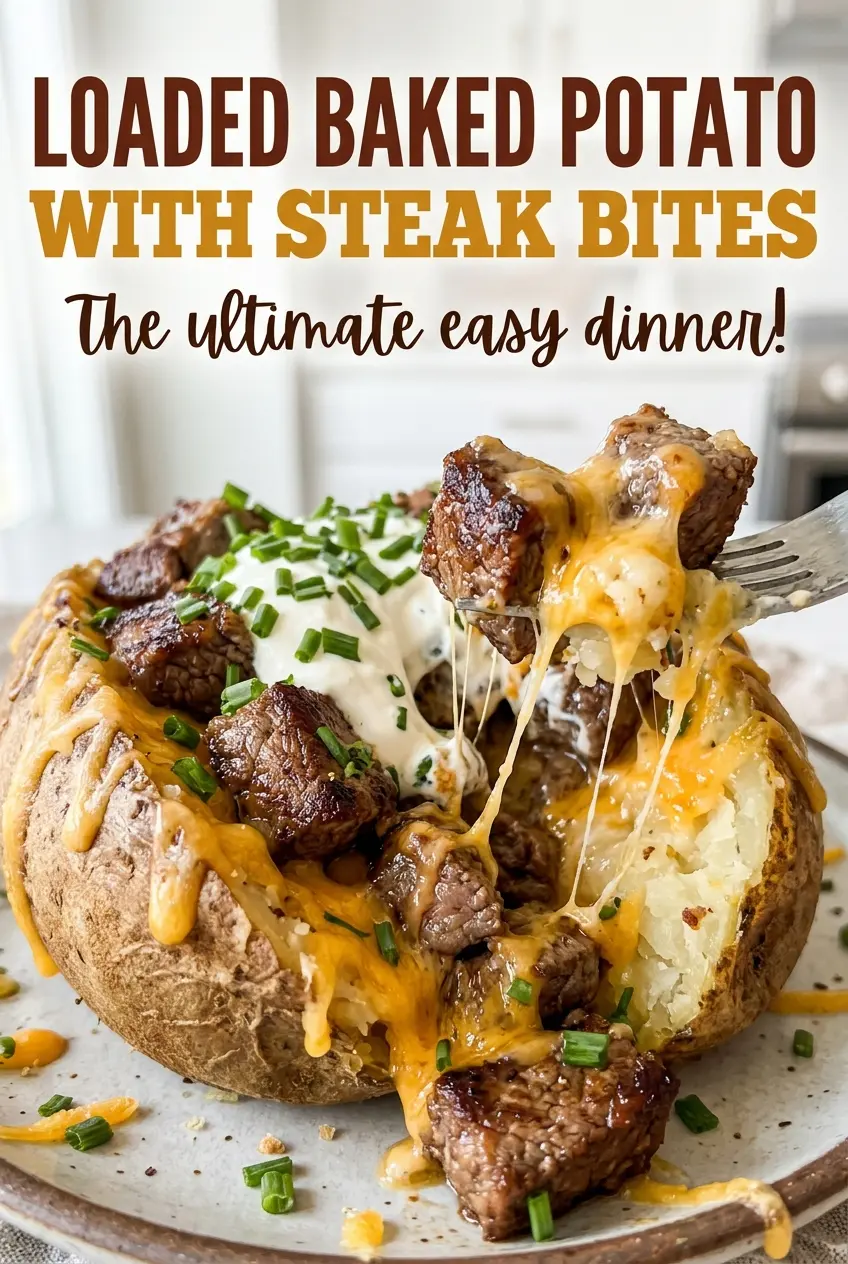
- Russet potatoes — Choose large potatoes that feel firm, with no soft spots. Similar-sized potatoes tend to finish at a similar pace. Yukon Gold potatoes work if that’s what you have, but their creamier, less fluffy centers make a denser base for the toppings.
- Sirloin steak — Sirloin gives you beefy flavor and bite-sized pieces that sear quickly. You don’t need a premium steak for this preparation; look for a piece that’s evenly thick so you can cut consistent cubes. Patting the cubes dry is important because surface moisture keeps them from browning well.
- Avocado oil — It suits the high heat needed to sear the steak. A neutral, high-heat cooking oil works as a direct substitute in the same amount, though choose one that won’t smoke readily in a very hot skillet.
- Sharp cheddar — Its stronger flavor stands up to steak and bacon, so the potato doesn’t taste only of dairy. Shredding a block yourself gives you a smoother melt than many pre-shredded cheeses, which are coated to keep the shreds separate.
- Bacon, butter, and sour cream — The bacon brings a crisp, salty contrast, while butter enriches the potato before the sour cream adds a cool tang. Standard bacon and everyday butter work well here; choose sour cream with a creamy texture so it sits neatly on the fluffy potato.
- Scallions — Their fresh, mild onion flavor cuts through the richer toppings. Slice them thinly so a little lands across each serving rather than in large, sharp pieces.
Bake, Crisp, Sear, Then Build the Potato While It’s Hot
Let the russets bake through
Heat the oven to 400°F. Prick the potatoes all over with a fork, rub them with olive oil and fine sea salt, and set them directly on the oven rack. Bake for 55 to 70 minutes, using a knife to check the center rather than guessing from the outside. If the knife catches, give the potatoes more time; the center needs to be tender enough to fluff easily.
Get the bacon crisp while the oven is on
Arrange the bacon slices in a single layer on a rimmed baking sheet and bake them for 15 to 20 minutes while the potatoes cook. Start checking near the shorter end of the range, since crispness can vary with slice thickness and oven behavior. Transfer the bacon to paper towels, then crumble it once it’s cool. If it still feels flexible, give it a little more time in the oven before taking it out.
Sear the steak in two batches
Pat the steak cubes thoroughly dry, then season them all over with kosher salt and black pepper. Heat a 12-inch skillet over medium-high heat until very hot, add half the avocado oil, and arrange half the steak in a single layer. Leave it undisturbed for 2 minutes to brown, turn the cubes, and cook for 1 to 3 minutes more; add half the garlic for the last 30 seconds. Repeat with the remaining oil, steak, and garlic, cooking until the largest cubes reach 145°F. Crowding the skillet makes the meat release moisture instead of searing.
Fluff and top each potato
Move the cooked steak bites to a clean plate and let them rest for 3 minutes. Split each baked potato lengthwise and use a fork to fluff the insides, keeping the skin intact as a shell. Divide the butter and cheddar among the potatoes first, then add the sour cream, steak bites, crumbled bacon, and sliced scallions. Serve while the potato is hot and the toppings still have their contrasting textures.
Three Ways to Change the Loaded Potato
Make the toppings dairy-free
Replace the butter with plant-based butter, the cheddar with dairy-free cheddar-style shreds, and the sour cream with an unsweetened dairy-free sour cream alternative. Use each in the same role and amount as the original ingredient. The potato will still be hearty, though dairy-free shreds often melt less smoothly than cheddar.
Trade sharp cheddar for pepper Jack
Use the same amount of shredded pepper Jack in place of the sharp cheddar. It brings a gentle chile warmth and a milder cheese flavor, so the steak and bacon remain prominent. For a less spicy, softer-tasting finish, Monterey Jack is another easy swap.
Leave off the bacon
Skip the bacon for a less smoky potato that puts more attention on the sirloin and cheddar. The other toppings still give the fluffy center plenty of richness and texture, so there’s no need to change the cooking method.
Storage and Reheating
- Refrigerator: Store the components separately in airtight containers and refrigerate within 2 hours. They keep for 3 to 4 days; the potato skin softens as it sits.
- Freezer: I don’t recommend freezing the assembled potatoes. The potato texture can turn mealy, and sour cream may separate after thawing.
- Reheating: Reheat the potato in a 350°F oven until the center reaches 165°F, then add the refrigerated toppings. Reheating the fully assembled potato tends to make the steak dry and the sour cream warm.
Questions That Come Up While These Potatoes Bake and Sear
Loaded Baked Potato with Steak Bites
Ingredients
Equipment
Method
- Preheat the oven to 400°F.
- Prick the potatoes all over with a fork.
- Rub the potatoes with olive oil and fine sea salt.
- Place the potatoes directly on the oven rack and bake for 55-70 minutes, until a knife slides easily into the centers.
- Arrange the bacon in a single layer on a rimmed baking sheet.
- Bake the bacon for 15-20 minutes, until crisp.
- Transfer the bacon to paper towels and crumble when cool.
- Pat the steak cubes thoroughly dry.
- Season the steak all over with kosher salt and black pepper.
- Heat a 12-inch skillet over medium-high heat until very hot.
- Add 1/2 tablespoon avocado oil and half the steak in a single layer.
- Sear the steak for 2 minutes without moving, then turn and cook for 1-3 minutes more, adding half the garlic for the last 30 seconds.
- Repeat with the remaining oil, steak and garlic, cooking until the largest cubes reach 145°F.
- Transfer the steak bites to a clean plate and let rest for 3 minutes.
- Split each potato lengthwise.
- Fluff the insides with a fork.
- Divide the butter, cheddar, sour cream, steak bites, bacon and scallions among the potatoes.