The dough starts shaggy, then turns smooth as you knead; the small bit of tackiness that clings to your fingers is part of the texture, not a sign that you’ve done something wrong. Mashed potatoes bring softness to these Leftover Mashed Potato Rolls, but they also make the dough feel different from a basic dinner roll dough. I add the flour gradually and pay attention to how the dough feels instead of trying to make it dry and easy to handle.
Room-temperature potatoes and egg help the dough come together without cooling the warm milk and yeast mixture. Once the rolls rise until puffy and touch at the sides, they bake up together in the dish, with golden tops and tender sides. Give them a few minutes to rest after baking, and you’ll have soft pull-apart rolls with a gentle potato richness.
Kitchen Note
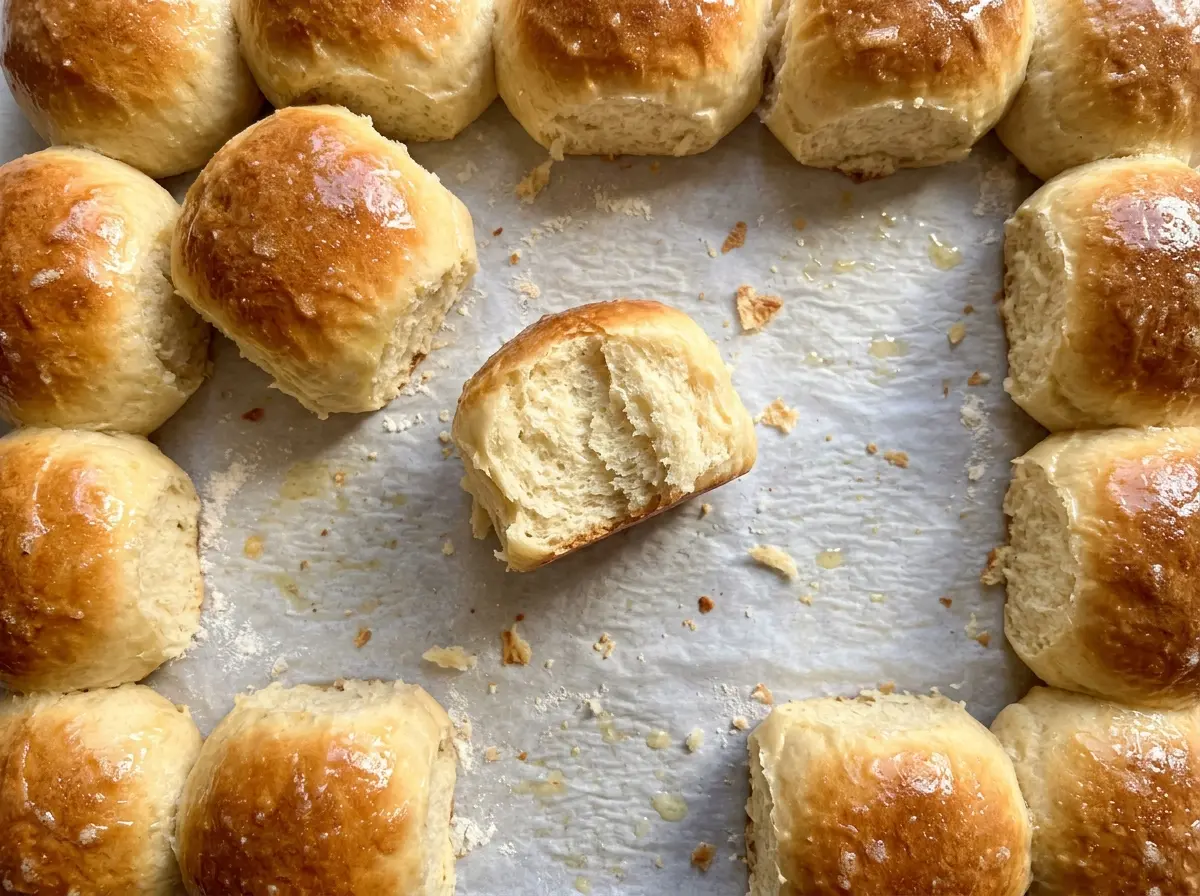
Let the rolls rest in the baking dish for the full 10 minutes before serving. They’re delicate straight from the oven, and that short pause makes it easier to pull them apart without squashing their soft sides.
Save these Leftover Mashed Potato Rolls for a soft, golden batch that turns yesterday’s potatoes into pull-apart dinner rolls.
Why These Rolls Should Feel Slightly Tacky Before They Rise
Mashed potatoes make this dough softer than a plain flour-and-milk dough, and the moisture in leftover potatoes isn’t identical from batch to batch. A scoop of fairly dry mashed potatoes and a scoop with a looser texture won’t behave exactly alike. That’s why I add the flour gradually and judge the dough by its feel rather than expecting it to become firm and dry.
After kneading, the dough should look smooth and elastic, but it should still feel a little tacky. If you keep working in extra flour until it no longer clings at all, the dough can become stiff and the baked rolls less tender. A light tackiness is a useful cue that the dough hasn’t been dried out. It should still be manageable on a clean counter, not runny or gluey.
That texture also helps explain why the rise matters as much as the kneading. The dough needs time to expand until it has doubled, then the shaped rolls need another rise until they’re puffy and touching. Follow those visual changes along with the approximate times; the room’s temperature can affect how quickly the dough moves.
What Leftover Mashed Potatoes Change in This Dough

- Mashed potatoes — They add moisture and a soft, tender quality that flour alone won’t give these rolls. Use plain or lightly seasoned leftovers, brought to room temperature; strongly seasoned potatoes can make the finished rolls taste saltier or more assertive than intended. There isn’t a direct dry-potato substitute in this formula.
- Whole milk and active dry yeast — Warm milk gives the yeast a comfortable start, while the yeast produces the rise that makes the rolls light. I use whole milk here rather than swapping in a different liquid, since changing the liquid also changes the dough’s richness and hydration. Keep the milk within the stated temperature range so it’s warm without overheating the yeast.
- Egg and softened unsalted butter — These enrich the dough and help give it a tender bite. Room-temperature egg blends in more easily than a cold one, and softened butter incorporates without leaving hard pieces in the dough. Unsalted butter keeps the salt level controlled; salted butter would change that balance.
- All-purpose flour — It provides the structure while keeping the crumb tender. Use all-purpose flour for the texture this dough is designed around; bread flour can make the rolls chewier and firmer. Add it gradually rather than tipping it all in at once, since the potatoes affect how much moisture the dough seems to need.
From Foamy Yeast to Puffy Rolls in Five Stages
Wake the yeast in warm milk
Spray a large bowl and a 9×13-inch baking dish with nonstick cooking spray before you start. Warm the milk to 105–110°F, then stir it with the active dry yeast and sugar in the bowl. Leave it for 5–10 minutes, until a foamy layer forms on top. If the mixture stays flat, check that the milk wasn’t too hot or too cool before moving on.
Bring the dough together gradually
Stir the mashed potatoes, egg, softened butter, and salt into the foamy yeast mixture. Add the flour in stages, mixing as you go, until the dough looks shaggy rather than dry and crumbly. The dough will feel uneven at this point, which is expected before kneading. Adding the flour gradually makes it easier to notice when everything has come together.
Knead until smooth, not dry
Turn the dough onto a clean counter and knead for 8–10 minutes. At first it may feel rough and sticky, but it should become smoother and more elastic as you work it. Stop when it holds together and feels slightly tacky; a firm, completely dry dough isn’t the goal here. If it’s still shaggy, keep kneading rather than trying to fix the texture by dusting in a heavy layer of flour.
Let the dough rise, then shape twelve rolls
Return the dough to the greased bowl, cover it, and let it rise at room temperature for 1–1 1/2 hours, until doubled in size. Divide it into 12 equal pieces and shape each piece into a ball. Arrange the balls in the prepared baking dish, cover them, and give them 30–45 minutes for the second rise. They’re ready for the oven when they look puffy and are touching one another.
Bake until the tops turn golden
Bake the rolls at 350°F for 22–27 minutes, watching for golden-brown tops. If they still look pale, give them a little more time within that range rather than pulling them out before the tops color. The rolls should look joined where they’ve risen against each other, with browned tops above their softer sides. After baking, leave them in the dish for 10 minutes before serving.
Two Ways to Let Your Leftover Potatoes Set the Tone
Keep the rolls mild with plain potatoes
Choose plain mashed potatoes when you want the rolls’ flavor to stay neutral and gently buttery. The dough stays within the same ingredient balance, so you don’t need to adjust the salt or the method.
Use lightly seasoned potatoes for a savory edge
Lightly seasoned leftover mashed potatoes bring their existing seasoning into the rolls, making the result a little more savory without changing the dough method. Keep the potatoes only lightly seasoned so their salt and added flavor don’t overwhelm the soft roll.
Storage and Reheating
- Refrigerator: Keep the rolls airtight for up to 4 days. The crumb firms up faster in the refrigerator than it does at room temperature.
- Freezer: Once completely cool, wrap the rolls tightly and freeze for up to 2 months. Thaw them while wrapped at room temperature to help keep them from drying out.
- Reheating: Warm the rolls in a 300°F oven for 8–10 minutes, loosely covered with foil. Leaving them uncovered can dry the soft edges before the centers are warm.
Questions That Come Up When Baking Potato Rolls
Leftover Mashed Potato Rolls
Ingredients
Equipment
Method
- Spray a large bowl and a 9x13-inch baking dish with nonstick cooking spray.
- Warm the milk to 105–110°F in a small saucepan or microwave.
- Stir the warm milk, yeast, and sugar together in the large bowl.
- Let the mixture stand for 5–10 minutes, until foamy.
- Stir in the mashed potatoes, egg, butter, and salt.
- Add the flour gradually until a shaggy dough forms.
- Turn the dough onto a clean counter and knead for 8–10 minutes, until smooth and elastic but still slightly tacky.
- Return the dough to the greased bowl and cover it.
- Let the dough rise at room temperature for 1–1 1/2 hours, until doubled in size.
- Divide the dough into 12 equal pieces.
- Shape each piece into a ball and arrange them in the prepared baking dish.
- Cover the rolls and let rise for 30–45 minutes, until the rolls look puffy and are touching.
- Bake at 350°F for 22–27 minutes, until golden brown.
- Let the rolls rest in the dish for 10 minutes before serving.