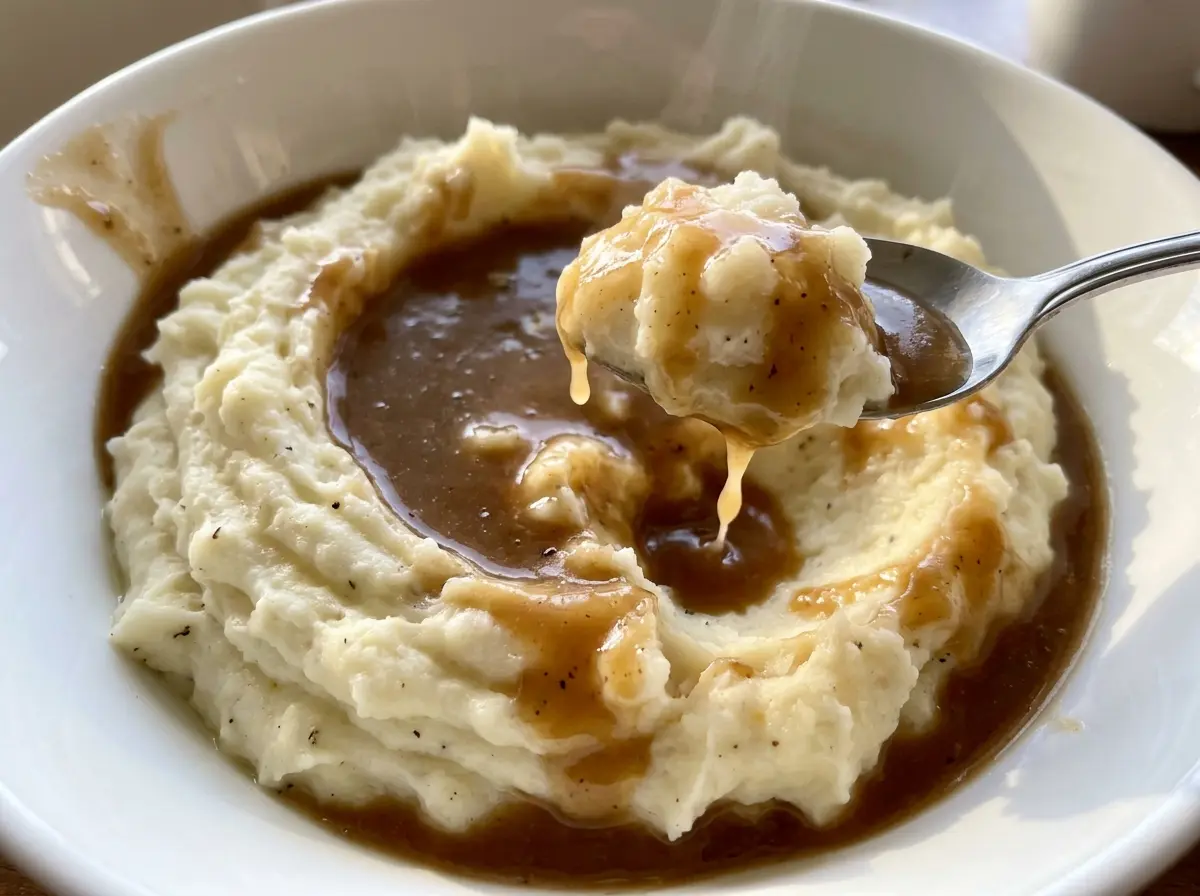
The first spoonful tells you whether the balance is right: the potatoes should feel soft and buttery, while the gravy sits in a smooth layer instead of disappearing into the bowl. I wanted the familiar fast-food-style combination without a packet mix, so I make the mash from russets and cook a simple stovetop gravy alongside it. The KFC mashed potatoes and gravy have two distinct textures, and both deserve a little attention.
I mash the potatoes until smooth, then add the warm butter and milk gradually. That gives me room to stop when the mash is creamy instead of loose. The gravy gets its body from a butter-and-flour roux, not a last-minute thickener, so it has a savory, rounded taste that holds up over the potatoes. It’s a comforting side for six, with peppery gravy ready to pour while the mash is still warm.
Kitchen Note
Warm the butter and milk only until the butter melts; bubbling means the mixture has gotten too hot. Warm dairy blends into the potatoes more easily, and you won’t cool the mash as you finish it.
Save these KFC mashed potatoes and gravy for a cozy side dish with buttery mash and smooth, peppery gravy.
Why the Roux Needs to Turn Golden Before the Broth Goes In
A roux is more than a way to thicken gravy. Cooking the flour in butter for a few minutes takes away its raw, starchy taste and builds a toasted note that gives this gravy its deeper, savory character. The change is visible: the butter-flour paste shifts from pale to golden brown while you whisk. Keep the whisk moving so the roux colors evenly rather than scorching in one spot.
Broth goes in gradually after that. Adding it all at once can make it harder to work out lumps, especially when the hot roux meets cold liquid. A steady pour with constant whisking lets the mixture loosen smoothly, then a gentle simmer gives the flour time to thicken the gravy. Don’t judge the final texture while it’s still thin at the start of cooking; the spoon-coating consistency comes as it simmers. This is why a simple roux makes a better fit here than stirring a thickener into the finished gravy.
What Gives the Potatoes Their Soft Texture and the Gravy Its Savory Base

- Russet potatoes — Their starchy texture mashes up fluffy and smooth. Regular grocery-store russets work well; peel them and cut them into even pieces so they cook at a similar pace. Yukon Gold potatoes can stand in with the same peeling and cutting, but the mash will be denser and more buttery than fluffy.
- Whole milk and unsalted butter — Together they make the potatoes creamy without masking the potato flavor. Standard butter is fine; there’s no need to seek out a specialty brand. If whole milk isn’t on hand, use the same amount of 2% milk for a slightly less rich mash.
- Beef broth and chicken broth — The combination gives the gravy a fuller savory base than either broth alone. Low-sodium cartons are useful here because the gravy reduces as it simmers and the seasonings stay in balance; an everyday store brand is perfectly suitable.
- All-purpose flour — Flour cooks with the butter to make the roux that thickens the gravy. A standard bag works; freshness matters more than brand. For a gluten-free version, use the same amount of a gluten-free all-purpose flour blend designed for a 1:1 swap. The finished gravy may be a little less silky.
- Black pepper, onion powder, and garlic powder — These season the gravy without adding pieces that interrupt its smooth texture. Ground spices from the pantry are fine; just replace any that have lost their aroma, since stale seasonings won’t bring much to the broth.
How to Cook the Potatoes and Gravy Without Losing Their Texture
Simmer the Potato Pieces Until Fork-Tender
Put the peeled, 1 1/2-inch potato pieces in a 5-quart pot and cover them with cold water, adding more if needed. Bring the water to a boil over high heat, then lower the heat to maintain a steady simmer. Cook for 15 to 20 minutes, until a fork slides into the potatoes easily and they feel very tender. If they’re still firm in the middle, give them more time before draining; firm pieces won’t mash smoothly.
Dry the Potatoes Before Mashing
Drain the potatoes well, return them to the pot, and set the pot over low heat for 1 minute. Shake the pot gently during that minute so excess moisture can evaporate from the pieces. Meanwhile, warm the butter and milk in a small saucepan over low heat until the butter melts. Mash the potatoes until smooth, then gradually mix in the warm butter and milk and the salt.
Cook the Roux to a Golden Brown
Melt the butter for the gravy in a 2-quart saucepan over medium heat. Whisk in the flour and keep whisking constantly for 2 to 3 minutes, until the roux is golden brown. If you stop stirring, the flour can brown unevenly or catch on the bottom of the pan. Have the broths ready before you start so you can move straight into the next stage.
Whisk in Broth and Simmer Until Coating
Gradually whisk in the beef broth and chicken broth until the gravy is smooth, then whisk in the black pepper, onion powder, and garlic powder. Bring it to a gentle simmer and cook for 4 to 6 minutes, whisking often. It’s ready when it coats the back of a spoon rather than running off like broth. Spoon the gravy over the mashed potatoes to serve.
Three Ways to Adapt This Mashed Potatoes and Gravy
Make the Gravy Vegetarian
Replace the beef and chicken broths with 2 cups of low-sodium vegetable broth. The roux and seasonings work the same way, though the gravy will have a lighter, less beef-forward savory taste.
Make It Dairy-Free
Use unsweetened plain oat milk in place of the whole milk and dairy-free stick butter in place of the butter in both the potatoes and gravy. The potatoes will have a mild oat note, and the gravy may taste a little less rich, but the stick-style butter still works in the roux.
Turn Up the Pepper
For a more pepper-forward gravy, increase the ground black pepper from 1/4 teaspoon to 1/2 teaspoon. It brings a sharper bite to the sauce without changing the roux or its smooth texture.
Storage and Reheating
- Refrigerator: Store the potatoes and gravy separately in airtight containers for up to 3 to 4 days. The potatoes will firm up, and the gravy will thicken as it chills.
- Freezer: Freeze them separately in airtight containers for up to 1 month for best quality. Thaw overnight in the refrigerator; the potatoes may be less fluffy after thawing, and the gravy may need a good whisk.
- Reheating: Warm the potatoes gently on the stovetop, stirring in a little milk if they seem stiff. Reheat the gravy over low heat, whisking in a little broth if it has become too thick; avoid bringing it to a hard boil.
Questions That Come Up When Making This Gravy and Mash
KFC Mashed Potatoes and Gravy
Ingredients
Method
- Place the potatoes in a 5-quart pot and add the cold water; add more water if needed to cover them.
- Bring to a boil over high heat.
- Reduce the heat to maintain a steady simmer and cook for 15 to 20 minutes, until the potatoes are very tender when pierced with a fork.
- Drain the potatoes well and return them to the pot.
- Set the pot over low heat for 1 minute, shaking it gently to dry the potatoes.
- Warm the butter and milk in a small saucepan over low heat until the butter melts; do not let the mixture boil.
- Mash the potatoes until smooth.
- Gradually mix in the warm butter and milk and the salt.
- Melt the butter in a 2-quart saucepan over medium heat.
- Whisk in the flour and cook for 2 to 3 minutes, whisking constantly, until the roux is golden brown.
- Gradually whisk in the beef broth and chicken broth until smooth.
- Whisk in the black pepper, onion powder, and garlic powder.
- Bring the gravy to a gentle simmer and cook for 4 to 6 minutes, whisking often, until thick enough to coat the back of a spoon.
- Serve over the mashed potatoes.