The wine loosens the browned bits at the bottom of the Dutch oven, and the whole kitchen starts to smell like something worth waiting for. The first time I made this Julia Child beef bourguignon, I was surprised by how much the separate steps mattered: the beef needs time to turn fork-tender, while the onions and mushrooms need their own attention so they keep their shape.
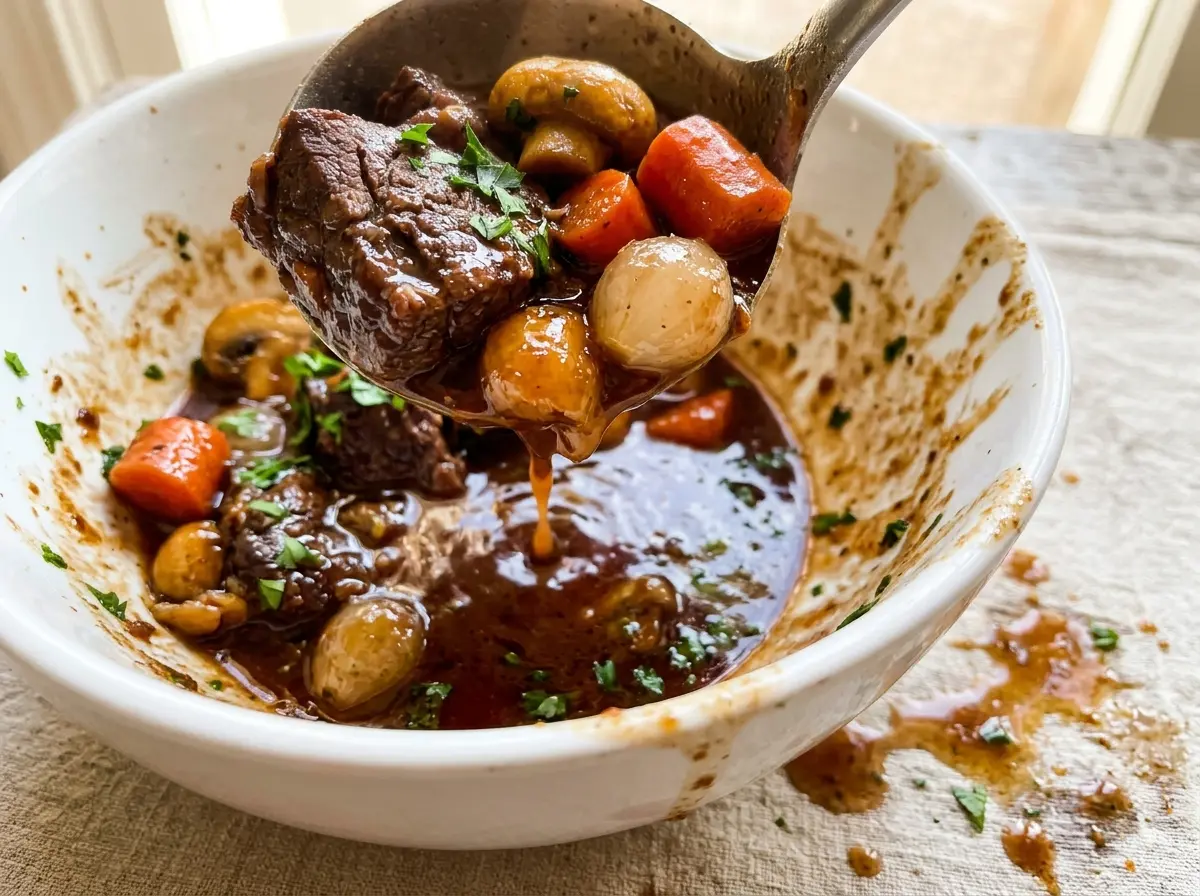
I blanch the bacon before browning it, then cook the beef in batches instead of crowding the pot. Those small choices build flavor without rushing the braise. While the beef cooks low and slow, the pearl onions simmer in their own stock and the mushrooms brown in a separate skillet. At the end, the strained sauce brings everything together: tender beef, glossy onions, browned mushrooms, and a deep red-wine gravy.
Give the pot the time it needs, and you’ll have a generous, satisfying dinner for six with a sauce that clings to every piece of beef.
Kitchen Note
Blanching the bacon first takes the sharp edge off before it goes into the Dutch oven. Drain it well and pat it dry; wet bacon won’t brown as cleanly.
Save Julia Child beef bourguignon for a slow-cooked dinner with fork-tender beef, wine-rich sauce, and browned mushrooms.
Why the Onions and Mushrooms Don’t Go Into the Braise
The beef needs a long, covered cook in the wine and stock to become tender. Pearl onions and mushrooms don’t need that same stretch of time. If they went into the Dutch oven at the beginning, their texture would soften while the beef was still braising, and their distinct browned edges would disappear into the sauce.
Cooking them separately gives each ingredient the right treatment. The pearl onions brown first, then simmer gently in beef stock until tender. The mushrooms get a hotter pan and are cooked in batches, which gives them a chance to brown instead of releasing moisture into a crowded skillet. They join the beef only after the cooking liquid has been strained and lightly thickened.
That last-minute fold-in is what makes each spoonful feel composed rather than like everything has cooked down together. You get the richness of a long braise, with onions and mushrooms that still taste and look like themselves.
What the Beef, Wine, and Bacon Each Bring to This Braise
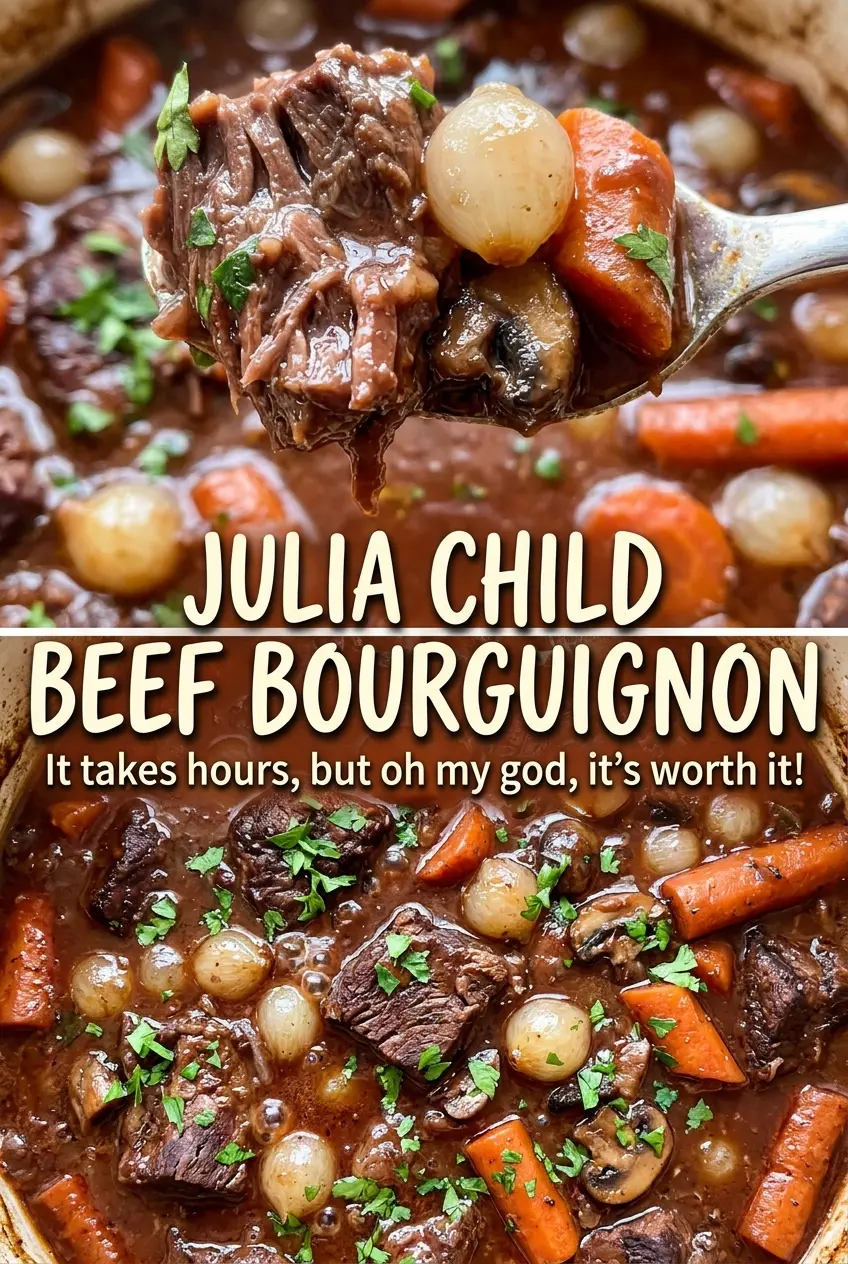
- Beef chuck — Its marbling and connective tissue suit a long braise, turning tender as the pot cooks. Choose boneless chuck with visible marbling; lean stew meat won’t give the same soft texture. Cut it into even cubes so the pieces cook at a similar pace.
- Thick-cut bacon — It renders savory fat for browning the beef and gives the sauce a smoky depth. A standard grocery-store thick-cut bacon works well; a specialty cured bacon isn’t necessary. Patting it dry after blanching helps it brown instead of steam.
- Dry red wine — The wine gives the braising liquid its character and acidity. Pinot Noir is a good fit, and another dry red wine works too; avoid sweet wine, which can make the sauce taste out of balance. You don’t need an expensive bottle, just one you’d be comfortable drinking.
- Pearl onions — Frozen peeled onions save the slow, fiddly work of peeling each one, and thawing and drying them helps them brown in the skillet. Keep them whole so they stay distinct in the finished dish.
- Cremini mushrooms — Their savory flavor holds up alongside the beef. Ordinary cremini mushrooms are right for this; quarter them evenly so they brown at a similar rate. Unsalted butter helps them take on color without hiding their earthy taste.
- Flour and tomato paste — The flour lightly coats the beef before its short bake in the hot oven, while tomato paste adds depth to the wine and stock. All-purpose flour is the straightforward choice here; changing the thickener changes how the sauce develops.
Building the Braise in the Dutch Oven, Then Finishing It Separately
Blanch the Bacon and Brown the Beef
Bring the water and bacon to a boil in a medium saucepan, simmer for 10 minutes, then drain the bacon and pat it dry. Heat the oven to 450°F and warm the olive oil in a 5 1/2- to 6-quart Dutch oven over medium heat. Cook the bacon for 4–5 minutes, then move it to a plate, leaving the fat in the pot. Pat the beef dry, season it with salt and pepper, and brown it in batches for 2–3 minutes per side; if the pieces are crowded, they’ll steam instead of forming a browned surface.
Cook the Vegetables and Bake the Flour-Coated Beef
Add the carrot and onion to the Dutch oven and cook over medium heat for 5 minutes, stirring now and then. Return the beef and bacon to the pot, sprinkle in the flour, and toss until the pieces are coated. Bake uncovered for 4 minutes, stir, then bake for 4 minutes more. The short bake gives the flour a chance to cook before the liquid goes in.
Add the Wine and Let the Beef Braise
Take the pot out of the oven and lower the oven temperature to 325°F. Stir in the wine, beef stock, tomato paste, garlic, thyme, and bay leaf, then bring the liquid to a simmer on the stove. Cover the Dutch oven and return it to the oven for 2 1/2–3 hours. The beef is ready when a fork slips into a piece easily; if it still feels resistant, it needs more time in the braising liquid.
Simmer the Pearl Onions Until Tender
While the beef braises, melt the butter with the olive oil in a 10-inch skillet over medium heat. Add the thawed, patted-dry pearl onions and turn them occasionally as they cook for 5–7 minutes, until lightly browned. Add the beef stock, thyme, bay leaf, salt, and pepper, then cover and simmer over medium-low heat for 25–30 minutes. They’re ready when tender and most of the liquid has evaporated; remove the thyme and bay leaf.
Brown the Mushrooms and Bring the Pot Together
Melt the butter in a 12-inch skillet over medium-high heat and cook the quartered mushrooms in two batches for 5–7 minutes per batch, until browned. Return all the mushrooms to the skillet and stir in the salt and pepper. Lift the beef from the Dutch oven with a slotted spoon, strain the cooking liquid into a saucepan, discard the cooked vegetables and herbs, and skim off excess fat. Simmer the sauce for 5–10 minutes until lightly thickened, pour it over the beef, fold in the onions and mushrooms, and warm everything covered over low heat for 5 minutes.
Two Practical Ways to Adapt the Wine and Butter
Choose a Bolder Dry Red
Use a dry Cabernet Sauvignon instead of Pinot Noir if you want a fuller, more assertive wine note in the sauce. The result will taste more robust, so keep the wine dry rather than choosing a sweet red.
Make the Dish Dairy-Free
Replace the butter used for the pearl onions and mushrooms with olive oil. The onions and mushrooms will still brown, though the finished dish will lose some of the rounded, buttery richness.
Storage and Reheating
- Refrigerator: Store covered for 3–4 days. The sauce may firm up as it chills, then loosen as it warms.
- Freezer: This braise freezes well. Cool it, pack it with the sauce in an airtight freezer-safe container, and freeze for up to 3 months; thaw overnight in the refrigerator for the best texture.
- Reheating: Warm it covered in a saucepan over low heat, stirring gently until hot throughout; add a small splash of water if the chilled sauce is too thick. Avoid a hard boil, which can make the beef break apart.
Questions That Come Up While Making Beef Bourguignon
Julia Child Beef Bourguignon
Ingredients
Equipment
Method
- Bring the water and bacon to a boil in a medium saucepan.
- Simmer for 10 minutes.
- Drain and pat the bacon dry.
- Preheat the oven to 450°F.
- Heat the olive oil in a 5 1/2- to 6-quart Dutch oven over medium heat, add the bacon, and cook for 4–5 minutes.
- Transfer the bacon to a plate, leaving the fat in the pot.
- Pat the beef dry and season it with the salt and pepper.
- Brown the beef in batches in the Dutch oven for 2–3 minutes per side.
- Transfer each batch to the plate.
- Add the carrot and onion to the pot and cook over medium heat for 5 minutes, stirring occasionally.
- Return the beef and bacon to the pot, sprinkle with flour, and toss to coat.
- Bake uncovered for 4 minutes.
- Stir, then bake for 4 minutes more.
- Remove the pot from the oven and reduce the oven temperature to 325°F.
- Stir in the wine, stock, tomato paste, garlic, thyme, and bay leaf.
- Bring the mixture to a simmer on the stove.
- Cover the pot and braise in the oven for 2 1/2–3 hours, until the beef is fork-tender.
- Melt the butter with the olive oil in a 10-inch skillet over medium heat.
- Add the pearl onions and cook for 5–7 minutes, turning occasionally, until lightly browned.
- Add the stock, thyme, bay leaf, salt, and pepper.
- Cover and simmer over medium-low heat for 25–30 minutes, until the onions are tender and most of the liquid has evaporated.
- Discard the thyme and bay leaf.
- Melt the butter in a 12-inch skillet over medium-high heat.
- Add the mushrooms in two batches and cook each batch for 5–7 minutes until browned.
- Return all the mushrooms to the skillet and stir in the salt and pepper.
- Transfer the beef to a bowl with a slotted spoon.
- Strain the cooking liquid into a saucepan and discard the cooked vegetables and herbs.
- Skim excess fat from the liquid.
- Simmer the sauce for 5–10 minutes until lightly thickened.
- Pour the sauce over the beef in the Dutch oven.
- Fold in the pearl onions and mushrooms.
- Warm covered over low heat for 5 minutes before serving.