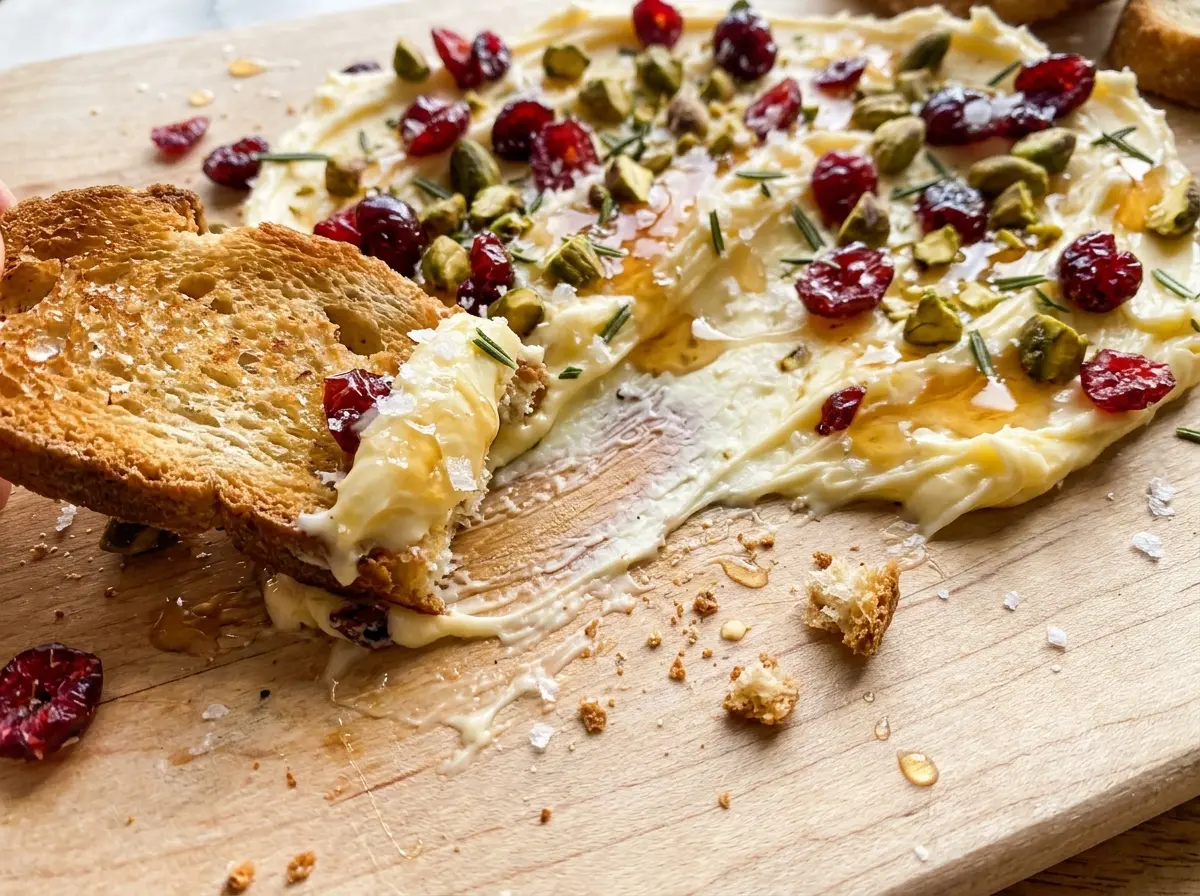
The butter should spread in soft ridges, not drag across the platter in hard, cold chunks. I let it stand until it feels cool but easy to move, then sweep it into loose swoops on the serving plate. That texture gives the toppings somewhere to settle without turning the board into a puddle.
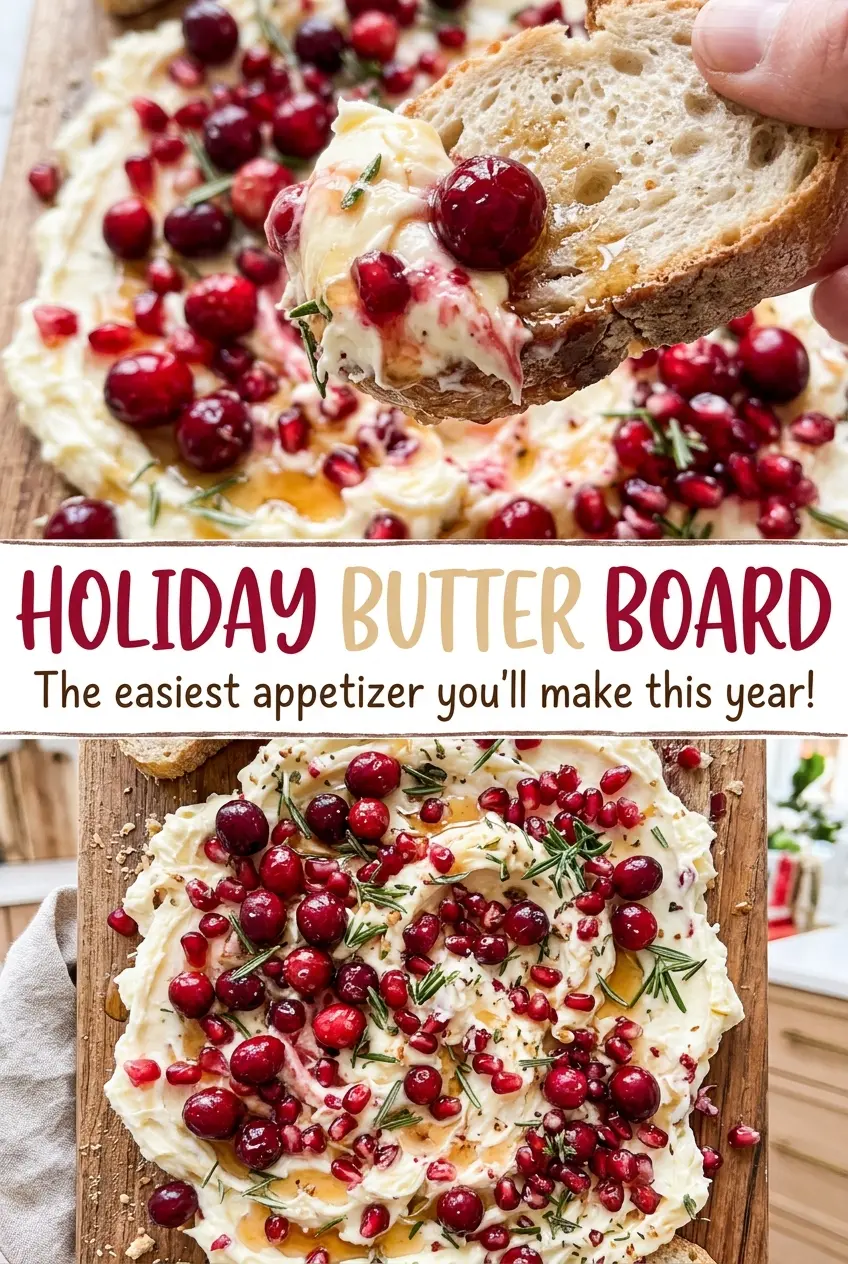
I make this Holiday Butter Board when I want a shared starter that looks festive without needing to be assembled bite by bite. Honey and orange zest bring sweetness and brightness, while the fruit and pistachios add little pops of texture. Fresh rosemary keeps the top notes savory, and flaky salt makes each swipe taste balanced. Set thin baguette slices around the platter, and you have a rich, bright bite with a clean rosemary finish.
Kitchen Note
Stop when the butter is cool and easily spreadable, not glossy or slack. It should hold the ridges you make, so the toppings stay on the butter instead of sliding toward the edge.
Save this Holiday Butter Board for its sweet-tart toppings and soft, spreadable butter centerpiece.
Why the Butter Swoops Matter More Than a Smooth Surface
A butter board is more than butter spread out on a plate. Those loose swoops create high and low spots, which give the scattered toppings a place to land and make the board easier to scoop. A perfectly flat layer looks tidy, but it gives the toppings fewer places to catch; a pile of toppings in the middle leaves plenty of butter bare around the edges.
Think about each baguette slice as a small swipe through the whole board. With the butter spread across the platter, a slice can pick up a little topping wherever it lands. Scatter the fruit, nuts, and rosemary over the surface rather than keeping each in its own mound. That way, the board feels composed without needing every bite to be identical. The honey and zest go on before the larger toppings, so the finished surface stays varied instead of looking like a garnish piled on at the end.
Keep some butter visible between the toppings. It gives the board its soft, swooped look and leaves room for the colors to stand out. The goal isn’t a perfectly even blanket; it’s a spreadable base with enough topping in each area to make the next swipe interesting.
The Ingredients That Give Each Swipe Its Sweet-Tart Balance
- Unsalted butter — This is the creamy base, so use butter you like the taste of on its own. Let it soften naturally until it spreads without crumbling; melting it changes the texture and makes the swoops difficult to hold.
- Honey and orange zest — Honey adds a gentle sweetness, while finely grated zest gives a bright citrus note without adding a large piece of peel to a bite. Grate the zest finely so it scatters over the butter instead of clumping.
- Pomegranate arils and dried cranberries — The arils bring juicy bursts, and the cranberries add a chewier, tart-sweet contrast. Finely chop the cranberries so they distribute easily; if you don’t have pomegranate, leaving it out is better than adding a wetter fruit that could make the butter messy.
- Pistachios — Shelled pistachios are an easy way to add crunch and a nutty note. Chop them finely enough to scatter across the board, rather than leaving large pieces that are awkward to pick up with a baguette slice.
- Fresh rosemary and flaky salt — Fresh rosemary gives the board a fragrant savory edge, and flaky salt adds crisp little bursts at the finish. Chop the rosemary finely so its flavor is spread through the topping rather than concentrated in long needles.
- Baguette — Thin slices are easy to arrange around the platter and to swipe through the butter. A loaf with a tender interior and a crust that holds its shape works best for this serving style.
How to Spread, Top, and Serve the Butter Without Smearing It
Let the butter soften without melting
Set the butter out at room temperature for 30 to 45 minutes, until it’s cool and easily spreadable. It should give under gentle pressure but still feel like butter, not a liquid. If it’s still stiff, the spread will drag and break into chunks. If it has softened too far, it won’t hold the soft ridges that make the board easy to top.
Make loose swoops on the platter
Spread the butter in swoops over a 12-inch rimmed serving platter. Work it across the surface in overlapping curves, leaving some texture rather than smoothing it into a flat sheet. A rimmed platter gives you a defined serving area for the toppings and baguette slices. Keep the butter spreadable and avoid pressing it so thin that the platter shows through in large patches.
Layer the toppings, then bring the bread to the table
Drizzle the honey over the butter and sprinkle on the orange zest. Scatter the pomegranate arils, finely chopped dried cranberries, chopped pistachios, and rosemary across the surface, then finish with flaky salt. Keep your hand moving as you scatter, so one section doesn’t end up loaded while another is bare. Arrange thin baguette slices around the platter and serve the board immediately.
Two Ways to Change the Board Without Losing Its Balance
Make individual baguette bites
For a more portioned presentation, spread the softened butter across the baguette slices instead of the platter, then distribute the toppings over them. The result is less of a centerpiece and more of a ready-to-pass bite, though you’ll lose the shared swooped-board look.
Use a gluten-free baguette
Replace the baguette with a gluten-free baguette and slice it thinly, keeping the butter and toppings unchanged. Choose a loaf that holds together when sliced so it can carry a swipe of butter. The bread’s texture will differ, but the sweet, tart, and savory topping combination still works.
Serving and Leftovers
- Serving: Assemble the board close to serving time; it is best served immediately while the butter is easy to spread.
- Leftovers: Discard any butter left at room temperature for more than 2 hours. If you have leftovers sooner, cover and refrigerate them; the butter will firm and the finished board won’t keep its fresh, swooped presentation.
- Freezer: The assembled board isn’t a good freezer candidate. The scattered fruit and nuts won’t keep their fresh arrangement after thawing.
Questions That Come Up While Building a Butter Board
Holiday Butter Board
Ingredients
Equipment
Method
- Let the butter stand at room temperature for 30 to 45 minutes, until cool and easily spreadable.
- Spread the butter in swoops over a 12-inch rimmed serving platter.
- Drizzle the honey over the butter and sprinkle with the orange zest.
- Scatter the pomegranate arils, cranberries, pistachios, and rosemary over the butter.
- Finish with the flaky salt.
- Arrange the baguette slices around the platter and serve immediately; discard any butter left at room temperature for more than 2 hours.