Roasted sweet potatoes, crispy chickpeas, and a glossy fig balsamic vinaigrette give these harvest bowls the kind of balance that keeps them in the dinner rotation long after the novelty wears off. You get warm grains, crunchy greens, creamy goat cheese, and pops of sweet-tart pomegranate in every bite, so the bowl never feels heavy or one-note.
What makes this version work is the contrast. The sweet potatoes and chickpeas roast separately, which matters because they brown at different rates and need different amounts of time to get the right texture. The dressing leans on fig jam for body and sweetness, while Dijon and balsamic keep it sharp enough to cut through the cheese and nuts.
Below, I’ll walk through the little details that keep the chickpeas crisp, the Brussels sprouts fresh and snappy, and the vinaigrette smooth instead of broken. There’s also a few practical swaps if you want to make it dairy-free or use what you already have on hand.
The chickpeas stayed crisp even after I drizzled the dressing, and the fig balsamic pulled everything together without making the bowl taste too sweet. I packed the leftovers for lunch the next day and the Brussels sprouts were still pleasantly crunchy.
Save these harvest bowls for the nights when you want a filling meal with roasted sweet potatoes, crispy chickpeas, and that sweet-savory fig balsamic finish.
The Key to Keeping the Chickpeas Crisp Under the Dressing
The biggest mistake in grain bowls like this is letting everything hit the pan at once and expecting the textures to survive. Chickpeas and sweet potatoes need separate roast times because chickpeas dry out and crisp while sweet potatoes soften and caramelize. If you crowd them together, the chickpeas steam and the potatoes go soft at the edges before they get any color.
The other thing that matters is the order of assembly. Put the grains down first, then the hot roasted ingredients, then the raw Brussels sprouts, pomegranate, pecans, and goat cheese. The dressing goes on last, and it should be enough to coat without soaking the whole bowl. That keeps the sprouts from wilting and the nuts from losing their crunch.
What Each Ingredient Is Actually Doing in This Bowl
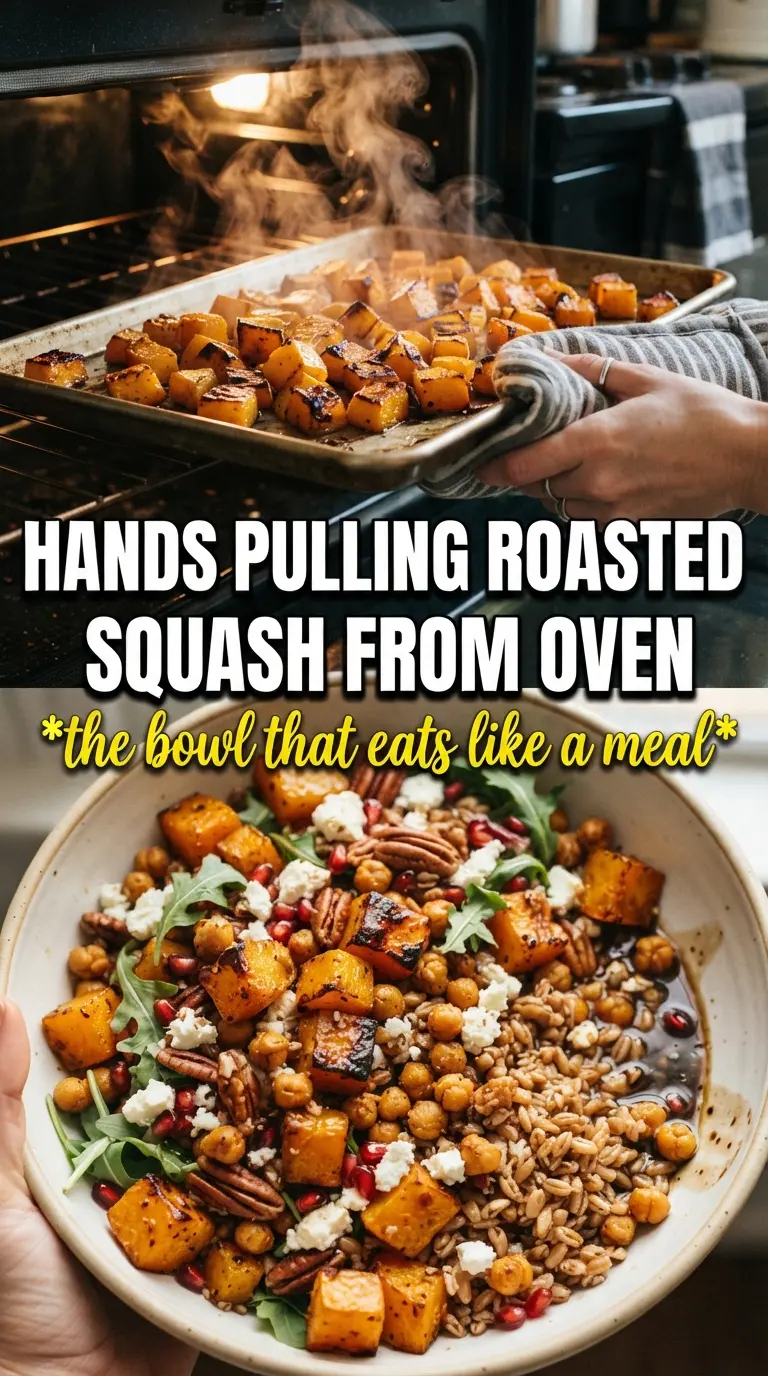
- Farro or quinoa — This is the base that holds everything together. Farro gives you a chewy, nutty bite; quinoa stays lighter and works well if you want a gluten-free bowl. Either one should be cooked and cooled enough to stay fluffy, not clumped.
- Sweet potatoes — They bring sweetness and a soft, caramelized center that balances the sharp dressing. Cube them evenly so they roast at the same rate, and give them enough space on the pan so the edges brown instead of steaming.
- Chickpeas — These add protein and crunch, but only if they go into a hot oven after being dried well. Any moisture left on them will keep the skins soft. Canned chickpeas are fine here as long as you drain and pat them dry thoroughly.
- Brussels sprouts — Raw shaved sprouts give the bowl its fresh crunch and slightly bitter edge. You want them thinly shaved so they eat easily with a fork. If you slice them too thick, they’ll feel tough against the softer ingredients.
- Fig jam — This is what makes the vinaigrette cling instead of running off the bowl. It adds body and a mellow sweetness that plain balsamic doesn’t have. If you don’t have fig jam, apricot preserves is the closest swap, though the flavor will be lighter and less earthy.
- Goat cheese and candied pecans — These finish the bowl with creaminess and a sweet crunch. The cheese softens the acidity of the dressing, and the pecans give you a hit of richness at the end. If you skip one, the bowl still works, but it loses some of the contrast that makes each bite interesting.
Building the Bowls So Nothing Turns Soggy
Roasting the Sweet Potatoes
Toss the sweet potato cubes with a little oil, salt, and pepper, then spread them in a single layer on a sheet pan. They’re done when the edges are browned and the centers yield easily to a fork. If the pan is crowded, they’ll soften before they caramelize, and you’ll lose the contrast that makes the bowl feel substantial.
Crisping the Chickpeas
Roast the chickpeas on their own pan so they can dry out without fighting for space. They should look slightly wrinkled and feel firm when you shake the pan. If they’re soft when they come out, give them a few more minutes rather than pulling them early; under-roasted chickpeas go chalky instead of crisp.
Whisking the Fig Balsamic Vinaigrette
Whisk the fig jam, balsamic, olive oil, Dijon, and garlic until the dressing looks smooth and glossy. The Dijon helps emulsify it, so don’t just stir and stop when you see streaks. If it separates, keep whisking for another 20 to 30 seconds and it will come back together.
Assembling for Texture
Layer the grain base first, then pile on the warm vegetables and chickpeas while they’re still just a little warm. Add the sprouts, pomegranate seeds, pecans, and goat cheese after that so the fresh ingredients keep their bite. Drizzle the dressing right before serving, because an early pour will soften the nuts and flatten the crunch.
How to Adapt These Harvest Bowls Without Losing the Balance
Make it dairy-free
Skip the goat cheese and add avocado slices or a spoonful of tahini dressing for creaminess. You’ll lose the tangy bite from the cheese, so keep the vinaigrette sharp and don’t overdo the sweet toppings.
Use quinoa for a gluten-free bowl
Quinoa keeps the bowl light and works well with the sweet potatoes and pomegranate. It won’t have the same chewy bite as farro, so let it cool a little before assembling or it can turn mushy under the toppings.
Swap the nuts for seeds
Pumpkin seeds or sunflower seeds work well if you need a nut-free version. Toast them briefly in a dry skillet first so they still give you that roasted crunch the bowl depends on.
Storage and Reheating
- Refrigerator: Store the components separately for up to 4 days. The sweet potatoes and chickpeas will soften a little, but they still hold up well if you keep the dressing off until serving.
- Freezer: The roasted sweet potatoes and cooked grain freeze well, but the sprouts, pecans, cheese, and vinaigrette do not. Freeze only the base components in airtight containers for up to 2 months.
- Reheating: Warm the grains, sweet potatoes, and chickpeas in a skillet or 350°F oven until heated through. Don’t microwave everything together in one bowl or the chickpeas will go limp and the sprouts will wilt before the center is warm.
Answers to the Questions Worth Asking
Harvest Bowls With Fig Balsamic Vinaigrette
Ingredients
Equipment
Method
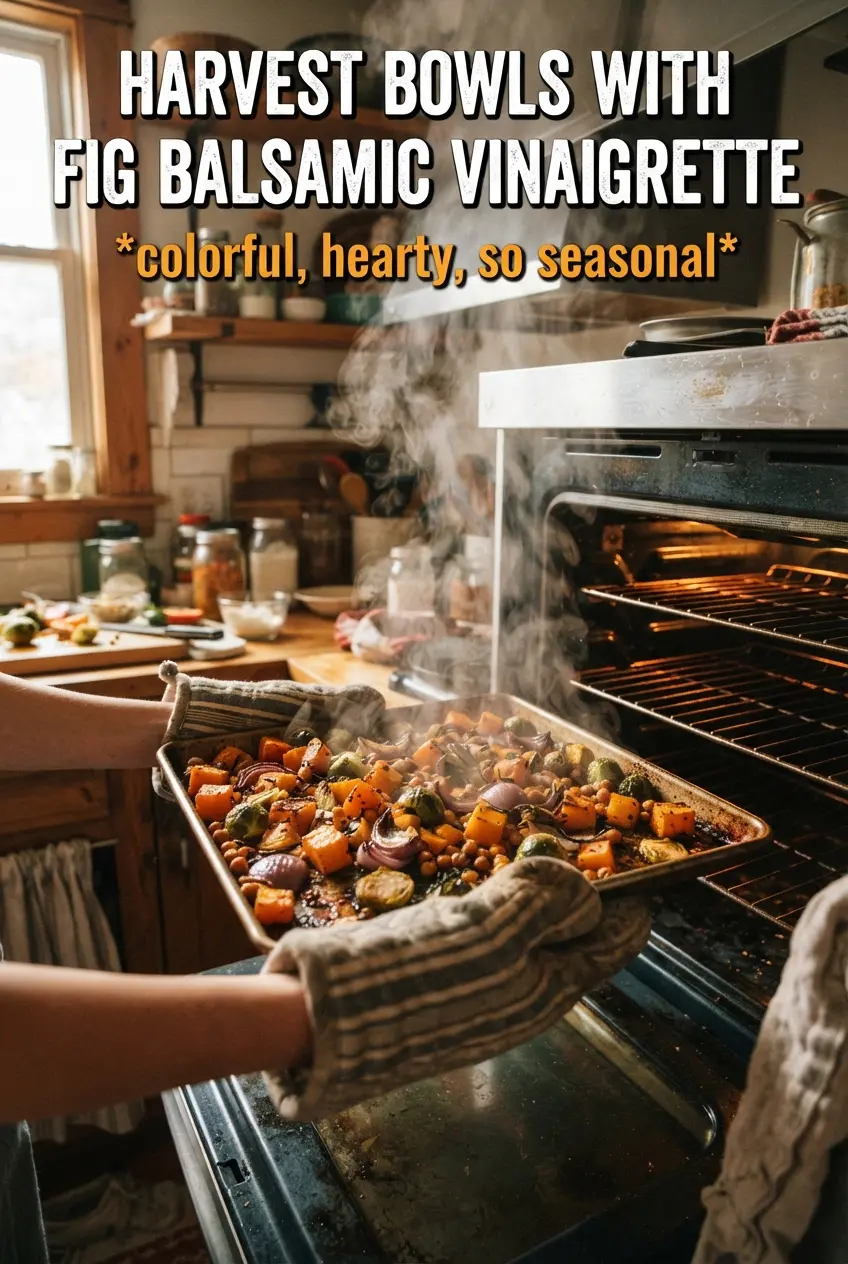
- Preheat the oven to 425F and spread cubed sweet potatoes on one sheet pan in an even layer for dry roasting. Roast for 25 minutes, turning once, until browned and tender.
- Drain the chickpeas thoroughly, pat them dry, and spread them on a second sheet pan in a single layer. Roast at 425F for 20-25 minutes until crispy and browned at the edges.
- Whisk fig jam, balsamic vinegar, olive oil, Dijon mustard, minced garlic, and salt and pepper in a bowl until smooth and glossy. Continue whisking until the mixture looks fully emulsified.
- Divide the cooked farro or quinoa among 4 bowls as the base and spread into an even layer. This creates a stable foundation for the warm and fresh toppings.
- Top each bowl with the roasted sweet potatoes and crispy chickpeas, distributing them evenly. Use the remaining roasted bits to keep each bowl balanced.
- Scatter shaved Brussels sprouts over the bowls in a fresh, leafy layer. The raw sprouts should stay bright and add crunch.
- Sprinkle pomegranate seeds and candied pecans over each bowl. The pomegranate should look jewel-like and the pecans should add visible golden crunch.
- Crumble goat cheese over each bowl and drizzle generously with fig balsamic vinaigrette. Finish by letting the dressing lightly soak into the warm toppings before serving.