The beef should sizzle when it hits the Dutch oven, then turn brown in small crumbles rather than gray, watery clumps. That first stretch of cooking sets the savory base for hamburger stew, and it’s worth letting the meat brown before draining the excess fat.
I like this version because it eats like a full, cozy meal without needing a separate pan for the vegetables or a flour roux. The flour gets stirred right into the beef and vegetables, so it can thicken the broth as the stew simmers instead of leaving you with a thin, beefy soup.
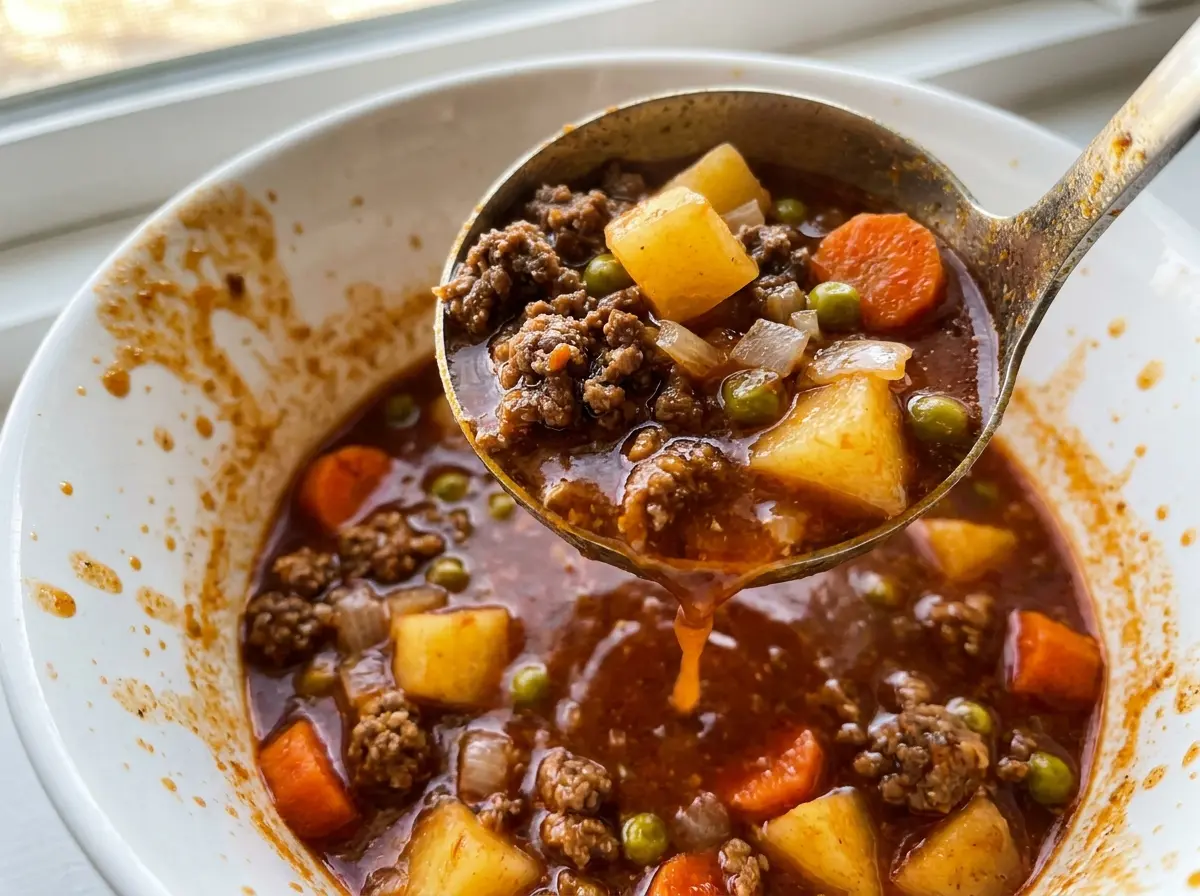
Yukon Gold potatoes keep their shape while the broth turns rich and spoonable, and the peas go in at the end so they stay green and sweet. It’s the kind of stew that fills a bowl generously and makes the kitchen smell like dinner is already taken care of.
Kitchen Note
Keep the carrots in half-inch pieces and the potatoes in one-inch pieces. That size difference lets both turn tender in the same simmer without asking the potatoes to fall apart while the carrots catch up.
Save this hamburger stew for a night when you want tender vegetables, browned beef, and a thick, comforting broth in one pot.
Why the Flour Goes In Before the Broth
A stew can have plenty of beef and vegetables and still feel like soup if its broth stays thin. Here, the flour is worked into the browned meat and softened vegetables before any liquid goes into the pot. That gives the flour a chance to coat the ingredients instead of landing in a puddle of broth where it can clump.
The tomato paste joins that coating step, too. It spreads across the beef and vegetables and brings concentrated tomato flavor to the base; the thyme, salt, and pepper get distributed through it rather than floating in the liquid. Once the broth and tomatoes go in, the flour gradually thickens the stew during the uncovered simmer. The result should cling lightly to a spoon, not set up like gravy. Stir now and then as it cooks so the thickening stays even and the potatoes don’t stick to the bottom. If you rush the base and pour in liquid before the flour has been stirred through, you lose that even start and make lumps more likely.
Why Yukon Golds, Low-Sodium Broth, and 85% Beef Matter Here

- Ground beef — The 85% lean blend browns well and gives the broth a beefy base; draining the excess fat keeps the finished stew from feeling greasy. A leaner ground beef works in the same method and leaves less fat to drain, though the broth will taste a little less rich.
- Yukon Gold potatoes — These hold their shape during simmering while contributing enough starch to make the broth feel fuller. Russets are a workable swap, cut to the same size, but they soften and break down more, making the stew thicker and less chunky.
- Low-sodium beef broth — It lets the salt in the stew stay in your control as the liquid reduces. Regular broth will work, but it can make the finished stew saltier; if that’s what you have, taste before adding any extra salt.
- Tomato paste and canned tomatoes — The paste gives the base concentrated, savory tomato flavor, while diced tomatoes and their juices provide both tomato pieces and liquid. Standard canned diced tomatoes are a reliable choice here; there’s no need to spend extra on a specialty brand.
- All-purpose flour — It thickens the broth as the stew simmers, and ordinary all-purpose flour is all this step needs. For a gluten-free version, use an equal amount of gluten-free 1:1 all-purpose flour and choose gluten-free beef broth and Worcestershire sauce as well.
- Frozen peas and dried thyme — Frozen peas are convenient and hold their color when added near the end; they don’t need to be thawed first. Dried thyme stands up to the long simmer, so the basic grocery-store jar is fine.
Building the Stew in the Dutch Oven
Brown the Beef, Then Drain
Heat a 6-quart Dutch oven over medium-high heat, add the ground beef, and break it into small pieces as it cooks for 6–8 minutes. Look for browned crumbles rather than large pale clumps, and use a thermometer to confirm the beef reaches 160°F. Drain the excess fat before adding the vegetables; leaving a pool behind can make the broth oily.
Soften the Vegetables Without Browning the Garlic
Add the chopped onion, carrots, and celery to the beef and cook for 5–6 minutes, stirring occasionally, until they’re beginning to soften. The vegetables should still have some firmness because they’ll simmer with the potatoes later. Stir in the minced garlic and cook for 30 seconds; garlic turns bitter if it sits over the heat too long, so keep it moving.
Coat the Base Evenly
Stir in the flour, tomato paste, dried thyme, kosher salt, and black pepper, then cook for 1 minute. The mixture will look thick and cling to the beef and vegetables rather than resemble a sauce. Scrape around the bottom as you stir, especially if tomato paste has stuck there, so the base doesn’t scorch before the broth goes in.
Simmer Until the Vegetables Are Tender
Pour in the beef broth and diced tomatoes with their juices, then stir in the potatoes, Worcestershire sauce, and bay leaf. Bring the pot to a boil over high heat, then reduce the heat to medium-low and simmer uncovered for 25–30 minutes, stirring occasionally. The potatoes and carrots should be tender when pierced, and the broth should look thicker than it did at the start; if the vegetables are still firm, give them the full simmer rather than raising the heat and boiling hard.
Finish with Peas
Stir in the frozen peas and simmer for 3–5 minutes, just until they’re hot. They’ll add a fresh, sweet note without needing a long cook. Remove the bay leaf before serving so no one gets it in their bowl.
Three Smart Ways to Adapt This Hamburger Stew
Make It Gluten-Free
Replace the all-purpose flour with the same quantity of gluten-free 1:1 all-purpose flour, and use gluten-free beef broth and Worcestershire sauce. The stew still thickens as it simmers, though the broth may be a little less silky depending on the flour blend.
Use Russets for a Thicker, Softer Stew
Swap the Yukon Gold potatoes for the same amount of russets and cut them into the same one-inch pieces. They release more starch and soften more readily, so expect a thicker broth with less distinct potato edges.
Choose Leaner Ground Beef
A leaner ground beef blend browns in the same way and makes a lighter-tasting stew with less excess fat to drain. The trade-off is a little less richness in the broth, so keep the Worcestershire sauce in the pot for its savory depth.
Storage and Reheating
- Refrigerator: Refrigerate leftovers within 2 hours and keep them covered for 3–4 days. The potatoes will absorb some broth as the stew chills, so it will be thicker the next day.
- Freezer: Freeze cooled stew in airtight, freezer-safe containers for up to 3 months. The potatoes may soften after thawing, but the stew remains suitable for freezing.
- Reheating: Warm it gently on the stovetop, stirring now and then, until it reaches 165°F. Avoid a hard boil, which can break up the potatoes.
Questions That Come Up While Making Hamburger Stew
Hamburger Stew
Ingredients
Equipment
Method
- Heat a 6-quart Dutch oven over medium-high heat.
- Add the ground beef and cook for 6–8 minutes, breaking it into small pieces, until browned and it reaches 160°F.
- Drain excess fat.
- Add the onion, carrots, and celery and cook for 5–6 minutes, stirring occasionally, until beginning to soften.
- Add the garlic and cook for 30 seconds.
- Stir in the flour, tomato paste, thyme, salt, and pepper, and cook for 1 minute.
- Pour in the beef broth and diced tomatoes.
- Stir in the potatoes, Worcestershire sauce, and bay leaf.
- Bring to a boil over high heat.
- Reduce the heat to medium-low and simmer uncovered for 25–30 minutes, stirring occasionally, until the potatoes and carrots are tender and the broth has thickened.
- Stir in the peas and simmer for 3–5 minutes, until hot.
- Remove the bay leaf before serving.