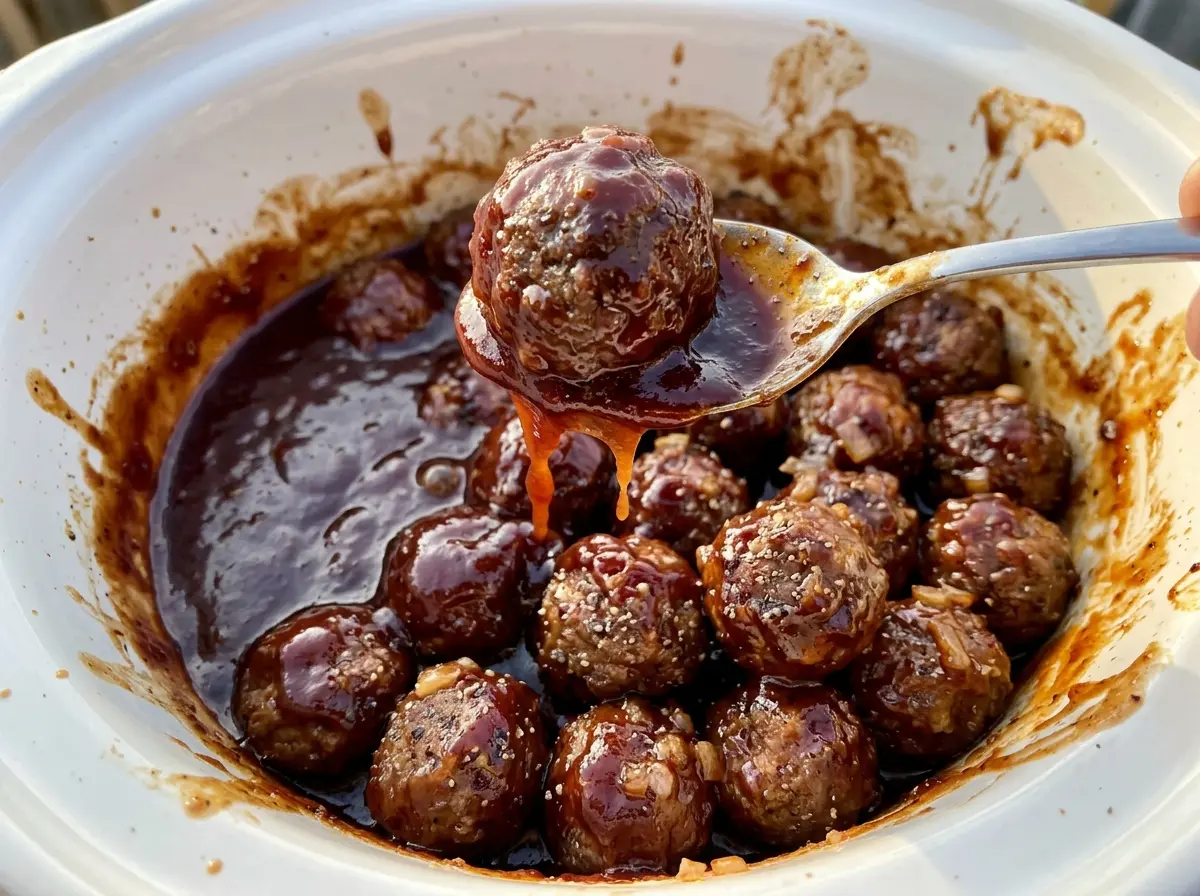
The sauce looks almost too simple when the grape jelly and barbecue sauce first meet in the slow cooker. Give them a good stir, though, and they turn into a glossy coating that clings to every meatball. These grape jelly BBQ meatballs are the kind of hands-off dish I reach for when I want a warm, savory-sweet bite without juggling several pans.
I use frozen, fully cooked meatballs and thaw them in the refrigerator overnight before they go into the cooker. That gives the sauce time to warm around them without having to guess how long a frozen center will take. The slow cooker handles the rest, and the grape jelly softens into the barbecue sauce as everything heats.
The finished meatballs are tender, easy to serve, and coated in a sweet-tangy sauce that’s built from just three ingredients.
Kitchen Note
These meatballs are already fully cooked, so I treat the slow-cooker time as a gentle warm-through, not a long braise. Once the centers are hot, more time can make the meatballs firmer instead of better.
Save these grape jelly BBQ meatballs for an easy slow-cooker batch with a glossy sweet-tangy sauce.
Why the Sweetness Doesn’t Take Over the Sauce
Grape jelly brings a clear sweetness, but it isn’t the only flavor in the pot. Barbecue sauce has its own tang and savory depth, which keeps the finished coating from tasting like warmed jelly. Stirring the two together gives each meatball both sides of that balance in every bite.
The ratio also means you don’t have to add another liquid to make a sauce. The jelly softens as it warms, while the barbecue sauce gives the mixture a consistency that can coat the meatballs. The result should look glossy rather than watery, with enough sauce clinging to the outside for each bite to taste balanced.
Because the flavor of barbecue sauce varies by brand, the sauce you choose has a noticeable effect on the finished dish. A sweeter one will lean more mellow; a tangier or smokier one will make the contrast with the jelly more pronounced. Keep that in mind when choosing a bottle, especially if you already know you prefer one style.
What the Jelly, Barbecue Sauce, and Meatballs Each Bring

- Frozen fully cooked meatballs — Since the meatballs are already cooked, this recipe is about heating them through and coating them in sauce. A standard frozen package works well; choose a familiar, plainly seasoned variety so its seasoning doesn’t compete with the barbecue sauce. Raw meatballs aren’t a direct swap because they need a different cooking approach.
- Grape jelly — Smooth jelly melts into the sauce and gives it its recognizable sweet edge. A basic grocery-store grape jelly is all you need; there’s no advantage to buying a specialty version here. Grape preserves have fruit pieces and won’t blend into the same smooth coating, so I stick with jelly for this texture.
- Barbecue sauce — This is where you can steer the flavor without changing the method. A familiar, affordable sauce is fine, and its sweetness, smoke, and tang will shape the final balance. Choose a style you already like on its own; there isn’t a separate seasoning blend to cover up a sauce you don’t enjoy.
From a Smooth Sauce Base to Evenly Heated Meatballs
Thaw the Meatballs in the Refrigerator
Move the frozen meatballs to the refrigerator the night before you plan to cook. They should be thawed before they go into the slow cooker, which keeps the cook time more predictable than starting with frozen centers. Keep them chilled until you’re ready to add them. If they’re still frozen in the middle, give them more time in the refrigerator rather than relying on the listed cooker window.
Stir the Jelly and Barbecue Sauce Together
Use a 5-quart slow cooker and stir the grape jelly and barbecue sauce together in the cooker until combined. The jelly can be firm when cold, so press and stir it against the side of the insert to break it up. Before adding the meatballs, look for a mostly uniform sauce instead of separate pockets of jelly and barbecue sauce. Mixing in the cooker keeps the full batch together from the start.
Coat the Meatballs and Cook Until Hot
Add the thawed meatballs and stir until they’re coated, then cover the slow cooker. Cook on LOW for 3–4 hours or on HIGH for 1 1/2–2 hours. Slow cookers don’t all heat at precisely the same rate, so check the centers of several meatballs rather than judging by the clock alone. They’re ready when those centers reach 165°F.
How to Change the Flavor Without Losing the Easy Method
Use a Smokier or Spicier Barbecue Sauce
Choose a smoky or spicy barbecue sauce in place of a mild, sweet one, keeping the same quantity. The grape jelly will still soften the sauce’s sharper edges, but the finished meatballs will have a deeper smoky note or a noticeable kick. This is the simplest way to shift the flavor without adding another ingredient.
Make a Gluten-Free Batch
Replace the regular frozen meatballs with gluten-free fully cooked meatballs and use gluten-free barbecue sauce; keep the grape jelly. The sauce’s sweetness and texture stay much the same, though the meatballs’ seasoning may vary by brand. Thaw the meatballs in the refrigerator as usual and cook until their centers are hot through.
Storage and Reheating
- Refrigerator: Refrigerate leftovers within 2 hours in a covered container and use them within 3–4 days. The sauce firms up when cold and loosens as it warms.
- Freezer: Freeze in an airtight freezer-safe container for up to 2 months for best quality. Thaw overnight in the refrigerator; the sauce may need a stir after thawing.
- Reheating: Warm a portion covered in the microwave in short intervals, stirring between, or heat gently in a saucepan. Avoid prolonged high heat, which can dry out the meatballs and make the sauce catch.
Questions That Come Up Before the Slow Cooker Goes On
Grape Jelly BBQ Meatballs
Ingredients
Equipment
Method
- Thaw the meatballs in the refrigerator overnight.
- Stir the grape jelly and barbecue sauce together in a 5-quart slow cooker until combined.
- Add the meatballs and stir to coat.
- Cover and cook on LOW for 3–4 hours or HIGH for 1 1/2–2 hours, until the centers of several meatballs reach 165°F.