Garlic Parmesan bowtie pasta with beef hits that sweet spot between comforting and fast. The bowties catch the sauce in their folds, the beef gives every bite some substance, and the Parmesan cream clings instead of pooling in the bottom of the bowl. It’s the kind of pan dinner that disappears fast because it tastes like you spent more time on it than you did.
What makes this version work is the order. Browning the beef first leaves behind those browned bits that give the sauce depth, and using the same skillet means nothing gets wasted. The cream only needs a gentle simmer before the Parmesan goes in; if you rush it over high heat, the sauce can turn grainy or separate. The reserved pasta water matters too, because that starch helps loosen the sauce without thinning it into nothing.
Below, I’ve added the timing detail that keeps the sauce smooth, plus a few swaps that still hold onto the same creamy, garlicky finish.
The sauce coated the bowties perfectly and never broke, even after I added the beef back in. My picky kid asked for seconds, which never happens with pasta at our house.
Save this garlic Parmesan bowtie pasta with beef for a creamy skillet dinner that comes together fast and stays silky.
The One Thing That Keeps This Cream Sauce from Turning Grainy
The sauce in this dish wants to stay smooth, but Parmesan can turn clumpy fast if the heat is too aggressive. The cream should be at a gentle simmer, not a rolling boil, before the cheese goes in. That gives the Parmesan time to melt into the fat instead of seizing up into little bits.
The other piece that matters is the pasta water. A splash of that starchy water helps the sauce loosen and cling at the same time, which is exactly what you want with bowties. Too much and the sauce turns loose and greasy; just enough and it turns glossy.
What Each Ingredient Is Actually Doing in This Dish
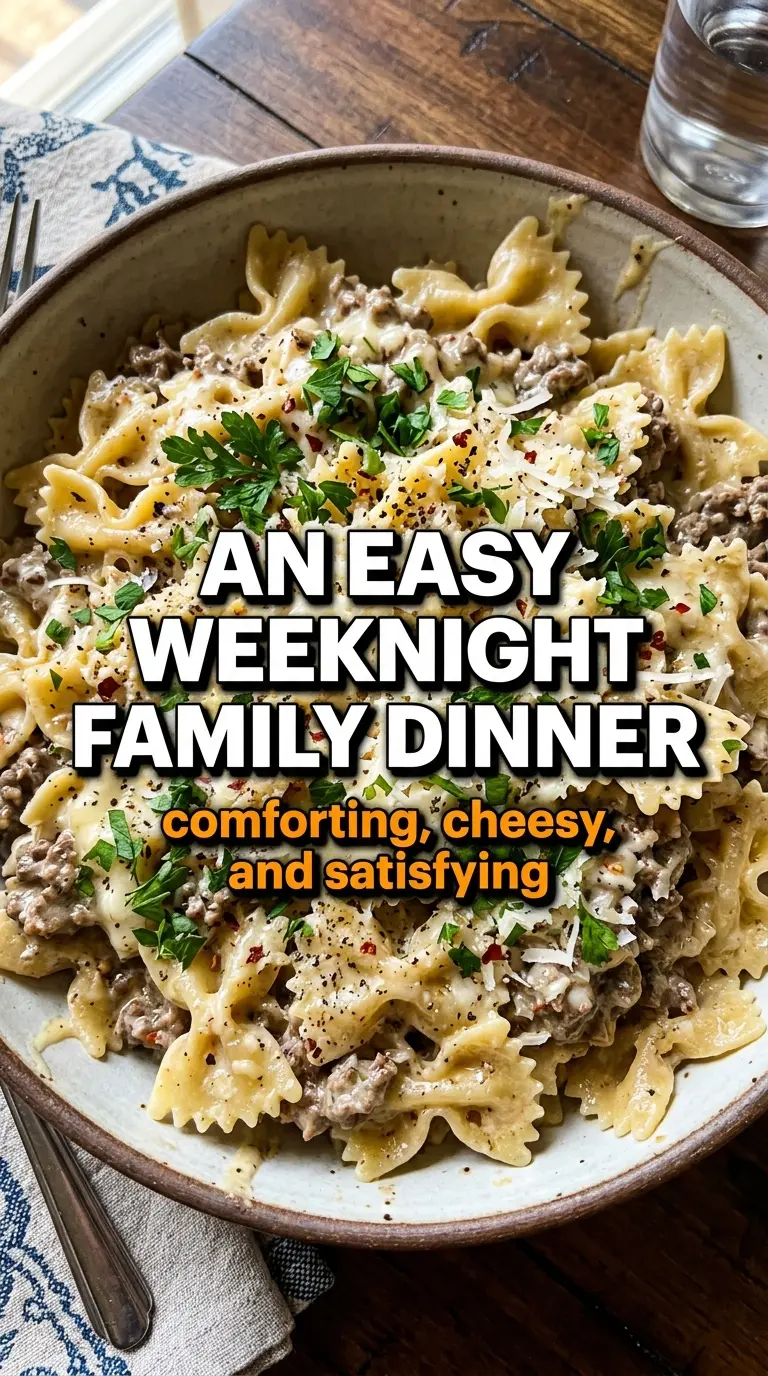
- Bowtie pasta — The ridges and folds trap the sauce better than a smooth noodle. If you only have penne or rotini, those work too, but you lose a little of the sauce-catching effect that makes bowties so good here.
- Ground beef — Use regular or lean ground beef. A little fat helps the sauce taste fuller, but if your beef is very fatty, drain off the excess after browning so the cream doesn’t get slick.
- Garlic — Fresh minced garlic is worth using here because it blooms in butter and gives the whole pan that savory base. Pre-minced garlic will work in a pinch, but it cooks faster and can taste sharper, so keep the heat low.
- Heavy cream — This is what gives the sauce body. Half-and-half can work, but it won’t cling the same way and it’s more likely to thin out once the pasta goes in.
- Parmesan — Grate it fresh if you can. Shelf-stable grated Parmesan can leave the sauce gritty because it doesn’t melt as cleanly.
- Reserved pasta water — This is the quiet ingredient that saves the sauce if it tightens up. Add it a splash at a time until the pasta is coated and glossy.
Building the Beef, Then Letting the Sauce Come Together in the Same Pan
Brown the Beef First
Cook the ground beef in a large skillet over medium-high heat until it loses its pink color and starts picking up browned edges. That browned layer on the bottom of the pan is part of the flavor, so don’t rush to wipe it out. Season the beef as it cooks so the meat tastes seasoned on its own, not just coated at the end. If there’s a lot of grease in the pan, drain off the extra before moving on.
Wake Up the Garlic in Butter
Once the beef is out, melt the butter in the same skillet and add the garlic. Stir it for about 30 seconds, just until it smells warm and fragrant. If the garlic goes from pale to browned, it turns bitter fast, and that bitterness will carry through the whole sauce. Keep it moving and lower the heat if the pan still feels too hot.
Let the Cream and Parmesan Melt Together
Pour in the heavy cream and bring it to a gentle simmer, then whisk in the Parmesan a little at a time. The sauce should turn smooth and slightly thick, with no grainy bits floating around. If it looks broken, the heat was probably too high or the cheese went in too quickly. Pull the pan off the burner for a moment and whisk in a splash of pasta water to bring it back.
Coat the Pasta Without Overcooking It
Add the drained bowties and the beef back to the skillet and toss until every piece is coated. The pasta should finish in the sauce, not sit there long enough to go soft. If the pan looks tight, add a little reserved pasta water until the sauce slips around the noodles in a creamy layer. Finish with parsley and extra Parmesan while it’s still hot so the cheese melts lightly on top.
Three Ways to Adjust It Without Losing the Comfort-Food Feel
Make It a Little Lighter
Use lean ground beef and stir in a little extra pasta water instead of more cream if the sauce tightens up. The result won’t be as rich, but it will still taste creamy and still cling to the pasta.
Go Gluten-Free
Use a sturdy gluten-free pasta that holds up in sauce, then undercook it by a minute so it finishes in the skillet. Some gluten-free shapes break down faster, so toss gently once the sauce is in the pan.
Swap the Beef for Italian Sausage
Italian sausage brings more seasoning and a little spice, so the dish tastes bolder right away. If you use it, go lighter on the salt until the very end because sausage usually carries plenty on its own.
Add a Vegetable Without Watering It Down
Stir in baby spinach at the very end or fold in sautéed mushrooms after the beef browns. Raw vegetables with a lot of moisture can thin the sauce, so cook them off first if you want them to taste integrated instead of watery.
Storage and Reheating
- Refrigerator: Store leftovers in an airtight container for up to 4 days. The sauce will thicken as it chills, and the pasta will absorb some of the cream.
- Freezer: It freezes, but the cream sauce can separate a bit when thawed. If you do freeze it, cool it completely first and reheat gently with a splash of cream or milk.
- Reheating: Warm it in a skillet over low heat with a spoonful or two of water, milk, or cream. High heat is the mistake that makes the sauce break and the pasta dry out.
Questions I Get Asked About This Recipe
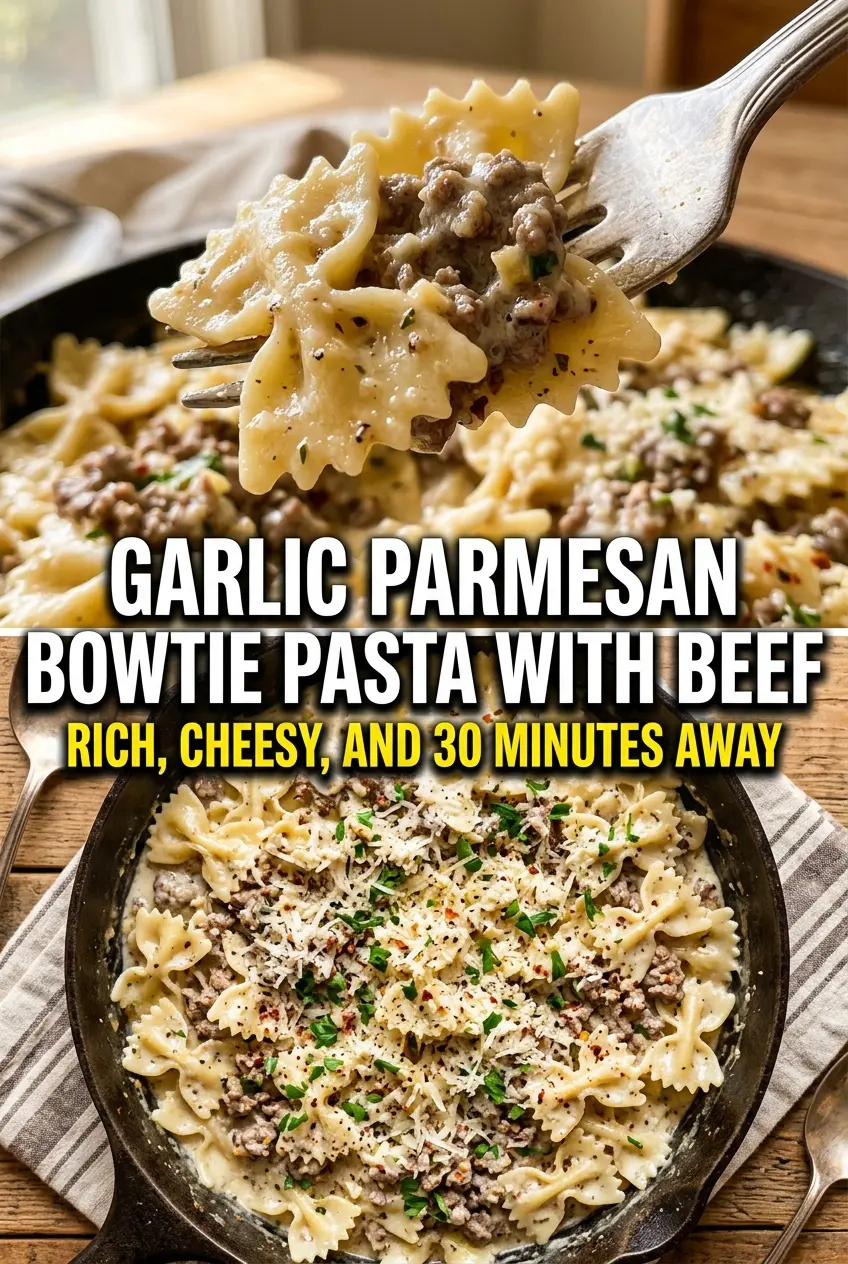
Garlic Parmesan Bowtie Pasta with Beef
Ingredients
Equipment
Method
- Cook the bowtie pasta in salted boiling water according to package directions. Before draining, reserve 1/2 cup pasta water.
- Brown the ground beef in a large skillet over medium-high heat for 6–7 minutes, seasoning with half the salt and pepper as it cooks. Then remove the beef and set aside.
- Melt the butter in the same skillet and sauté the minced garlic for 30 seconds, until fragrant.
- Pour in the heavy cream and bring to a gentle simmer, then whisk in the Parmesan until smooth.
- Return the beef and cooked pasta to the skillet and toss to coat, loosening with reserved pasta water if needed.
- Season with the remaining salt and pepper, then garnish with fresh parsley and extra Parmesan before serving.