The butter and sugar turn pale and fluffy before the flour ever goes in, and that’s when these sugar cookie bars start to feel like more than a shortcut to individual cookies. The dough presses into one 9×13-inch pan, bakes as a single slab, and gets a smooth layer of vanilla frosting once it’s cool. I like that the edges and center come out together, so there’s no rotating trays or scooping batch after batch.
These bars have a soft, tender bite, with enough structure to cut into neat squares after the frosting sets. The dough is mixed only until the flour disappears, which keeps the bars from turning tough. Take a moment to press it evenly into the corners; an even layer gives the pan a better chance of baking uniformly. Once frosted, each square has that familiar sugar-cookie flavor without the fuss of rolling and cutting dough.
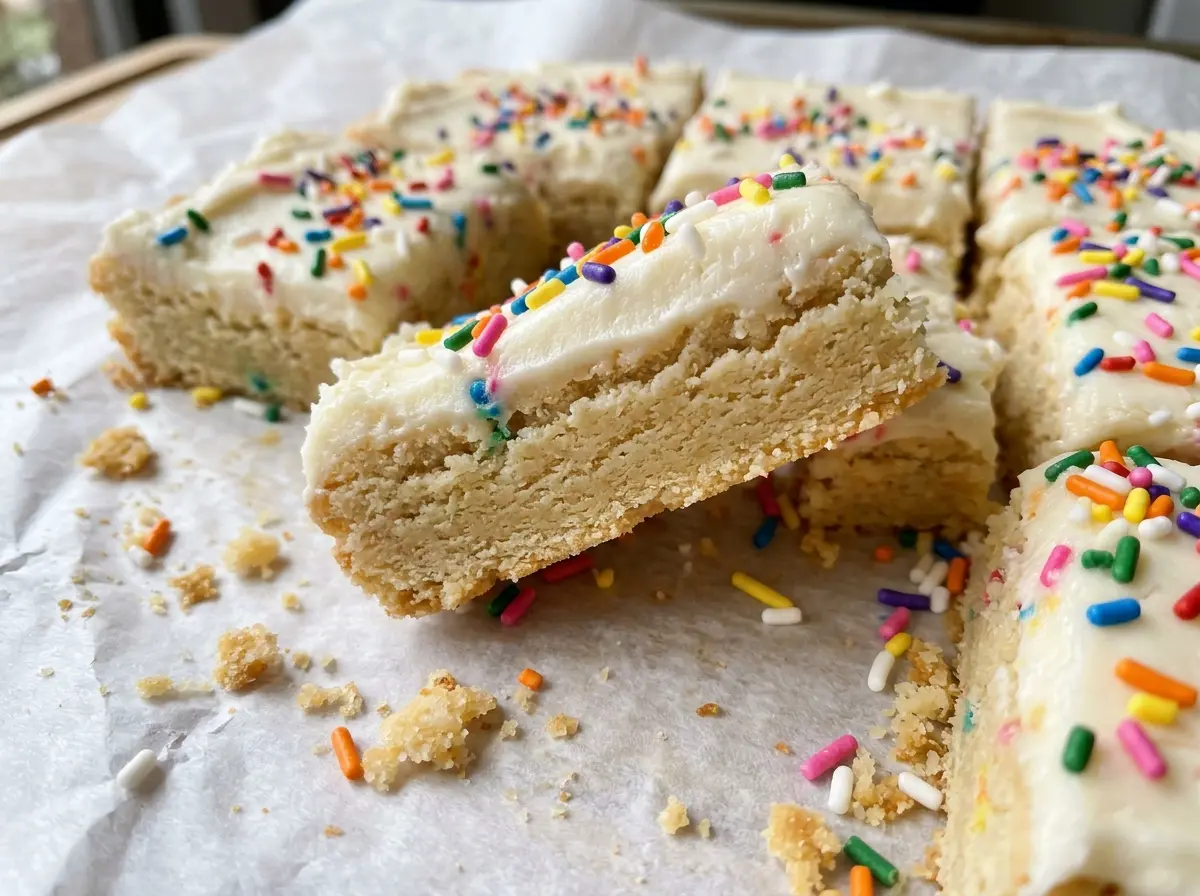
Kitchen Note
For creaming, softened butter should give slightly when you press it, but it shouldn’t look shiny or melted. Butter that’s too soft won’t hold air as well when you beat it with the sugar, so give it a little more time to cool if it’s started to slump.
Save these frosted sugar cookie bars for a bake sale or a batch to share—soft cookie centers, vanilla frosting, and no individual cookies to scoop.
Why an Even Slab Matters More Than a Perfectly Smooth Top
Cookie-bar dough is thicker than cake batter, so it won’t level itself once it’s in the pan. If one corner is packed higher than the rest, that section will take longer to bake while the thinner edges move ahead. The goal isn’t a polished surface; it’s a fairly even depth from corner to corner. A few shallow marks from your fingers won’t hurt the finished bars.
This is also why I use the specified 9×13-inch pan rather than squeezing the dough into a smaller dish. The pan gives the dough room to spread into a slab that can be divided into 24 bars without changing the thickness dramatically. Evenness matters more than pressing hard: compacting the dough aggressively can make the finished texture heavier. Use your fingertips to nudge it into place, especially along the edges, then leave the surface level enough that the frosting can glide over it later.
What the Butter, Flour, and Two Sugars Each Bring to These Bars
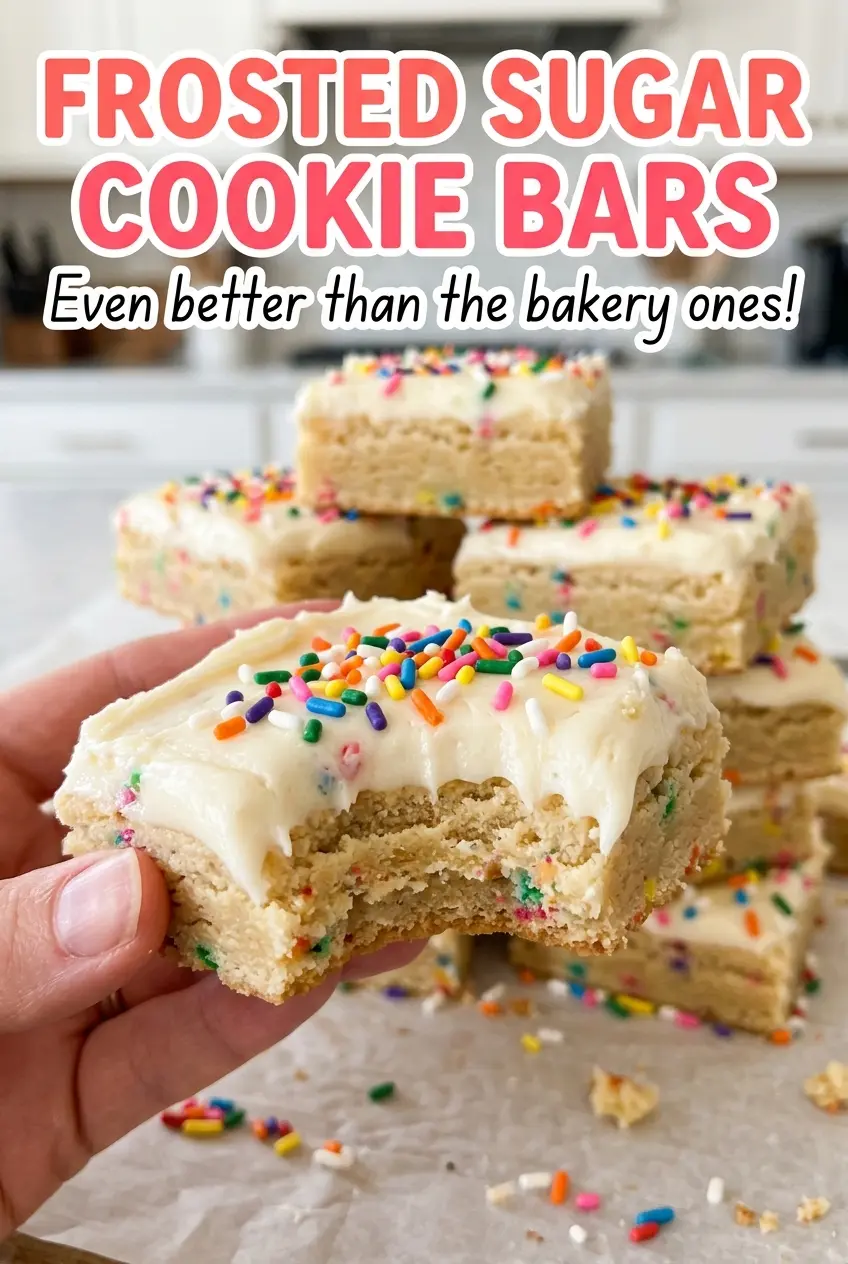
- Unsalted butter — Butter supplies richness in both the bars and the frosting, while unsalted butter lets the measured salt stay in control. Use it softened for both mixtures; there’s no need for an expensive specialty butter here, just one that tastes fresh.
- Granulated sugar — This sweetens the cookie base and creams with the butter to create a lighter mixture before the eggs go in. Keep it granulated in the dough; powdered sugar won’t behave the same way during creaming.
- Eggs — Eggs bind the dough and help give the bars their structure. Bring them in one at a time so they mix into the butter mixture evenly rather than leaving it streaky.
- All-purpose flour — Flour gives the slab enough body to hold its shape after cutting. Spoon it into the measuring cup and level the top instead of dipping the cup straight into the bag; a packed cup can leave you with too much flour and a drier, firmer bar.
- Baking powder — This gives the bars a little lift, keeping them from eating like a dense block of dough. Check that yours is fresh if it has been open in the pantry for a long time.
- Powdered sugar — Powdered sugar makes the frosting smooth and spreadable. Granulated sugar won’t dissolve into the same soft icing, so this is one ingredient I wouldn’t swap.
- Vanilla extract — Vanilla ties the plain cookie base and buttery frosting together. A standard pure or imitation vanilla both work; use the one you keep on hand.
- Milk — Milk loosens the frosting so it spreads instead of dragging across the cooled bars. Start with the listed smaller amount, then use the remaining tablespoon only if the frosting needs it.
From Creamed Butter to a Frosted, Cuttable Slab
Cream the Butter and Sugar Until Light
Heat the oven to 350°F and coat a 9×13-inch pan with nonstick cooking spray. Beat the softened butter with the granulated sugar for about 2 minutes, until the mixture looks lighter and fluffy rather than dense. Add the eggs one at a time, beating after each, then mix in the vanilla. If the mixture looks a little uneven just after an egg goes in, keep mixing until it comes together before adding the next one.
Bring the Dry Ingredients Together Gently
In a separate bowl, whisk the flour, baking powder, and salt so the leavener is distributed through the flour. Add that mixture to the butter mixture and mix on low just until combined. Stop when you no longer see dry flour; a few extra seconds of mixing won’t improve the dough and can make the bars tougher. The finished dough will be thick enough to press into the pan rather than pour.
Press, Bake, and Let the Bars Cool
Transfer the dough to the prepared pan and press it into an even layer, paying attention to the corners. Bake for 20 to 24 minutes, until the edges are lightly golden and a toothpick inserted in the center comes out with a few moist crumbs. A clean toothpick can mean the bars have gone too far, so don’t wait for the center to look completely dry. Let the pan cool completely, about 1 1/2 hours, before frosting; a warm surface will soften the butter in the topping.
Mix the Frosting and Finish the Cuts
Beat the softened butter until smooth, then gradually beat in the powdered sugar, vanilla, salt, and 2 tablespoons of milk. The frosting should spread without running; add up to 1 tablespoon more milk if it feels too stiff. Spread it across the cooled bars, then let it set for about 20 minutes before cutting into 24 bars. If the frosting slides rather than holding its layer, give it more time to set before slicing.
Two Simple Ways to Adjust the Frosted Sugar Cookie Bars
Leave half the pan unfrosted
Spread frosting over one half of the cooled slab and leave the other half plain. You’ll have frosted and unfrosted bars from the same batch, which is handy when you want a choice between a sweeter top and a simple sugar-cookie finish.
Skip the frosting for a less-sweet batch
Leave off the frosting altogether and cut the cooled slab into bars. The cookie base still has its full sugar amount, but omitting the topping makes each piece less sweet and avoids the extra powdered sugar and butter.
Storage and Reheating
- Refrigerator: Store frosted bars in an airtight container for up to 4 days. The frosting will firm up when chilled.
- Freezer: Freeze the unfrosted bars, tightly wrapped or in an airtight container, for up to 2 months. Thaw them in the refrigerator, then frost once they’re fully thawed and cool.
- Reheating: These bars don’t need reheating. Let refrigerated bars sit at room temperature for about 20 minutes before serving; microwaving can soften or melt the frosting.
Questions That Come Up When Baking These Cookie Bars
Frosted Sugar Cookie Bars
Ingredients
Equipment
Method
- Heat the oven to 350°F and coat a 9x13-inch baking pan with nonstick cooking spray.
- In a large bowl, beat the softened butter and granulated sugar until light and fluffy, about 2 minutes.
- Beat in the eggs one at a time, then mix in the vanilla.
- In a separate bowl, whisk together the flour, baking powder, and salt.
- Add the dry mixture to the butter mixture and mix on low just until combined.
- Press the dough evenly into the prepared pan.
- Bake for 20-24 minutes, until the edges are lightly golden and a toothpick inserted in the center comes out with a few moist crumbs.
- Cool the bars completely in the pan, about 1 1/2 hours.
- Beat the softened butter until smooth.
- Gradually beat in the powdered sugar, vanilla, salt, and 2 tablespoons milk; add up to 1 tablespoon more milk as needed for a spreadable frosting.
- Spread the frosting over the cooled bars.
- Let it set for about 20 minutes, then cut into 24 bars.