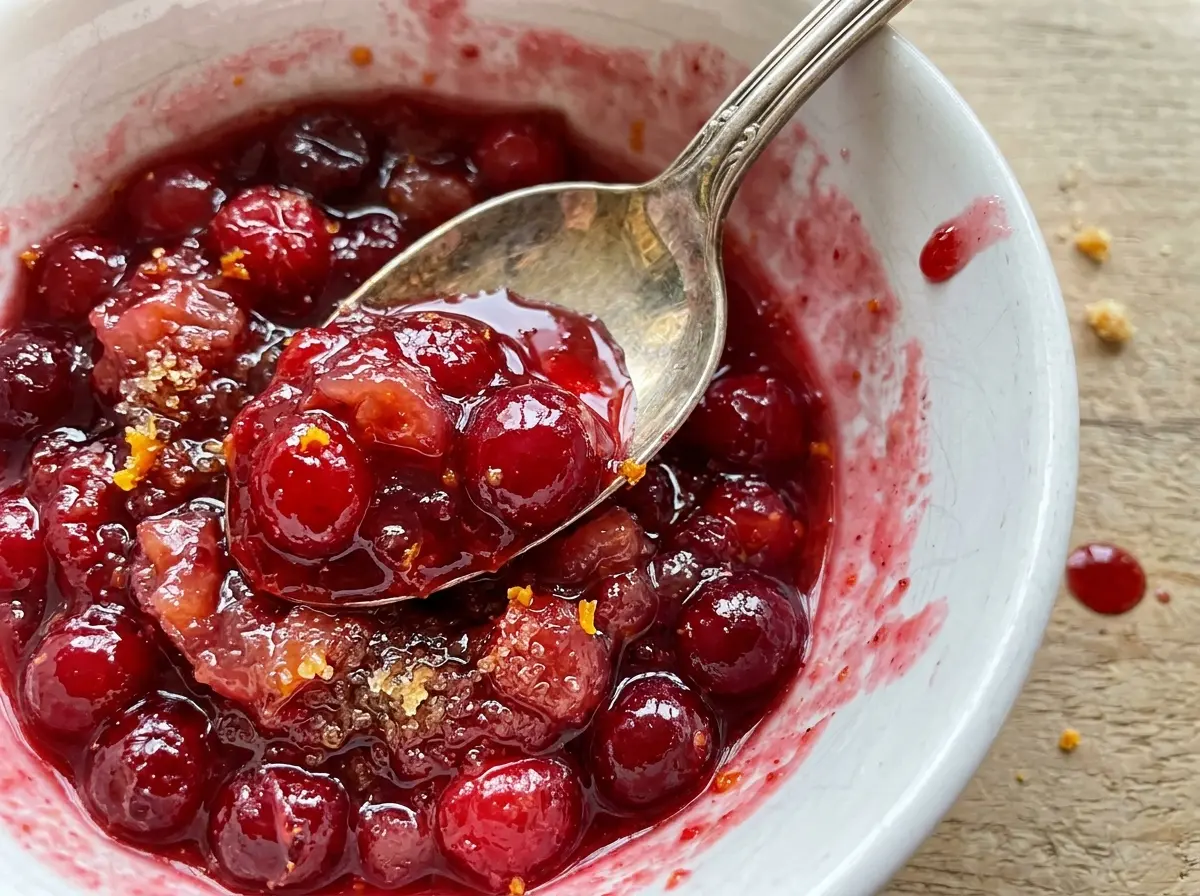
As the cranberries heat, they start popping one by one, and the liquid in the pan turns a deep ruby color. I like watching that change because it’s the clearest sign that the berries are doing the work of thickening the sauce. Fresh Cranberry Orange Sauce keeps the fruit’s tart edge, with orange woven through instead of taking over.
Here, orange juice goes into the saucepan with water and sugar before the cranberries, so the sugar dissolves evenly before the fruit starts to cook. A short simmer gives you a sauce with plenty of cranberry character; chilling lets it settle into a spoonable texture without any extra thickener. The finished sauce is bright, tart-sweet, and full of tender berries.
Kitchen Note
Grate just the orange-colored peel, and stop before you reach the white pith. Finely grated zest spreads its aroma through the sauce without leaving bitter flecks.
Save this Fresh Cranberry Orange Sauce for a bright, tart-sweet bowl that thickens as it chills.
Why Cranberry Sauce Looks Thin Before It Chills
Right after simmering, this sauce may look looser than you expect. That’s normal. Cranberries release juice as they burst, so the pan holds plenty of liquid while the berries are still hot. The fruit also brings natural pectin, which helps the sauce thicken as it cools. There’s no need to add cornstarch or keep cooking until the sauce looks like jam.
Use the cues together: most berries should have burst, and the liquid should look thicker than it did at the boil. Once the sauce reaches room temperature and then chills, it firms up further. If you judge it only while it’s hot, you may keep simmering past the point you need and end up with a tighter, more reduced sauce. A little looseness in the saucepan is part of the process; the chilled spoonful is the better measure of its final texture.
What the Orange and Cranberries Each Bring to the Pot
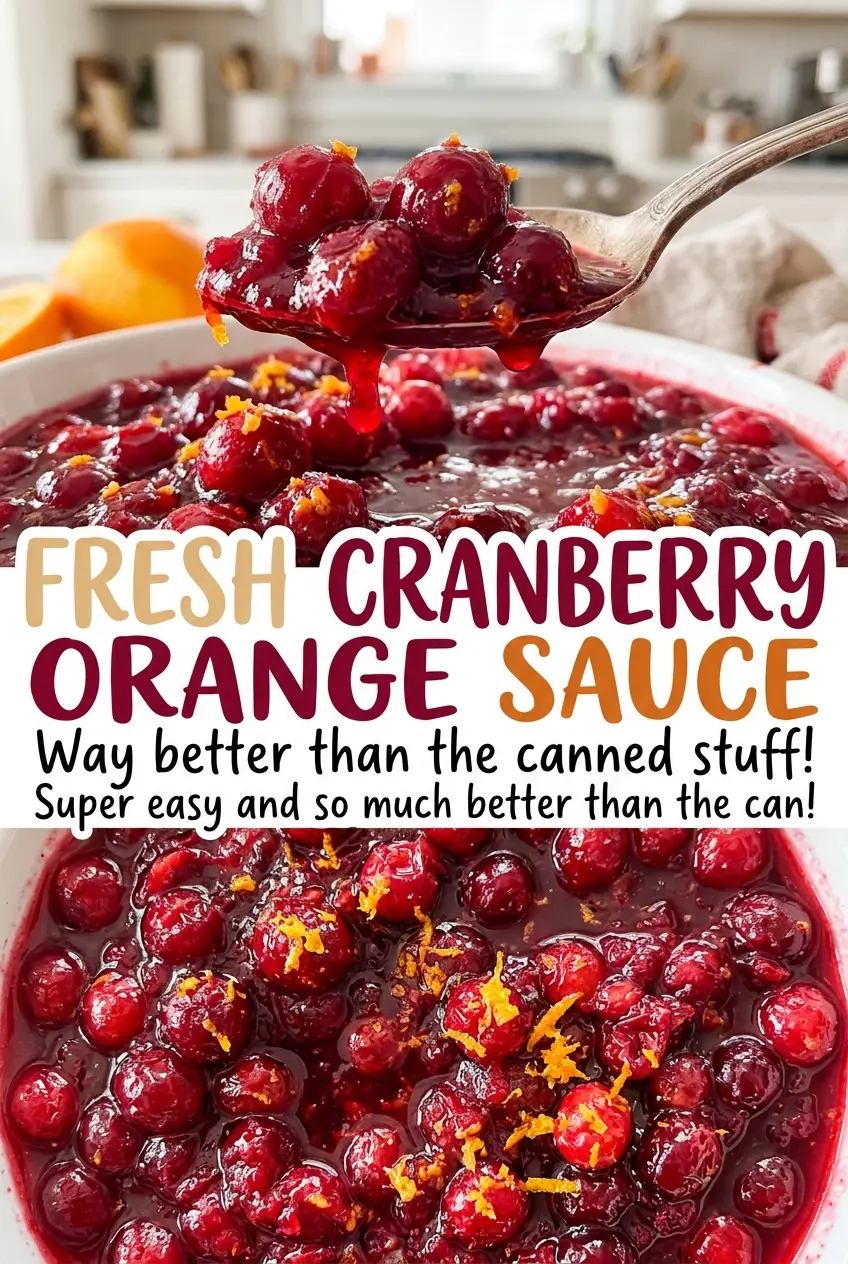
- Fresh cranberries — Their sharp, fruity taste is the backbone of the sauce, and their skins and pulp give it body as they burst. Pick through the bag and rinse the berries before they go into the pan. Firm berries are preferable; shriveled or soft ones don’t give the same fresh, tart result. Frozen cranberries are a possible stand-in, but they can release water differently, so the texture and timing are less predictable.
- Orange juice — Juice softens cranberry tartness and gives the simmering liquid a rounded citrus note. Fresh-squeezed or bottled 100% orange juice both work; choose juice you’d enjoy drinking, since its taste carries into the finished sauce. More juice isn’t a direct replacement for the zest: the liquid brings fruitiness, while the peel supplies fragrant oils.
- Orange zest — The finely grated peel adds a more concentrated orange aroma than juice alone. A fine grater distributes it through the sauce, while larger strips would leave stronger bites of peel. There isn’t a true substitute in this ingredient list, so don’t count on extra juice to do the same job.
- Granulated sugar and water — Sugar rounds off the cranberries’ sharpness and dissolves into the simmering liquid; water keeps the orange from crowding out the berry flavor. Granulated sugar is the reliable choice here because it dissolves cleanly. A dry alternative sweetener can change how the sauce tastes and thickens, so use a granulated substitute only if it behaves like regular sugar.
From Dissolved Sugar to a Chilled, Spoonable Sauce
Bring the Sweet Citrus Base to a Boil
Combine the water, orange juice, and sugar in a 2-quart saucepan. Set the pan over medium-high heat and stir as the liquid warms. Wait for a full boil and for the sugar to dissolve; gritty sugar at the bottom means it needs another stir. Starting with the sugar dissolved gives the cranberries an even base to cook in.
Simmer Until Most of the Berries Burst
Stir in the picked-over, rinsed cranberries and finely grated orange zest, then reduce the heat to medium. Simmer for 10 to 12 minutes, stirring occasionally. You’ll hear the berries pop and see their skins split; the sauce will deepen in color as the fruit softens. Stop when most cranberries have burst and the liquid has thickened, rather than waiting for every berry to disappear.
Cool First, Then Let the Refrigerator Finish
Transfer the sauce to a serving bowl and let it cool to room temperature. Don’t cover it while it’s still steaming; once it has cooled, cover the bowl and refrigerate until chilled for at least 2 hours. The sauce will become firmer as it chills, and the berry pieces will hold their shape in the spoonful. Serve it cold from the refrigerator.
Small Changes That Keep the Cranberry-Orange Balance
Choose fresh-squeezed or bottled orange juice
Fresh-squeezed juice gives the sauce a brighter, less uniform citrus note; bottled 100% orange juice tastes rounder and consistent. Keep the recipe’s listed quantity the same either way so the liquid balance stays intact.
Use granulated beet sugar for a cane-free version
If you avoid cane sugar, granulated beet sugar is a practical one-for-one replacement. It dissolves in the same way and keeps the sauce’s sweetness and texture close to the original; avoid swapping in a liquid sweetener, which changes the balance of the simmering liquid.
Storage and Reheating
- Refrigerator: Keep covered and use within 3 to 4 days. The sauce will stay thick and spoonable while chilled.
- Freezer: Freeze in an airtight freezer-safe container for up to 2 months. Thaw it in the refrigerator; a little separation is normal, and stirring brings it back together.
- Reheating: This sauce is served chilled, so reheating isn’t needed. Don’t warm the whole batch just to soften it; take out only the portion you plan to serve.
Questions That Come Up When Cranberry Sauce Cooks
Fresh Cranberry Orange Sauce
Ingredients
Equipment
Method
- In a 2-quart saucepan, combine the water, orange juice, and sugar; bring to a boil over medium-high heat, stirring until the sugar dissolves.
- Stir in the cranberries and orange zest.
- Reduce the heat to medium and simmer for 10 to 12 minutes, stirring occasionally, until most of the cranberries have burst and the sauce has thickened.
- Transfer the sauce to a serving bowl and let cool to room temperature.
- Cover and refrigerate until chilled, at least 2 hours.