The pastry is easiest to roll when it’s cold but flexible: too warm, and it can feel soft and sticky under your hands. I keep the thawed sheet in the refrigerator until I’m ready to fill it, then work steadily so it stays easy to handle. These fig and goat cheese puff pastry pinwheels turn that simple roll into golden, flaky little spirals with a creamy, tangy center.
Fig preserves bring sweetness, while goat cheese keeps the filling pleasantly savory. Fresh thyme and black pepper add a little aromatic edge without taking over. Spreading the mixture evenly matters more than making the roll look perfect; a thin, consistent layer gives every slice a balanced swirl.
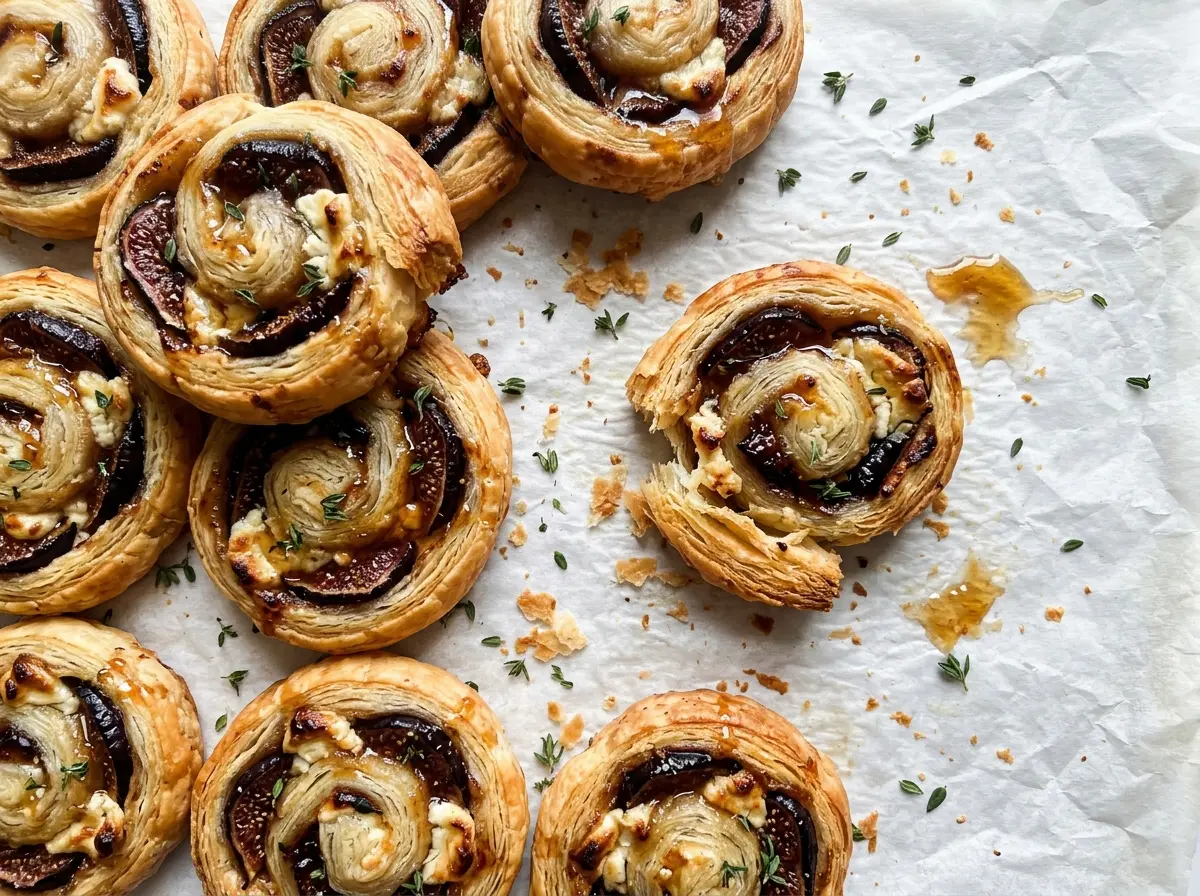
A narrow bare edge gives the egg wash somewhere to help seal the roll, and the short chill firms it up for slicing. Once baked, the pastry lifts into crisp layers around the soft filling, with fig peeking through each golden spiral.
Kitchen Note
Don’t rush the chill before slicing. When the roll feels firm, the rounds hold their shape instead of squashing into little ovals.
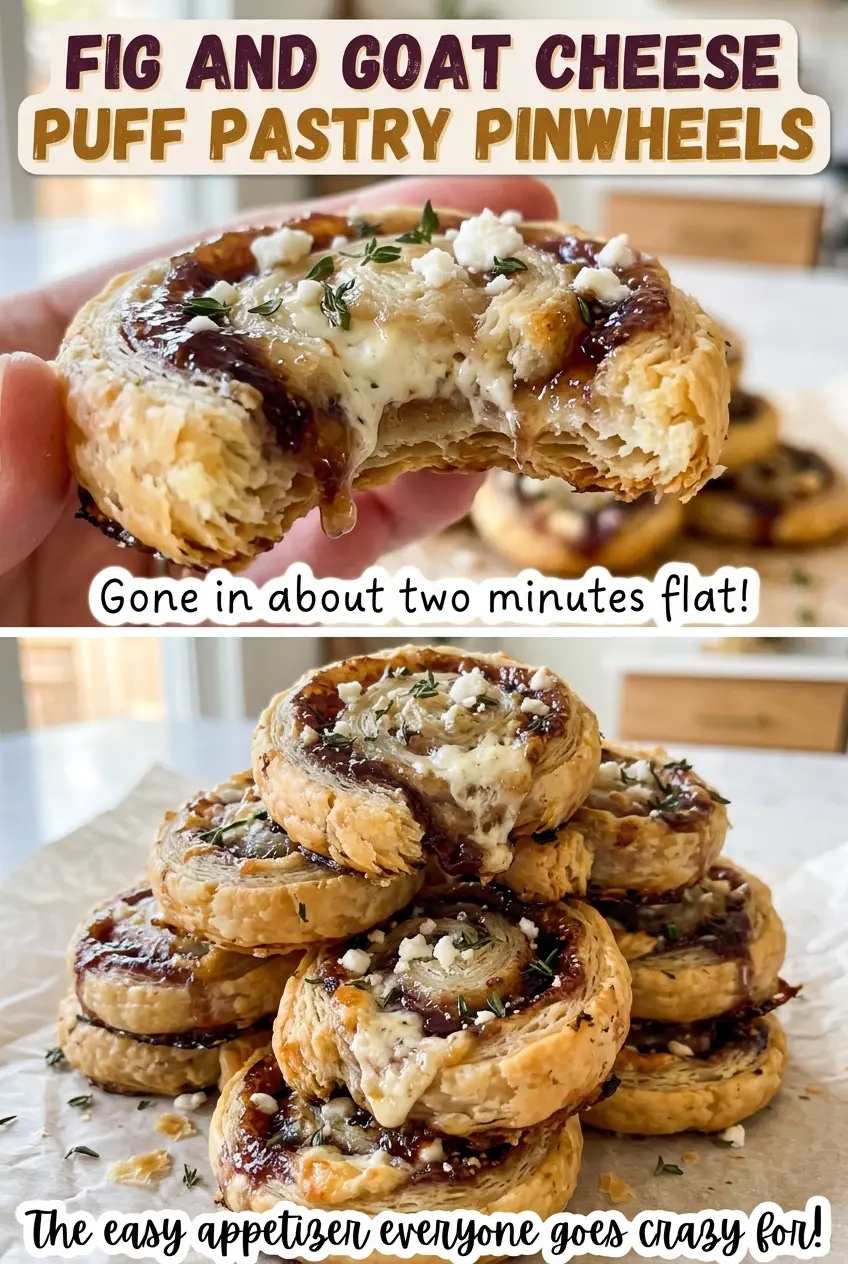
Save these fig and goat cheese puff pastry pinwheels for a flaky, savory-sweet bite with a creamy thyme center.
Why a Bare Pastry Edge Keeps the Fig Filling Inside the Spiral
Sweet preserves and soft cheese make a lovely filling, but they can slide toward the edge as the pastry rolls. Leaving a narrow strip bare along one long side gives you a clean place to seal the roll instead of trapping filling between the pastry layers at the seam. Brush that border lightly with egg wash, roll toward it, then press the pastry closed.
Try to spread the filling in an even layer all the way across the pastry, stopping at that bare edge. If one area gets a thick mound, that section can bulge as you roll while the thinner parts bake with less filling. You don’t need to press hard; a gentle, steady roll keeps the sheet intact and distributes the goat cheese and fig through each turn.
That balance is what makes these pinwheels look like pinwheels rather than pastries with a filling leak on one side. The egg wash has two jobs here: a little helps the seam hold, and the rest gives the tops their deep golden finish. Use a light hand so the wash coats the surface without pooling around the spirals.
What Fig Preserves, Goat Cheese, and Cold Pastry Bring to Each Bite
- Puff pastry — Choose a sheet that’s thawed enough to unfold without cracking but still cold to the touch. Keeping it cold helps the layers stay distinct as you handle and roll it; if it turns soft, pause and chill it until it’s manageable again.
- Goat cheese — Softened cheese blends more smoothly with the preserves, so you’re less likely to drag or tear the pastry while spreading. Its tang is an important counterpoint to the fig, and a firmer or milder cheese won’t give quite the same creamy, tart center.
- Fig preserves — The preserves provide concentrated fig sweetness and help make the filling spreadable. Their texture matters: a smooth, thick preserve is easier to distribute than a loose, runny one, which could make the filling harder to keep in an even layer.
- Fresh thyme and black pepper — Thyme brings a woodsy, savory note, and pepper keeps the sweet filling from tasting one-dimensional. Fresh thyme gives the mixture a brighter herbal character; both seasonings can be omitted for a simpler, gentler flavor, but there isn’t a direct swap that tastes quite the same.
- Egg and water — Beating them together makes a wash that helps the pastry edge seal and the tops brown. Brush lightly rather than letting it collect around the cut edges.
Roll, Chill, Slice, and Bake Without Flattening the Spirals
Mix a smooth, spreadable filling
Stir the softened goat cheese with the fig preserves, chopped fresh thyme, and black pepper until the mixture is combined. A few small streaks are less important than an even texture that spreads without pulling at the pastry. Set it aside while you prepare the sheet. Keep the oven at 400°F and line a large baking sheet with parchment paper.
Spread the filling and leave a sealing edge
Unfold the cold pastry on a clean work surface and gently press out the fold lines. Spread the filling evenly over the sheet, leaving a 1/2-inch border along one long edge. If the pastry starts feeling soft or sticky, handle it gently rather than pressing harder. That uncovered strip will become the outside seam of the roll.
Seal the roll and let it firm
Beat the egg with the water, then brush a little over the bare pastry border. Roll the pastry tightly toward that edge and press to seal. Set the roll seam-side down and chill it for 20 minutes, until it feels firm enough to slice. Cutting before it firms can compress the layers and make the rounds lose their neat shape.
Slice into rounds and bake until golden
Cut the chilled roll into 1/2-inch rounds and arrange them cut-side up on the prepared baking sheet. Brush the tops lightly with the remaining egg wash; too much wash can run down the sides instead of coating the tops. Bake for 16 to 20 minutes, until the pastry is puffed and golden brown. Let the pinwheels cool on the baking sheet for 5 minutes before serving.
Two Small Flavor Changes That Keep the Pinwheels Simple
Leave out the thyme for a softer flavor
Omit the fresh thyme if you’d rather let the fig and goat cheese stand on their own. The filling will taste sweeter and less herbal, while the rolling and baking method stays the same.
Skip the black pepper for a milder bite
Leaving out the black pepper makes the sweet-tangy filling gentler, without changing the pastry texture. This is a small adjustment rather than a full flavor makeover, so the fig and thyme remain at the center.
Storage and Reheating
- Refrigerator: Keep baked pinwheels in a covered container for up to 3 days. The pastry softens in storage, though the filling remains creamy.
- Freezer: Freeze the baked, cooled pinwheels in a single layer, then transfer them to an airtight freezer container for up to 1 month for best quality. Thaw in the refrigerator before reheating.
- Reheating: Warm them in the oven until heated through and the pastry has crisped again. The microwave is quicker, but it softens the flaky layers.
Questions That Come Up When Making Puff Pastry Pinwheels
Fig and Goat Cheese Puff Pastry Pinwheels
Ingredients
Equipment
Method
- Heat the oven to 400°F.
- Line a large baking sheet with parchment paper.
- In a small bowl, mix the goat cheese, fig preserves, thyme, and black pepper until combined.
- Unfold the pastry on a clean work surface and gently press out any fold lines.
- Spread the filling evenly over the pastry, leaving a 1/2-inch border along one long edge.
- Beat the egg with the water.
- Brush the bare pastry border with a little egg wash.
- Roll the pastry tightly toward that edge.
- Press the pastry to seal.
- Chill the roll seam-side down for 20 minutes, until firm enough to slice.
- Cut the roll into 1/2-inch rounds and arrange them cut-side up on the baking sheet.
- Brush the tops lightly with the remaining egg wash.
- Bake for 16 to 20 minutes, until puffed and golden brown.
- Cool on the baking sheet for 5 minutes before serving.