The butter and sugars turn pale and creamy before the flour ever goes in, and that’s the moment these cookies start getting their texture. I used to rush past it; the finished cookies spread more and had less of that soft, chewy middle. Give the mixer about two minutes, then let the espresso chocolate chip cookies rest in the refrigerator while the oven heats.
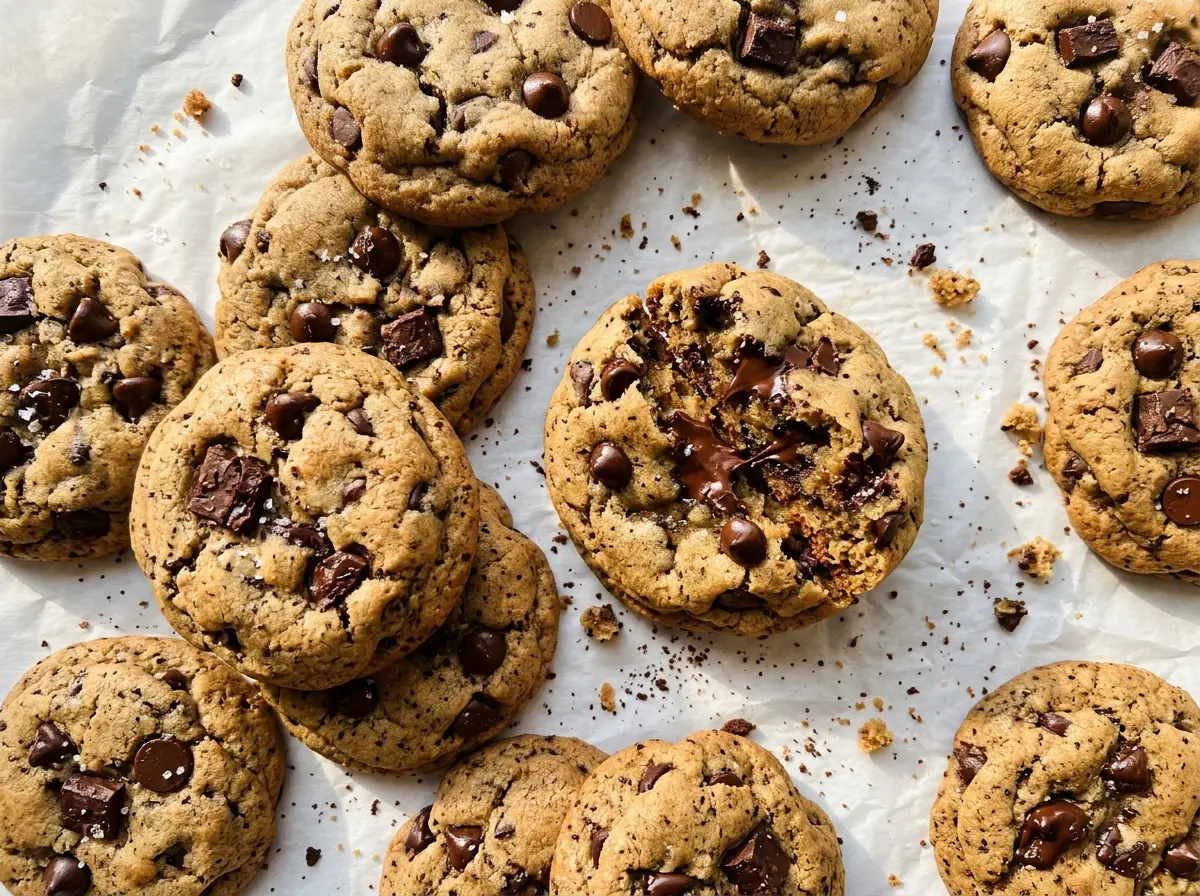
Instant espresso powder brings out the deep, familiar taste of semisweet chocolate without making each bite taste like a cup of coffee. A short chill gives the dough time to firm up, so it’s easier to portion and the cookies hold their shape. They come out with lightly browned edges, soft-looking centers, and pockets of warm chocolate.
Kitchen Note
Room-temperature eggs blend into creamed butter more smoothly than cold ones. I set them out before I start so the butter stays creamy instead of turning lumpy when the eggs go in.
Save these espresso chocolate chip cookies for a bake when you want deep chocolate flavor, soft centers, and a little coffee in the background.
Why These Taste Chocolate-Forward, Not Like Coffee
Espresso powder is easy to overthink in a cookie dough. Here, it isn’t meant to turn the cookies into a mocha dessert; its job is to deepen the chocolate flavor already coming from the semisweet chips. The result should still read as a chocolate chip cookie first, with a gentle roasted note behind it.
That balance is why I keep the espresso powder in the dry mix and use the stated amount rather than adding brewed coffee or espresso. A liquid coffee addition changes the moisture in the dough, while the powder brings concentrated flavor without thinning it. The short refrigeration gives the mixed dough time to firm up before it’s scooped, so the cookies bake into distinct rounds instead of running together on the pans.
The other flavor decision is the mix of brown and granulated sugar. Brown sugar brings a deeper, caramel-like sweetness and helps keep the centers tender; granulated sugar keeps the cookies from becoming too soft throughout. Neither sugar is just there for sweetness, and replacing one entirely changes how the cookies bake.
What Each Ingredient Is Doing in These Espresso Cookies

- All-purpose flour — It gives the cookies enough structure to hold the chocolate chips and form a soft center. Keep it all-purpose here; a different flour can change how much moisture the dough absorbs and how the cookies spread.
- Baking soda — This is the leavener that helps the cookies spread and brown. Check that yours is fresh if it’s been open for a long time; stale baking soda can leave cookies flatter and less evenly baked.
- Fine salt — Fine grains distribute through the dough more evenly than coarse crystals, so each cookie gets balanced seasoning without salty pockets.
- Instant espresso powder — Use powder made to dissolve, not brewed coffee. A fresh jar gives a clearer roasted note; there’s no need to buy an expensive specialty brand for this small amount.
- Unsalted butter — Softened butter creams properly with the sugars and gives the dough its richness. Use unsalted so the fine salt in the dough stays in control; it should yield slightly when pressed but not look shiny or melted.
- Light brown and granulated sugars — The two sugars work together for a tender middle and set edges. Break up any hard lumps in the brown sugar before mixing so they don’t leave sticky pockets in the dough.
- Large eggs and vanilla extract — Eggs bind the dough, and vanilla rounds out the chocolate and espresso. Pure vanilla is lovely, but the less expensive extract works well here because the chocolate is the main flavor.
- Semisweet chocolate chips — They hold their shape in the oven and give you chocolate in every bite. A standard bag works; choose a brand you enjoy eating since the chips are one of the strongest flavors in the finished cookies.
From Creamed Butter to Cookies With Set Edges
Whisk the Dry Ingredients Evenly
Whisk the flour, baking soda, fine salt, and espresso powder together in a medium bowl. Keep whisking until the espresso powder looks evenly dispersed rather than sitting in darker streaks. This distributes both the leavener and the coffee flavor through the dough. Set the bowl aside while you cream the butter and sugars.
Cream the Butter and Sugars
Beat the softened butter with both sugars in a large bowl using an electric mixer on medium speed. Give it about two minutes, stopping when it looks creamy and blended rather than greasy or separated. If pieces of butter are still visible, scrape the bowl and continue until the mixture is uniform. Starting with butter that’s too soft makes this stage harder to judge.
Add the Eggs, Then the Dry Mix
Beat in the eggs one at a time, then mix in the vanilla until combined. Add the flour mixture and mix on low just until no dry streaks remain; a few seconds less is better than working the dough until it turns tough. Stir in the chocolate chips only after the flour is incorporated, distributing them without further beating the dough.
Chill and Portion the Dough
Cover the bowl and refrigerate the dough for 30 minutes. While it chills, heat the oven to 350°F and line two baking sheets with parchment paper. Scoop the dough into 2-tablespoon portions, arranging 12 on each sheet with about 2 inches between them. That spacing gives the cookies room to spread without merging at the edges.
Bake Until the Centers Still Look Soft
Bake both sheets for 10–12 minutes, switching their rack positions and rotating them front to back halfway through. Look for edges that are set and lightly browned; the centers should still look slightly soft when you take the pans out. Let the cookies cool on the baking sheets for 5 minutes, then transfer them to a wire rack to cool completely. They firm up as they cool, so don’t wait for the centers to look fully set in the oven.
Three Good Ways to Change the Chocolate or Flour
A Darker, Less-Sweet Chocolate Bite
Replace the semisweet chips with the same amount of bittersweet chocolate chips. The espresso note becomes more pronounced beside the darker chocolate, and the cookies taste less sweet without changing the dough or the baking method.
Larger Chocolate Pockets
Use chopped semisweet chocolate in place of the chips, measuring the replacement by volume. The uneven pieces melt into bigger pools, though they won’t distribute as evenly as chips, so some scoops will have more chocolate than others.
A Gluten-Free Batch
Replace the all-purpose flour with the same amount of a cup-for-cup gluten-free baking blend that includes xanthan gum. The dough may feel a little different to scoop, and the cookies can bake up more tender or slightly grainy depending on the blend, but the espresso and chocolate still come through.
Storage and Reheating
- Refrigerator: Store in an airtight container for up to 5 days; refrigeration firms the cookies and can make them less tender.
- Freezer: Freeze completely cooled cookies in an airtight container, with parchment between layers, for up to 2 months. Thaw at room temperature before serving.
- Reheating: These cookies are good at room temperature and don’t need reheating. If you want warm chocolate, microwave one briefly and check it before adding more heat, since chocolate chips can get hot before the cookie does.
Questions That Come Up While Baking These Cookies
Espresso Chocolate Chip Cookies
Ingredients
Equipment
Method
- Whisk the flour, baking soda, salt, and espresso powder together in a medium bowl.
- Beat the butter, brown sugar, and granulated sugar in a large bowl with an electric mixer on medium speed until creamy, about 2 minutes.
- Beat in the eggs one at a time.
- Mix in the vanilla until combined.
- Add the flour mixture and mix on low just until no dry streaks remain.
- Stir in the chocolate chips.
- Cover the dough and refrigerate for 30 minutes.
- Meanwhile, heat the oven to 350°F and line two baking sheets with parchment paper.
- Scoop the dough into 2-tablespoon portions.
- Arrange 12 portions on each baking sheet, leaving about 2 inches between them.
- Bake both sheets for 10–12 minutes, switching their rack positions and rotating them front to back halfway through, until the edges are set and lightly browned and the centers still look slightly soft.
- Let the cookies cool on the baking sheets for 5 minutes.
- Transfer them to a wire rack to cool completely.