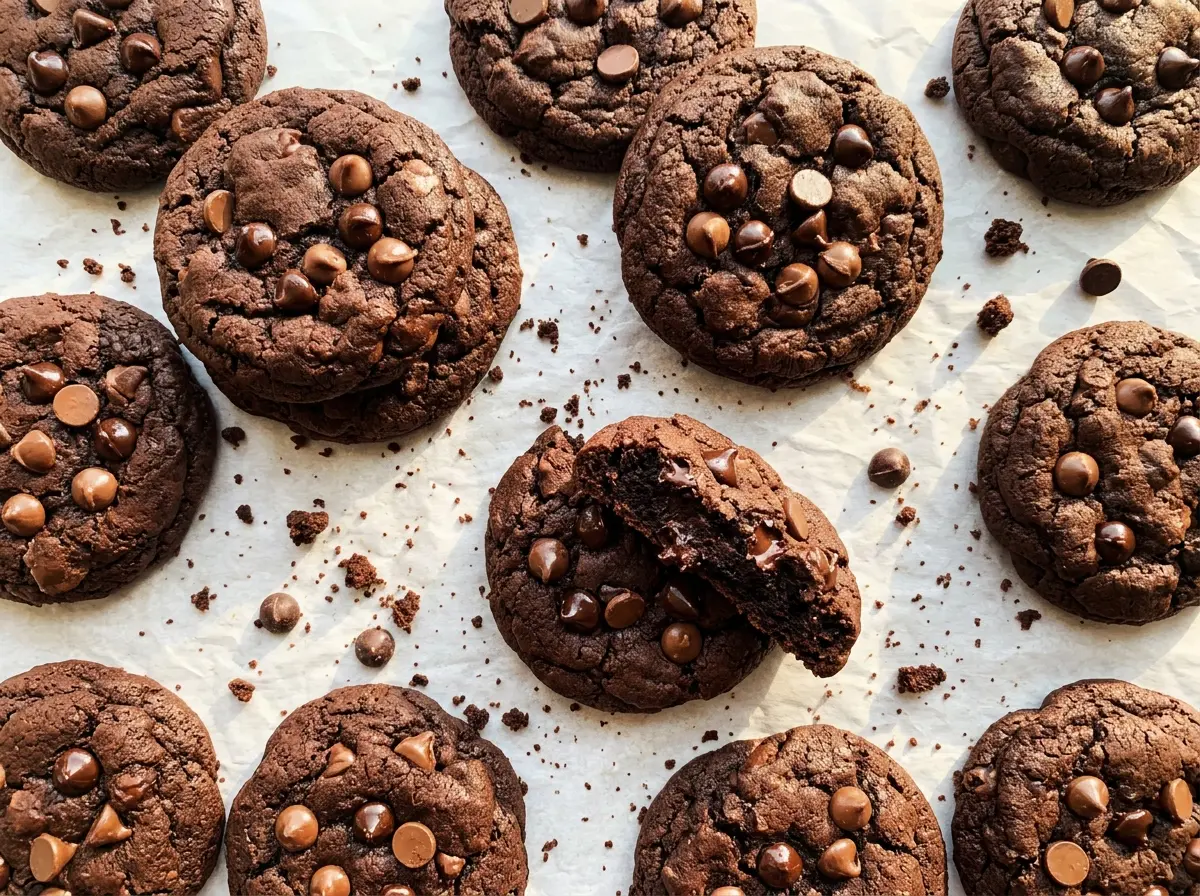
The cocoa turns the dough nearly black before the chocolate chips go in, so it’s easy to underestimate how much chocolate these cookies already have. I wanted a cookie with a deep cocoa base and real pockets of melted chocolate, not a plain chocolate cookie with a few chips scattered through it. These double chocolate chip cookies give you both, with edges that set and centers that stay soft.
Natural cocoa powder brings the chocolate flavor, while semisweet chips add a sweeter, melting contrast. I cream the butter with both sugars until fluffy, then chill the dough before baking; that short rest makes it easier to portion and helps the cookies hold their shape. The finished cookies are rich without being dense, with glossy chips tucked into every bite.
Kitchen Note
Take the cookies out while the centers still look slightly soft. They finish setting on the hot baking sheet, and leaving them there for the full five minutes makes them much easier to move without breaking.
Save these double chocolate chip cookies for a chocolate-rich bake with soft centers and semisweet chips in every bite.
Why These Cookies Need a Chill Before They Go in the Oven
Butter-based cookie dough can spread quickly when it goes into the oven warm and soft. A refrigerated rest gives the butter time to firm up again, so each portion has a better chance of baking into a thick cookie instead of spreading into a thin, crisp round. It also makes this dark, sticky dough easier to scoop neatly.
Thirty minutes is enough to make a noticeable difference without turning this into an all-day project. Keep the bowl covered while it chills so the dough doesn’t dry out or pick up refrigerator odors. If it feels firm when you take it out, portion it with a spoon and your hands; the dough softens as you work, but it shouldn’t be warm or greasy. Even spacing matters, too: cookies need room around them so their edges can set without running into one another.
What the Cocoa and Chocolate Chips Each Bring
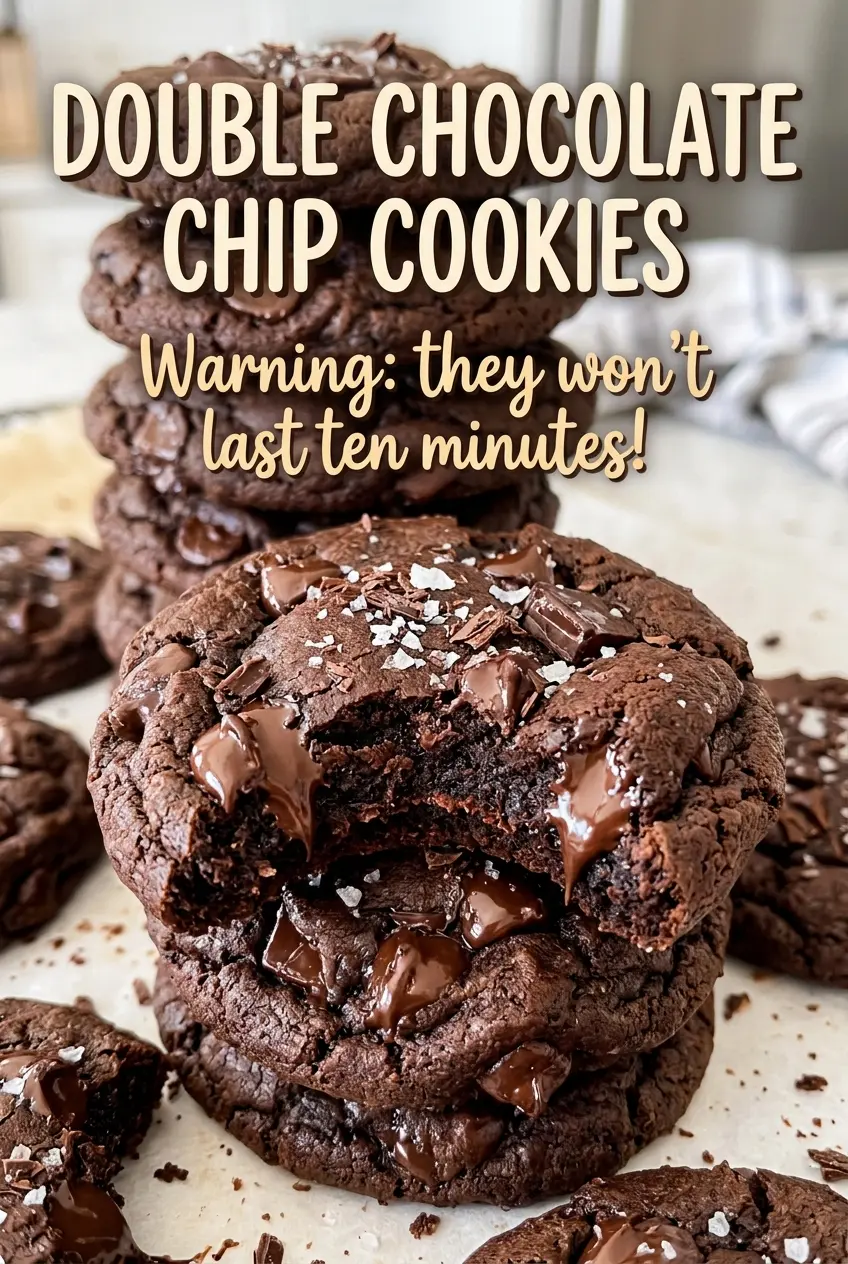
- Natural cocoa powder — This is the backbone of the chocolate flavor, not just a way to darken the dough. Use unsweetened natural cocoa, as written; Dutch-process cocoa has different acidity and can change how the baking soda performs. A fresh, well-sealed container matters more than paying extra for a specialty label.
- Semisweet chocolate chips — The chips provide little bursts of sweetness against the cocoa-rich cookie. A standard baking brand works well here, so there’s no need to seek out premium chips. For a different texture without changing the chocolate type, chop some of the chips before folding them in; smaller pieces spread chocolate through more of the dough.
- Butter and the two sugars — Softened unsalted butter creams smoothly with granulated and light brown sugar. The granulated sugar supports crisp edges, while brown sugar contributes moisture and a softer middle. Use packed light brown sugar so the amount is consistent, and let cold butter soften before mixing rather than melting it.
- Flour, eggs, and vanilla — All-purpose flour gives the cookies enough structure to hold the chips, and the eggs bind the dough and help it bake evenly. Vanilla rounds out the cocoa rather than competing with it. Measure the flour carefully; too much can leave a dry, crumbly dough that’s harder to portion.
From Fluffy Butter to Soft-Centered Cookies
Whisk the Dry Ingredients Evenly
Heat the oven to 350°F and line two large baking sheets with parchment paper. In a medium bowl, whisk the flour, natural cocoa, baking soda, and salt until the cocoa is evenly distributed. Cocoa can cling in small lumps, so break those up as you whisk rather than leaving dark pockets in the finished dough. An even mixture means you can combine it with the butter mixture quickly without overworking the dough later.
Cream the Butter and Sugars Until Fluffy
In a large bowl, beat the softened butter with the granulated and packed light brown sugars on medium speed for 2 to 3 minutes. The mixture should look creamy and noticeably fluffy, not like separate butter pieces coated in sugar. Beat in the eggs one at a time, then mix in the vanilla. If the mixture looks a little loose after adding the eggs, keep mixing just until it comes together.
Fold in the Cocoa Dough and Chill
Add the flour mixture and mix on low just until no dry streaks remain; stop as soon as the dough is combined. Mixing longer than needed can make the cookies tougher, especially once flour is hydrated. Stir in the semisweet chocolate chips, cover the bowl, and refrigerate the dough for 30 minutes. The dough should be firm enough to portion without smearing across your hands.
Portion, Bake, and Let the Cookies Set
Divide the dough into 30 balls, about 1 1/2 tablespoons each, and place 15 on each prepared sheet with about 2 inches between them. Bake one sheet at a time for 9 to 11 minutes, until the edges are set and the centers still look slightly soft. Let the cookies cool on the baking sheet for 5 minutes, then transfer them to a wire rack to cool. Moving them too soon can cause the soft centers to break.
Three Ways to Change the Chocolate or Make a Dairy-Free Batch
More chocolate throughout
Chop some of the semisweet chips before stirring them into the dough. The smaller pieces distribute chocolate through more bites, while the whole chips still give you larger melted pockets. Keep the total amount of chocolate chips the same.
A less-sweet chocolate finish
Use bittersweet chocolate chips in place of semisweet chips, keeping the same quantity. The cocoa base stays the same, but the chip pockets taste more intense and less sweet. This swap works without changing the mixing or baking method.
Dairy-free chocolate cookies
Replace the butter with a plant-based baking stick and choose dairy-free semisweet chocolate chips. Use a baking stick rather than a soft tub spread, which can contain more water and make the dough spread differently. The cookies will keep their cocoa flavor, though the butter-rich taste will be less pronounced.
Storage and Reheating
- Refrigerator: Keep the cookies in an airtight container for up to 1 week; chilling firms them and can make the centers less soft.
- Freezer: Freeze fully cooled cookies in an airtight container, with parchment between layers, for up to 2 months. Thaw at room temperature.
- Reheating: Microwave a cookie briefly, just until warm. Long heating can make the chocolate too hot and the cookie hard around the edges.
Questions That Come Up When Baking Double Chocolate Cookies
Double Chocolate Chip Cookies
Ingredients
Equipment
Method
- Heat the oven to 350°F.
- Line two large baking sheets with parchment paper.
- In a medium bowl, whisk together the flour, cocoa powder, baking soda, and salt.
- In a large bowl, beat the butter, granulated sugar, and brown sugar with a mixer on medium speed for 2 to 3 minutes, until creamy and fluffy.
- Beat in the eggs one at a time.
- Mix in the vanilla extract.
- Add the flour mixture and mix on low just until combined.
- Stir in the chocolate chips.
- Cover the dough and refrigerate for 30 minutes.
- Portion the dough into 30 balls, about 1 1/2 tablespoons each.
- Arrange 15 on each prepared baking sheet, spacing them about 2 inches apart.
- Bake one sheet at a time for 9 to 11 minutes, until the edges are set and the centers still look slightly soft.
- Let the cookies cool on the baking sheet for 5 minutes.
- Transfer the cookies to a wire rack to cool.