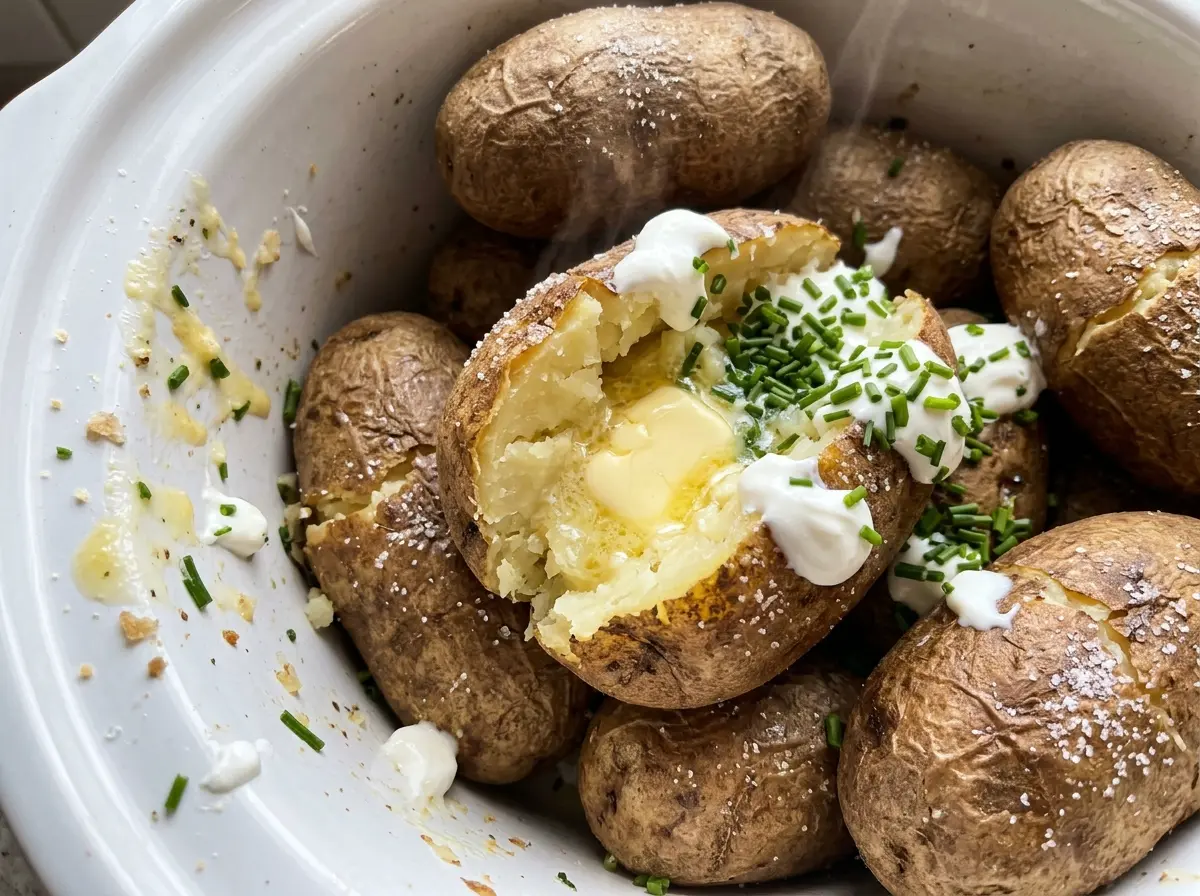
When the slow cooker lid comes off, these potatoes look nothing like crisp-skinned oven potatoes. Their skins stay soft, but the russet centers turn fluffy and steaming, which is exactly what I want from a hands-off side dish. Crock Pot Baked Potatoes are useful when the oven is already busy or I want the potatoes cooking while I get on with dinner.
The first time I made them, I kept waiting for the slow cooker to need water. It doesn’t. Each potato cooks inside its own foil packet, and the covered cooker holds the heat around them. That simple setup gives you tender potatoes without a pot to watch or a pan to scrub, and the only real doneness test is how easily a knife reaches the center.
Kitchen Note
Dry the potatoes well before rubbing them with oil. If the skins are still damp, the oil beads up instead of coating them evenly, and the salt won’t stick as neatly.
Save these Crock Pot Baked Potatoes for a fluffy, hands-off side dish with soft skins and tender russet centers.
Why These Potatoes Need No Water in the Slow Cooker
It feels natural to pour water into a slow cooker, especially when the potatoes are wrapped and the pot looks dry. For this method, skip it. The potatoes contain plenty of moisture to cook through inside their foil packets, while the covered slow cooker holds heat around the packets. Adding water changes the environment from dry, wrapped cooking to a wet one.
The foil matters because it keeps each potato enclosed and prevents it from sitting directly in the cooker. Wrap each one tightly, then arrange the packets in a single layer so they’re surrounded by the cooker’s heat rather than piled together. A 6-quart slow cooker gives six medium russets room to sit side by side.
There’s a texture tradeoff worth knowing before you start: the skin won’t turn crisp inside a foil packet. It stays soft and tender, while the inside becomes fluffy. If a crisp skin is your goal, this particular slow-cooker method isn’t designed to give you one.
Russets, Olive Oil, and Salt: What Each One Brings

- Russet potatoes — Their starchy flesh is what gives the cooked centers that light, fluffy texture. Choose firm potatoes without soft spots, and keep them close to the same medium size—about 8 ounces each—so they cook at a similar pace. A waxier potato won’t give the same fluffy result, so I stick with russets here.
- Olive oil — A thin coating helps the salt cling to the skins and gives the outside an even finish. There’s no need to use an expensive bottle for this; the oil is coating the potatoes, not carrying a delicate flavor. You can leave it out for an oil-free batch, but more of the salt will fall away.
- Kosher salt — Its larger crystals are easy to distribute over the oiled skins. Fine salts vary in density, so they aren’t a dependable teaspoon-for-teaspoon substitute; if kosher salt isn’t available, leaving it out is the simplest adjustment. The potatoes will cook the same, though the skins will taste less seasoned.
The Three Stages That Get the Centers Tender
Clean, Dry, and Pierce the Russets
Scrub each potato, then dry it well; dirt left in the skin is unpleasant, and dampness makes the oil harder to spread evenly. Pierce each potato several times with a fork before wrapping. Keep the potatoes whole, and don’t skip the fork holes: they give steam a way to escape as the potatoes heat. Similar-sized russets help the batch finish more evenly.
Oil, Salt, and Wrap Each Potato
Rub olive oil over the entire surface of each potato, then sprinkle the kosher salt evenly over the skins. Wrap every potato tightly in aluminum foil, closing the seams so each one is enclosed. A loose packet is more likely to open as you arrange the potatoes, so press the foil snugly around the potato without crushing it. Don’t pour water into the cooker.
Cook Until a Knife Slides Through the Center
Set the foil-wrapped potatoes in a single layer in a 6-quart slow cooker, cover, and cook on LOW for 7 to 8 hours or HIGH for 4 to 5 hours. At the end of the range, carefully open one packet enough to test the center with a knife. The potato is ready when the knife slides in easily; if it catches on a firm spot, close the lid and keep cooking until the center is tender. Unwrap carefully and serve hot.
Easy Adjustments for Less Salt, Less Oil, or a Smaller Batch
A Lower-Sodium Batch
Use half the kosher salt for a milder, lower-sodium skin, or leave it out entirely. The potatoes cook the same either way; you’ll just have less salty seasoning on the outside.
Skip the Olive Oil
For an oil-free version, rub the salt over the dry potatoes without the oil. The salt won’t coat as evenly and some will fall off, but the foil-wrapped russets will still cook through.
Make Three Instead of Six
For a half batch, use three medium russets, 1/2 tablespoon olive oil, and 1/2 teaspoon kosher salt. Keep the potatoes in a single layer and use the same LOW or HIGH time range, checking the centers with a knife because slow cookers can vary.
Storage and Reheating
- Refrigerator: Remove the foil and refrigerate leftovers within 2 hours. Store them in a covered container for 3 to 4 days; the skins soften further as they chill.
- Freezer: Whole cooked russets don’t freeze especially well because thawing leaves the centers mealy and watery. I don’t recommend freezing them.
- Reheating: Remove any foil, split the potato, and reheat it in the microwave until hot throughout. Don’t microwave it in foil.
Questions That Come Up With Slow Cooker Baked Potatoes
Crock Pot Baked Potatoes
Ingredients
Equipment
Method
- Scrub the potatoes.
- Dry them well.
- Pierce each potato several times with a fork.
- Rub the potatoes all over with the olive oil.
- Sprinkle evenly with the kosher salt.
- Wrap each potato tightly in aluminum foil.
- Arrange the wrapped potatoes in a single layer in a 6-quart slow cooker; do not add water.
- Cover and cook on LOW for 7 to 8 hours or HIGH for 4 to 5 hours, until a knife slides easily into the center of a potato.
- Carefully unwrap the potatoes.
- Serve the potatoes hot.