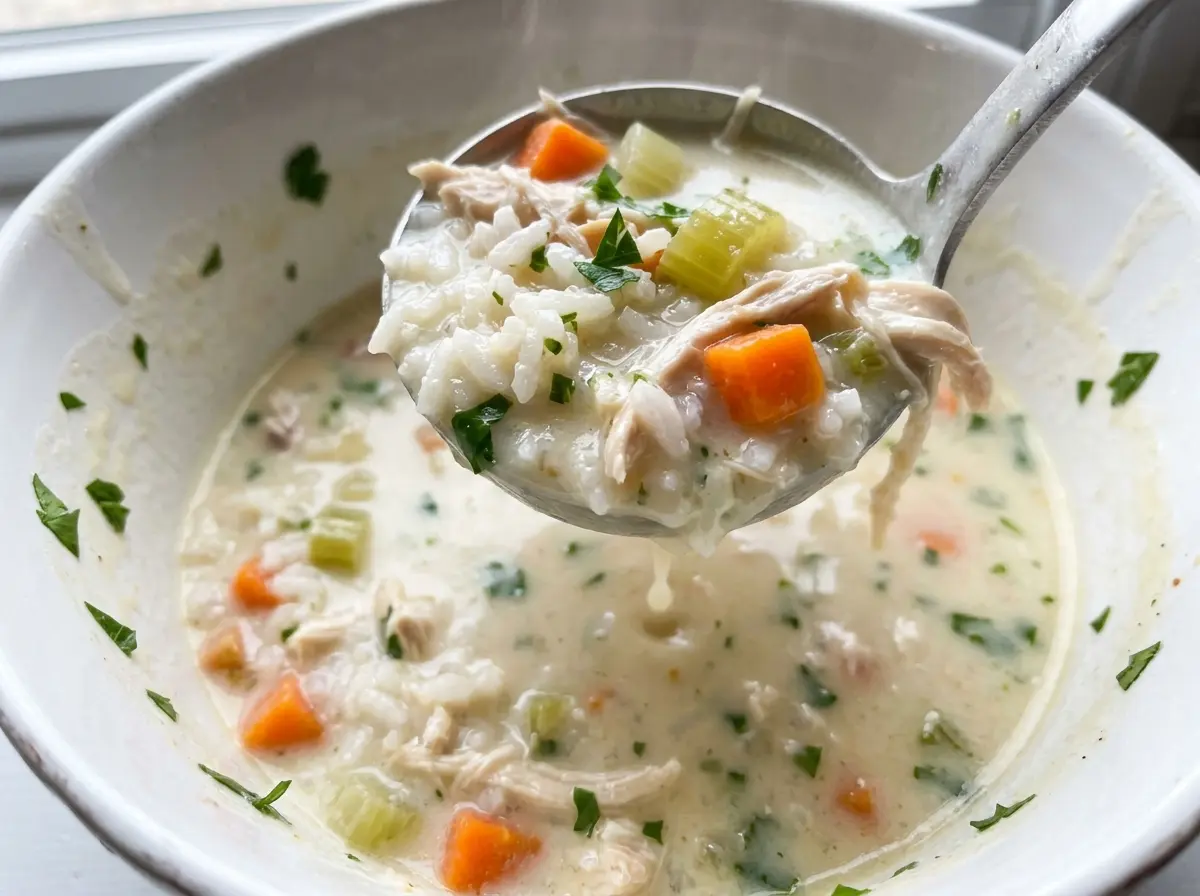
The vegetables soften in butter first, then flour turns that base into a soup that feels creamy before the cream even goes in. I like that the chicken cooks whole in the broth, so it stays easy to lift out and shred while the rice finishes in the pot. That order is what makes this creamy chicken and rice soup hearty without asking the chicken to simmer longer than it needs.
Long-grain white rice is the right fit here because it becomes tender in the time the soup needs, and its starch gives the broth a little more body. The heavy cream goes in at the end, where it rounds out the soup instead of carrying all the thickening on its own. Each spoonful has soft rice, tender chicken, and a silky broth that still tastes like chicken soup.
Kitchen Note
Once the cream goes in, keep the heat low and watch the surface. Warm it for just 2 to 3 minutes without letting the soup boil, so the finish stays smooth and creamy.
Save this creamy chicken and rice soup for a cozy bowl with tender chicken, soft rice, and a broth thickened right in the pot.
Why This Soup Gets Its Body Before the Cream Goes In
The creamy texture starts with the flour, not with a heavy pour of cream. Once the vegetables have softened, the flour coats them in the butter and cooks briefly before the broth is added. Whisking the broth into that base gives it a chance to turn smooth and lightly thickened as it heats. The cream then finishes the soup with richness rather than having to thicken a pot of plain broth by itself.
That distinction matters when you want a soup that feels substantial but still has a broth you can ladle easily. If the flour is skipped, the soup will be thinner; if the cream is expected to do all the work, it won’t create the same body. The dried thyme, black pepper, and softened vegetables are folded into the base early, too, so their flavor carries through the whole pot instead of sitting on top of the finished soup.
Keep the broth addition gradual and smooth, and the texture develops without a separate sauce pan or extra thickener. It’s a small bit of timing that lets the soup stay homey and spoonable rather than pasty.
The Ingredients That Give This Soup Its Creamy, Hearty Texture

- Chicken breasts — Boneless, skinless breasts cook directly in the broth and are easy to shred once they’re cooked through. Choose pieces that are similar in thickness so they finish at about the same time; there’s no need to buy especially large or premium breasts for a soup where the meat is shredded.
- Long-grain white rice — This rice cooks tender in the soup’s short simmer and stays distinct enough to give each spoonful some texture. Brown rice isn’t a direct swap because it needs a longer cooking time. Rinse-free, ordinary long-grain white rice is the practical choice here; add it straight to the pot.
- Butter and all-purpose flour — Butter carries the softened vegetables, while flour builds the soup’s base and gives the broth body. All-purpose flour is the ingredient this method is built around, so another thickener won’t produce precisely the same texture without changing how the soup is made.
- Heavy cream — Heavy cream brings a fuller, silkier finish than the broth alone. It goes in after the chicken and rice are cooked, which keeps its role focused on enriching the soup. There isn’t a like-for-like swap among the listed ingredients that gives the same finish.
- Onion, carrots, celery, and dried thyme — Dicing the vegetables helps them soften evenly during their time in the butter. Dried thyme is convenient and works well in this simmered soup; the vegetables don’t need to be perfectly uniform, but similarly sized pieces make the bowl easier to eat.
The Order That Keeps the Chicken Tender and the Rice Just Right
Soften the vegetables in butter
Melt the butter in a 6-quart Dutch oven or soup pot over medium heat, then add the diced onion, carrots, and celery. Cook for 6 to 8 minutes, stirring occasionally, until the vegetables have softened. You’re looking for tender pieces, not browned edges; if they’re still firm, give them the full cooking window before moving on. The softened vegetables become the base of every spoonful.
Cook the flour and build a smooth broth
Stir in the flour, dried thyme, kosher salt, and black pepper, and keep stirring for 1 minute. Gradually whisk in the low-sodium chicken broth until the liquid looks smooth and no flour pockets remain. Take your time as the broth goes in; adding it gradually makes it easier to work the flour evenly into the liquid. Once it’s smooth, add the chicken breasts.
Simmer the chicken, then lift it out
Bring the pot to a gentle boil, then reduce the heat to maintain a simmer. Cook the chicken for 15 to 20 minutes, checking the thickest part of each breast for 165°F. A steady, gentle simmer is the goal rather than a hard, rolling boil. Transfer the cooked chicken to a plate so the rice can simmer without the breasts staying in the pot for the full rice-cooking time.
Cook the rice and finish the soup
Stir the long-grain white rice into the pot and simmer uncovered for 15 to 18 minutes, stirring occasionally, until the rice is tender. If the rice still has a firm center, give it a little more time rather than moving on early. Shred the chicken with two forks and return it to the soup. Stir in the heavy cream and warm the pot over low heat for 2 to 3 minutes without boiling.
Easy Ways to Adjust the Rice and Batch Size
Leave out the rice for a rice-free soup
Omit the rice and keep the rest of the ingredients and sequence the same. The flour still gives the broth body, while the finished soup has more chicken and vegetables in each spoonful and no rice to absorb liquid.
Use less rice for a brothier bowl
Cut the rice amount in half if you’d rather have more broth around each spoonful. Keep the rice simmer uncovered and use tenderness, not the original amount alone, to judge when it’s ready; the soup will have a looser texture and a less rice-forward feel.
Make a half batch for a smaller pot of soup
Halve each ingredient to make a smaller amount, keeping the same sequence of cooking the vegetables, simmering the chicken, and adding rice after the chicken comes out. Use a thermometer to judge the chicken rather than assuming its cooking time will be exactly half; the rice still needs to become tender before you finish with cream.
Storage and Reheating
- Refrigerator: Store in a covered container for 3 to 4 days. The rice continues to absorb broth, so the soup will be thicker after chilling.
- Freezer: Freeze in airtight portions for up to 2 months. The rice may soften further and the cream may look less smooth after thawing, but gentle reheating brings the soup back together.
- Reheating: Warm it slowly in a pot over low to medium-low heat, stirring as it loosens. Add a little of the listed chicken broth if it has thickened more than you like; avoid a hard boil, which can make the creamy texture less smooth.
Questions That Come Up When Making Chicken and Rice Soup
Creamy Chicken And Rice Soup
Ingredients
Equipment
Method
- Melt the unsalted butter in a 6-quart Dutch oven or soup pot over medium heat.
- Add the yellow onion, carrots, and celery and cook for 6 to 8 minutes, stirring occasionally, until softened.
- Stir in the all-purpose flour, dried thyme, kosher salt, and black pepper and cook for 1 minute, stirring constantly.
- Gradually whisk in the low-sodium chicken broth until smooth.
- Add the chicken breasts.
- Bring to a gentle boil, then reduce the heat to maintain a simmer.
- Cook for 15 to 20 minutes, until the thickest part of each breast reaches 165°F.
- Transfer the chicken to a plate.
- Stir the long-grain white rice into the pot.
- Simmer uncovered for 15 to 18 minutes, stirring occasionally, until the rice is tender.
- Shred the chicken with two forks and return it to the pot.
- Stir in the heavy cream and warm over low heat for 2 to 3 minutes, without boiling.