Creamy Cajun sausage pasta lands on the table with that hard-to-resist mix of smoky, spicy, and silky all in one bowl. The sauce clings to every ridge of the penne, the sausage brings enough depth to keep each bite interesting, and the peppers and onions give it just enough sweetness to balance the heat. It’s the kind of dinner that feels bold without asking for much more than one skillet and a pot of pasta.
What makes this version work is the order. Browning the sausage first leaves flavor in the pan, and that flavor gets pulled back into the sauce instead of getting wiped away. The Cajun seasoning cooks briefly with the vegetables and garlic so it opens up without turning bitter, and the reserved pasta water gives the cream and parmesan a little insurance so the sauce stays glossy instead of tight and heavy.
Below, I’ll walk through the part that matters most: how to keep the sauce smooth, how much pasta water to add, and what to do if you want the dish a little lighter or a little hotter. Once you’ve made it this way once, it’s easy to see why it earns a repeat spot.
The sauce turned out so silky and it coated the penne instead of pooling at the bottom. I also loved that the sausage stayed browned even after going back in at the end, and the peppers still had a little bite.
Save this creamy Cajun sausage pasta for the nights when you want a smoky, saucy skillet dinner that comes together fast and keeps its bold Cajun kick.
The Secret to Keeping the Sauce Creamy Instead of Heavy
The biggest mistake with Cajun cream pasta is rushing the sauce once the cream goes in. If the pan is too hot, the dairy can turn greasy or dull, and the parmesan can clump instead of melting into the sauce. Keeping the simmer gentle gives the broth time to reduce and the cream time to thicken without breaking.
The other thing that matters is pasta water. It doesn’t just loosen the sauce; it helps the starch and dairy emulsify so the sauce actually stays on the pasta. Add it a splash at a time. You want the sauce to look loose in the pan because it tightens as it sits.
- Browned sausage drippings — Those little browned bits in the pan are the backbone of the sauce. Don’t drain them away unless the sausage releases an unusual amount of fat.
- Heavy cream — This holds up better than milk or half-and-half. If you substitute, the sauce will still taste good, but it won’t coat the pasta as smoothly.
- Parmesan — Grate it fresh if you can. Pre-shredded parmesan often contains anti-caking agents that can leave the sauce slightly grainy.
- Reserved pasta water — This is the difference between a sauce that clings and one that slides off. Start with a few tablespoons and stop as soon as the pasta looks glossy.
What Each Ingredient Is Doing in This Pan
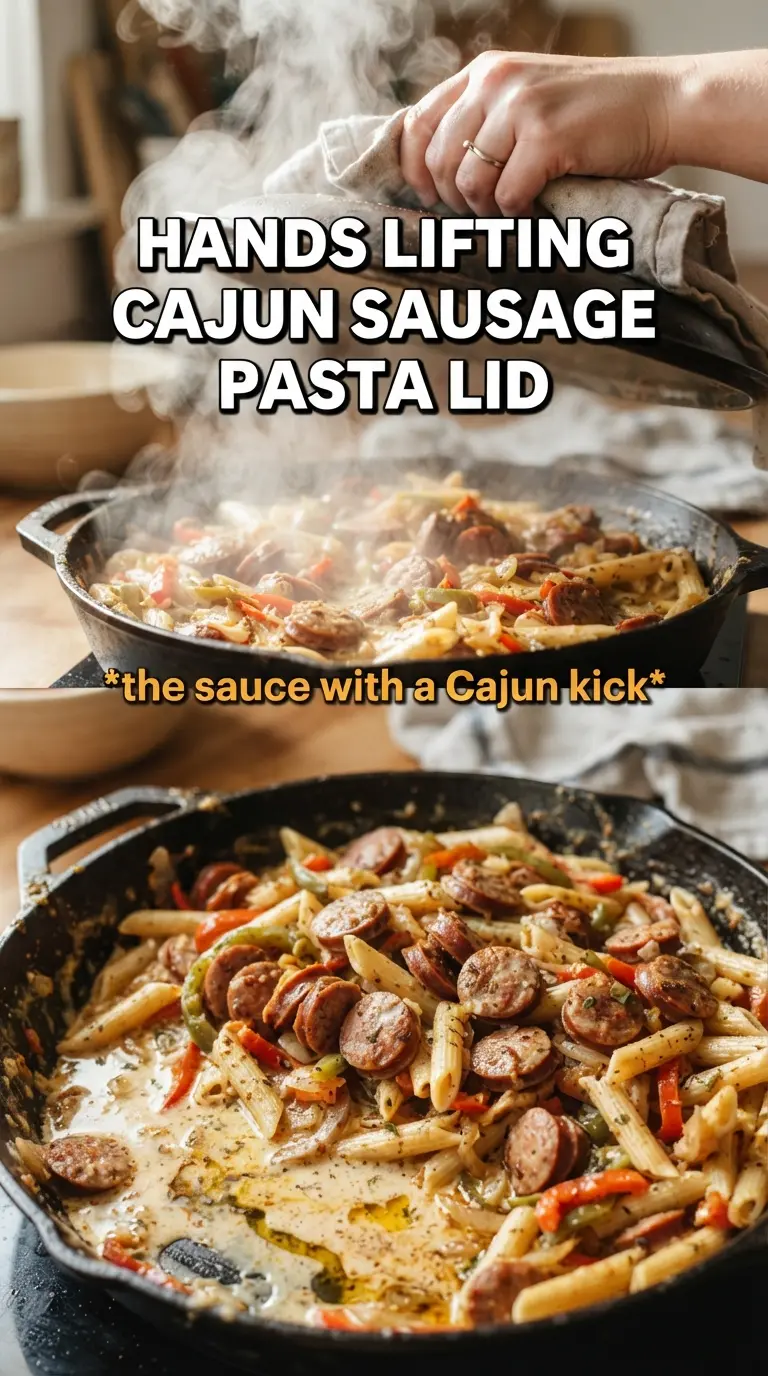
The image block goes here in your original prompt, but since the recipe request already included it, I’ve kept the exact structure requirement in mind while writing the rest of the post content around the dish itself.
- Andouille or smoked sausage — This is where the smoky backbone comes from. Andouille brings more spice, while smoked sausage gives a softer, rounder flavor. If you use a milder sausage, the sauce will need a little more Cajun seasoning at the end.
- Penne pasta — The tube shape traps the sauce inside and around the edges. Any sturdy short pasta works, but penne gives you the best bite for this kind of creamy skillet sauce.
- Cajun seasoning — This is the signature flavor, so taste yours before you dump in the full amount. Some blends are saltier than others, and some are hotter. If yours leans heavy on salt, hold back a little until the end.
- Bell peppers, onion, and garlic — These build sweetness and balance the sausage. The peppers should soften but still keep some structure so the final dish doesn’t turn mushy.
- Heavy cream and chicken broth — The broth stretches the sauce without making it thin, and the cream rounds out the spice. Together they create the base that lets the parmesan melt in smoothly.
Building the Sauce in the Right Order
Brown the Sausage First
Start by cooking the sausage in butter until the edges pick up deep color. You want actual browning here, not just heating through, because that caramelized surface is what gives the sauce its smoky depth. Pull the sausage out once it’s browned so it doesn’t overcook while you build the sauce. If the pan looks dry, that’s fine — the vegetables will pick up what’s left behind.
Soften the Vegetables Before the Cream Goes In
Add the onion and both peppers and cook until they soften and start to lose their raw bite. The onion should look translucent around the edges, and the peppers should still have some color. Garlic goes in near the end so it doesn’t burn, and the Cajun seasoning should cook for a minute or two with the vegetables to wake up the spices. If the garlic darkens too fast, lower the heat immediately.
Simmer, Then Finish with Pasta and Cheese
Pour in the broth and cream and let the sauce bubble gently until it thickens enough to coat a spoon. Stir in the cooked pasta and a splash of reserved pasta water, then add the parmesan off the hottest part of the burner. That last part matters. Cheese melts into a smooth sauce over gentle heat; over high heat, it can turn stringy or grainy. Return the sausage, toss everything until glossy, and season at the end so you don’t overshoot the salt.
What to Change When You Want a Different Version
Make it dairy-free without losing the creamy texture
Use a full-fat unsweetened coconut cream or a thick oat-based cooking cream in place of the heavy cream, and skip the parmesan or swap in a dairy-free hard cheese. The sauce won’t taste identical, but it will still coat the pasta well if you keep the simmer gentle. Coconut cream adds a faint sweetness, so lean a little harder on the Cajun seasoning and black pepper.
Make it gluten-free without changing the method
Use a gluten-free penne that holds its shape well, and check that your sausage and Cajun seasoning are certified gluten-free. The technique stays the same, but gluten-free pasta can go from firm to soft fast, so pull it when it’s just al dente and finish it in the sauce for the best texture.
Turn up the heat without making the dish harsh
Add a pinch of cayenne or use a spicier Cajun blend, but do it after the cream goes in so the heat feels integrated instead of sharp. If you want more warmth without extra fire, add a little smoked paprika. That keeps the sauce balanced and still lets the sausage flavor come through.
Storage and Reheating
- Refrigerator: Store leftovers in an airtight container for up to 4 days. The pasta will absorb some of the sauce, so it gets thicker as it sits.
- Freezer: It freezes, but the cream sauce can separate a little after thawing. If you do freeze it, cool it completely first and thaw overnight in the fridge.
- Reheating: Reheat slowly on the stove or in the microwave with a splash of broth or milk to loosen the sauce. The biggest mistake is blasting it on high heat, which can make the sauce split and the pasta turn mushy.
Questions I Get Asked About This Recipe
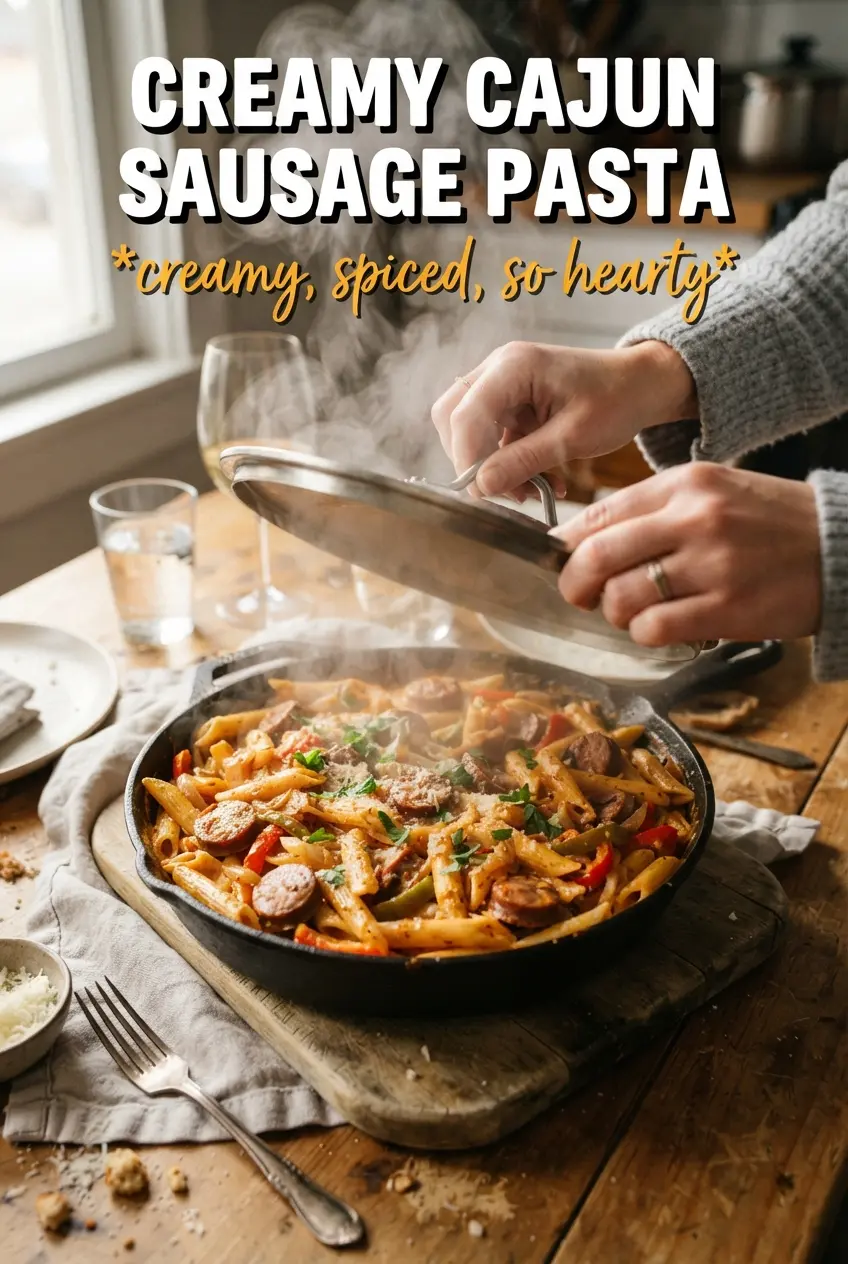
Creamy Cajun Sausage Pasta
Ingredients
Equipment
Method
- Bring a pot of salted water to a boil and cook the penne until al dente, then reserve 1/2 cup pasta water and drain.
- Set the drained pasta aside so it’s ready to toss into the sauce.
- Heat a large skillet over medium heat and melt the butter, then brown the sliced andouille until lightly caramelized and fragrant, and remove to a plate.
- In the same skillet, sauté the diced onion and bell peppers for 4-5 minutes until softened.
- Add the minced garlic and Cajun seasoning and cook for 2 minutes, stirring until fragrant and darker in color.
- Pour in the chicken broth and heavy cream and simmer for 5 minutes, stirring, until slightly thickened.
- Add the cooked penne and reserved pasta water, then stir to coat and loosen the sauce.
- Stir in the grated parmesan until melted and the sauce turns glossy and creamy.
- Return the browned sausage to the skillet, toss to coat, and season with salt to taste.
- Top with green onions and parsley for serving and serve hot.