When the potatoes come out of the oven, their skins should feel firm enough to hold a filling, while the insides are tender all the way to the center. That contrast is what makes these cottage pie baked potatoes work: you get a crisp-edged russet shell, savory beef filling, and a soft mashed-potato top in every serving. I like that each potato is its own little cottage pie, so there’s no casserole dish to portion at the table.
The filling needs to be thick before it goes into the shells. A few minutes of simmering gives the broth and flour time to turn into gravy that clings to the beef and vegetables instead of running out when you cut into a potato. I scoop the flesh into a bowl, mash it with butter and milk, then spread it over the filling while the potatoes are still easy to handle. The finished tops come out golden in spots, with a warm, savory center underneath.
Kitchen Note
After browning the beef, leave about a tablespoon of fat in the skillet when you drain it. That little bit helps the onion and carrot soften in the same pan without making the finished gravy greasy.
Save these cottage pie baked potatoes for a cozy dinner with beef gravy tucked into crisp russet shells and golden mashed-potato tops.
Why a Loose Cottage Pie Filling Spills Out of a Potato
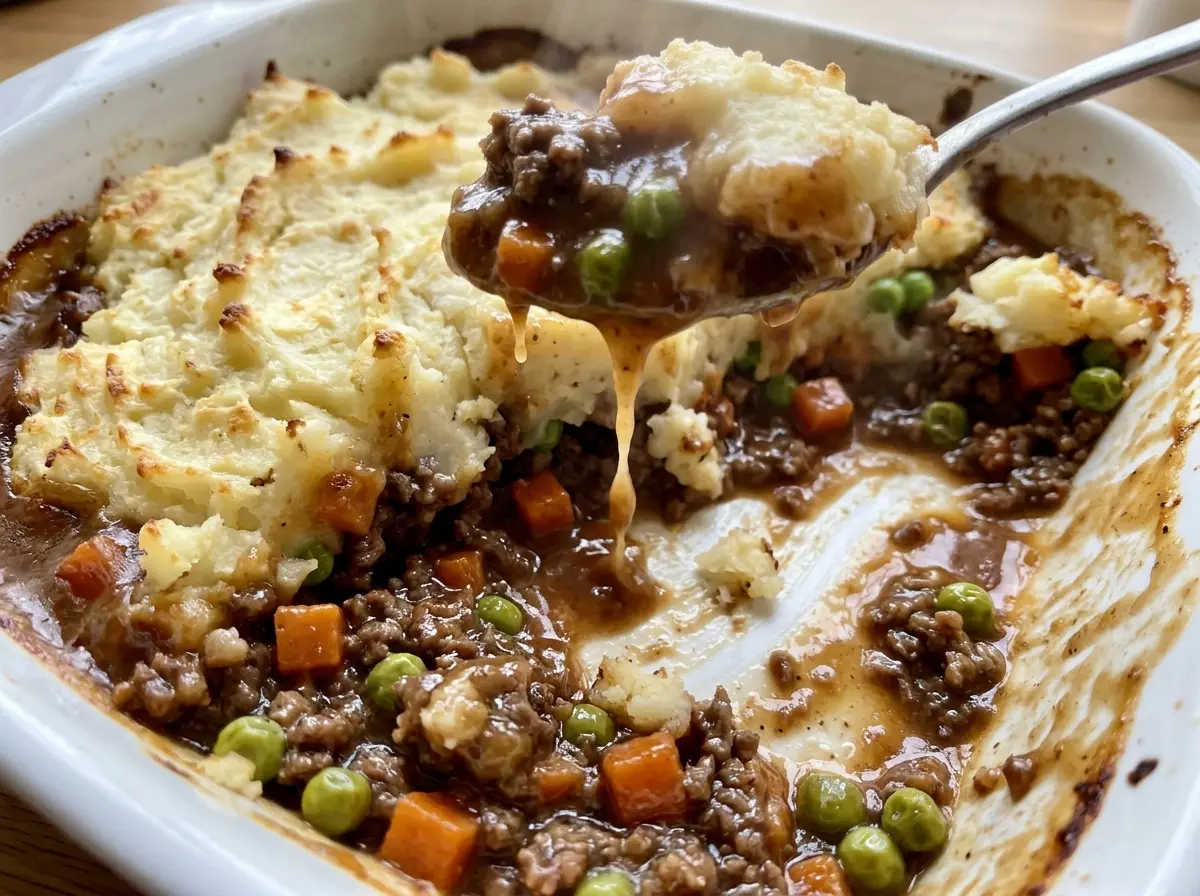
A casserole can hold a looser filling in a broad, shallow layer. A hollowed potato can’t. The filling sits in a smaller space, and a thin gravy can run toward the cut edge before you’ve even taken the first bite. That’s why I let the beef mixture thicken in the skillet before spooning it into the shells. The texture should be rich and spoonable, not soupy.
Tomato paste brings concentrated savory depth, while the flour helps the broth cling to the browned beef and vegetables. Give the mixture time to simmer after the broth goes in; rushing this part leaves you with a thinner center and a messier potato. The peas go in at the end, so they keep their shape rather than disappearing into the gravy. Once the filling holds together on a spoon, it’s ready for the potatoes.
What Russets and a Little Flour Do for These Cottage Pie Potatoes

- Russet potatoes — Their sturdy skins make useful little boats, and their fluffy flesh mashes easily with butter and milk. Choose large potatoes of similar size so they bake at roughly the same rate. Another large baking potato can stand in, though a thinner-skinned potato is easier to break while scooping.
- Ground beef — The 85% lean beef browns well and leaves enough fat to cook the vegetables in. A leaner grind works, but the filling won’t have quite the same richness. Ground turkey is another option if you want a lighter-tasting center; expect less beefy depth.
- Tomato paste and Worcestershire sauce — These give the gravy its deep, savory backbone. Tomato paste in a tube is handy when you need just a spoonful, but a can works just as well. Don’t replace the paste with ketchup; its sweetness and thinner texture change the sauce.
- All-purpose flour — It thickens the broth into gravy that stays in the potato instead of soaking into the shell. For a gluten-free version, use a gluten-free 1-to-1 flour blend in its place, and choose Worcestershire sauce labeled gluten-free.
- Frozen peas — They’re easy to keep on hand and hold their shape when stirred in at the end. Add them straight from the freezer; there’s no need to thaw them first. If you use fresh peas instead, simmer the filling until they’re tender.
- Butter and milk — Together they make the scooped potato flesh creamy enough to spread over the filling. Unsalted butter lets you control the seasoning, while plain milk keeps the mash simple and savory.
How to Bake, Fill, and Broil the Potato Boats
Bake the Russets Until the Centers Yield
Heat the oven to 425°F and line a rimmed baking sheet with foil. Scrub and dry the potatoes, prick each one several times with a fork, then rub the skins with olive oil. Bake for 50 to 65 minutes, until a fork pierces easily to the center. If the middle still feels firm, give the potatoes more time before cutting them open.
Brown the Beef and Build the Gravy
While the potatoes bake, cook the ground beef in a 12-inch skillet over medium-high heat for 6 to 8 minutes, breaking it up as it browns; it should reach 160°F. Drain off the excess fat, then add the onion and carrot and cook for 5 to 6 minutes, until softened. Stir in the garlic and tomato paste for 1 minute, then add the flour, beef broth, Worcestershire sauce, thyme, 1/2 teaspoon of the salt, and black pepper. Simmer for 4 to 6 minutes, until the gravy thickens, then stir in the frozen peas.
Mash the Potato Centers Without Thinning the Shells
Let the potatoes cool until they’re easy to handle, then halve them lengthwise. Scoop the flesh into a bowl and leave sturdy 1/4-inch shells; digging too close to the skin makes the boats more likely to tear. Mash the potato flesh with the butter, milk, and remaining 1/4 teaspoon salt. Stop once the mixture is smooth enough to spread, rather than beating it until it turns sticky.
Fill the Shells and Watch the Broiler
Divide the beef mixture among the potato shells and spread the mashed potato over each one. Set the oven rack about 6 inches from the broiler and heat the broiler to high. Broil the potatoes on the baking sheet for 2 to 4 minutes, watching closely. Pull them when the tops are golden in spots; the broiler can darken them quickly.
Three Ways to Adapt Cottage Pie Baked Potatoes
Make the mashed topping dairy-free
Replace the butter with dairy-free butter and the milk with unsweetened plain soy milk. The mash will still spread over the filling, though it won’t taste quite as rich as the butter-and-milk version.
Give the topping a cheddar finish
Scatter shredded sharp cheddar over the mashed potato before broiling. It adds a salty, more pronounced cheese flavor, and the extra topping may brown sooner, so keep your eyes on the tray.
Use ground lamb for a shepherd’s pie twist
Swap the beef for ground lamb and keep the rest of the filling the same. The result is richer and more distinctly lamb-forward; technically, that change takes the dish into shepherd’s pie territory.
Storage and Reheating
- Refrigerator: Refrigerate cooled leftovers in an airtight container within 2 hours and use them within 3 to 4 days. The potato topping softens as it sits.
- Freezer: The beef filling freezes well for up to 3 months in an airtight container. Thaw it overnight in the refrigerator and make fresh potato shells for the best texture; cooked russet shells can turn grainy after freezing.
- Reheating: Reheat in a 350°F oven until the center reaches 165°F. Cover loosely with foil if the topping darkens before the filling is hot; microwaving works for a quick portion but softens the top.
Questions That Come Up While Making Cottage Pie Baked Potatoes
Cottage Pie Baked Potatoes
Ingredients
Equipment
Method
- Preheat the oven to 425°F and line a rimmed baking sheet with foil.
- Scrub and dry the potatoes, prick each several times with a fork, and rub with olive oil.
- Bake the potatoes on the sheet for 50 to 65 minutes, until easily pierced to the center.
- Cook the ground beef in a 12-inch skillet over medium-high heat for 6 to 8 minutes, breaking it up, until browned and it reaches 160°F.
- Drain off all but about 1 tablespoon of fat.
- Add the onion and carrot and cook for 5 to 6 minutes, until softened.
- Stir in the garlic and tomato paste for 1 minute.
- Stir in the flour, beef broth, Worcestershire sauce, thyme, 1/2 teaspoon of the salt, and the black pepper.
- Simmer for 4 to 6 minutes, until thickened, then stir in the peas.
- Let the potatoes cool until easy to handle, then halve them lengthwise and scoop the flesh into a bowl, leaving sturdy 1/4-inch shells.
- Mash the potato flesh with the butter, milk, and remaining 1/4 teaspoon salt.
- Divide the beef filling among the potato shells and spread the mashed potato over each.
- Set the oven rack about 6 inches from the broiler and heat the broiler to high.
- Broil the potatoes on the baking sheet for 2 to 4 minutes, until the topping is golden in spots, watching closely.