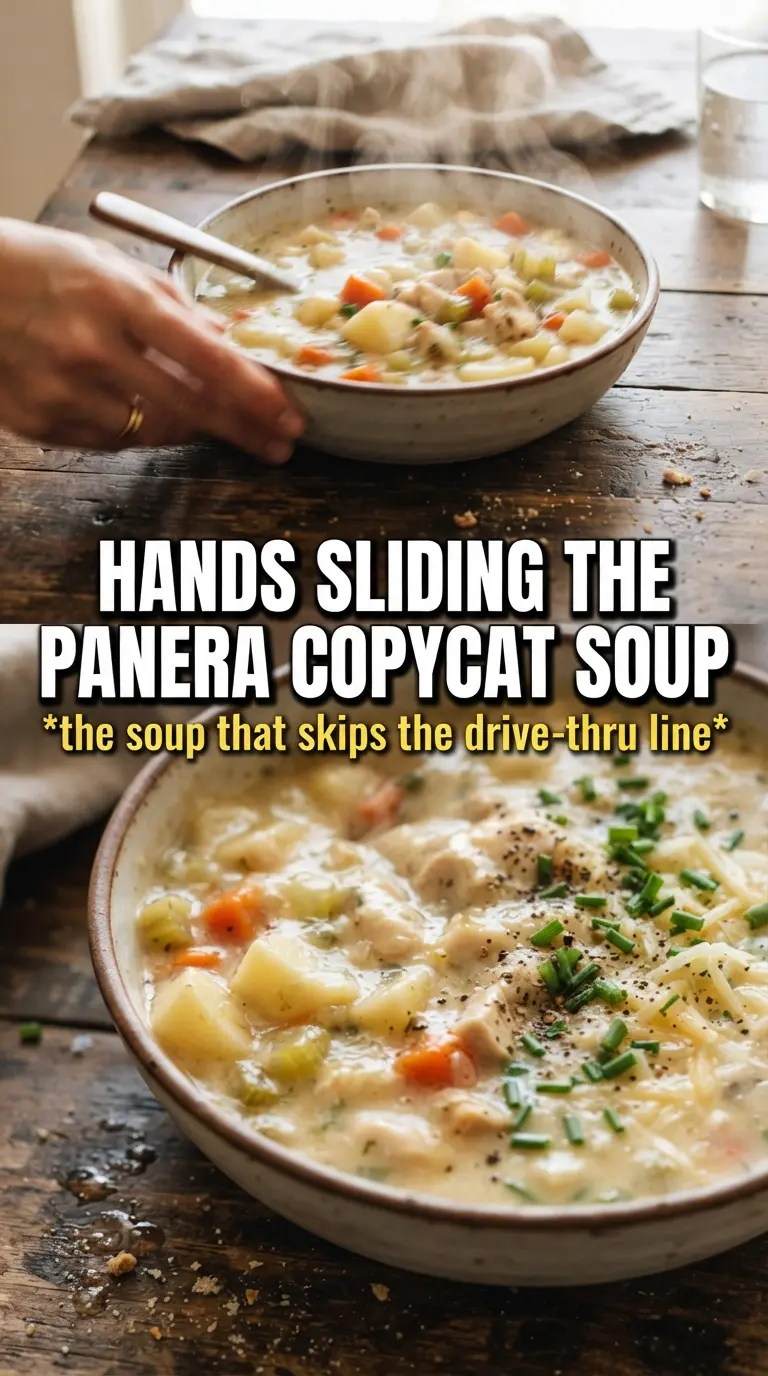
Thick, silky potato soup with tender chunks and a creamy cheddar finish has a way of disappearing fast, and this copycat version gets the texture right without turning heavy or gluey. It tastes like the bowl you’d order at the café: mellow potatoes, a little tang from sour cream, and enough cheese to make every spoonful feel rich without being overwhelming.
The trick is in the layering. The potatoes simmer until they’re fully soft, then most of the soup gets blended while a few chunks stay behind for body. Cream cheese goes in before the cream and sour cream, which helps the base turn smooth instead of grainy. White pepper keeps the color clean and gives the soup that gentle restaurant-style warmth that doesn’t read as spicy.
Below, you’ll find the exact method that keeps the soup velvety, plus a few practical swaps if you need to work with what’s already in the fridge.
The soup turned out thick and creamy like the restaurant version, and the little potato chunks made it feel homemade. I loved that the cheddar melted in smoothly without getting stringy, and it reheated beautifully the next day.
Save this copycat Panera potato soup for the nights when you want that thick, creamy restaurant-style bowl with cheddar, sour cream, and chives.
The Blend That Gives You Creamy Soup Without Losing the Potatoes
The biggest mistake with potato soup is taking it all the way smooth. That sounds like a shortcut, but it wipes out the best part of the dish: the contrast between the creamy base and the soft potato pieces. Blending most of the soup gives you that thick, spoon-coating texture, while leaving some cubes intact keeps every bite from tasting flat.
Another place people go wrong is adding dairy too early or too hot. Once the potatoes are tender, the heat needs to come down before the cream cheese, cream, sour cream, and cheddar go in. If the pot is boiling, the dairy can separate or turn grainy. A gentle heat is what gives you that polished, restaurant-style finish.
- Russet potatoes — These break down enough to thicken the soup naturally. Yukon Golds work too, but the result will be a little silkier and less fluffy.
- Cream cheese — This is what gives the soup its body and helps everything emulsify. Let it soften first so it melts in without little lumps.
- Heavy cream and sour cream — Heavy cream rounds out the texture, while sour cream gives the soup that familiar tang. Greek yogurt can stand in for sour cream in a pinch, but the flavor will be sharper and a bit less classic.
- White cheddar or sharp cheddar — Use a block and shred it yourself if you can. Pre-shredded cheese is coated to prevent clumping, and that coating can make the soup a little grainy.
- White pepper — This keeps the soup looking clean and gives it a softer heat than black pepper. If all you have is black pepper, use it lightly so it doesn’t dominate the bowl.
What Each Ingredient Is Actually Doing in This Recipe
- Primary ingredient (the star) — Quality matters most. Choose the best you can find.
- Cooking medium (oil, butter, or broth) — This carries flavors and prevents dryness.
- Seasonings (salt, pepper, spices, herbs) — Layer flavors so nothing overpowers. Build depth gradually.
- Aromatics (garlic, onion, herbs) — Cook with fat to bloom flavors. Become the foundation.
- Supporting ingredients — Complement the main ingredient without overpowering it.
- Sauce or liquid (if applicable) — Brings flavors together. Balance richness with acid.
- Acid (lemon, vinegar, wine, or other) — Brightens and prevents flat-tasting results.
- Final finish (garnish, glaze, or sauce) — Prevents one-dimensional taste and adds visual appeal.
The 20 Minutes That Matter Most in the Pot
Sweating the Onion Until It Turns Sweet
Melt the butter over medium heat, then cook the onion until it softens and turns translucent with just a hint of gold at the edges. You’re not trying to brown it hard here. If the onion stays crunchy, it never fully disappears into the soup, and you lose that mellow base that makes the finished bowl taste rounded instead of sharp.
Cooking the Potatoes Until They Collapse
Add the broth and potatoes, bring everything to a boil, then drop it to a steady simmer until the potatoes are very tender and almost falling apart. A fork should slide through with no resistance. If the potatoes are still firm in the center, the soup won’t blend smoothly and you’ll end up working harder for a thinner texture.
Blending for Body, Not Purée
Use an immersion blender to blend most of the soup right in the pot, but stop well before it looks completely smooth. A few visible chunks are a good thing. If you use a countertop blender instead, work in batches and vent the lid carefully so steam doesn’t build up. Blend only until the soup looks thick and cohesive, not whipped.
Finishing with Dairy and Cheese
Pull the pot off the heat or turn it to low before stirring in the cream cheese, cream, sour cream, and cheddar. The cream cheese should melt in first so the base turns glossy and smooth before the cheddar goes in. If you add the cheese while the soup is bubbling hard, it can seize or turn slightly grainy. Finish with salt, white pepper, and garlic powder, then top the bowls while the soup is still hot enough to melt a little of the cheddar on contact.
How to Adapt This for a Different Pantry or a Bigger Bowl
Make It Gluten-Free Without Changing the Texture
This soup is naturally gluten-free as written, as long as your broth is certified gluten-free. That matters more than it sounds like, because some broths use additives that aren’t obvious from the label. The texture stays the same, so you don’t need any special adjustment.
Dairy-Free Version That Still Tastes Rich
Swap the butter for olive oil or dairy-free butter, use unsweetened oat or cashew cream in place of heavy cream, and replace the cream cheese and sour cream with dairy-free versions. The soup won’t have the exact same tang, but it will still be creamy and satisfying. Choose a dairy-free cheddar that melts well, not a slice-style product that stays rubbery.
Lighter Bowl With Less Dairy
You can replace half of the heavy cream with extra broth for a lighter soup, but keep the cream cheese and at least some cheddar or the soup loses its signature body. The result will be less thick and a little more rustic, which works fine if you want a looser, more brothy bowl. Don’t cut the fat too aggressively or the texture turns thin instead of creamy.
Using Leftover Baked Potatoes
If you already have baked potatoes, use them in place of peeled raw potatoes and cut the simmer time way down. You’re just warming and softening the onion broth before blending, which makes this much faster. The flavor gets a slightly deeper, earthier note from the baked potatoes, which I actually like.
Storage and Reheating
- Refrigerator: Store in an airtight container for up to 4 days. It will thicken as it sits, which is normal for potato soup.
- Freezer: It freezes, but the texture can get a little grainy once thawed because of the dairy. Freeze only if you’re okay with a slightly less silky result, and thaw it slowly in the fridge.
- Reheating: Warm it over low heat on the stove and stir often. Don’t boil it, or the dairy can separate and the potatoes can go mealy. If it gets too thick, loosen it with a splash of broth or milk.
Answers to the Questions Worth Asking

Copycat Panera Potato Soup
Ingredients
Equipment
Method
- Melt the butter in a large pot over medium heat. Sauté the diced onion for 5 minutes, then add the minced garlic and cook for 1 minute.
- Add the chicken broth and the cubed potatoes to the pot and bring to a boil. Reduce to a simmer and cook for 20 minutes, until the potatoes are very tender.
- Blend most of the soup with an immersion blender, leaving some chunks for texture. Blend until the base looks smooth and creamy but still rustic.
- Stir in the softened cream cheese until completely smooth. Add the heavy cream and sour cream, then stir to combine.
- Stir in the shredded cheddar and cook just until melted. Season with the salt, white pepper, and garlic powder.
- Ladle the soup into bowls and top with bacon bits, extra cheddar, and chives. Serve hot with the thick, silky texture and visible potato chunks.