When the first cubes of beef hit a hot Dutch oven, they should hiss and begin to brown, not crowd together and steam. I give the chuck room in the pot and brown it in batches; those dark bits left behind become part of the sauce. That little bit of patience gives Classic German goulash its deep, savory start.
The long, covered braise turns the beef tender while paprika and caraway settle into a rich sauce. What makes this version feel generous is the onion base: it cooks down slowly instead of relying on flour for body. By the time the lid comes off, the beef yields to a fork and the sauce clings to every piece.
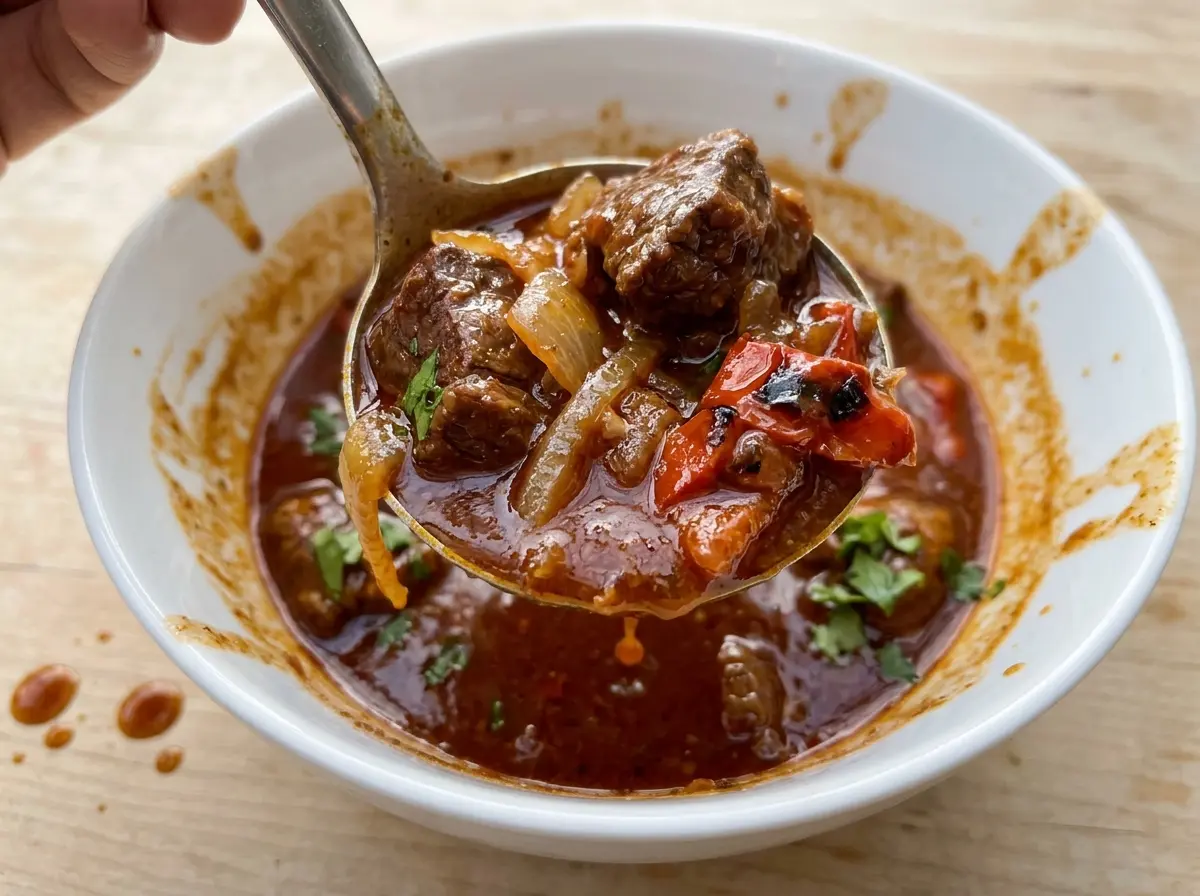
Kitchen Note
I wait the full 10 minutes after stirring in the vinegar before ladling the goulash. That short rest lets the sauce settle, so it tastes rounded rather than sharply vinegary.
Save Classic German goulash for a cozy braise: fork-tender beef, a paprika-rich onion sauce, and a finish of red wine vinegar.
The Onion Base Thickens This Goulash Without Flour
Two pounds of finely chopped onions may look like an outsized amount beside the beef, but they’re doing more than adding sweetness. Cooked slowly until soft and deep golden, they collapse into the braising liquid and give it body. There’s no flour or starch to muddy the paprika and beef flavors.
Color matters more than rushing to the next step. Pale, barely softened onions won’t build the same depth, and the finished sauce will taste less rounded. Stir often over medium heat and give them the full 15 to 20 minutes to turn deep golden. The pieces don’t need to disappear completely; they soften further in the oven and help the sauce coat the beef.
Why Chuck, Sweet Paprika, and Dry Wine Matter in This Pot
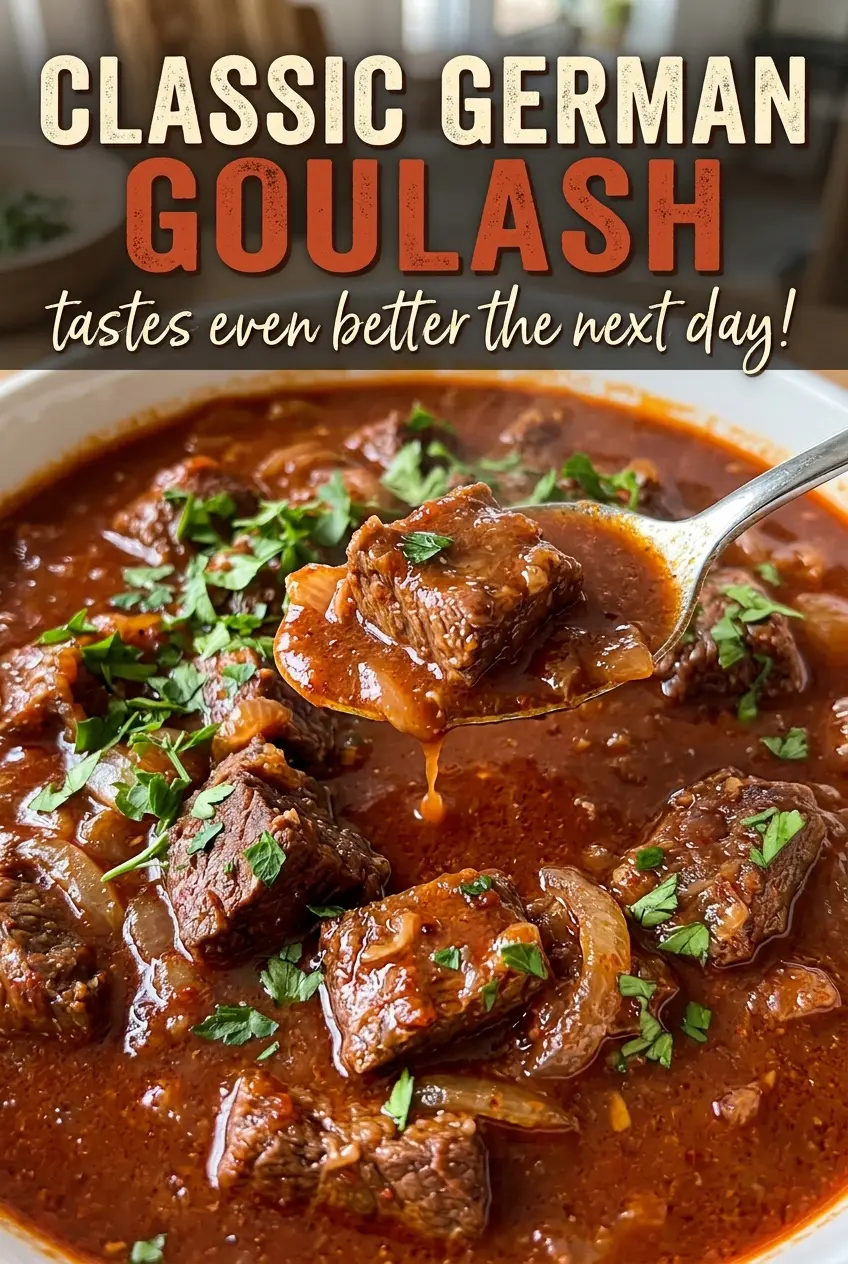
- Beef chuck — Its marbling and connective tissue soften during the covered braise, giving you tender pieces and a beefy sauce. Cut the cubes evenly so they cook at a similar pace. A well-marbled beef shoulder roast is the closest substitute; cut it to the same size and judge it by tenderness.
- Sweet paprika — This is the warm, mellow backbone of the sauce, not just a garnish. Fresh paprika smells fragrant and looks bright rather than dusty; an everyday supermarket jar is fine if it hasn’t gone stale. Smoked paprika changes the character of the pot, so use it only if you want that smoky variation below.
- Caraway and dried marjoram — Caraway brings an earthy, slightly aromatic note, while marjoram adds a gentle herbal edge. Fresh, well-stored spices make a noticeable difference here, but there’s no need for a specialty brand. If caraway isn’t available, leaving it out is better than adding a different seed that pulls the flavor in another direction.
- Dry red wine — Wine loosens the browned bits from the pot and adds acidity to balance the rich beef. Choose a dry bottle you’d drink, but don’t spend extra on an expensive one; its job is to support the sauce, not take it over. The alcohol-free swap below uses beef broth instead.
- Beef broth and tomato paste — Broth carries the browned beef and spice flavors through the braise; a lower-sodium carton makes the salt easier to control, though regular broth works. Tomato paste adds concentrated savoriness and helps round out the wine. A tube or small can is equally useful, and there’s no need for a premium brand.
Brown the Beef, Then Let the Onion Base Do Its Work
Get a Proper Sear on the Chuck
Heat the oven to 325°F, pat the beef dry, and season it with the kosher salt and black pepper. Warm the vegetable oil in a 5- to 6-quart Dutch oven over medium-high heat. Brown the beef in batches for 3 to 4 minutes per side, then transfer each batch to a plate. If the cubes are packed tightly together, they’ll release moisture and steam instead of developing a browned surface.
Cook the Onions Until Deep Golden
Add the finely chopped onions and cook over medium heat, stirring often, for 15 to 20 minutes. They’ll first soften and turn translucent, then deepen in color. Keep scraping the bottom as you stir so the onions pick up the savory browned bits. Move on when they’re soft and deep golden, not merely wilted.
Wake Up the Spices and Deglaze
Stir in the garlic, sweet paprika, caraway seeds, dried marjoram, and tomato paste. Cook for 1 minute, stirring so the spices and paste spread through the onions. Pour in the dry red wine and scrape the bottom of the pot until the browned bits loosen. Simmer for 3 minutes before adding the broth.
Braise Until the Beef Gives Easily
Stir in the beef broth, bay leaves, browned beef, and any juices left on the plate. Bring the pot to a simmer, cover it, and transfer it to the oven. Braise for 2 to 2 1/2 hours, until a fork slides into the beef easily; if the meat still resists, keep it covered as it approaches the longer end of that range. Remove the bay leaves and stir in the red wine vinegar before serving.
How to Change the Wine or Paprika Without Losing the Stew
Make It Without Alcohol
Replace the dry red wine with 1 cup of beef broth. The sauce will be more beef-forward and less wine-bright, while the red wine vinegar still brings acidity at the finish.
Choose a Gluten-Free Broth
Use certified gluten-free beef broth in place of regular beef broth. It keeps the same savory base and braising texture; choose gluten-free packaged spices and tomato paste as well if you need to avoid cross-contact.
Give the Paprika a Smoky Edge
Swap the sweet paprika for the same amount of smoked paprika. The sauce takes on a woodsy, smokehouse note and loses some of the clean sweetness of the original, so this is a noticeable change rather than a quiet substitute.
Storage and Reheating
- Refrigerator: Refrigerate in shallow, covered containers within 2 hours; it keeps for 3 to 4 days. The sauce thickens as it chills.
- Freezer: Freeze in airtight portions for up to 3 months for best quality. Thaw overnight in the refrigerator before reheating.
- Reheating: Warm gently in a covered saucepan over low heat, stirring occasionally, until hot throughout. Add a splash of beef broth if the sauce is too thick; avoid a hard boil, which can break up the tender beef.
Questions That Come Up While German Goulash Braises
Classic German Goulash
Ingredients
Equipment
Method
- Heat the oven to 325°F.
- Pat the beef dry and season it with the kosher salt and black pepper.
- Heat the vegetable oil in a 5- to 6-quart Dutch oven over medium-high heat.
- Brown the beef in batches for 3 to 4 minutes per side, then transfer it to a plate.
- Add the yellow onions to the pot and cook over medium heat, stirring often, for 15 to 20 minutes, until softened and deep golden.
- Stir in the garlic, sweet paprika, caraway seeds, dried marjoram, and tomato paste; cook for 1 minute.
- Pour in the dry red wine and scrape up the browned bits from the bottom of the pot.
- Simmer for 3 minutes.
- Stir in the beef broth, bay leaves, beef, and any accumulated juices.
- Bring to a simmer and cover the pot.
- Braise in the oven for 2 to 2 1/2 hours, until the beef is fork-tender.
- Remove the bay leaves and stir in the red wine vinegar.
- Let the goulash rest for 10 minutes before serving.