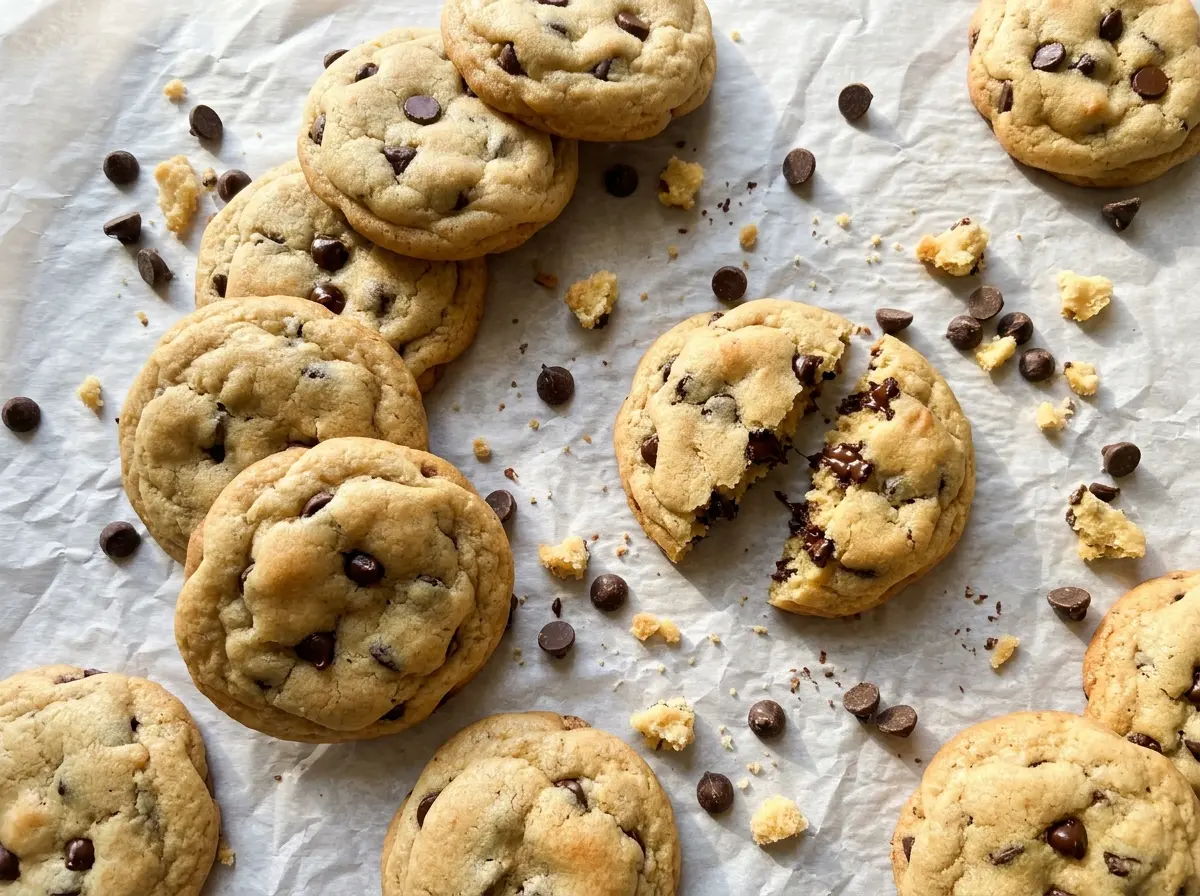
When the timer goes off, the edges should look set while the centers still seem a little soft. That’s the point where these chocolate chip pudding cookies come out of the oven—not when every inch looks firm. They finish setting on the hot baking sheet, and that small timing difference keeps the middle tender instead of dry.
Vanilla instant pudding mix goes right into the butter and sugars, so there’s no separate pudding to prepare and no extra liquid to throw off the dough. I scoop rounded tablespoons onto parchment, leave room between them, and rotate the two pans halfway through baking. The result is a soft-centered cookie with lightly golden edges and plenty of semisweet chocolate in every bite.
Kitchen Note
Pack the light brown sugar into the measuring cup before leveling it. Loose, unmeasured brown sugar changes the balance of the dough, and the cookies won’t have the same tender chew.
Save these chocolate chip pudding cookies for a bake day when you want soft centers and lightly golden edges in every batch.
Why Instant Pudding Mix Makes These Cookies Tender, Not Pudding-Like
Instant pudding mix sounds as if it should make a cookie soft in a strange, custardy way, but it doesn’t. The dry mix blends into the creamed butter and sugars, adding starch and sweetness without the water that prepared pudding would bring. That extra starch helps the cookies hold moisture, while the flour still gives them enough structure to keep their shape.
Order matters here. The pudding mix goes into the fluffy butter-and-sugar mixture before the eggs, so it’s distributed through the dough rather than left in little dry pockets. The eggs then help bind everything together, and the flour mixture goes in last. Once you add the flour, mixing only until it disappears keeps the cookies from turning tough.
Instant pudding mix is doing a specific job, not standing in for flour or replacing the usual cookie ingredients. Keep the amount and the dry-mix format consistent, and the dough stays scoopable, bakes into rounded cookies, and keeps that soft center that makes this version different from a standard chocolate chip cookie.
What the Pudding, Butter, and Chocolate Each Bring to the Dough

- All-purpose flour — It gives the cookies their shape and keeps the dough sturdy enough to hold the chocolate chips. Whisk it with the baking soda and salt before it meets the wet ingredients so the leavening is spread evenly. A standard store-brand flour works well here.
- Unsalted butter — Butter gives the dough its richness and helps it cream with the sugars. A basic stick butter is fine; the important detail is that it’s softened enough to beat until fluffy, not melted. If salted butter is what you have, use it in place of the unsalted butter and leave out the added salt.
- Light brown and granulated sugars — Brown sugar brings moisture and a gentle molasses note, while granulated sugar helps the edges bake up neatly. Dark brown sugar can replace light brown sugar in the same packed measure, though it gives the cookies a deeper molasses flavor.
- Vanilla instant pudding mix — Use the dry mix, not pudding that’s already been prepared. The vanilla flavor is subtle but rounds out the butter and chocolate, and a standard grocery-store brand is suitable. Keep the mix in its instant form so it blends into the dough without adding liquid.
- Large eggs and vanilla extract — The eggs bind the dough and contribute moisture; using large eggs keeps the dough’s proportions steady. Vanilla extract supports the pudding’s flavor. There isn’t a simple egg swap that keeps the same texture, so I stick with large eggs for this batch.
- Semisweet chocolate chips — Semisweet chocolate balances the sweet dough, and chips hold their shape instead of disappearing into it. Chopped semisweet chocolate works in the same quantity if you’d rather have uneven chocolate pockets. There’s no need for premium chocolate here; a dependable bag of chips does the job.
Mixing and Baking the Dough Without Losing Its Soft Center
Whisk the Dry Ingredients Evenly
Heat the oven to 350°F and line two large baking sheets with parchment paper. Whisk the flour, baking soda, and salt together in a medium bowl until the mixture looks uniform. This quick whisk helps prevent a concentrated bite of baking soda later. Set the bowl aside while you cream the butter and sugars.
Cream the Butter, Sugars, and Pudding Mix
Beat the softened butter with both sugars until the mixture looks fluffy, about 2 minutes. If the butter is too cold, it won’t blend smoothly; if it’s melted, it won’t cream into that airy mixture. Beat in the dry pudding mix until it’s incorporated. Scrape the bowl if you see dry mix clinging to the sides.
Add the Eggs, Then Fold in the Chips
Beat in the eggs one at a time, then mix in the vanilla extract. Add the flour mixture and mix on low just until the last streaks of flour disappear. A few extra seconds of beating at this point can make the cookies less tender, so stop as soon as the dough comes together. Fold in the chocolate chips until they’re spread through the dough.
Scoop, Rotate, and Cool
Scoop rounded tablespoons of dough onto the parchment-lined sheets, leaving about 2 inches between portions. Bake at 350°F for 10–12 minutes, switching the sheets’ positions and rotating them front to back halfway through. Pull them when the edges are set and lightly golden but the centers still look soft; they’ll firm up as they cool. Leave the cookies on the baking sheets for 5 minutes, then move them to a wire rack to cool completely.
Three Simple Ways to Change the Batch
Make a gluten-free batch
Replace the all-purpose flour with the same amount of a cup-for-cup gluten-free baking flour blend formulated for cookies. Choose a blend that includes xanthan gum or another binder; expect a slightly more delicate texture than the wheat-flour version.
Turn up the vanilla-cookie flavor
Use one 3.4-ounce package of vanilla instant pudding mix as usual, then swap the semisweet chips for milk chocolate chips in the same quantity. The cookies will taste sweeter and creamier, so this change suits anyone who prefers a softer chocolate flavor.
Storage and Reheating
- Refrigerator: Keep the fully cooled cookies in an airtight container for up to 1 week. They’ll firm up when chilled, so let them sit at room temperature before serving.
- Freezer: Freeze fully cooled cookies in an airtight container, with parchment between layers, for up to 2 months.
- Reheating: Microwave a cookie for about 8 seconds to soften it slightly. Longer heating can make the edges tough, so warm one briefly rather than trying to heat a whole stack.
Questions That Come Up When Baking Pudding Cookies
Chocolate Chip Pudding Cookies
Ingredients
Equipment
Method
- Heat the oven to 350°F.
- Line two large baking sheets with parchment paper.
- In a medium bowl, whisk together the flour, baking soda, and salt.
- In a large bowl, beat the butter, brown sugar, and granulated sugar until fluffy, about 2 minutes.
- Beat in the pudding mix.
- Beat in the eggs one at a time.
- Mix in the vanilla extract.
- Add the flour mixture and mix on low just until combined.
- Fold in the chocolate chips.
- Scoop rounded tablespoons of dough onto the prepared baking sheets, spacing them about 2 inches apart.
- Bake at 350°F for 10–12 minutes, switching the sheets’ positions and rotating them front to back halfway through, until the edges are set and lightly golden and the centers still look soft.
- Cool the cookies on the baking sheets for 5 minutes.
- Transfer them to a wire rack to cool completely.