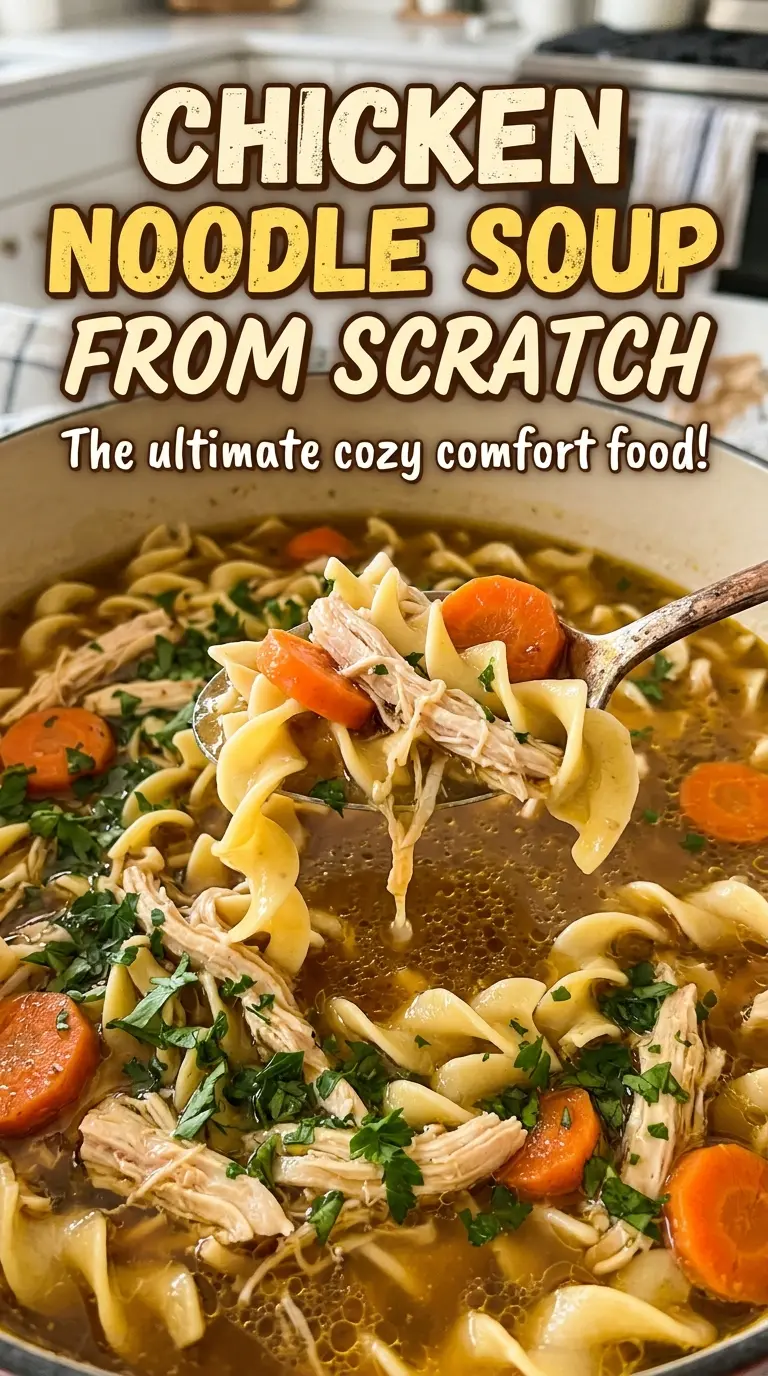
Homemade chicken noodle soup has a depth that store-bought broth just can’t fake. The broth turns a deep golden color as the chicken simmers with carrots, celery, onion, garlic, bay, and thyme, and by the time the noodles go in, the pot tastes round and savory instead of flat. It’s the kind of soup that settles in kindly, with tender shredded chicken, soft vegetables, and wide noodles that hold their shape instead of turning mushy.
The key is starting with a whole chicken and cold water, then keeping the simmer gentle once it comes to a boil. That slow heat pulls flavor from the bones without clouding the broth, and the long simmer gives the chicken enough time to become shreddable. I also like to cook the noodles in the finished broth near the end, so they soak up flavor without stealing all the liquid from the pot.
Below, I’ll walk through the broth, the timing for the vegetables and noodles, and the small choices that keep this soup tasting clean and balanced instead of heavy.
The broth came out rich and golden, and the noodles stayed perfectly chewy instead of falling apart. I loved that the chicken shredded right after the long simmer, and the parsley at the end made it taste fresh, not heavy.
Save this chicken noodle soup from scratch for the nights when you want a broth that tastes homemade, not boxed.
The Broth Needs a Gentle Simmer, Not a Hard Boil
The biggest mistake in chicken noodle soup is boiling it like pasta water. A hard boil pushes fat and proteins around too aggressively, which gives you cloudy broth and chicken that can turn stringy before it has given up its flavor. Start with cold water, bring it up gradually, skim the foam that rises, then lower the heat until the surface barely trembles.
That slow simmer is what gives you a clean-tasting broth with body. The chicken should be so tender that the meat pulls away from the bones without resistance, but the liquid should still look clear enough to see through. If the pot starts rolling, lower the heat right away.
What Each Ingredient Is Actually Doing in This Soup
- Whole chicken — This is the backbone of the soup. Bones, skin, and meat all contribute to the broth, and you won’t get the same depth from chicken breasts alone. A cut-up whole chicken works too, but the flavor won’t be quite as round.
- Carrots, celery, onion, garlic — These build the classic soup base and give the broth sweetness and savory balance. For the broth, they can simmer long because they’re being strained out anyway. In the finished soup, the fresh vegetables should stay slightly firm, not collapse into the pot.
- Bay leaves, peppercorns, thyme, parsley stems — These season the broth from the inside out. Parsley stems add herb flavor without turning the broth muddy, and peppercorns give a quiet warmth that feels present but not sharp. If you only have dried parsley, skip it and lean on the fresh chopped parsley at the end instead.
- Wide egg noodles — These hold up best in chicken soup and give you that familiar, satisfying texture. Cook them at the end so they don’t absorb too much broth. If you know you’ll have leftovers, undercook them slightly or cook them separately and add them to each bowl.
The Order That Keeps the Broth Clear and the Noodles Tender
Building the broth first
Put the whole chicken and all the broth ingredients in a very large pot, then cover with cold water and bring it up to a boil. The foam that rises in the first part of cooking is normal; skim it off for a cleaner broth. Once the pot boils, lower the heat and let it settle into a gentle simmer for about 1 1/2 hours. If the liquid is raging, the broth will turn murky and the chicken can dry out at the edges before the center is fully tender.
Straining and shredding
Lift the chicken out carefully, then strain the broth and discard the spent vegetables. That step matters because the long-cooked vegetables have given up their flavor and can make the broth taste tired if they stay in the pot. When the chicken is cool enough to handle, remove the meat and shred it into bite-size pieces. Don’t rush this while the chicken is piping hot or you’ll tear the meat into dry threads instead of soft shreds.
Finishing the soup
Return the clear broth to the pot and season it before adding the fresh vegetables. The carrots, celery, and onion need about 10 minutes to soften, then the noodles go in for 6 to 8 minutes until just tender. Add the shredded chicken and parsley at the end so the chicken warms through without overcooking and the herbs stay bright. Taste again before serving; broth that tastes flat usually needs salt more than anything else.
How to Adapt This for a Smaller Pot, a Gluten-Free Bowl, or Make-Ahead Cooking
Gluten-Free Chicken Noodle Soup
Swap the egg noodles for a gluten-free noodle that holds up to simmering, then cook it just until tender. Rice noodles work, but they soften quickly, so add them at the very end and serve right away. The broth and chicken stay exactly the same, which means you keep the depth of the original soup without sacrificing texture.
Using a Rotisserie Chicken Instead
If you’re short on time, use shredded rotisserie chicken and start with a good-quality low-sodium stock instead of making broth from scratch. You’ll lose some of the deep homemade body, but you’ll still get a solid weeknight soup if you simmer the vegetables in the stock long enough for the onion and celery to soften. Add the chicken near the end so it doesn’t dry out.
Making It Ahead for the Week
This soup keeps well, but noodles keep drinking broth in the fridge. For the best leftovers, store the soup and noodles separately if you can, then combine them in the bowl when serving. That keeps the broth clear and the noodles from turning bloated by day two.
Storage and Reheating
- Refrigerator: Store in an airtight container for up to 4 days. The noodles will soften as they sit, especially if they’re stored in the broth.
- Freezer: Freeze the broth and chicken without the noodles for best results. Noodles turn mushy after thawing, so cook fresh noodles when you reheat the soup.
- Reheating: Warm gently over medium-low heat until steaming, not boiling. A hard boil will overcook the chicken and turn the noodles past their best texture.
Answers to the Questions Worth Asking

Chicken Noodle Soup From Scratch
Ingredients
Equipment
Method
- Place the whole chicken and all broth ingredients into a very large pot with cold water. Bring to a boil and skim off the foam until the surface looks clearer.
- Reduce the heat to maintain a gentle simmer. Simmer for 1.5 hours, until the chicken is very tender and easily pulls apart.
- Strain the broth and discard the used vegetables. Remove all meat from the chicken and shred into bite-size pieces.
- Return the clear broth to the pot. Taste and season with salt so the base flavor is balanced.
- Bring the broth to a simmer. Add the fresh sliced carrots, celery, and onion and stir to distribute.
- Simmer for 10 minutes, until the vegetables look slightly softened. The broth should be gently bubbling without boiling hard.
- Add the wide egg noodles. Simmer for 6-8 minutes until the noodles are tender but still hold their shape.
- Add the shredded chicken and fresh parsley. Cook for 1-2 minutes just to warm through, then reduce heat for the final seasoning.
- Adjust the soup seasoning with salt and pepper to taste. Stop when the flavors are fully balanced and the broth tastes bright.