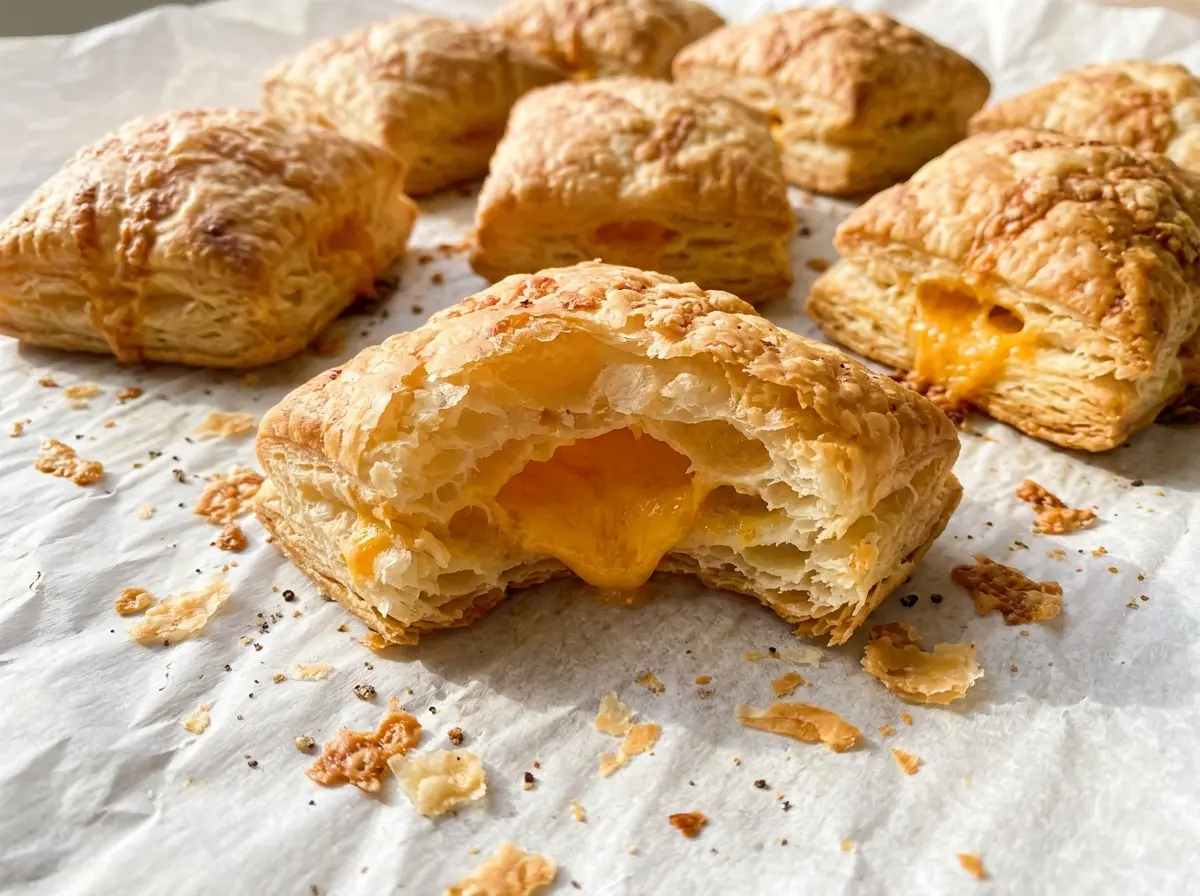
When the baking sheet comes out of the oven, the pastry should be puffed around the edges and deep golden across the top, with the scored squares ready to separate. I like this cheese puff square recipe when I want a savory pastry that’s easy to portion without shaping individual pieces. Each square has a flaky top and bottom with a soft, cheesy center.
The filling starts with softened cream cheese, so the sharp cheddar has a creamy base instead of sitting by itself between the pastry sheets. Dijon adds a little tang, and the egg helps the filling hold together as it bakes. Score the top before baking, then give the pastry time to rest before cutting through those lines. The result is a tray of golden squares with a rich center that stays tucked inside.
Kitchen Note
Give the baked pastry its full 10-minute rest before cutting. When the filling is piping hot, it’s soft enough to smear; letting it settle makes the score lines much easier to follow.
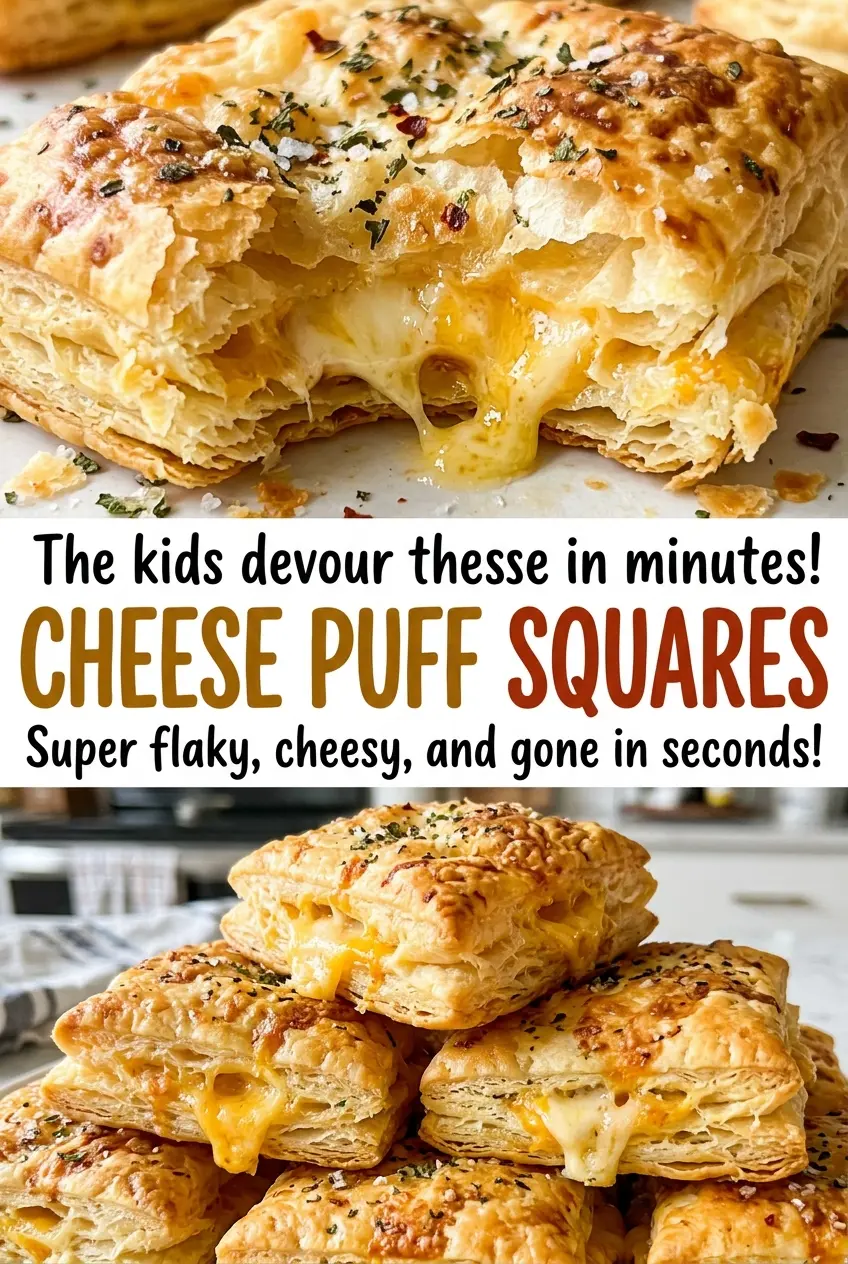
Save these Cheese Puff Squares for a party tray or a savory snack: flaky pastry surrounds a creamy sharp-cheddar filling.
Why the Cream Cheese Matters in a Cheddar Pastry Filling
Cheddar brings the bold, savory flavor, but a filling made from cheddar alone can turn oily as the cheese melts. Cream cheese gives the mixture a softer, more cohesive base, while the egg helps it hold its shape inside the pastry. You get a creamy center rather than a layer of loose melted shreds.
Dijon mustard has a small but useful job here, too. Its tang cuts through the richness of the cheeses without making the filling taste strongly of mustard. Garlic powder and black pepper add background seasoning, so the cheddar stays out front. Keeping the filling spread in an even layer matters: a thick mound in the middle is harder to enclose and leaves the outer squares with less cheese. The goal is an even filling across the pastry, with a clear border all the way around for sealing.
The top pastry sheet gives the cheese mixture room to puff under a second layer, while the bottom one supports each portion. That balance is what makes these feel like pastry squares instead of cheese spread on a crust.
What to Choose for Flaky Layers and a Filling That Holds
- Puff pastry — Frozen puff pastry gives the squares their distinct lift and layered texture. Thaw it according to the package directions; pastry that’s still stiff can crack when rolled, while very soft pastry is harder to handle. Use the all-purpose flour lightly on the work surface so the sheets don’t stick without leaving a dry coating.
- Cream cheese — Choose regular block cream cheese rather than whipped cream cheese from a tub. The block style gives the filling a thicker consistency, and softening it before mixing helps it beat smoothly with the other ingredients.
- Sharp cheddar — For the fullest cheddar flavor, shred it from a block just before mixing. Pre-shredded cheese is convenient, but its coating can keep the filling from blending as smoothly. A different cheddar style changes the flavor, so keep the same amount if you try a sharper or milder version.
- Egg and Dijon mustard — Use a large egg for the filling’s structure and Dijon for a gentle tang. The egg should be mixed in with the cream cheese and cheddar, rather than brushed over the pastry; milk is used for the top.
- Milk for finishing — A light brush of milk helps the top brown as the pastry bakes. Apply it over the pastry surface, not around the edges where you’ve pressed the two sheets together.
Building, Sealing, and Baking the Cheese Puff Squares
Roll the Bottom Sheet to Fit
Heat the oven to 400°F with a rack in the center, and line an 18×13-inch rimmed baking sheet with parchment. Lightly flour the work surface, then roll one pastry sheet into a 10×12-inch rectangle. Transfer it to the lined pan, keeping the sheet in one piece; if it tears, press the edges back together before adding the filling.
Mix a Smooth, Even Filling
Beat the softened cream cheese, shredded cheddar, egg, Dijon, garlic powder, salt, and pepper in a medium bowl. Stop when the mixture looks evenly combined, with no visible streaks of plain cream cheese. If the cream cheese is still cold and firm, it’s more likely to leave lumps. An even mixture spreads more neatly over the pastry.
Enclose the Filling and Score the Top
Spread the filling over the bottom pastry, leaving a 1/2-inch border. Roll the second sheet into a 10×12-inch rectangle and place it over the filling, then press the pastry edges together with a fork to seal. Brush the top with milk and score it into 24 squares, taking care not to cut through the bottom pastry. Shallow score marks give you a guide for separating the baked squares.
Bake Until Deep Golden
Bake for 25 to 30 minutes, until the pastry is puffed and deep golden brown. A lightly colored top needs more time; look for color across the surface, not just at the edges. Once baked, leave the pastry on the baking sheet for 10 minutes, then cut through the score lines to separate the squares. Cutting along those marks gives you 24 portions.
Small Changes That Shift the Cheese Flavor
Use extra-sharp cheddar for a bolder bite
Replace the sharp cheddar with the same amount of extra-sharp cheddar. The cheese flavor comes through more strongly against the cream cheese, with no change to the pastry method.
Leave out the garlic powder for a simpler filling
Omit the garlic powder and keep the other filling ingredients unchanged. The result is more focused on the cheddar and Dijon, without changing how the squares bake.
Storage and Reheating
- Refrigerator: Refrigerate leftovers within 2 hours and keep covered for up to 3 days. The pastry softens as it sits.
- Freezer: Freeze fully baked, cooled squares in an airtight container for up to 2 months. Separate layers with parchment so the squares are easier to remove.
- Reheating: Warm in a 400°F oven until hot and crisp again. The microwave is quicker, but it softens the pastry layers.
Questions That Come Up When Making Cheese Puff Squares
Cheese Puff Squares
Ingredients
Equipment
Method
- Heat the oven to 400°F with a rack in the center.
- Line an 18x13-inch rimmed baking sheet with parchment paper.
- Lightly flour the work surface with the all-purpose flour.
- Roll one puff pastry sheet into a 10x12-inch rectangle and transfer it to the prepared baking sheet.
- Beat the cream cheese, cheddar, egg, Dijon mustard, garlic powder, salt, and black pepper in a medium bowl until evenly combined.
- Spread the filling over the pastry, leaving a 1/2-inch border.
- Roll the second pastry sheet into a 10x12-inch rectangle and place it on top.
- Press the edges together with a fork to seal.
- Brush the top with the milk.
- Score the pastry into 24 squares without cutting through the bottom pastry.
- Bake for 25 to 30 minutes, until puffed and deep golden brown.
- Let the pastry rest on the baking sheet for 10 minutes.
- Cut through the score lines to separate the squares.