Golden sourdough, sharp melted cheddar, and crisp bacon turn this turkey melt into the kind of sandwich that earns a permanent spot in the lunch rotation. The bread gets shatter-crisp on the outside while the inside stays warm and gooey, with just enough mustard bite to keep all that richness from feeling heavy.
What makes this version work is the layering. Dijon goes against the turkey and cheddar, where it can cut through the fat and wake up the meat, while mayonnaise adds a softer, rounder note on the other half of the sandwich. Butter on the outside gives the sourdough that even, pan-toasted crust that a dry skillet never quite matches. The greens and tomato go in at the end so they stay fresh instead of stewing in the heat.
Below, I’ll show you the small timing details that keep the cheese fully melted without burning the bread, plus a few smart swaps if you need to change the cheese, bread, or protein.
The bread got this perfect crunchy edge and the cheddar melted all the way through before the sourdough overcooked. I used the Dijon on one side and mayo on the other like suggested, and it tasted balanced instead of greasy.
Save this cheddar and bacon turkey melt for the days when you want a crisp sourdough sandwich with real diner-style crunch and a cheese pull worth making again.
The Trick to Melting the Cheese Without Burning the Sourdough
The biggest mistake with a melt like this is cranking the heat too high and hoping the bread and cheese finish at the same time. Sourdough browns fast, but cheddar still needs a little time to soften all the way through. Medium heat gives you a real window: the butter turns the bread deeply golden while the filling warms enough to melt into itself.
Another thing that matters here is the order of the fillings. The cheese belongs directly against the hot bread and turkey so it starts melting from both sides once the sandwich hits the pan. If you pile the greens and tomato too early, they’ll steam the bread and make the center slippery before the cheese has a chance to set.
- Sharp cheddar — Use a good melting cheddar with some bite. Mild cheddar works, but it tastes flatter against the bacon and mustard. Pre-sliced cheese melts fine here, though block cheese sliced thin gives a cleaner melt if you have a few extra minutes.
- Sourdough — The tangy bread stands up to the fat in the bacon and mayo. Any sturdy sandwich bread can work, but soft bread tends to collapse before the cheese fully melts.
- Dijon mustard — This is the sharp edge that keeps the sandwich from tasting heavy. Yellow mustard will work in a pinch, but it won’t give the same depth.
- Mayonnaise — Mayo adds a softer, richer layer on the other half of the sandwich. It also helps keep the interior from tasting dry. If you don’t want mayo, use a thin swipe of softened butter or a little aioli.
What Each Ingredient Is Actually Doing in This Recipe

- Primary ingredient (the star) — Quality matters most. Choose the best you can find.
- Cooking medium (oil, butter, or broth) — This carries flavors and prevents dryness.
- Seasonings (salt, pepper, spices, herbs) — Layer flavors so nothing overpowers. Build depth gradually.
- Aromatics (garlic, onion, herbs) — Cook with fat to bloom flavors. Become the foundation.
- Supporting ingredients — Complement the main ingredient without overpowering it.
- Sauce or liquid (if applicable) — Brings flavors together. Balance richness with acid.
- Acid (lemon, vinegar, wine, or other) — Brightens and prevents flat-tasting results.
- Final finish (garnish, glaze, or sauce) — Prevents one-dimensional taste and adds visual appeal.
Build It in the Right Order for a Crisp Crust and a Melted Center
Prep the fillings before the bread hits the pan
Cook the bacon until it’s fully crisp, then let it drain so it doesn’t soak the bread. Slice the tomato and dry it lightly with a paper towel; extra moisture is the fastest way to turn the center of the sandwich soggy. Lay everything out before you start assembling so the bread doesn’t sit around waiting while the skillet heats.
Layer the sandwich so the cheese melts into the turkey
Spread the butter on the outside of every slice first, then flip and add Dijon to half the slices and mayonnaise to the other half. Stack the turkey, bacon, and cheddar on the Dijon side so the mustard sits closest to the savory fillings. Close the sandwich with the mayo side and press lightly; that gentle pressure helps the layers fuse without squeezing out the filling.
Cook low enough for the cheese to catch up
Set the skillet or griddle over medium heat and cook the sandwiches butter-side down. Listen for a steady, soft sizzle, not an angry fry. If the bread is turning dark before the cheese softens, the pan is too hot; lower the heat and give it another minute per side. You want a deep golden crust and cheddar that has melted all the way through, not just warmed at the edges.
Add the greens and tomato after the heat work is done
Open the sandwiches, add the arugula and tomato, then press them back together and serve right away. Doing this at the end keeps the greens bright and the tomato fresh instead of wilted. If you add them before cooking, they’ll steam and the sandwich will lose that clean, crisp bite that makes the melt worth eating.
How to Adapt This Turkey Melt Without Losing What Makes It Good
Make it gluten-free with sturdy sandwich bread
Use a gluten-free bread that can hold up to grilling, not a soft sandwich loaf that falls apart under the weight of the filling. Toast it a little longer if needed, since many gluten-free breads brown more slowly and need extra time to get crisp.
Swap the turkey for leftover chicken or ham
Leftover roasted chicken works cleanly here, and ham gives the sandwich a saltier, more classic deli feel. Either one keeps the structure of the melt intact, though ham will make the sandwich taste a little richer and more savory than turkey.
Use a different cheese if cheddar isn’t what you have
Swiss, provolone, or gouda all melt well and give you a slightly different finish. Swiss is nuttier, provolone is milder and silkier, and gouda brings a creamier texture. If you use mozzarella, add a pinch of salt or the sandwich can taste bland next to the bacon.
Skip the mayo for a lighter sandwich
You can leave out the mayo and use Dijon on both sides if you want a sharper, leaner sandwich. The melt will still work, but the middle won’t feel quite as rich, so the bacon and cheddar will stand out more.
Storage and Reheating
- Refrigerator: Store assembled sandwiches without the greens and tomato for up to 2 days. The bread will soften a bit, so expect a less crisp crust after chilling.
- Freezer: I don’t recommend freezing the finished sandwich. The tomato and greens won’t recover well, and the bread turns chewy after thawing.
- Reheating: Reheat in a skillet over low to medium-low heat, covered for a minute or two so the cheese warms through before the bread scorches. The biggest mistake is using the microwave, which makes the sourdough limp and the bacon rubbery.
Questions I Get Asked About This Recipe
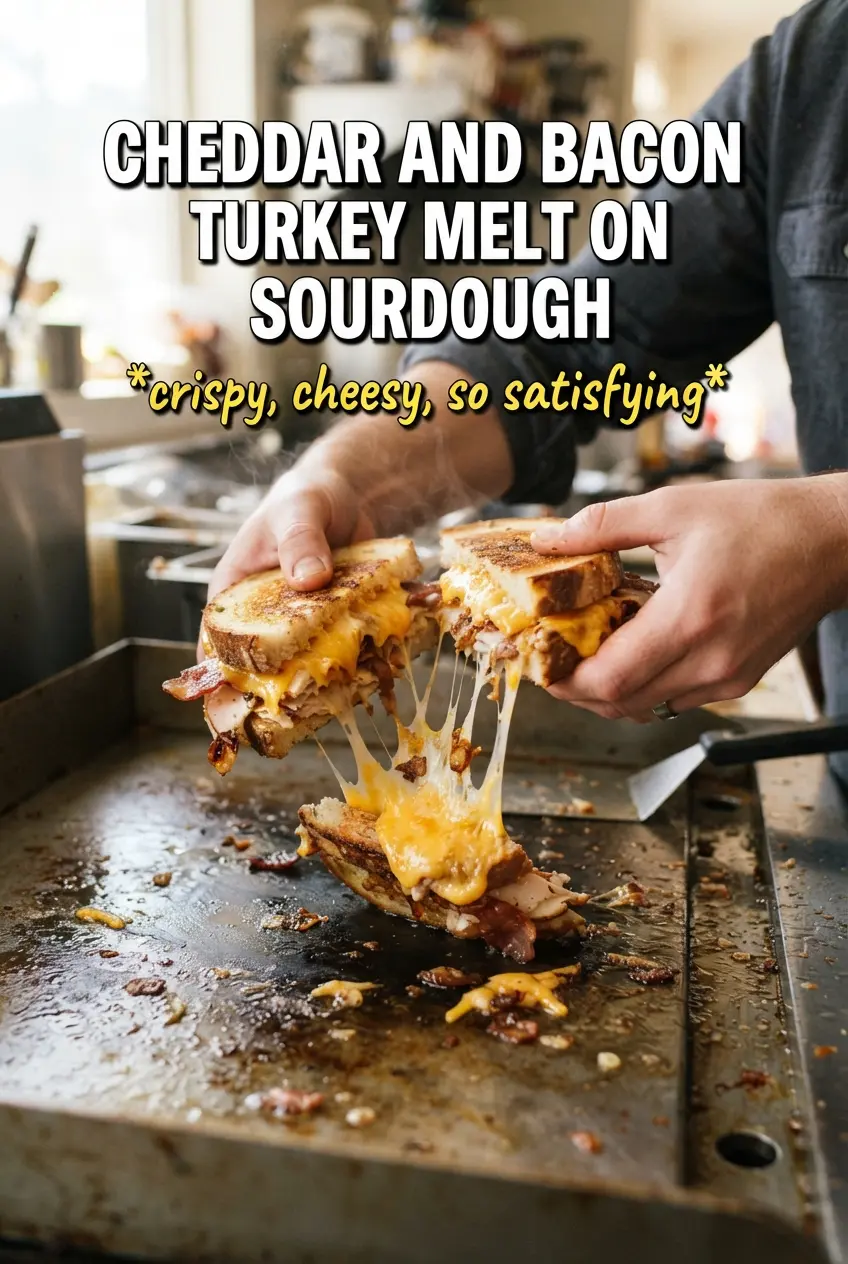
Cheddar and Bacon Turkey Melt on Sourdough
Ingredients
Equipment
Method
- Cook the bacon in a skillet or on a griddle over medium heat until crispy, then drain and set aside so it stays crunchy.
- Spread softened butter on one side of each bread slice so the outside browns well.
- Flip the bread over and spread Dijon mustard on half the slices and mayonnaise on the other half.
- Layer turkey, crispy bacon, and sharp cheddar on the Dijon side, keeping the filling even to melt uniformly.
- Heat a skillet or griddle over medium heat, place sandwiches butter-side down, and cook until the bottoms turn golden.
- Top with the mayonnaise-spread slices butter-side up, then cook 3-4 minutes per side until the cheddar is fully melted and the bread is crisp.
- Open each sandwich and add arugula or mixed greens and tomato slices.
- Press closed and serve immediately while the cheese is still molten.