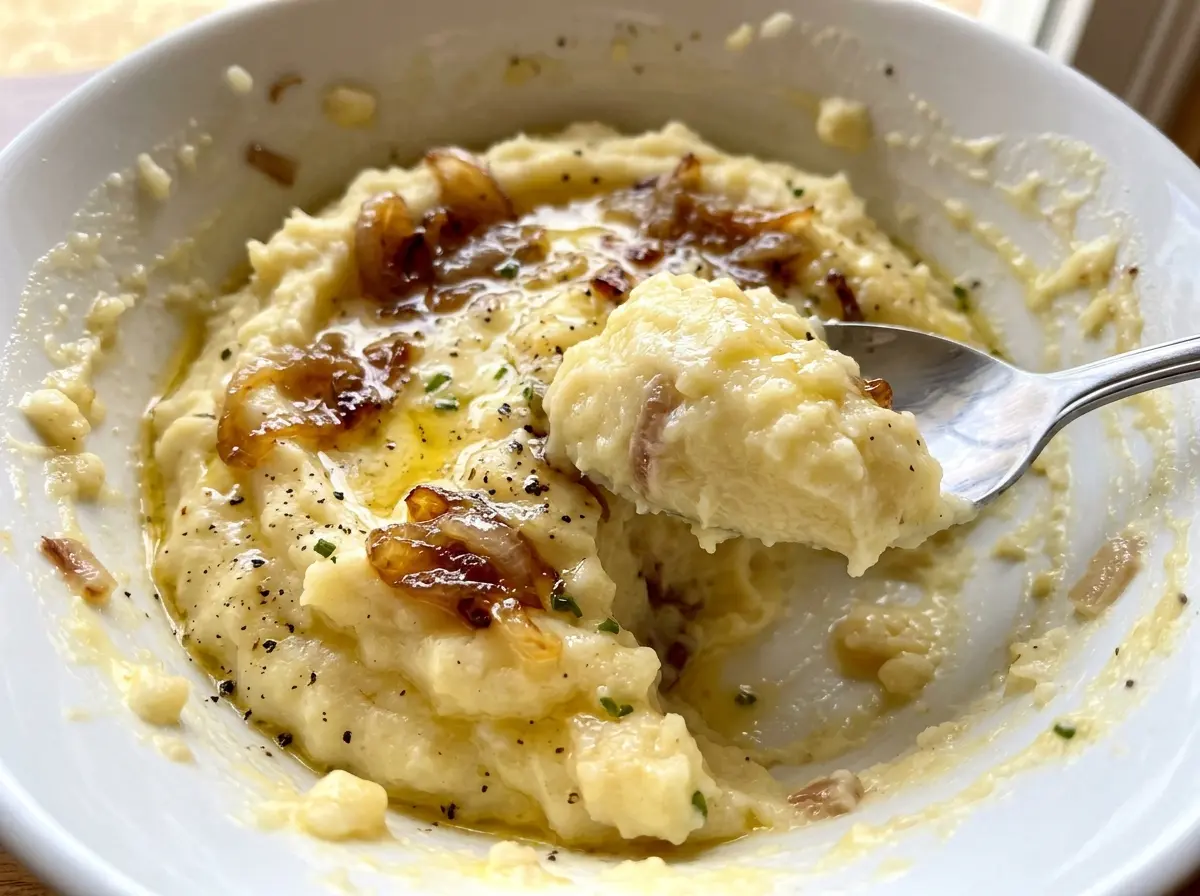
In the skillet, thinly sliced shallots can look like they’re barely changing for a while; then their edges turn deep golden and the whole pan softens into something sweet and jammy. That slow transformation is what makes Caramelized Shallot Mashed Potatoes feel special without needing a complicated method. The shallots bring a mellow, savory sweetness to familiar, buttery mashed potatoes, and a spoonful on top makes every serving look inviting.
I warm the milk with the butter before it goes into the potatoes. Cold dairy can cool the potatoes as you mash, while a hot milk mixture blends in smoothly and keeps the mash soft. Add it gradually rather than pouring it all in at once; you can stop when the potatoes are as creamy as you like. The finished bowl is rich, tender, and full of little pockets of caramelized shallot.
Kitchen Note
Give the shallots the full 30–40 minutes they need over medium-low heat. They should be very soft and deep golden brown, not just translucent; if they’re still pale, keep cooking and stir every few minutes.
Save these caramelized shallot mashed potatoes for a cozy dinner or holiday table—the golden shallots make every spoonful a little more special.
Why These Potatoes Need Salt at Three Different Moments
Seasoning this dish isn’t a single adjustment at the end. The shallots get a little salt while they cook, the potato water is salted before it comes to a boil, and the mashed potatoes get their own final seasoning. Each moment does a different job: the shallots are seasoned as they soften, while salted cooking water gives the potatoes flavor beyond their surface. The last addition lets you season the whole bowl after the butter, milk, and shallots are mixed in.
That order matters because potatoes absorb water as they cook, but they won’t take on much flavor if the water is completely plain. On the other hand, the salt stirred in at the finish is what lets you adjust the overall balance once everything is together. I use the measured amounts for each stage, then taste a bite before serving. If the mash seems a little flat, check the seasoning of the potatoes themselves rather than adding more shallots; their sweetness can make the salt seem less noticeable.
Why Yukon Golds and Shallots Make Such a Creamy, Savory Mash

- Yukon Gold potatoes — Their naturally creamy texture makes a smooth mash without needing an elaborate technique. Peel them and cut them into even 1 1/2-inch chunks so the pieces cook at a similar pace. If you substitute russets, expect a fluffier, starchier result rather than the same buttery texture.
- Shallots — Thin slices have plenty of surface area to soften and brown gradually, bringing a sweeter, gentler onion flavor than a sharper yellow onion. Buy firm shallots without soft spots; peeling and slicing them thinly helps them cook evenly in the skillet.
- Unsalted butter — Butter carries the shallots’ sweetness into the potatoes and gives the mash its full, rounded texture. Unsalted butter also lets you control seasoning across the three stages. If you only have salted butter, reduce the added salt carefully and taste before serving.
- Whole milk — Whole milk makes the potatoes creamy without making them heavy. Warm it with the butter so it blends into the mash instead of cooling it. Lower-fat milk works in a pinch, but the potatoes won’t taste quite as rich.
- Olive oil — A little oil goes into the skillet with the butter, helping the shallots cook gently without relying on butter alone. A standard olive oil is fine here; there’s no need to use a strongly flavored finishing oil.
How to Caramelize the Shallots Before the Potatoes Are Mashed
Let the Shallots Soften Slowly
Melt the shallot portion of the butter with the olive oil in a 12-inch skillet over medium-low heat. Add the thinly sliced shallots and their salt, then cook for 30–40 minutes, stirring every few minutes. They’re ready when they’re very soft and deep golden brown, not when they’re merely limp. If the pan is browning them too quickly before they soften, lower the heat; fast, dark edges won’t give you the same mellow result.
Cook the Potatoes Until the Largest Pieces Yield
Put the peeled, 1 1/2-inch potato chunks in a 6-quart pot, cover them with cold water by 1 inch, and add the potato-water salt. Bring the pot to a boil over high heat, then lower it to a simmer for 15–20 minutes. Test the largest pieces with a paring knife; it should slide in easily without the potato resisting in the center. If the biggest chunks are still firm, give them more time rather than draining the pot while the centers are undercooked.
Warm the Dairy, Then Mash Gradually
While the potatoes simmer, heat the milk and remaining butter in a microwave-safe measuring cup for 45–60 seconds, until the butter has melted and the milk is hot. Drain the potatoes well and return them to the pot before mashing. Mix in the warm milk mixture gradually, then stir in the remaining salt; adding the liquid in stages gives you control over the final texture. Fold about three-quarters of the caramelized shallots through the potatoes and spoon the rest over the top.
Three Ways to Change the Flavor Without Losing the Comfort
Make the Mash Dairy-Free
Use olive oil in place of both portions of butter, and use unsweetened, unflavored oat milk instead of whole milk. Keep the quantities the same as the butter and milk in the recipe, warming the oat milk with the oil before mixing it into the potatoes. The result is less buttery and has a light oat flavor, but the shallots still give the mash its sweet, savory character.
Add a Fresh Chive Finish
Fold in 2 tablespoons of finely chopped fresh chives along with the caramelized shallots, and add a few grinds of black pepper. The chives bring a clean, mild onion note that lifts the sweet shallots without changing the creamy texture. Keep some shallots aside for the top so their golden color still shows.
Use Yellow Onions for a Sharper Edge
Replace the shallots with the same weight of thinly sliced yellow onions and cook them until very soft and deep golden brown. Onions taste sharper and less delicate, so the finished potatoes will have a more familiar, savory onion flavor. Follow the color and tenderness cues rather than relying only on the clock, since the slices may take a little longer to soften.
Storage and Reheating
- Refrigerator: Store leftovers in a covered container for 3–4 days. The potatoes will firm up as they chill.
- Freezer: Freeze in airtight portions for up to 1 month for the best texture. Thaw overnight in the refrigerator; the potatoes may look slightly loose after thawing, so stir them well as they warm.
- Reheating: Warm gently in a covered saucepan over low heat, stirring often, or microwave in short intervals and stir between each one. A splash of milk can loosen the mash if it has thickened. Reheat leftovers to 165°F, and avoid high heat, which can make the potatoes stick or turn pasty.
Questions That Come Up When Making Shallot Mashed Potatoes
Caramelized Shallot Mashed Potatoes
Ingredients
Equipment
Method
- Melt 2 tablespoons of the butter with the olive oil in a 12-inch skillet over medium-low heat.
- Add the shallots and 1/2 teaspoon salt.
- Cook, stirring every few minutes, for 30–40 minutes, until very soft and deep golden brown.
- Put the potatoes in a 6-quart pot.
- Cover with cold water by 1 inch.
- Add 2 teaspoons salt.
- Bring to a boil over high heat.
- Simmer for 15–20 minutes, until a paring knife slides easily into the largest pieces.
- While the potatoes cook, heat the milk and remaining 6 tablespoons butter in a microwave-safe measuring cup for 45–60 seconds, until the butter is melted and the milk is hot.
- Drain the potatoes well.
- Return the potatoes to the pot.
- Mash, gradually mixing in the warm milk mixture.
- Stir in the remaining 1 1/2 teaspoons salt.
- Fold about three-quarters of the caramelized shallots into the potatoes.
- Spoon the rest of the caramelized shallots over the top.