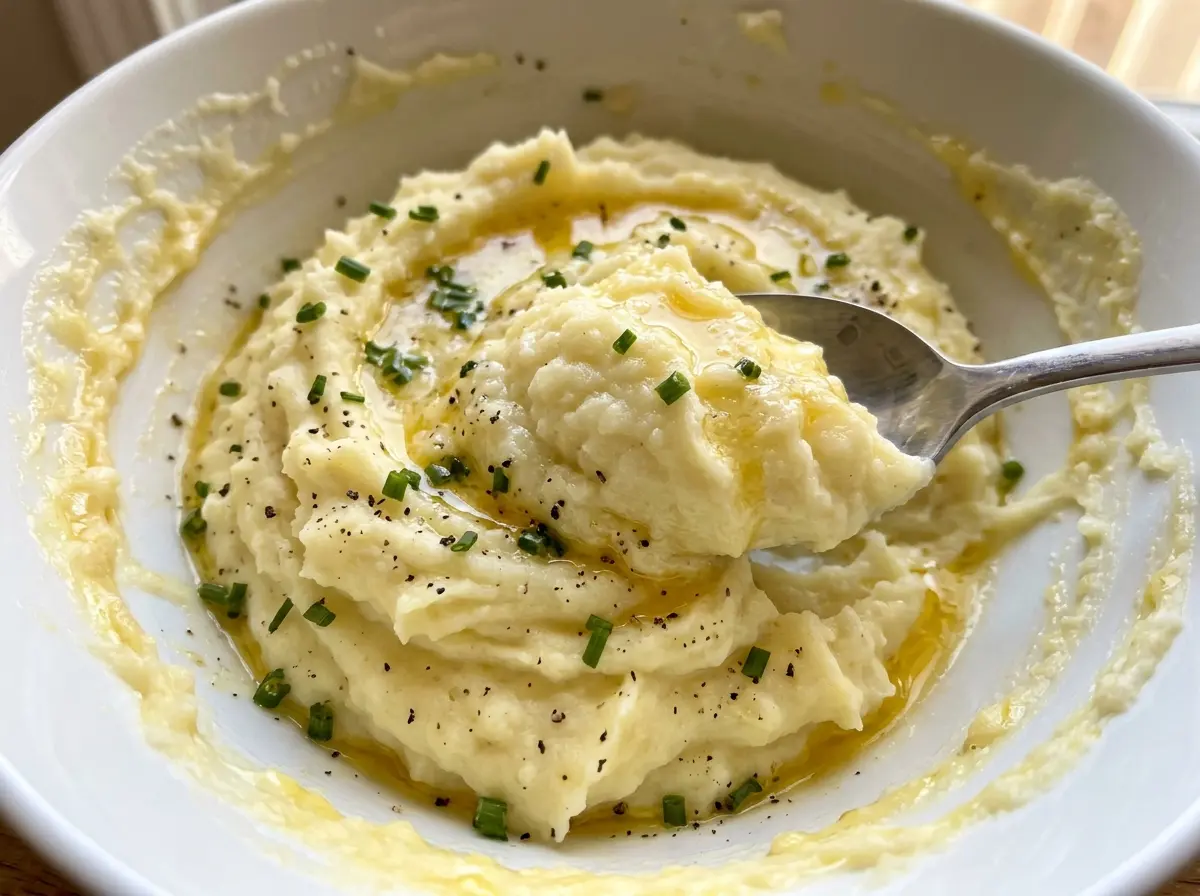
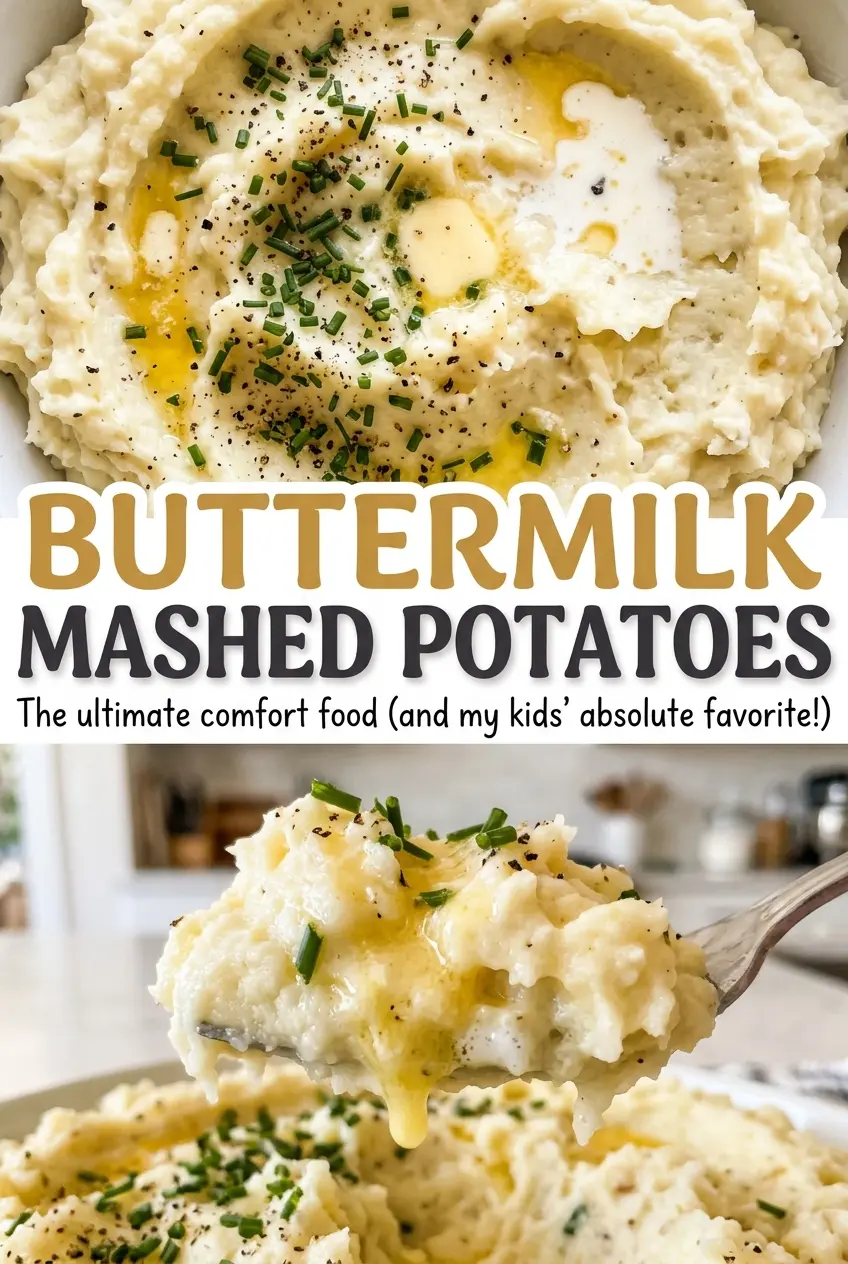
The potatoes are tender, the butter is melted, and then one small choice decides whether the mash turns creamy or stiff: what you pour in with the masher. I warm the buttermilk and butter together while the Yukon Golds simmer, so the potatoes stay hot when the tangy dairy goes in. These buttermilk mashed potatoes have a soft, creamy texture with enough tang to keep each bite from feeling heavy.
I also let the drained potatoes sit over low heat for a minute or two before mashing. That little pause lets excess water steam away, so the buttermilk doesn’t have to compete with a puddle at the bottom of the pot. Add the warm mixture gradually, and stop stirring as soon as it’s incorporated. The result is buttery, gently peppered mash that still tastes like potatoes.
Kitchen Note
When the butter and buttermilk are steaming, take them off the heat before they bubble. Boiling the mixture isn’t needed; gentle heat melts the butter and keeps the buttermilk from breaking.
Save these buttermilk mashed potatoes for a meal that needs creamy Yukon Golds with a gentle, tangy finish.
Why Yukon Golds Stay Creamy When You Stop Mashing in Time
Yukon Gold potatoes have a naturally creamy texture, which makes them a good fit for mash that’s rich without needing a lot of extra handling. But any potato can turn gluey if it’s mashed or stirred too aggressively. The more you work the cooked potatoes, the more starch they release, and that starch can make the finished texture sticky rather than soft.
That’s why I treat “just combined” as the finish line, not an invitation to keep stirring until every last lump disappears. Mash the potatoes, add the warm buttermilk mixture gradually, and stop once the liquid is incorporated and the texture looks creamy. A few small soft lumps are preferable to an overworked, pasty mash. The potato variety gives you a head start; a gentle hand protects it.
What the Yukon Golds, Butter, and Buttermilk Each Bring
- Yukon Gold potatoes — Their naturally creamy, buttery texture suits this mash, and peeling them gives the finished potatoes a smooth feel. Russets work if that’s what you have, but they make a fluffier, starchier mash; handle them gently and add the warm liquid gradually so the texture doesn’t turn pasty.
- Buttermilk — This is what gives the potatoes their mild tang and loosens the mash. For a practical substitute, plain yogurt thinned with a little milk until pourable works, though it tastes less tangy and can make the potatoes a little thicker. Add that substitute gradually and judge the texture as you go.
- Unsalted butter — It brings richness without adding another layer of salt, so the seasoning stays easier to control. Salted butter can stand in, but the potatoes may taste saltier; use your judgment when seasoning the cooking water.
- Black pepper — It adds a warm, mild bite that cuts through the butter. Freshly ground pepper gives a more noticeable aroma, while pre-ground pepper is fine for an even, subtle background flavor.
From Fork-Tender Potatoes to Creamy Buttermilk Mash
Start the Potatoes in Cold, Salted Water
Put the peeled Yukon Gold chunks in a 5-quart pot and cover them with cold water by about an inch. Add the kosher salt, then bring the pot to a boil over high heat. Starting cold gives the centers time to cook as the water heats, rather than leaving the outside soft before the middle is tender. Keep the pieces close to the same 1 1/2-inch size so they finish at roughly the same time.
Simmer Until a Fork Slides In Easily
Once the water boils, lower the heat to maintain a steady simmer. Cook the potatoes for 15 to 20 minutes, checking a larger piece with a fork near the end. It should pierce easily without the potato falling apart in the water. If the fork still meets a firm center, give the pieces a little more simmering time instead of mashing them early.
Drain Well and Let the Steam Escape
Drain the potatoes thoroughly, then return them to the pot over low heat for 1 to 2 minutes. Shake the pot gently to move the potatoes around without breaking them up. You’re looking for the excess moisture to evaporate; wet potatoes can leave the finished mash looser than you want. Keep the heat low and don’t walk away, since the goal is to dry the surface, not brown the potatoes.
Warm the Dairy and Mash Just Until Combined
While the potatoes cook, warm the butter and buttermilk together in a small saucepan over low heat until the butter melts and the mixture is steaming. Mash the potatoes, then gradually add the warm mixture and stir in the black pepper. Add it in stages so you can see the texture change rather than flooding the pot all at once. Stop as soon as the mash looks creamy and the ingredients are combined.
Two Ways to Adapt These Buttermilk Mashed Potatoes
Make a Dairy-Free Batch with Soy Yogurt
Use dairy-free butter in place of the unsalted butter, and use unsweetened plain soy yogurt thinned with water until pourable in place of the buttermilk. Warm the replacement mixture gently with the dairy-free butter, then add it gradually. The potatoes will still be creamy, though the tang and richness won’t be quite the same as the buttermilk version.
Leave the Yukon Gold Skins On for a Rustic Mash
Skip peeling the Yukon Golds and cut them into the same-size chunks before cooking. The finished potatoes will have flecks of tender skin and a more rustic texture, rather than the smooth look of peeled potatoes. Mash gently so the pieces of skin stay distinct instead of being worked into the potatoes.
Storage and Reheating
- Refrigerator: Refrigerate leftovers within 2 hours in a covered, airtight container and use them within 3 to 4 days. The mash will firm up as it chills.
- Freezer: Freeze in an airtight container for up to 1 month for best quality. Thaw overnight in the refrigerator; the texture may be a little less smooth after freezing.
- Reheating: Warm gently in a covered saucepan over low heat, stirring occasionally, or microwave in short intervals and stir between them. Heat leftovers to 165°F, and avoid high heat, which can dry the potatoes around the edges before the center is warm.
Questions That Come Up When Making Buttermilk Mashed Potatoes
Buttermilk Mashed Potatoes
Ingredients
Equipment
Method
- Put the potatoes in a 5-quart pot, add the water and kosher salt, and bring to a boil over high heat.
- Reduce the heat to maintain a steady simmer and cook for 15 to 20 minutes, until the potatoes are fork-tender.
- Drain the potatoes well and return them to the pot.
- Cook over low heat for 1 to 2 minutes, shaking the pot gently to evaporate excess moisture.
- While the potatoes cook, warm the butter and buttermilk in a small saucepan over low heat until the butter melts and the mixture is steaming; do not let it boil.
- Mash the potatoes.
- Gradually add the warm buttermilk mixture.
- Stir in the black pepper until just combined.