The butter foams before it turns clear, and then those little amber flecks start collecting at the bottom of the saucepan. Keep swirling and the smell shifts from plain butter to something toasted and nutty. That’s the moment that gives these browned butter toffee chocolate chip cookies their deep, warm flavor without adding another ingredient.
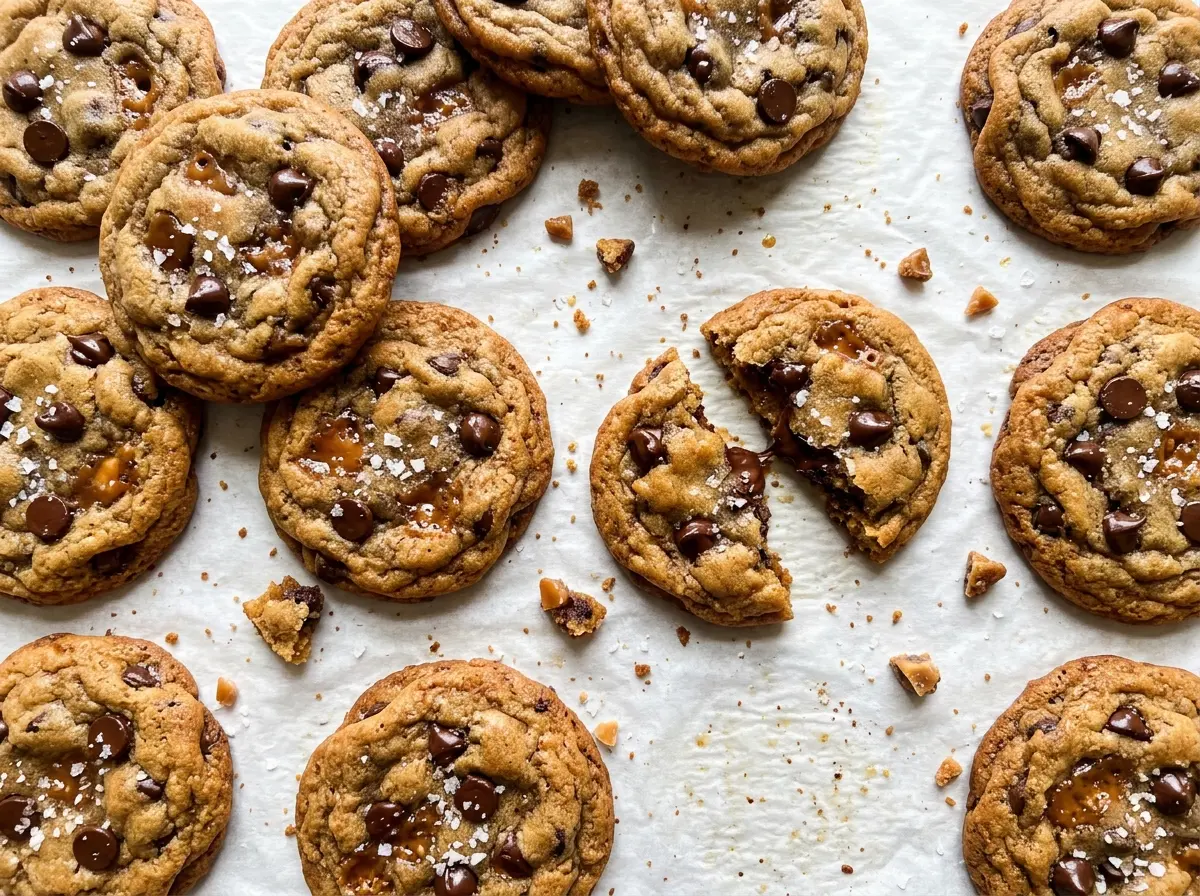
I let the butter cool until it’s warm, not hot, before whisking in the eggs. That pause matters: hot butter can start cooking the eggs before they’re mixed into the dough. A covered hour in the refrigerator firms everything up, so the cookies bake with golden edges and centers that stay a little soft. Each bite has chocolate and a small, buttery crunch from the toffee.
Kitchen Note
Pour the browned butter and every amber fleck into the mixing bowl. Those toasted milk solids carry the nutty flavor, so don’t leave them stuck to the saucepan.
Save these browned butter toffee chocolate chip cookies for their nutty butter, soft centers, and crunchy toffee pieces.
Why the Browned Butter Has to Cool Before the Eggs Go In
Browned butter is still liquid when it leaves the saucepan, and it holds heat longer than the outside of the bowl suggests. Whisking eggs into butter that’s too hot can make them turn grainy or partially cook before they blend into the dough. Let the butter sit until it feels warm rather than hot, then whisk in the sugars first. The sugar helps bring the mixture together, and the eggs and vanilla can then be whisked in smoothly.
This cooling pause also makes the dough easier to manage later. You’re not trying to bring the butter back to a solid state in the bowl; the refrigerator firms the finished dough after the chocolate and toffee go in. If you rush the butter and add the eggs while it’s hot, you can lose the smooth base that holds the flour evenly. A little patience here gives you dough that’s cohesive rather than oily or streaky.
What the Butter, Sugars, Chocolate, and Toffee Bring to the Dough

- Unsalted butter — Browning creates the toasted flavor and gives the cookies their rich base. Unsalted butter lets you control the fine salt; if salted butter is all you have, reduce the added salt by ¼ teaspoon.
- Light brown sugar and granulated sugar — Brown sugar brings moisture and a caramel note, while granulated sugar keeps the sweetness from tasting too heavy. Dark brown sugar can replace light brown sugar in the same amount, though it gives the cookies a deeper molasses flavor.
- Eggs and vanilla — The eggs bind the dough and help it bake into a soft-centered cookie. There isn’t a simple egg swap that preserves the same texture, so keep them for the best result. Use the vanilla you like; a basic pure or imitation extract both work here.
- All-purpose flour and baking soda — Flour gives the dough structure, and baking soda helps the cookies spread and brown. Baking powder isn’t a direct replacement for baking soda; it can change the spread and texture. For a gluten-free version, use a cup-for-cup gluten-free baking flour blend, as described below.
- Semisweet chocolate chips and toffee bits — Semisweet chips keep the cookie from becoming overly sweet beside the toffee. Choose chips that hold their shape in the oven; the toffee bits soften and create little caramel-like pockets. Store-brand chips and bits work well, so there’s no need to splurge.
From Nutty Butter to Cookies With Golden Edges
Watch the Butter Turn Amber
Melt the butter in a 2-quart saucepan over medium heat, swirling it often for 5–8 minutes. It will foam as it melts, then the foam will subside and the milk solids will turn amber. Take it off the heat when it smells nutty; dark, acrid-smelling butter has gone too far. Pour the butter and browned bits into a large heatproof bowl and let it cool for 15–20 minutes, until warm but not hot.
Whisk a Smooth Base, Then Add the Flour
Whisk both sugars into the cooled butter until combined, then whisk in the eggs and vanilla until the mixture looks smooth. In a separate bowl, whisk together the flour, baking soda, and salt so the leavener isn’t sitting in one spot. Add the flour mixture to the butter mixture and stir just until no dry flour remains. Stop there; mixing longer can make the cookies tougher.
Fold in the Mix-Ins and Chill Until Firm
Fold the chocolate chips and toffee bits through the dough, scraping along the bottom so they’re distributed throughout. Cover the bowl and refrigerate the dough for 1 hour, until firm. If the dough still feels very soft when you scoop it, give it more time in the refrigerator rather than trying to shape it while warm. Firm dough is easier to portion and less likely to spread too quickly.
Bake One Sheet at a Time
Heat the oven to 350°F and line an 18×13-inch baking sheet with parchment paper. Scoop the dough into 2-tablespoon portions, spacing them about 2 inches apart, and bake one sheet at a time for 10–12 minutes. Look for golden edges while the centers still appear slightly soft; they’ll continue to set as they rest. Cool the cookies on the baking sheet for 5 minutes before transferring them to a wire rack to cool completely.
Two Useful Ways to Adapt These Toffee Cookies
Make Them Gluten-Free
Replace the all-purpose flour with the same amount of a cup-for-cup gluten-free baking flour blend made for cookies. The texture may be a little more delicate, so let the cookies cool on the baking sheet for the full 5 minutes before moving them to the rack.
Go Darker on the Chocolate
Swap the semisweet chocolate chips for bittersweet chips in the same amount. Their less-sweet, more cocoa-forward taste balances the toffee, while the browned butter still gives the cookie its toasted character.
Storage and Reheating
- Refrigerator: Store cooled cookies in an airtight container for up to 4 days. They’ll soften a little as they sit.
- Freezer: Freeze completely cooled cookies in an airtight container, with parchment between layers, for up to 2 months. Thaw at room temperature.
- Reheating: Warm one cookie briefly in the microwave if you want it soft. Stop as soon as it’s warm; melted toffee can become hot and sticky.
Questions That Come Up When Baking These Cookies
Browned Butter Toffee Chocolate Chip Cookies
Ingredients
Equipment
Method
- Melt the butter in a 2-quart saucepan over medium heat, swirling often, for 5–8 minutes, until the foam subsides and the milk solids turn amber and smell nutty.
- Pour the browned butter and browned bits into a large heatproof bowl and cool for 15–20 minutes, until warm but not hot.
- Whisk the brown sugar and granulated sugar into the butter until combined.
- Whisk in the eggs and vanilla until smooth.
- In a separate bowl, whisk together the flour, baking soda, and salt.
- Add the flour mixture to the butter mixture and stir just until no dry flour remains.
- Fold in the chocolate chips and toffee bits.
- Cover the dough and refrigerate for 1 hour, until firm.
- Heat the oven to 350°F.
- Line an 18x13-inch baking sheet with parchment paper.
- Scoop the dough into 2-tablespoon portions and place them about 2 inches apart on the baking sheet.
- Bake one sheet at a time for 10–12 minutes, until the edges are golden and the centers still look slightly soft.
- Cool the cookies on the baking sheet for 5 minutes.
- Transfer the cookies to a wire rack to cool completely.