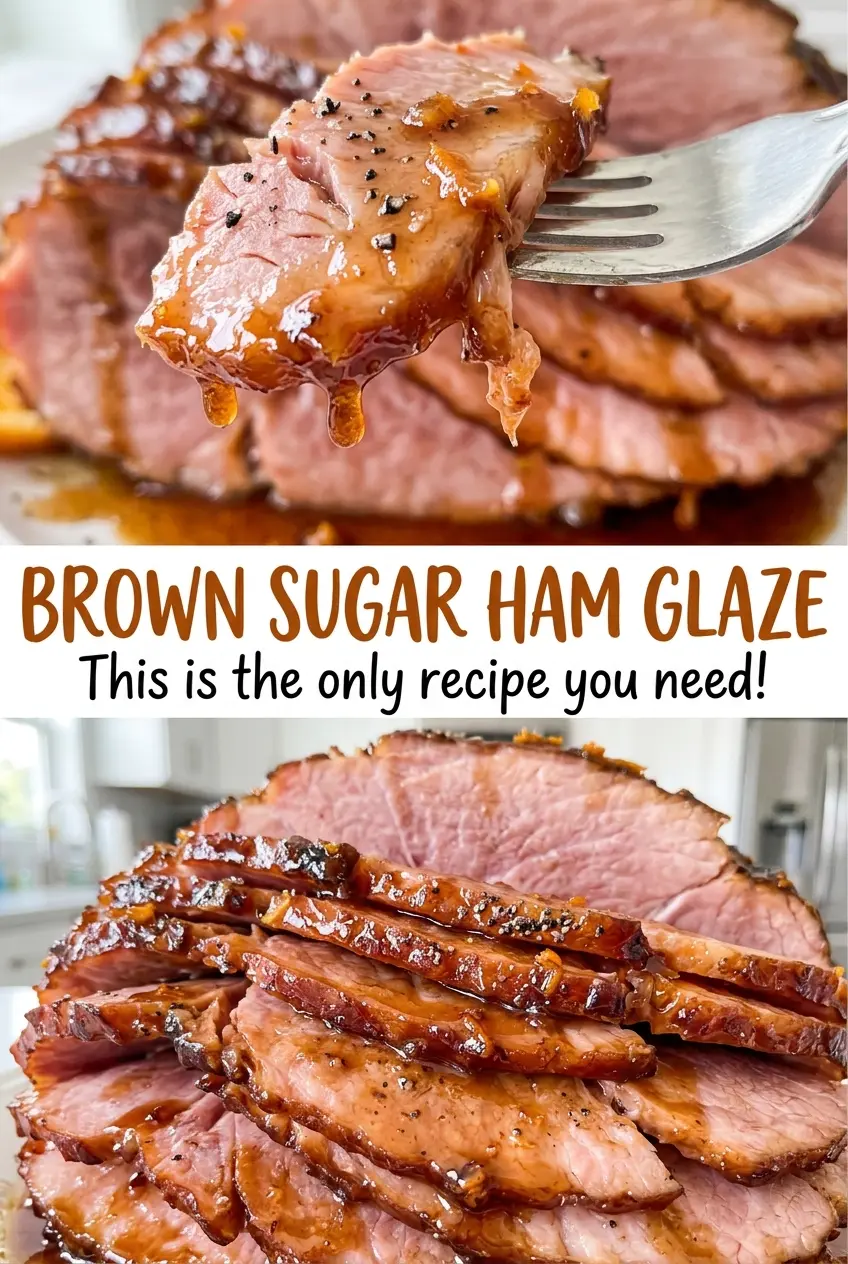
The glaze looks thin when it first comes together, and that’s exactly when it’s easy to worry that it won’t cling to the ham. Give it a few minutes over low heat and it turns glossy, with just enough body to brush on without sliding straight off. This brown sugar ham glaze balances warm sweetness with a little tang, so each slice gets a bright, shiny finish instead of a heavy layer of sugar.
I make the glaze on the stovetop while the fully cooked ham reheats, then brush it on near the end. That timing gives the coating a chance to warm and settle without sitting in the oven for the entire reheating time. The recipe makes enough for an 8- to 10-pound ham, and the finished glaze is smooth, aromatic, and ready to brush over the surface.
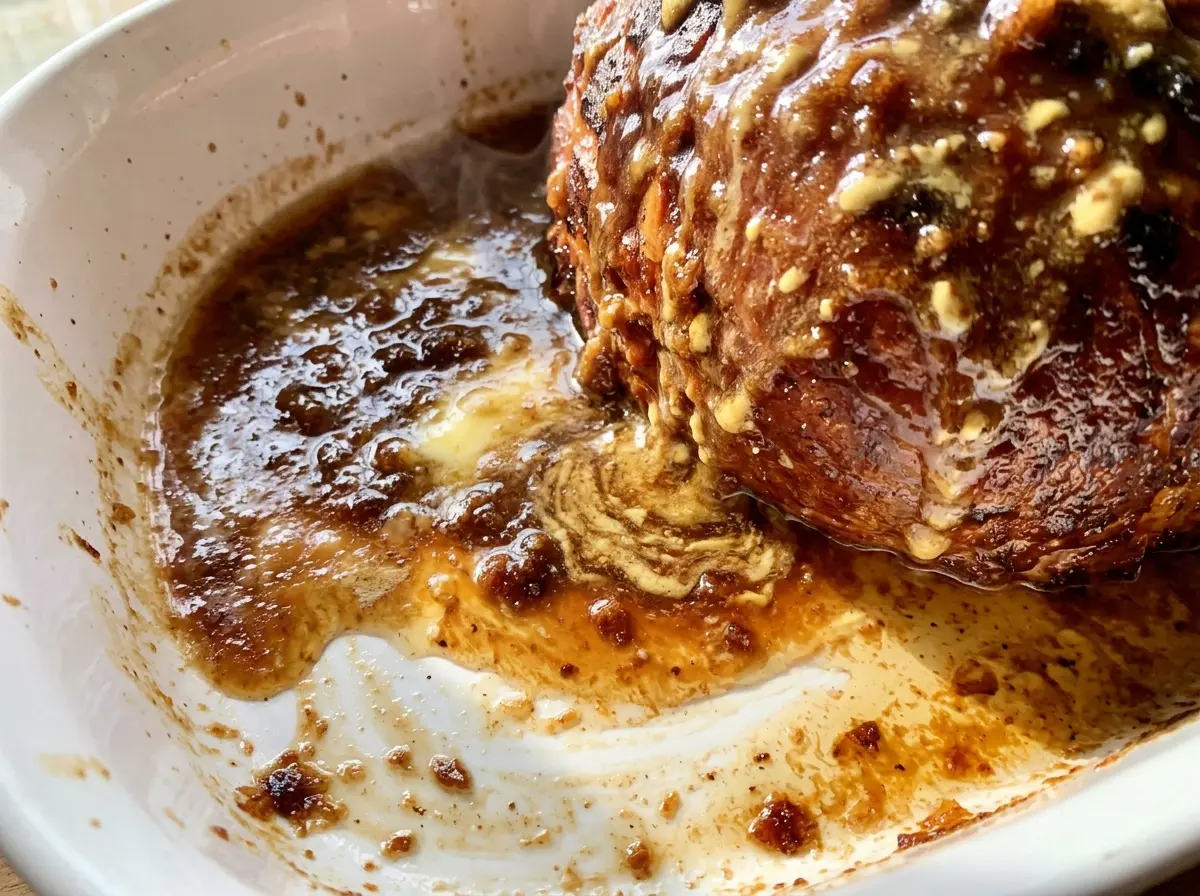
Kitchen Note
I stop cooking when the glaze looks glossy and slightly thickened, not when it gets syrupy and heavy. It will feel a little looser while warm, which makes it easier to brush in an even coat.
Save this brown sugar ham glaze for a glossy, tangy-sweet finish that’s easy to brush on during the final stretch of reheating.
Why Dijon and Vinegar Keep Brown Sugar From Tasting Flat
A sweet glaze needs contrast, especially when it’s going over a large ham. Brown sugar and honey bring the rounded sweetness, while Dijon and apple cider vinegar keep the finish from tasting one-note. The mustard also gives the glaze a little body, so it feels more like a coating than a thin syrup. Ground cloves add a warm, savory aroma in the background; they should support the sweetness, not take over the whole pan.
That balance matters even more when you’re brushing glaze over a fully cooked ham that already has its own salty, savory flavor. The vinegar’s sharp edge softens as the glaze simmers, but it doesn’t disappear. Dijon is a better fit here than a sweet mustard because it brings its own tang. Keep the cloves measured rather than adding an extra shake by instinct; their aroma gets pronounced quickly in a small batch.
What Each Ingredient Brings to This Ham Glaze
- Light brown sugar — Packed brown sugar gives the glaze its familiar molasses note and helps it thicken as it simmers. If you only have dark brown sugar, use it in the same amount; the finished glaze will taste deeper and more molasses-forward. Break up any hard lumps before they reach the saucepan so they dissolve evenly.
- Honey — Honey adds a smooth, floral sweetness and helps the glaze brush on easily. Choose a mild honey if you want the Dijon and cloves to stay in the foreground; a strongly flavored variety will leave a more noticeable honey taste. Pure maple syrup can replace it in the same amount, though the finished glaze will have a more woodsy sweetness.
- Dijon mustard — Dijon contributes tang and a little body without making the glaze taste like a mustard sauce. Smooth yellow mustard works in the same amount if that’s what you have, but it brings a milder, more familiar mustard flavor. There’s no need to choose a premium jar for this recipe; a fresh, standard Dijon is plenty.
- Apple cider vinegar — This adds the clean acidity that balances the sweet ingredients. White wine vinegar can stand in at the same amount for a slightly less fruity edge. Use a pourable vinegar rather than a thick, sweetened condiment so the balance stays predictable.
- Ground cloves — Cloves give the glaze a warm aroma that reads as classic alongside ham. Fresh, fragrant ground cloves matter more than an expensive brand; if the jar smells faint, the spice will barely show up. Measure carefully, since extra cloves can quickly dominate a small batch.
- Unsalted butter — Butter rounds out the tang and gives the finished glaze a smooth, rich feel. Unsalted butter keeps the seasoning from becoming overly salty alongside the ham. Use it cold from the refrigerator; it will melt as you whisk it into the warm glaze.
From a Quick Simmer to a Shiny Ham Coating
Start With the Sugar and Tang
Whisk the brown sugar, honey, Dijon, apple cider vinegar, and ground cloves together in a small saucepan over medium heat. Keep whisking as the mixture warms so the sugar doesn’t sit in a clump at the bottom. In about 2 minutes, the sugar should dissolve and the mixture should begin to simmer. Don’t leave the pan unattended; this is a small batch and the shift from dissolved to simmering happens quickly.
Finish the Glaze Over Low Heat
Once the mixture simmers, reduce the heat to low and whisk in the butter. Let it simmer gently for 3 to 5 minutes, whisking as it warms through. Watch for a glossy surface and a little more body than the mixture had at the start. A hard boil can make the glaze reduce too quickly, so keep the heat gentle rather than trying to rush the thickening.
Brush It on Near the End
Reheat an 8- to 10-pound fully cooked ham at 325°F, then brush the glaze over it during the last 20 to 30 minutes. Apply the glaze in two coats so the surface gets an even finish rather than one heavy layer. If the glaze has cooled enough to feel stiff, warm it gently until it brushes easily again. Keep the timing close to the end of reheating; sugary coatings can darken if they spend too long in the oven.
Three Simple Ways to Adjust the Glaze
A Clove-Free Finish
Leave out the ground cloves for a simpler brown sugar and mustard glaze. You’ll lose the warm, spiced aroma, but the honey, Dijon, and vinegar still give the ham a balanced sweet-and-tangy coating.
A More Mustard-Forward Glaze
For a sharper, more savory edge, increase the Dijon and reduce the honey by the same amount. The glaze will taste less sweet and more distinctly tangy, while still keeping the brown sugar base. Make this adjustment modestly so the mustard doesn’t drown out the cloves.
A Dairy-Free Version
Replace the unsalted butter with the same amount of plant-based butter. Choose a plain, unsweetened product so it doesn’t add an unexpected flavor. The glaze may taste a little less buttery, but it will still turn glossy and brushable.
Storage and Reheating
- Refrigerator: Store unused glaze in a covered container in the refrigerator for up to 4 days. It will firm up as it chills.
- Freezer: Freeze unused glaze in a freezer-safe, airtight container for up to 2 months. Thaw it in the refrigerator; the texture may look separated until warmed and whisked.
- Reheating: Warm the glaze gently in a small saucepan over low heat, whisking until smooth and easy to brush. Avoid a hard boil, which can reduce it too far and make it thick or sticky.
Questions That Come Up While Making Brown Sugar Ham Glaze
Brown Sugar Ham Glaze
Ingredients
Method
- Whisk the brown sugar, honey, Dijon mustard, apple cider vinegar, and ground cloves in a small saucepan over medium heat until the sugar dissolves and the mixture begins to simmer, about 2 minutes.
- Reduce the heat to low, whisk in the butter, and simmer gently for 3 to 5 minutes, until glossy and slightly thickened.
- Brush the glaze over an 8- to 10-pound fully cooked ham during the last 20 to 30 minutes of reheating at 325°F, applying it in two coats.