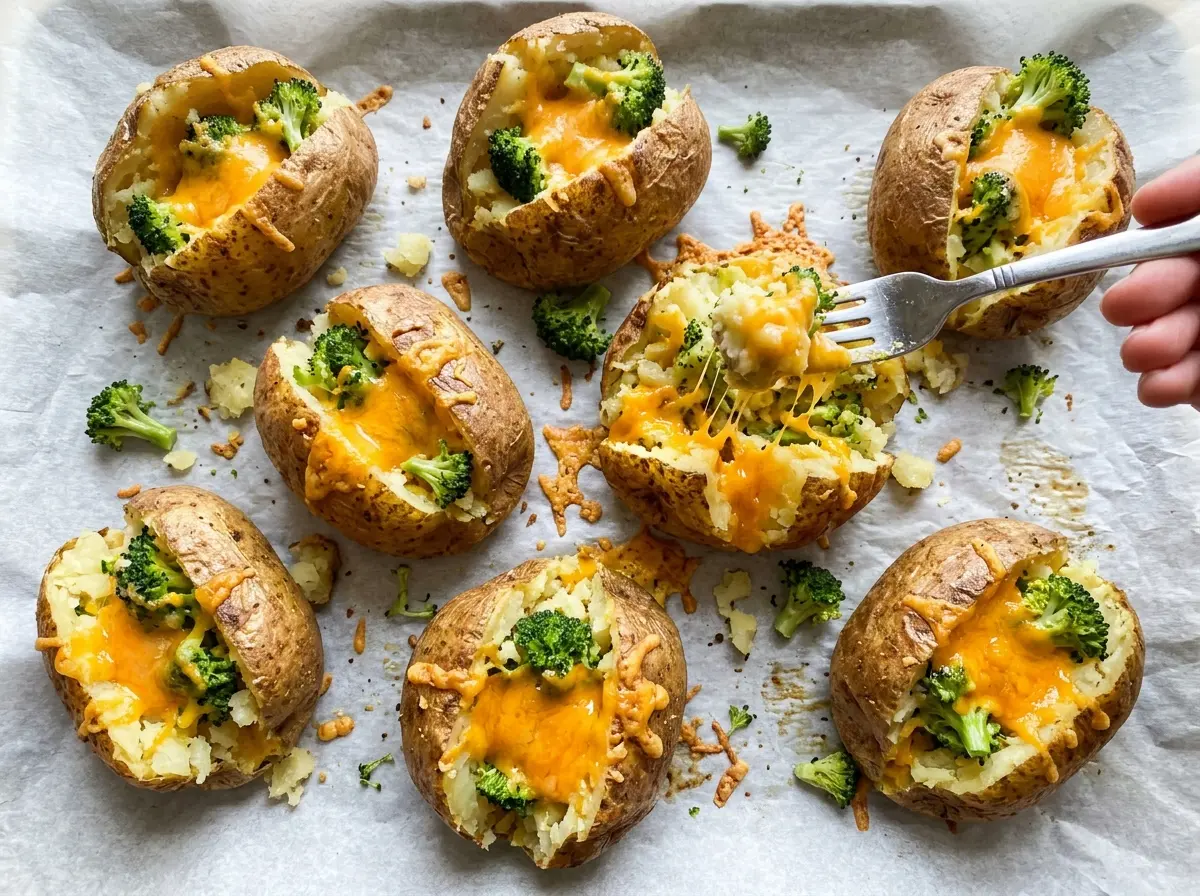
A russet can look finished on the outside and still resist the knife in the middle, so I check the center before I start on the broccoli. These broccoli cheese baked potatoes pair a tender, fluffy potato with a warm cheddar sauce that clings to crisp-tender florets instead of sliding off in a puddle.
I like the contrast between the salty potato skin and the sharp, creamy topping. The sauce starts with a quick butter-and-flour roux, which gives the milk enough body to coat the broccoli and stay put when you pile it onto the potato. Keep the broccoli in small florets, and the topping is easy to divide across all four potatoes. Each one comes out with a soft center and plenty of cheesy broccoli in every forkful.
Kitchen Note
Let the broccoli drain while you make the sauce. Water clinging to the florets can thin the cheese, so leave any steaming water behind rather than adding it to the topping.
Save these broccoli cheese baked potatoes for a cozy dinner with crisp-tender broccoli and a sharp cheddar topping.
The Broccoli’s Brief Steam Keeps the Cheese Topping From Going Heavy
Broccoli keeps cooking after it leaves the saucepan, especially once it gets folded into a hot cheese sauce. If the florets are already soft before they meet the sauce, they lose their shape and the topping starts to feel more like a mash than a mix of vegetables and cheese. A short steam gives them a head start while leaving enough bite to stand up to the creamy sauce.
Look for a bright green color and a crisp-tender center. The florets should be easy to bite but not limp. Keeping them small helps, too: big pieces are harder to coat evenly and awkward to scoop with the potato. The goal is a topping where broccoli stays distinct, with enough sauce around it to bring the cheddar flavor into each bite. That little bit of texture is what keeps a generously topped potato from eating like a bowl of sauce.
Why Russets, Sharp Cheddar, and a Simple Roux Belong Together

- Russet potatoes — Their starchy, fluffy centers open up easily when you cut and fluff them, leaving room for the topping. Choose potatoes in the same size range so they bake at a similar pace, and dry them after scrubbing so oil and salt coat the skins instead of slipping off.
- Broccoli florets — Small florets cook quickly and are easier to portion over the potatoes than long stems or large crowns. Fresh broccoli gives the topping a firmer bite; trim and cut it into small, fairly even pieces.
- Sharp cheddar — Sharp cheddar brings enough tang to come through the milk and broccoli. A block you shred yourself melts smoothly; pre-shredded cheese is convenient, though its coating can make the sauce a little less silky.
- Whole milk — Whole milk gives the sauce a creamy body without making it too rich. Lower-fat milk works, but the sauce will be less full and may not cling quite as generously.
- Butter and all-purpose flour — Together, they form the roux that thickens the milk into a sauce. The flour needs its brief cooking time before the milk goes in; skipping it leaves a raw flour taste.
- Olive oil and black pepper — The oil helps the potato skins take on an even coating, while black pepper gives the cheddar sauce a little warmth. There’s no need to use an expensive olive oil here.
From Fluffy Russets to a Sauce That Coats Every Floret
Bake the Potatoes Until a Knife Glides Through
Heat the oven to 400°F and prick each scrubbed, dried russet 6 to 8 times with a fork. Rub the potatoes with olive oil and kosher salt, then set them on a rimmed baking sheet. Bake for 55 to 70 minutes, until a knife slides easily into the center. If the middle still feels firm, give the potatoes more time rather than relying on the skin to judge doneness.
Steam the Broccoli Until Bright Green
Put the small broccoli florets and water in a medium saucepan, cover, and steam over medium heat for 4 to 5 minutes. They’re ready when bright green and crisp-tender, not soft or drooping. Drain them and set them aside. If the florets are different sizes, cut the larger ones down so they cook more evenly.
Whisk the Roux Smooth Before Adding the Milk
Wipe the saucepan dry, then melt the butter over medium heat. Whisk in the flour and cook for 1 minute, keeping the mixture moving so it doesn’t brown or catch on the bottom. Gradually whisk in the milk, then cook for 2 to 3 minutes while stirring; the sauce should thicken enough to coat a spoon. Pouring in the milk all at once makes lumps harder to work out.
Fold the Broccoli Through the Cheese Sauce
Take the saucepan off the heat before stirring in the cheddar and black pepper. Stir until the cheese melts and the sauce looks smooth, then fold in the broccoli without crushing the florets. Cut each baked potato lengthwise and fluff the inside with a fork. Divide the topping among the potatoes while they’re hot.
Easy Ways to Change the Cheddar, Flour, or Batch Size
Make the sauce gluten-free
Replace the all-purpose flour with the same amount of a gluten-free 1-to-1 baking flour blend. Cook it with the butter as you would the regular flour; the sauce may have a slightly different texture depending on the blend, but it still thickens into a cheddar topping.
Swap in pepper jack
Use pepper jack in place of the sharp cheddar for a mild chile kick and a less tangy cheese flavor. Shred it yourself if you can, and stir it into the sauce off the heat just as you would the cheddar.
Make two potatoes instead of four
For a half batch, use two russets in the same 8-to-10-ounce size range and halve every topping ingredient. The bake time still depends on the size of the potatoes, so use the same knife-tender cue rather than expecting the smaller batch to bake faster.
Storage and Reheating
- Refrigerator: Store leftovers in an airtight container for up to 3 days. The potato skin softens and the cheese topping firms as it chills.
- Freezer: I don’t recommend freezing the assembled potatoes; the broccoli cheese sauce can turn watery or grainy, and the potato texture can become mealy.
- Reheating: Warm them in a 350°F oven until heated through. A microwave is quicker, but it softens the potato skin.
Questions That Come Up With Broccoli Cheese Baked Potatoes
Broccoli Cheese Baked Potatoes
Ingredients
Equipment
Method
- Heat the oven to 400°F.
- Prick each potato 6 to 8 times with a fork.
- Rub the potatoes with the olive oil and kosher salt.
- Place the potatoes on a rimmed baking sheet.
- Bake for 55 to 70 minutes, until a knife slides easily into the center.
- Combine the broccoli and water in a medium saucepan.
- Cover and steam over medium heat for 4 to 5 minutes, until bright green and crisp-tender.
- Drain the broccoli and set it aside.
- Wipe the saucepan dry.
- Melt the butter over medium heat.
- Whisk in the flour and cook for 1 minute.
- Gradually whisk in the milk and cook for 2 to 3 minutes, stirring, until thickened.
- Remove the saucepan from the heat.
- Stir in the cheddar and black pepper until smooth.
- Fold in the broccoli.
- Cut each potato lengthwise.
- Fluff the insides with a fork.
- Divide the broccoli cheese topping among the potatoes.