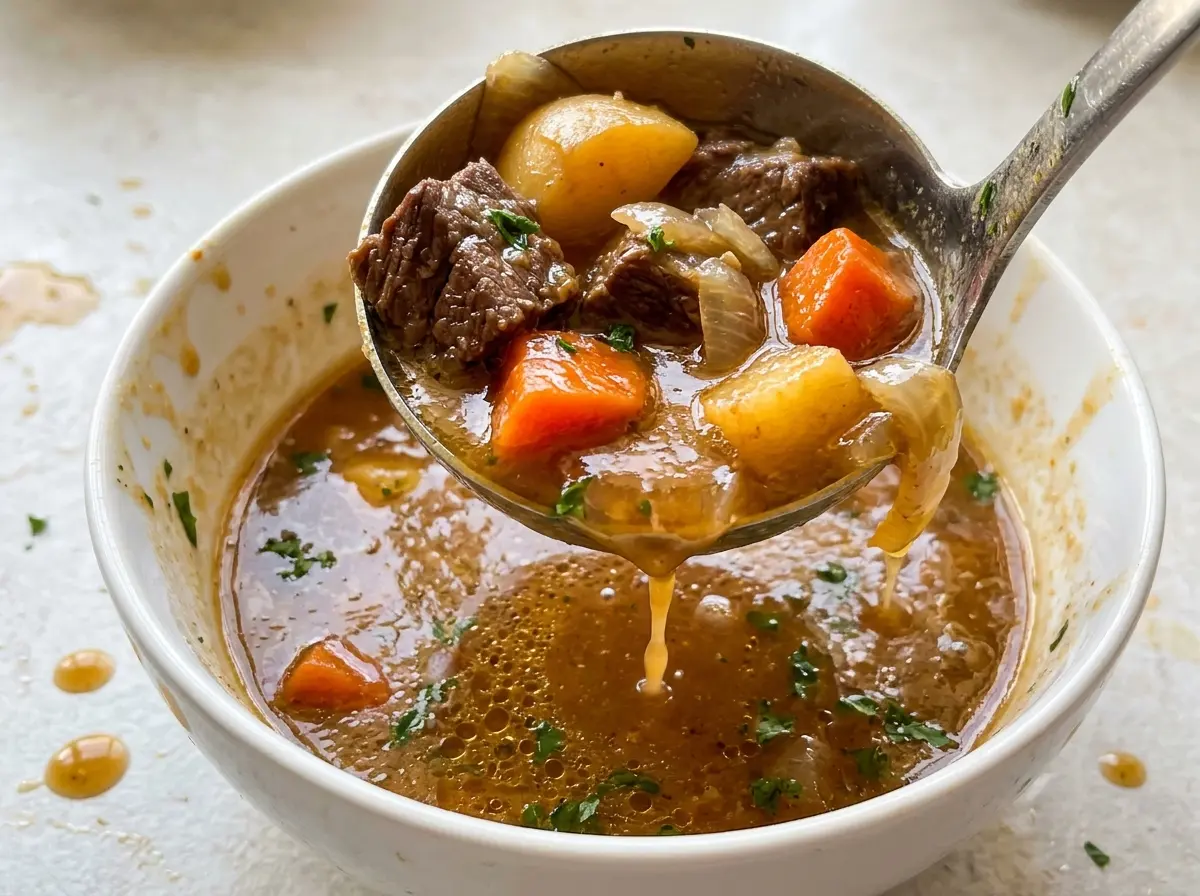
When you lift the lid after the first stretch in the oven, the beef should be starting to soften, but it won’t be ready to fall apart yet. That slow change is what turns a pot of browned chuck, vegetables, and beer into Beer and Horseradish Beef Stew: a deep, savory broth with potatoes that keep their shape.
I build the base in the same Dutch oven that goes into the oven. Browning the beef first leaves savory bits on the bottom, and the beer loosens them into the broth instead of leaving that flavor behind. Horseradish goes in only after the long braise, so its bright, peppery bite is still there when you sit down to a bowl of tender beef and potatoes.
Kitchen Note
Stir the horseradish in after the stew comes out of the oven, not before the braise. Give the pot its full 10-minute rest; the sharpness settles into the broth without losing its fresh kick.
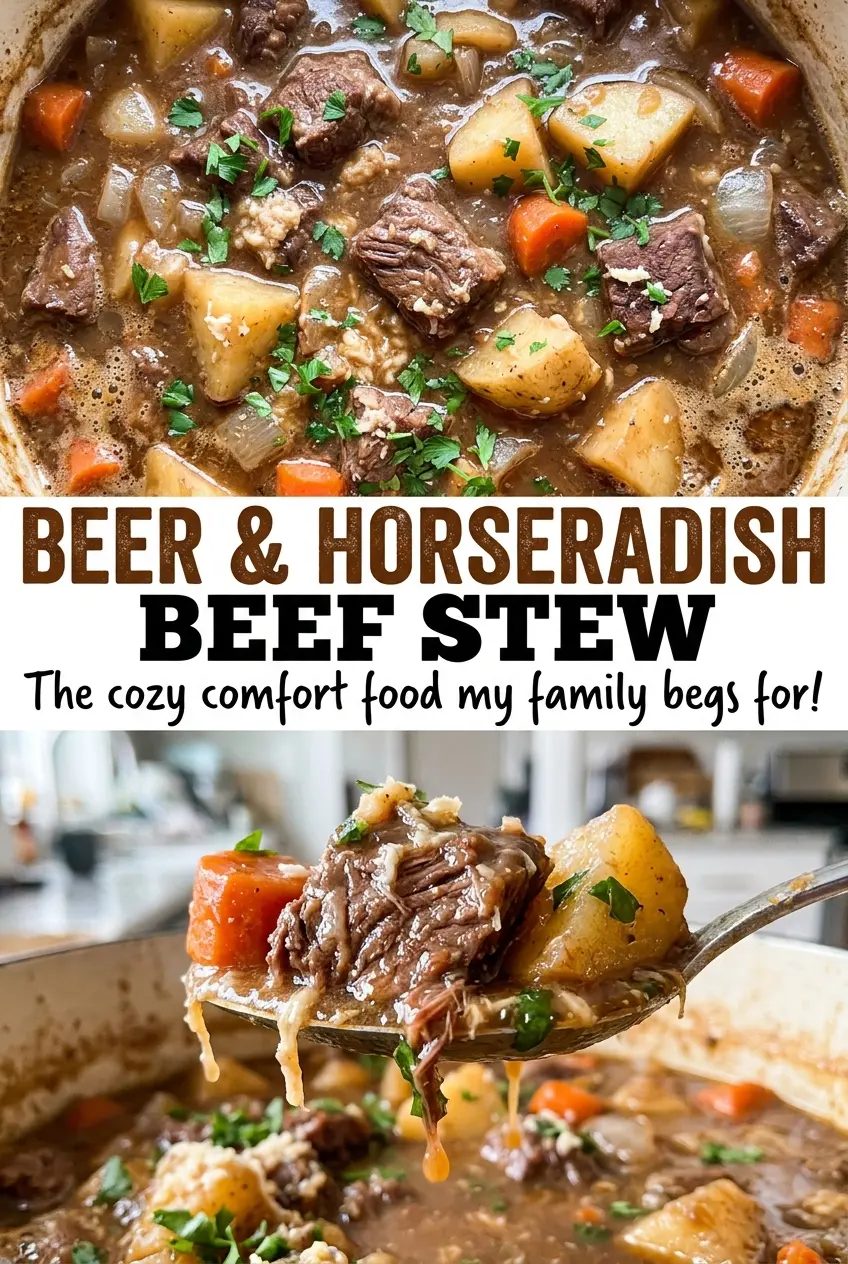
Save this Beer and Horseradish Beef Stew for a slow-braised dinner with tender chuck, soft potatoes, and a bright horseradish finish.
Why Amber Ale Gives This Stew More Than a Beer Flavor
The beer earns its place twice. First, it loosens the browned bits left behind by the beef and vegetables, folding that concentrated, savory flavor into the liquid. Then its malt brings a gentle toasted note that rounds out the beef broth. Amber ale is a good middle ground: it has enough character to show up in a long braise without the assertive bitterness that a heavily hopped beer can leave behind.
That balance matters because the stew spends a long time in the oven. A quick simmer after the beer goes in takes the raw edge off before the broth and seasonings join it, while the covered pot gives the chuck time to become tender without the liquid boiling away. The beer shouldn’t dominate the finished bowl. You want to notice a little malt and depth underneath the beef, not a strong beer aftertaste.
What the Chuck, Ale, and Horseradish Each Bring to the Pot
- Beef chuck — Its connective tissue softens during the covered braise, giving the broth body and the meat a tender, yielding texture. Regular chuck is a sensible buy here; a premium steak cut won’t improve a stew that’s cooked low and slow. If you need a similar cut, boneless short ribs work in the same-sized pieces and make the broth richer.
- Amber ale — The malt adds a rounded, toasted note that balances the beef. Choose a straightforward amber rather than an expensive specialty bottle; the beer simmers with the stew, so subtle distinctions fade. A stout gives a darker, more roasted result, while extra beef broth in place of the beer makes the stew milder.
- Prepared horseradish — This is the sharp, clean finish that keeps the rich broth from tasting heavy. Use prepared horseradish rather than a creamy horseradish sauce, which has a softer flavor and may contain dairy. If you don’t have it, leave it out; the stew will still be hearty, but it won’t have the same peppery lift.
- Yukon Gold potatoes — Their creamy centers hold together through the final oven stretch. Red potatoes are the closest swap; cut them to the same size for a slightly firmer, waxier bite. Smaller pieces soften faster, so keep the chunks generous.
- All-purpose flour — It gives the broth a gently thickened, stew-like body. For a gluten-free version, use a cup-for-cup gluten-free flour blend in its place, along with the compatible beer and sauce described below.
- Onion, carrots, celery, and garlic — Together they give the broth its familiar savory-sweet base. Fresh garlic is worth using here because it cooks briefly with the tomato paste, but ordinary yellow onion and carrots are just right; there’s no need to seek out specialty produce.
How to Build the Braise Before the Pot Goes in the Oven
Brown the chuck in uncrowded batches
Heat the oven to 325°F. Pat the beef dry, season it with kosher salt and black pepper, and heat the vegetable oil in a 6-quart Dutch oven over medium-high heat. Brown the beef in batches without crowding the pot, about 8 to 10 minutes total, then transfer it to a plate. If the pieces touch edge to edge, they steam instead of developing browned surfaces.
Soften the vegetables and coat the flour
Add the onion, carrots, and celery, then cook over medium heat for 6 to 8 minutes, stirring and scraping the pot as the onion softens. Stir in the garlic and tomato paste and cook for 1 minute. Sprinkle in the flour and keep stirring until no dry patches remain; flour left in clumps can make the finished broth uneven.
Deglaze, then let the chuck braise
Pour in the beer and simmer for 2 to 3 minutes, scraping the bottom of the Dutch oven. Stir in the beef broth, Worcestershire sauce, dried thyme, and bay leaves, then return the beef and any juices on the plate to the pot. Bring everything to a gentle simmer, cover, and bake for 1 hour 30 minutes; a lively boil isn’t needed for this slow, covered cook.
Add the potatoes for the final stretch
Stir in the Yukon Gold potatoes, cover the pot again, and bake until the beef is fork-tender and the potatoes are tender, 45 to 60 minutes. Check both rather than relying on the clock alone, since the beef should yield easily to a fork and the potato centers shouldn’t feel firm. Remove and discard the bay leaves, stir in the prepared horseradish, and let the stew rest for 10 minutes before serving.
Three Practical Ways to Adapt This Beer-Braised Stew
Make the stew gluten-free
Replace the all-purpose flour with the same amount of a cup-for-cup gluten-free flour blend. Use gluten-free beer, beef broth, and Worcestershire sauce as well. The stew keeps its thick, savory character, though the exact texture depends on the flour blend.
Trade the amber ale for stout
Use a 12-ounce bottle of stout instead of the amber ale. The long braise will bring out a darker, more roasted edge, which suits the beef but makes the broth taste less mellow.
Skip the beer
Replace the beer with 12 ounces of additional beef broth. The stew will still braise well, but it won’t have the malty depth amber ale brings to the liquid.
Storage and Reheating
- Refrigerator: Store in a covered container for 3 to 4 days. The broth thickens as it chills, and the potatoes soften slightly.
- Freezer: Freeze in airtight containers for up to 3 months. The beef freezes well, but the potatoes may be softer after thawing.
- Reheating: Warm gently on the stovetop, stirring now and then, until the leftovers reach 165°F throughout. Avoid a hard boil, which can break the potatoes into the thickened broth.
Questions That Come Up While the Stew Braises
Beer and Horseradish Beef Stew
Ingredients
Equipment
Method
- Heat the oven to 325°F.
- Pat the beef dry and season it with the salt and pepper.
- Heat the oil in a 6-quart Dutch oven over medium-high heat.
- Brown the beef in batches without crowding the pot, about 8 to 10 minutes total, then transfer the browned beef to a plate.
- Add the onion, carrots, and celery to the pot and cook over medium heat, stirring and scraping up browned bits, until the onion begins to soften, 6 to 8 minutes.
- Stir in the garlic and tomato paste and cook for 1 minute.
- Stir in the flour until no dry patches remain.
- Pour in the beer and simmer for 2 to 3 minutes, scraping the bottom of the pot.
- Stir in the beef broth, Worcestershire sauce, thyme, and bay leaves.
- Return the beef and any accumulated juices to the pot.
- Bring the stew to a gentle simmer and cover the pot.
- Bake for 1 hour 30 minutes.
- Stir in the potatoes and cover the pot.
- Bake until the beef is fork-tender and the potatoes are tender, 45 to 60 minutes.
- Remove and discard the bay leaves.
- Stir in the horseradish and let the stew rest for 10 minutes before serving.