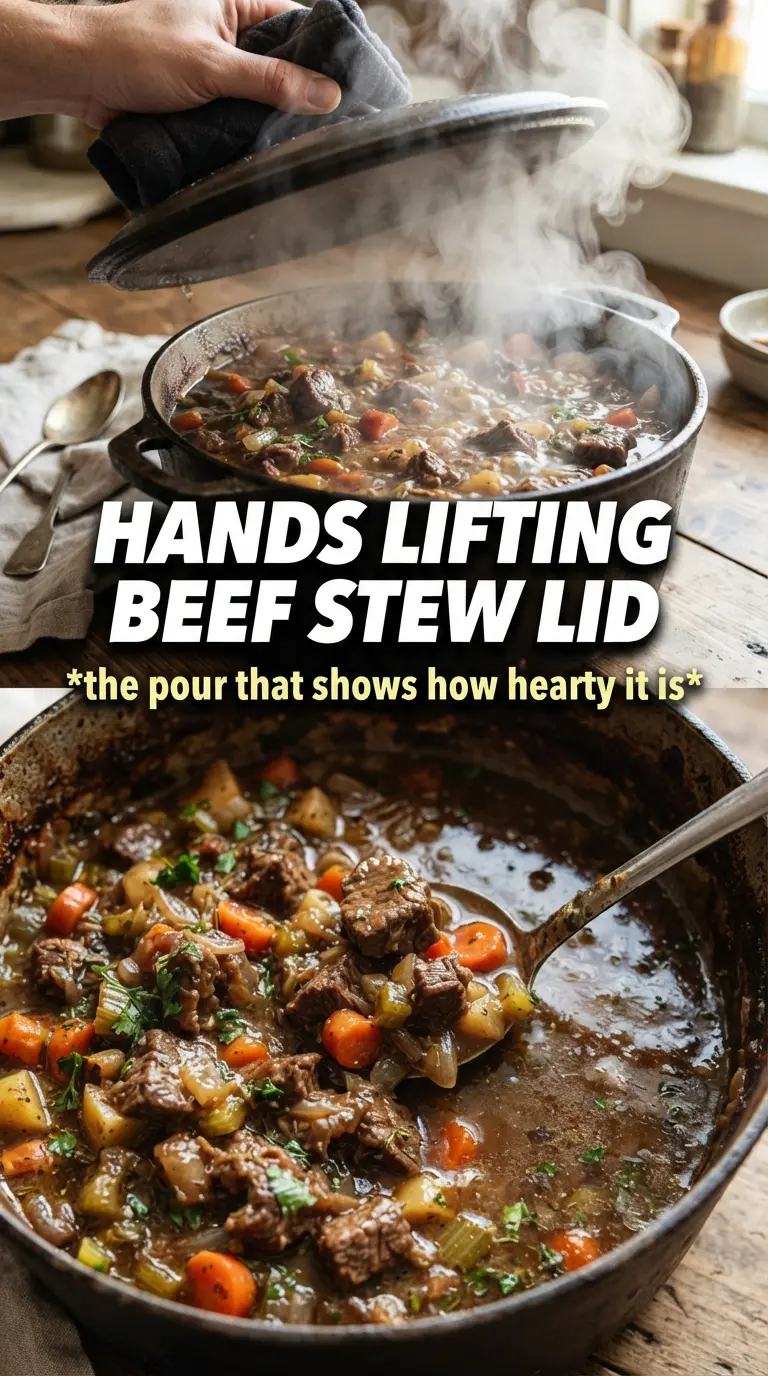
Beef stew earns its place on the table when the broth turns deep and savory, the beef gives up without a fight, and the potatoes soak up every bit of that rich, wine-kissed sauce. The best bowls don’t taste thin or muddy. They taste like the pot has been working all afternoon, even when the method stays straightforward.
The key is building flavor in layers. Browning the beef first gives the stew its backbone, and cooking the tomato paste with the vegetables keeps the broth from tasting flat. Red wine adds depth, but it gets a full simmer so it blends into the sauce instead of standing out on its own. Yukon gold potatoes hold their shape without turning chalky, and the peas go in at the end so they stay bright.
Below you’ll find the small details that keep the beef tender and the broth glossy, plus a few swaps that still give you a proper stew when you need to work with what’s in the pantry.
The beef got that deep browned crust before it went in, and the broth thickened up beautifully without getting heavy. I also loved that the peas stayed bright at the end instead of going mushy.
Save this beef stew for the nights when you want tender chuck, a glossy broth, and no guesswork about when the potatoes and peas go in.
The Browning Step That Gives Beef Stew Its Real Depth
Most bland stew starts before the liquid even goes in. If the beef only gets a quick gray sear, the broth has to do all the work, and it never gets there. You want dark, even browning on the outside of the cubes, which means the pan has to stay hot and the meat has to go in batches. Crowding the pan turns the beef steamy instead of crusty.
The flour on the beef does more than help thicken the stew later. It also gives the meat a dry surface that browns more aggressively, and that browning becomes the base of the sauce. The same goes for the tomato paste. Cooking it with the vegetables for a minute or two takes away the raw edge and deepens the whole pot.
- Chuck roast — This is the cut that gives you stew beef with real texture after a long simmer. Leaner cuts dry out before the sauce is ready. Chuck has enough fat and connective tissue to turn tender without falling apart completely.
- Yukon gold potatoes — They hold their shape better than russets and bring a creamy bite to the stew. If all you have are russets, cut them a little larger and add them late so they don’t dissolve.
- Red wine — It adds depth and a little acidity, which keeps the broth from tasting heavy. Use a wine you’d actually drink. If you want to skip alcohol, use extra beef broth plus a splash of red wine vinegar at the end.
- Frozen peas — They go in at the very end for color and sweetness. Adding them too early is the fastest way to get dull, overcooked peas that taste flat.
What Each Ingredient Is Actually Doing in This Recipe
- Primary ingredient (the star) — Quality matters most. Choose the best you can find.
- Cooking medium (oil, butter, or broth) — This carries flavors and prevents dryness.
- Seasonings (salt, pepper, spices, herbs) — Layer flavors so nothing overpowers. Build depth gradually.
- Aromatics (garlic, onion, herbs) — Cook with fat to bloom flavors. Become the foundation.
- Supporting ingredients — Complement the main ingredient without overpowering it.
- Sauce or liquid (if applicable) — Brings flavors together. Balance richness with acid.
- Acid (lemon, vinegar, wine, or other) — Brightens and prevents flat-tasting results.
- Final finish (garnish, glaze, or sauce) — Prevents one-dimensional taste and adds visual appeal.
Building the Stew in the Right Order
Seasoning and Searing the Beef
Toss the beef cubes in flour, salt, and pepper until every piece has a light coating. Then sear them in hot olive oil in batches until the surfaces are deeply browned, not just lightly tan. If the meat sticks at first, leave it alone; it will release once a crust forms. If the pan starts smoking hard, lower the heat slightly before the next batch so the fond doesn’t burn.
Softening the Vegetables and Toasting the Tomato Paste
Cook the onion, carrots, and celery until the onion turns translucent and the carrots start to soften at the edges. Add the garlic and tomato paste and cook them long enough to smell sweet and concentrated, not sharp or raw. This is where the stew starts to taste rounded instead of one-note. If you rush this part, the finished broth can taste thin even after a long simmer.
Deglazing and Simmering Low
Pour in the wine and scrape the pan well so all the browned bits dissolve into the liquid. That browned residue is concentrated flavor, and once it comes loose, add the broth, tomatoes, Worcestershire, thyme, bay leaves, and beef. Bring it up to a boil, then drop it to a gentle simmer and cover the pot. A hard boil makes the beef tighten and turn stringy, while a slow simmer lets it relax into tenderness.
Adding the Potatoes and Finishing with Peas
Wait until the beef is almost tender before adding the potatoes. They only need enough time to cook through and pick up the stew’s flavor, not enough time to collapse. Stir in the peas at the end and cook just until they’re heated through and still bright green. Pull the bay leaves before serving and taste for salt and pepper after the stew has finished reducing.
What to Change When You Need to Work With What You Have
Dairy-Free and Naturally Creamless
This stew already fits dairy-free cooking as written, which is one reason it holds up so well for a crowd. The broth thickens from the flour on the beef and the reduction in the pot, not from cream or butter, so you still get a glossy sauce without any dairy at all.
Gluten-Free Swap for the Flour Coating
Use a 1:1 gluten-free all-purpose flour blend in place of the regular flour. It still helps the beef brown and gives the broth some body. If your blend is heavy on starch, use a little less so the coating doesn’t turn gummy in the pan.
No Wine in the Pot
Replace the wine with more beef broth and add 1 to 2 teaspoons of red wine vinegar or balsamic vinegar near the end. You lose a little of the wine’s depth, but the vinegar brings back the brightness that keeps the stew from tasting flat.
Making It Ahead
Beef stew tastes even better after a night in the fridge because the broth settles and the seasoning evens out. If you’re cooking for later, stop after the potatoes are tender, then cool and refrigerate. Add the peas when reheating so they stay bright instead of wrinkled and dull.
Storage and Reheating
- Refrigerator: Keep covered for up to 4 days. The stew thickens as it chills, so expect the broth to look even richer the next day.
- Freezer: Freeze for up to 3 months in airtight containers. The potatoes soften a bit after thawing, but the flavor stays strong. For the best texture, freeze before adding the peas if you know you’ll reheat it later.
- Reheating: Warm it gently on the stovetop over medium-low heat with a splash of broth or water if needed. A fast boil can break the potatoes and make the beef feel stringy, so slow heat is the safer path.
Answers to the Questions Worth Asking
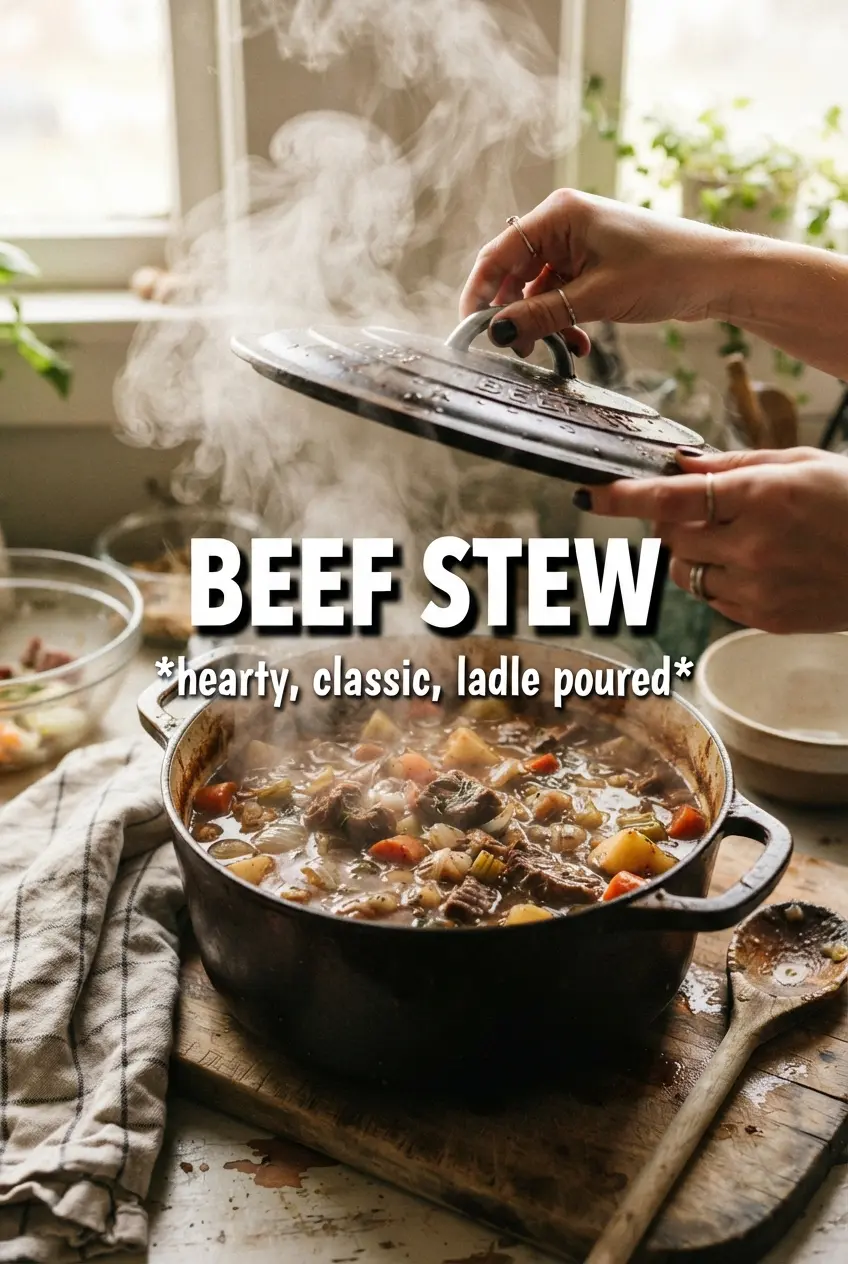
Beef Stew
Ingredients
Equipment
Method
- Season beef by tossing it with all-purpose flour. Coat evenly so the surface turns dry and dusty before browning.
- Heat olive oil in a Dutch oven over high heat and sear the beef in batches until deeply browned, about 3-5 minutes total per batch. Remove browned beef and repeat until all pieces are seared.
- Add onion, carrots, and celery to the Dutch oven and sauté for 5 minutes. Cook until the vegetables start to soften and the pot smells fragrant.
- Add garlic and tomato paste and cook for 2 minutes. Stir constantly until the tomato paste darkens slightly.
- Deglaze with red wine, scraping up the browned bits from the bottom of the pot. Cook for about 1-2 minutes so the wine reduces slightly.
- Add beef broth, diced tomatoes, Worcestershire, dried thyme, bay leaves, and the browned beef. Stir to combine and submerge the beef as much as possible.
- Bring to a boil, then reduce heat, cover, and simmer for 60-75 minutes until beef is very tender. Look for gentle bubbling that keeps a steady simmer under the lid.
- Add Yukon gold potatoes and cook for 20 minutes. Simmer until the potatoes are fork-tender and the broth thickens slightly.
- Add frozen peas and cook for 3 minutes. The peas should turn bright green and heat through.
- Remove bay leaves, then season with salt and pepper to taste. Taste and adjust so the broth is balanced.