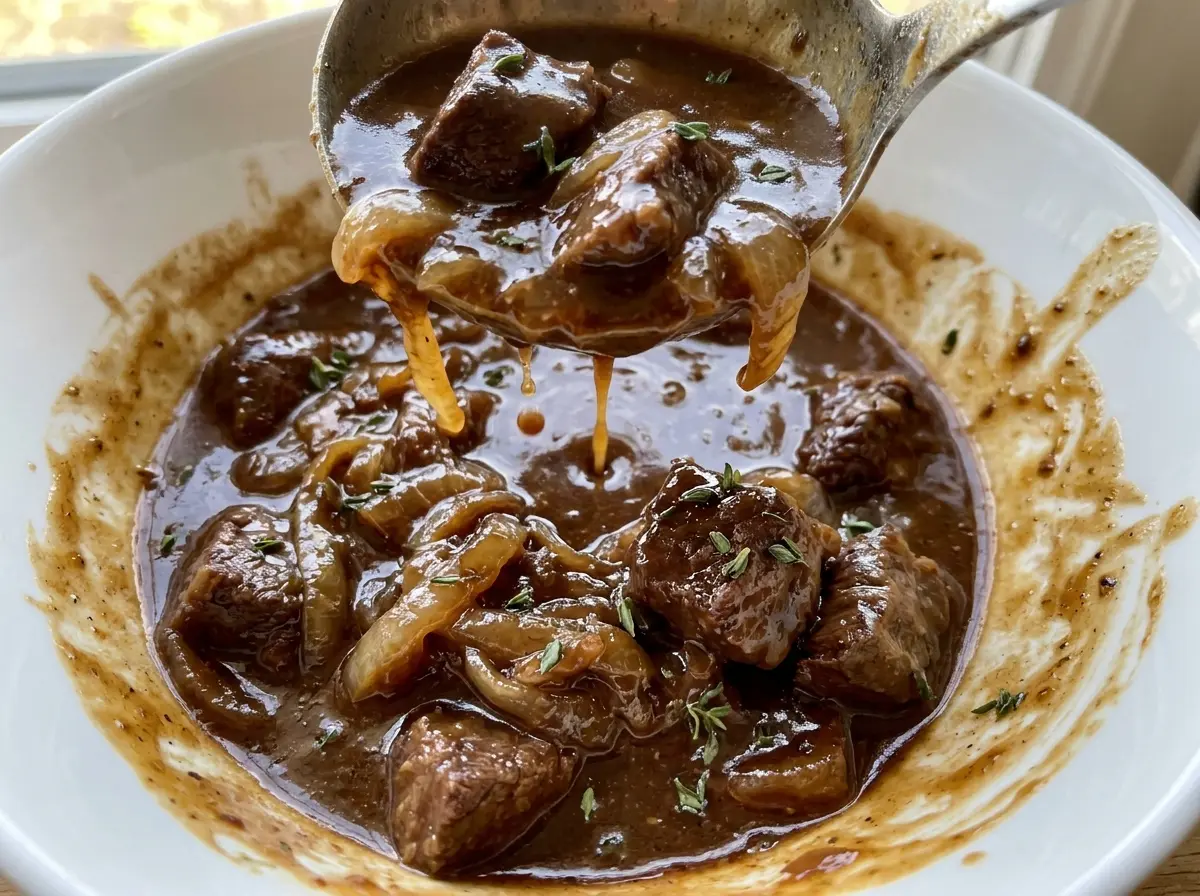
When the lid comes off the Dutch oven, the beef should give under a fork and the onions should have almost disappeared into the dark ale broth. That’s the moment this Beef Carbonnade Stew is meant to reach: not a pot of beef swimming in beer, but a slow-baked stew with a rounded, savory sauce. I don’t judge it by how much liquid is visible before baking; the beef and onions settle into it as they cook, and the flour helps the sauce thicken.
This version starts with chuck cut into 1 1/2-inch cubes and browned in batches, then the whole pot goes into a 325°F oven. The stovetop work takes attention, especially while the onions turn golden, but once the pot is covered, the oven does the steady work. Dijon mustard and apple cider vinegar keep the malt from tasting heavy. The stew serves six, with tender beef and a deep, savory broth worth lingering over.
Kitchen Note
Give the stew its full 10-minute rest after skimming the surface. The sauce settles around the beef during that pause, so the first ladleful is less loose than it would be straight from the oven.
Save Beef Carbonnade Stew for a slow oven dinner—fork-tender chuck, deeply golden onions, and a malty ale broth all in one Dutch oven.
Why the Onions Need to Turn Golden Before the Ale Goes In
Two pounds of onions might seem like a lot before they hit the pot, but they’re doing more than filling out the stew. As they cook, they soften and release moisture; given time, that moisture cooks off and the onions turn deeply golden. They then become part of the sauce, adding sweetness and body that balance the ale’s malty notes.
Flour on the beef helps thicken the broth, but it can’t do the onions’ job. If they go into the ale while they’re still pale and merely soft, the stew will have less rounded sweetness and a thinner-tasting base. That slow onion cook is one reason this dish rewards a little patience before it goes into the oven. Stir often and let the color develop evenly rather than turning up the heat to rush it.
What the Beef, Ale, and Onions Bring to Carbonnade

- Beef chuck — Chuck has enough connective tissue to become tender during the long, covered bake. Choose a single chuck roast and cut it into even cubes when possible; pre-cut stew meat can come from different cuts and cook unevenly.
- Belgian-style dubbel or brown ale — The ale gives the broth its malty depth. Either style works; an inexpensive bottle is fine as long as it’s one of these styles and not aggressively bitter. If you need an alcohol-free version, use three cups of additional low-sodium beef broth in place of the two bottles, along with the broth already listed. The stew will be more beef-forward and less malty.
- Yellow onions — Their sweetness develops as they cook down. Standard yellow onions are a good choice; slice them thinly so they soften into the sauce. Red onions can stand in, though their flavor is sharper and the stew’s sweetness will be less pronounced.
- All-purpose flour — The coating helps the beef brown and contributes body to the broth. For a gluten-free version, use a one-to-one gluten-free all-purpose flour blend and a gluten-free brown ale; the sauce may have a slightly different texture.
- Dijon mustard and apple cider vinegar — These bring a sharp, tangy counterpoint to the rich beef and ale. A spoon-for-spoon swap of whole-grain mustard works if that’s what you have; it adds a little texture to the finished broth.
- Low-sodium beef broth — It adds savory depth while leaving room for the kosher salt already used on the beef. Low-sodium is the better choice here because regular broth can make the finished stew saltier.
Building the Stew Before the Long Oven Bake
Coating and Browning the Chuck
Heat the oven to 325°F. Pat the beef dry, then toss it with the kosher salt, black pepper, and flour until every piece is coated. Heat 2 teaspoons of the oil in a 6-quart Dutch oven over medium-high heat and brown the beef in three batches, turning it to color several sides; give each batch about 3 to 4 minutes. Add 2 teaspoons of oil before each of the next two batches, and transfer the browned beef to a plate.
Cooking the Onions Until Deeply Golden
Melt the butter in the same pot over medium heat, then add the thinly sliced onions. Stir often as they cook for 20 to 25 minutes. They’ll soften and release moisture before their color deepens, so don’t stop while they’re still pale. If the bottom of the pot starts to darken too quickly, lower the heat rather than letting the onions scorch.
Deglazing With Ale and Starting the Stew
Pour in the ale and scrape the browned bits from the bottom of the pot; they add a savory note to the broth. Stir in the beef broth, apple cider vinegar, Dijon mustard, dried thyme, and bay leaves. Return the beef and any juices collected on the plate. Bring the mixture to a gentle simmer, which should take about 3 to 5 minutes.
Baking Until the Beef Gives Easily
Cover the Dutch oven and bake for 2 1/2 to 3 hours, stirring once halfway through. The beef is ready when a fork slips into a cube easily and the meat feels tender rather than springy. Remove the bay leaves, skim excess fat from the surface, and let the stew rest for 10 minutes before serving.
Three Practical Ways to Adapt Beef Carbonnade
Make It Gluten-Free
Use a one-to-one gluten-free all-purpose flour blend for the beef coating and choose a gluten-free brown ale. The stew keeps its savory, slow-cooked character, though the sauce may not thicken quite like it does with wheat flour.
Use Whole-Grain Mustard
Replace the Dijon with the same amount of whole-grain mustard. Its flavor is still tangy, but the visible mustard seeds give the broth a slightly more textured finish.
Try Red Onions
Use red onions in place of the yellow onions and slice them the same way. They’ll soften in the pot, but their sharper flavor makes the finished stew a little less sweet and mellow.
Storage and Reheating
- Refrigerator: Transfer leftovers to shallow, airtight containers and refrigerate within 2 hours. Keep for 3 to 4 days; the sauce will thicken as it chills.
- Freezer: Freeze in airtight, freezer-safe containers for up to 3 months. Thaw overnight in the refrigerator for more even reheating.
- Reheating: Warm gently on the stovetop, stirring occasionally, until the stew reaches 165°F throughout. Avoid a hard boil, which can make the beef feel tighter and the sauce reduce too much.
Questions That Come Up When Making Beef Carbonnade
Beef Carbonnade Stew
Ingredients
Equipment
Method
- Heat the oven to 325°F.
- Pat the beef dry, then toss it with the salt, pepper, and flour until evenly coated.
- Heat 2 teaspoons oil in a 6-quart Dutch oven over medium-high heat and brown the beef in 3 batches, turning to brown several sides, about 3 to 4 minutes per batch; add 2 teaspoons oil before each of the next 2 batches.
- Transfer the beef to a plate.
- Melt the butter in the pot over medium heat, add the onions, and cook, stirring often, for 20 to 25 minutes until deeply golden.
- Pour in the ale and scrape up the browned bits from the bottom of the pot.
- Stir in the broth, vinegar, mustard, thyme, and bay leaves.
- Return the beef and any accumulated juices to the pot and bring to a gentle simmer, about 3 to 5 minutes.
- Cover and bake for 2 1/2 to 3 hours, stirring once halfway through, until the beef is fork-tender.
- Remove the bay leaves and skim excess fat from the surface.
- Let the stew rest for 10 minutes before serving.