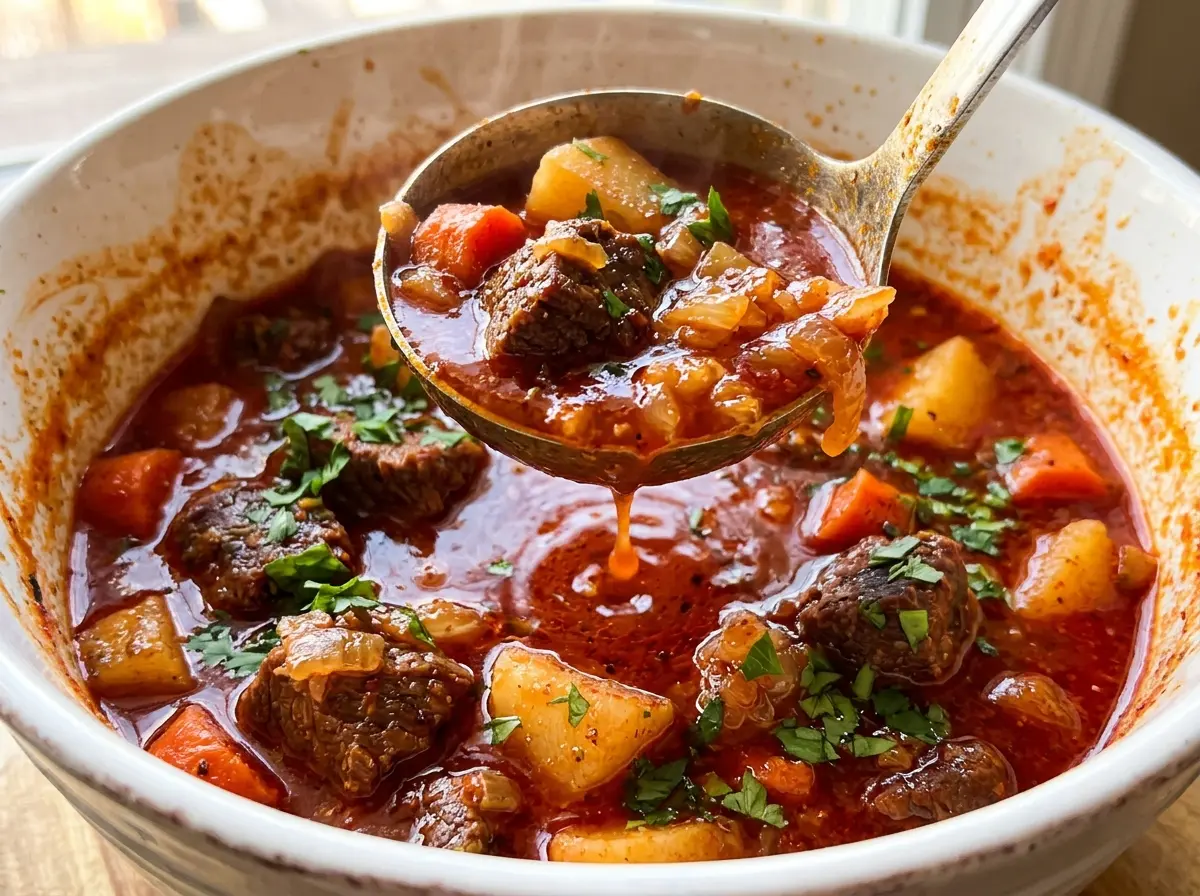
When the beef hits the hot oil, it should sizzle rather than sit in a wet layer. I pat every cube dry and give the pot room; crowded beef steams, and you miss the browned edges that deepen the broth. That first sear gives Lebanese beef stew a darker, fuller base than beef simmered straight in tomato sauce. The beef browns in batches, then shares the pot with softened onion and garlic, picking up the savory bits left behind.
Tomato paste and warm spices join those aromatics before the broth goes in, so their flavor has a moment to bloom in the pot. Then the stew simmers gently until the beef begins to give, and the carrots go in later so they don’t spend the whole braise getting soft. Frozen peas finish the pot with a little sweetness and color. The result is tender beef in a rich tomato broth, with carrots that hold their shape and a gentle warmth in every spoonful.
Kitchen Note
Keep the last simmer uncovered after the frozen peas go in. They heat through in just a few minutes, and the open pot lets you watch for tender peas before they turn soft and dull.
Save this Lebanese beef stew for a cozy dinner built around tender beef, a warmly spiced tomato broth, and vegetables that keep their shape.
Why the Cinnamon Stays in the Background
Allspice and cinnamon can make a savory stew taste unexpectedly sweet if either one takes over. Here, the cinnamon stays subtle, while allspice brings a fuller, peppery warmth that sits comfortably beside the tomato and beef. Together, they give the broth a distinctly warm aroma without turning it into something that tastes like a dessert spice blend.
That balance depends on keeping the spices in proportion and stirring them into the tomato paste before adding liquid. The brief time in the hot pot wakes up their aroma, while the tomato paste gives them a concentrated base to cling to. Once the broth goes in, the spices spread through the stew during the long simmer instead of standing out in sharp pockets. If you tend to shy away from cinnamon in savory food, this is a restrained use of it: you notice warmth in the background, not a cinnamon-forward taste.
What Gives This Stew Its Rich Broth and Tender Pieces
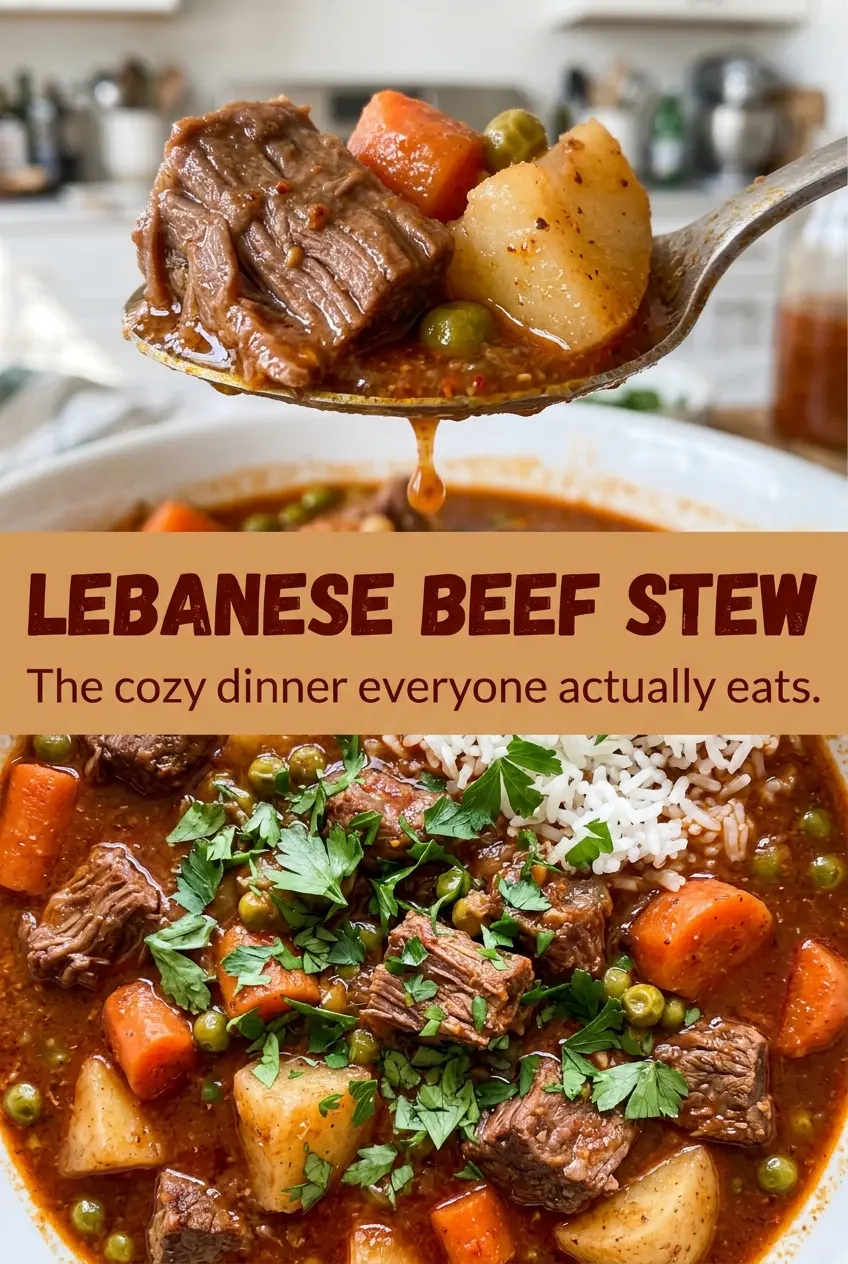
- Beef chuck — Its connective tissue softens during a long, gentle braise, giving you tender pieces and a fuller broth. If chuck isn’t available, boneless beef short ribs cut into similarly sized cubes make a good braising substitute; expect a richer, beefier result.
- Tomato paste and tomato sauce — The paste adds concentrated tomato flavor, while the sauce gives the broth a smooth, even base. Choose tomato sauce with a plain, savory taste; heavily seasoned sauce can compete with the allspice and cinnamon.
- Beef broth — A full-bodied broth supports the beef instead of making the tomato taste thin. Low-sodium broth works if you prefer more control over the final saltiness; regular broth works too.
- Onion and garlic — Finely chopped onion softens into the base, and minced garlic releases its aroma quickly. Keep an eye on the garlic once it hits the pot; it needs only a short cook before the tomato paste goes in.
- Carrots and frozen peas — Cut the carrots evenly so they soften at the same rate. Frozen peas are convenient straight from the freezer and hold their shape better than delicate canned peas during a simmer.
- Ground allspice and cinnamon — Fresh, fragrant spices make a noticeable difference in a stew with a short list of seasonings. If the jars smell faint or dusty, replace them; the tomato broth won’t hide stale spice.
Build the Stew in Stages for a Clear, Savory Broth
Brown the Beef Without Crowding the Pot
Pat the beef dry with paper towels, then season it with the kosher salt and black pepper. Heat the olive oil in a 6-quart Dutch oven over medium-high heat and brown the beef in batches, turning the pieces until several sides are deeply colored; each batch takes about 8 minutes. Transfer the browned pieces to a plate as they finish. If the pot is packed tightly, the beef releases moisture and steams instead of browning, so leave space around the cubes.
Soften the Onion and Wake Up the Spices
Reduce the heat to medium and add the finely chopped onion to the same pot. Stir as it cooks for about 5 minutes, until softened and translucent, scraping up browned bits as you go. Stir in the minced garlic and cook for about 30 seconds, just until fragrant. Add the tomato paste, ground allspice, and cinnamon, then stir for 1 minute so the paste darkens slightly and the spices smell fragrant rather than raw.
Let the Beef Braise Gently
Add the tomato sauce, beef broth, bay leaf, browned beef, and any juices on the plate. Bring the pot to a boil, then cover it and reduce the heat to low. Keep the stew at a gentle simmer for 1 1/2 to 2 hours, until the beef is nearly fork-tender; a hard boil can make the meat tighten instead of soften. Check the surface now and then for small, steady bubbles rather than a rolling boil.
Add the Vegetables Near the End
Stir in the carrots once the beef is nearly tender, cover the pot, and simmer for about 20 minutes. The carrots should be tender when pierced, and the beef should yield easily to a fork. Stir in the frozen peas and simmer uncovered for 5 to 8 minutes, until they’re hot and tender. Find and discard the bay leaf before serving.
How to Adapt Lebanese Beef Stew for Different Tables
Make It Gluten-Free
Use certified gluten-free beef broth and tomato sauce in place of standard versions. The stew keeps the same smooth tomato base and warm seasoning, so this swap doesn’t change its character.
Leave Out the Peas
Skip the frozen peas and keep the rest of the stew unchanged for a simpler, more beef-and-carrot-focused pot. You’ll lose their little pops of sweetness and green color, but the tomato broth still has plenty of body.
Use Lamb Shoulder for a Deeper, Lambier Stew
Swap in lamb shoulder cut into cubes for the beef chuck, then brown and braise it using the same visual cues. Lamb brings a more pronounced, earthy flavor; let tenderness guide the braise because the timing can vary with the cut.
Storage and Reheating
- Refrigerator: Store in an airtight container for 3 to 4 days. The carrots and peas soften a little as they sit in the broth.
- Freezer: Freeze cooled stew in airtight freezer containers for up to 3 months. The vegetables may be softer after thawing, but the beef and broth freeze well.
- Reheating: Warm gently in a covered saucepan, stirring occasionally, until the stew reaches 165°F throughout. Avoid a hard boil, which can make the vegetables break down.
Questions That Come Up While Making This Beef Stew
Lebanese Beef Stew
Ingredients
Equipment
Method
- Pat the beef dry with paper towels and season it with the salt and pepper.
- Heat the olive oil in a 6-quart Dutch oven over medium-high heat.
- Brown the beef in batches, turning the pieces until browned on several sides, about 8 minutes per batch; transfer to a plate.
- Add the onion to the pot and cook over medium heat, stirring, until softened, about 5 minutes.
- Stir in the garlic and cook until fragrant, about 30 seconds.
- Add the tomato paste, allspice, and cinnamon, and stir for 1 minute.
- Add the tomato sauce, beef broth, bay leaf, and browned beef with any accumulated juices, then bring to a boil.
- Cover, reduce the heat to low, and simmer gently until the beef is nearly fork-tender, 1 1/2 to 2 hours.
- Stir in the carrots, cover, and simmer until they are tender and the beef is fork-tender, about 20 minutes.
- Stir in the frozen peas and simmer uncovered until hot and tender, 5 to 8 minutes.
- Remove and discard the bay leaf before serving.