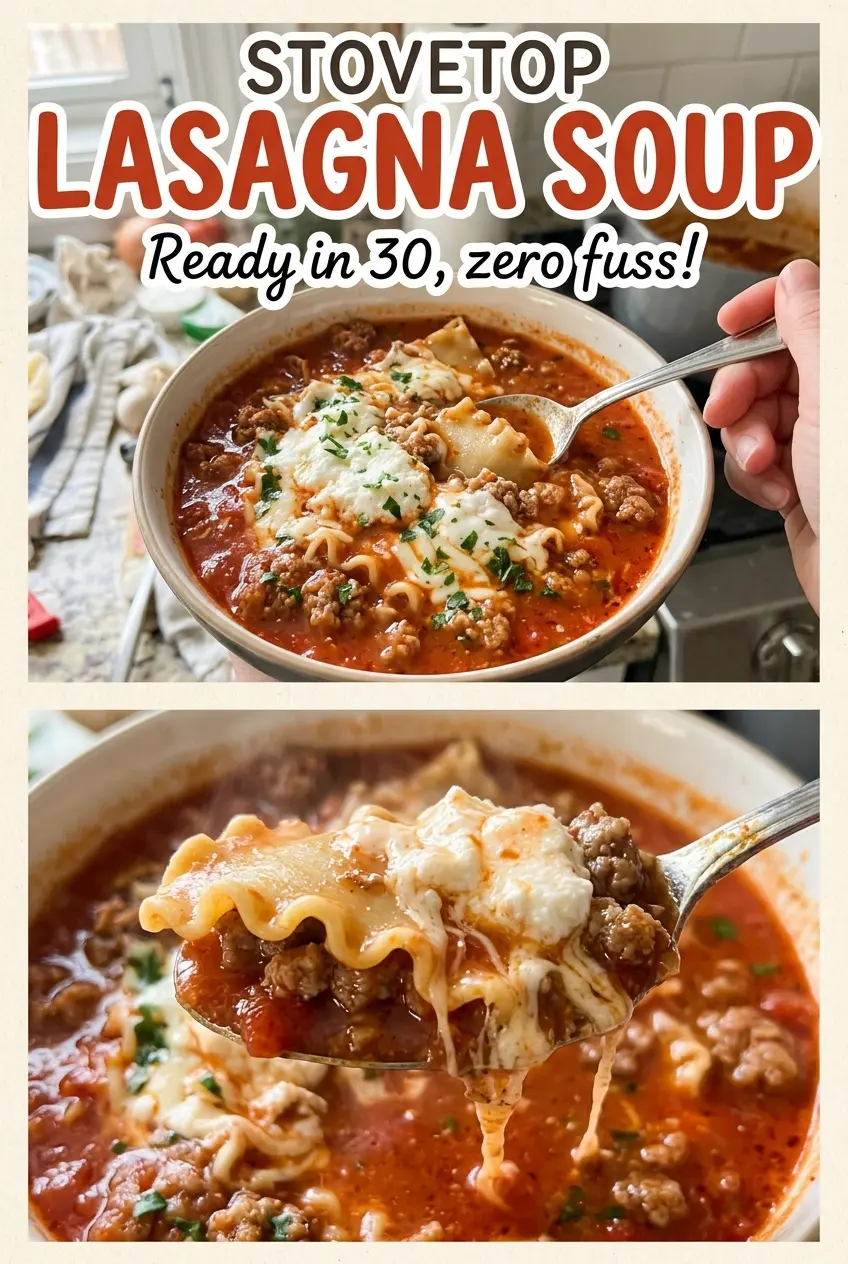
Stovetop lasagna soup gives you all the comfort of a bubbling pan of lasagna without the layering, baking, or waiting. The broth turns rich and savory fast, the sausage carries the whole pot, and the broken noodles soak up the tomato base until every spoonful eats like the best part of the casserole. The cheese dollop melts in slowly and leaves you with that creamy, tangy finish people expect from lasagna, just in a bowl.
This version works because the tomato paste gets cooked with the onion and garlic before the broth goes in. That short step deepens the base and keeps the soup from tasting flat. The noodles are added only after the pot reaches a full boil, then cooked at a steady simmer so they soften without turning mushy. Stirring often matters here, since lasagna noodles like to stick to the bottom once they start swelling.
Below, you’ll find the exact point where the noodles are done, how to keep the broth thick but still spoonable, and a few smart swaps if you want to adjust the sausage or make the soup a little lighter.
The broth had that rich lasagna flavor I was hoping for, and the broken noodles stayed tender without falling apart. I also loved that the ricotta-mozzarella dollop melted into the soup instead of disappearing.
Stovetop lasagna soup with sausage, broken noodles, and that creamy ricotta topping is the kind of one-pot dinner worth keeping close.
The No-Boil Shortcut That Still Gives You Real Lasagna Texture
The trap with lasagna soup is letting the noodles go too long. Once broken lasagna noodles sit in a simmering pot, they keep absorbing liquid even after the heat is off, which is how a good soup turns into a thick stew. This recipe avoids that by cooking the noodles right in the broth only until they are just tender, then serving immediately while the texture is still loose and spoonable.
Another thing that matters here is the order of the base. Browning the sausage first builds fond in the pot, and the onion and tomato paste pick that up as they cook. That gives the broth a deeper, slow-simmered taste even though the whole dish comes together in under 30 minutes.
- Italian sausage — This is the backbone of the soup, so use a sausage you actually like the flavor of. Mild or hot both work; hot sausage adds more heat than the red pepper flakes alone. If you swap in ground turkey, add an extra pinch of salt and a little olive oil so the broth doesn’t taste lean.
- Tomato paste — Don’t skip the brief cook time here. It loses that raw, metallic edge and turns sweet and concentrated once it hits the hot pan with the onion and garlic.
- Crushed tomatoes plus fire-roasted diced tomatoes — The crushed tomatoes give you the body of the broth, while the diced tomatoes add bits of texture and a deeper roasted note. If you only have regular diced tomatoes, the soup will still work, but it will taste a little less layered.
- Ricotta, mozzarella, and parmesan — The cheese topping is what makes this taste like lasagna instead of just tomato soup with pasta. Use whole-milk ricotta if you can; it stays creamy and soft instead of grainy. If you want a lighter finish, part-skim ricotta still works, but the topping won’t melt quite as luxuriously.
What Each Ingredient Is Actually Doing in This Recipe

- Primary ingredient (the star) — Quality matters most. Choose the best you can find.
- Cooking medium (oil, butter, or broth) — This carries flavors and prevents dryness.
- Seasonings (salt, pepper, spices, herbs) — Layer flavors so nothing overpowers. Build depth gradually.
- Aromatics (garlic, onion, herbs) — Cook with fat to bloom flavors. Become the foundation.
- Supporting ingredients — Complement the main ingredient without overpowering it.
- Sauce or liquid (if applicable) — Brings flavors together. Balance richness with acid.
- Acid (lemon, vinegar, wine, or other) — Brightens and prevents flat-tasting results.
- Final finish (garnish, glaze, or sauce) — Prevents one-dimensional taste and adds visual appeal.
Building the Broth Before the Noodles Go In
Brown the sausage first
Set a large Dutch oven or heavy pot over medium-high heat and cook the sausage until it’s browned and broken into small crumbles. Don’t rush this part by cranking the heat too high; you want browned edges, not gray meat swimming in liquid. If there’s a lot of fat in the pot, drain off the excess, but leave a thin coating behind for the onions.
Cook the aromatics and tomato paste
Add the onion and cook it until it’s softened and turning translucent at the edges, about 3 minutes. Stir in the garlic and tomato paste and let them cook for 1 to 2 minutes until the paste darkens slightly and smells sweet instead of sharp. If the garlic starts to brown hard, the heat is too high and it’ll taste bitter in the finished broth.
Build the soup base
Pour in the crushed tomatoes, fire-roasted diced tomatoes, broth, Italian seasoning, basil, oregano, and red pepper flakes. Stir well and scrape the bottom of the pot so nothing is stuck there. Bring the pot to a full boil before the noodles go in; if you add them too early, they’ll soak up liquid while the broth is still coming up to temperature and cook unevenly.
Cook the noodles to just-tender
Add the broken lasagna noodles and reduce the heat to a steady simmer. Stir often, especially along the bottom corners of the pot, because the noodles can settle and cling there. Cook until they are just tender, usually 10 to 12 minutes, and stop before they get floppy; they will keep softening in the hot broth after the burner is off.
Finish and serve right away
Taste the soup for salt and pepper at the end, not before, because the sausage and broth already bring salt into the pot. Ladle into bowls and top each serving with a spoonful of the ricotta-mozzarella mixture plus a few basil leaves. The cheese should soften into the soup in ribbons, not disappear completely, so serve it while the bowls are still steaming hot.
How to Adapt This When You Want It Lighter, Spicier, or Meat-Free
Use turkey sausage for a lighter bowl
Turkey sausage works well here, but it brings less fat and a little less depth than pork sausage. Add a drizzle of olive oil when browning it, and taste the broth at the end before deciding whether it needs more salt. The finished soup will still be hearty, just a touch leaner.
Make it gluten-free with gluten-free pasta
Use a sturdy gluten-free lasagna-style noodle or broken gluten-free pasta that can hold up in broth. Cook it a little less than the package suggests, because gluten-free noodles go from tender to soft fast once they’re in the soup. The texture is a little different, but the tomato base and cheese topping still give you the same lasagna feel.
Turn up the heat without changing the base
If you like more heat, use hot Italian sausage and add an extra pinch of red pepper flakes. That’s a better move than dumping in hot sauce at the end, since the spice tastes more integrated when it cooks with the tomatoes. You’ll get a warmer, fuller heat instead of a sharp burn.
Make a vegetarian version that still tastes full-bodied
Skip the sausage and use vegetable broth, then add sautéed mushrooms or lentils for body. The mushrooms bring the savory depth the meat usually provides, while lentils make the soup thicker and more filling. Without the sausage fat, the pot needs a little extra olive oil and a more careful hand with salt.
Storage and Reheating
- Refrigerator: Store leftovers for up to 4 days. The noodles will keep absorbing broth, so expect the soup to thicken.
- Freezer: It freezes best without the noodles, since pasta turns soft after thawing. Freeze the broth and sausage base, then cook fresh noodles when you’re ready to serve.
- Reheating: Warm it gently on the stovetop over medium-low heat with a splash of broth or water. The common mistake is boiling it hard, which turns the noodles mushy and can make the tomato base taste harsh.
Answers to the Questions Worth Asking
Stovetop Lasagna Soup
Ingredients
Equipment
Method
- Heat a large Dutch oven or pot over medium-high heat and brown the Italian sausage until crumbled and cooked through, then drain excess fat and keep the pot hot. Look for deep browning on the sausage bits before moving on.
- Add the diced onion and cook for 3 minutes, stirring often until softened. You should see the onion turn translucent at the edges.
- Stir in the minced garlic and tomato paste, then cook for 1-2 minutes. The mixture should smell fragrant and look slightly darker.
- Pour in the crushed tomatoes, fire-roasted diced tomatoes, and broth, then stir in the Italian seasoning, dried basil, dried oregano, and red pepper flakes. Mix until the seasonings are evenly distributed.
- Bring the soup to a full boil over high heat, then add the broken lasagna noodles. Watch for the boil to restart quickly after the noodles go in.
- Reduce to a steady simmer and cook for 10-12 minutes, stirring often, until the noodles are just tender. The soup should be bubbling gently, not aggressively, while the noodles soften.
- Season with salt and pepper to taste, then serve immediately. Taste after simmering to adjust seasoning to your preference.
- For each bowl, dollop ricotta and mozzarella, then sprinkle parmesan and top with fresh basil. Serve while the soup is hot so the cheese begins to melt slightly at the edges.