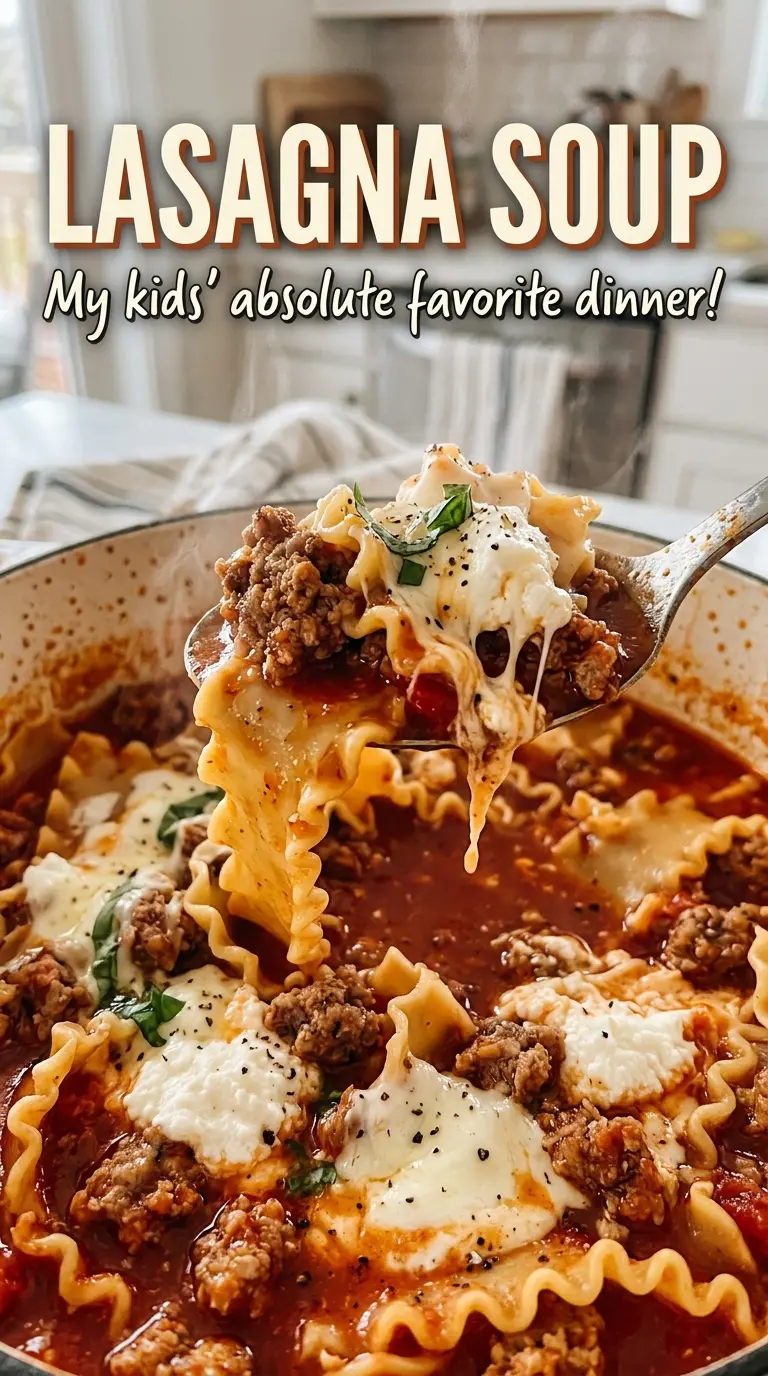
Lasagna soup gives you the deep, slow-cooked comfort of a baked lasagna without waiting on layering, baking, or slicing. The broth turns rich and savory, the noodles soften right in the pot, and the cheese dollop melts into the center just enough to mimic that creamy, cheesy layer everyone goes hunting for in a pan of lasagna. It lands in the bowl looking simple, but it eats like a full dinner.
What makes this version work is the order. The sausage browns first, which builds the base flavor before anything liquid goes in, and the tomato paste gets cooked long enough to lose its raw edge and deepen the broth. Broken lasagna noodles go in near the end so they stay tender instead of turning bloated and soft. The ricotta-mozzarella topping is mixed separately so it keeps its body and melts slowly into the hot soup instead of disappearing into it.
Below, I’ve included the small details that keep the broth balanced and the noodles from overcooking, plus a few smart ways to adapt it for what you have on hand.
The broth had that rich lasagna flavor I wanted, and the noodles stayed tender without getting mushy. I also liked that the ricotta topping held up in the bowl instead of melting away right away.
Like this lasagna soup? Save it to Pinterest for the nights when you want all the comfort of lasagna in one bowl, with tender noodles and a creamy cheese topping.
The Reason the Noodles Go in Last, Not First
Lasagna soup falls apart when the noodles sit in the pot too long. They keep absorbing broth after the heat is off, so if you cook them until they seem fully done on the stove, they’ll be soft and swollen by the time you serve the bowls. Adding them near the end keeps the texture closer to what you want in baked lasagna: tender, but not limp.
The other place people lose control is the tomato base. Raw tomato paste tastes flat and sharp if it doesn’t cook for a minute or two, and that matters here because the broth is built from only a handful of ingredients. Letting the sausage brown properly and giving the paste a short cook gives the soup that deeper, rounder flavor that makes it taste like more than tomatoes and stock.
- Italian sausage — This carries most of the seasoning and body in the pot. Mild sausage gives you a gentler soup, while hot sausage adds more heat without needing extra pepper flakes.
- Tomato paste — This is the flavor booster in the broth. Cook it until it darkens a shade or two and smells sweet and concentrated; that step keeps the soup from tasting thin.
- Lasagna noodles — Broken noodles work best here because they catch the broth and cheese in the spoon. Regular pasta shapes can work in a pinch, but they won’t give you that unmistakable lasagna feel.
- Ricotta, mozzarella, and parmesan — The mix matters. Ricotta gives the dollop its creamy center, mozzarella brings the melt, and parmesan adds the salty edge that keeps the topping from tasting bland.
Building the Broth So It Tastes Like Lasagna
Brown the sausage over medium-high heat until you get dark bits on the bottom of the pot and the meat has lost its pink color. Those browned spots are not a problem. They’re the base of the soup, so when the onions go in, they pick up everything that stuck to the pan. If you rush this stage, the broth will still taste fine, but it won’t have the same depth.
Cook the onion in the same pot until it turns soft and translucent, then add the garlic for just a minute. Garlic burns quickly and turns bitter if it sits in the hot pot too long before the liquid goes in. Stir in the tomato paste and let it cook briefly until it darkens; that short step takes away the tinny edge and gives the broth a richer, more cooked flavor.
Once the crushed tomatoes, diced tomatoes, broth, Italian seasoning, basil, and red pepper flakes go in, bring everything up to a boil, then drop it to a simmer. That simmer should look active but not furious. You want the flavors to blend without reducing the liquid too fast before the noodles are added.
Browning the Sausage
Break the sausage into small crumbles as it cooks so it distributes evenly through the soup. Let it sit undisturbed for a minute or two at a time if needed; constant stirring keeps it pale and steamed instead of giving it a proper sear. Drain excess fat if there’s a pool in the pot, but leave a little behind for flavor.
Cooking Down the Aromatics
Add the onion to the same pot and stir until it softens and picks up the sausage drippings. The garlic goes in after the onion has already started to turn translucent, because garlic needs less time than onion and can scorch fast. If the pan looks dry, the tomatoes will still lift what’s stuck to the bottom once they go in.
Letting the Tomato Base Mellow
Tomato paste needs a short cook before the broth is added. Stir it around the pot until it darkens slightly and stops smelling raw, then pour in the tomatoes and broth. This is the stage that keeps the soup from tasting flat, so don’t skip the minute or two of cooking time.
Finishing with the Noodles
Break the lasagna noodles into rough pieces and stir them into the simmering soup. Keep the pot at a gentle simmer and cook until the noodles are tender with a little bite left in the center. If the soup sits too long after the noodles are done, they’ll keep soaking up broth, so serve it soon after cooking.
Make it with ground beef instead of sausage
Ground beef gives you a milder, more classic meat sauce flavor. You’ll want to add a little extra Italian seasoning and a pinch more salt, because sausage brings its own seasoning and fat that beef doesn’t.
Dairy-free topping that still feels creamy
Use a dairy-free ricotta and mozzarella-style shreds, then stir in a little chopped basil and a spoonful of nutritional yeast if you want more savoriness. The topping won’t melt exactly like the original, but it still gives you that rich finish on top of the bowl.
Gluten-free version
Swap in gluten-free lasagna noodles or another sturdy gluten-free pasta shape. Check the texture a few minutes early, because gluten-free pasta can go from tender to soft faster than wheat noodles once it hits hot broth.
Storage and Reheating
- Refrigerator: Store the soup for up to 4 days. The noodles will continue soaking up broth, so expect a thicker bowl the next day.
- Freezer: Freeze the soup without the noodles if you can. The broth and meat base freeze well for up to 3 months, but pasta gets soft and grainy after thawing.
- Reheating: Reheat gently on the stove over medium-low heat with a splash of broth or water. The common mistake is boiling it hard, which can make the noodles break apart and the cheese topping separate.
Questions I Get Asked About This Recipe

Lasagna Soup
Ingredients
Equipment
Method
- Brown Italian sausage in a large pot over medium-high heat, breaking it into crumbles until browned, then drain excess fat.
- Sauté onion in the same pot for 4 minutes, then add garlic and cook for 1 minute.
- Stir in tomato paste and cook for 1-2 minutes until it darkens.
- Add crushed tomatoes, diced tomatoes, broth, Italian seasoning, basil, and red pepper flakes, then bring the mixture to a boil.
- Add broken lasagna noodles and simmer for 10-12 minutes, stirring occasionally, until noodles are tender.
- Season with salt and pepper until the flavors pop.
- Mix ricotta, shredded mozzarella, parmesan, and fresh basil together until evenly combined, creating a soft dollop mixture.
- Ladle soup into bowls and top each with a generous dollop of the cheese mixture so it melts into the center.