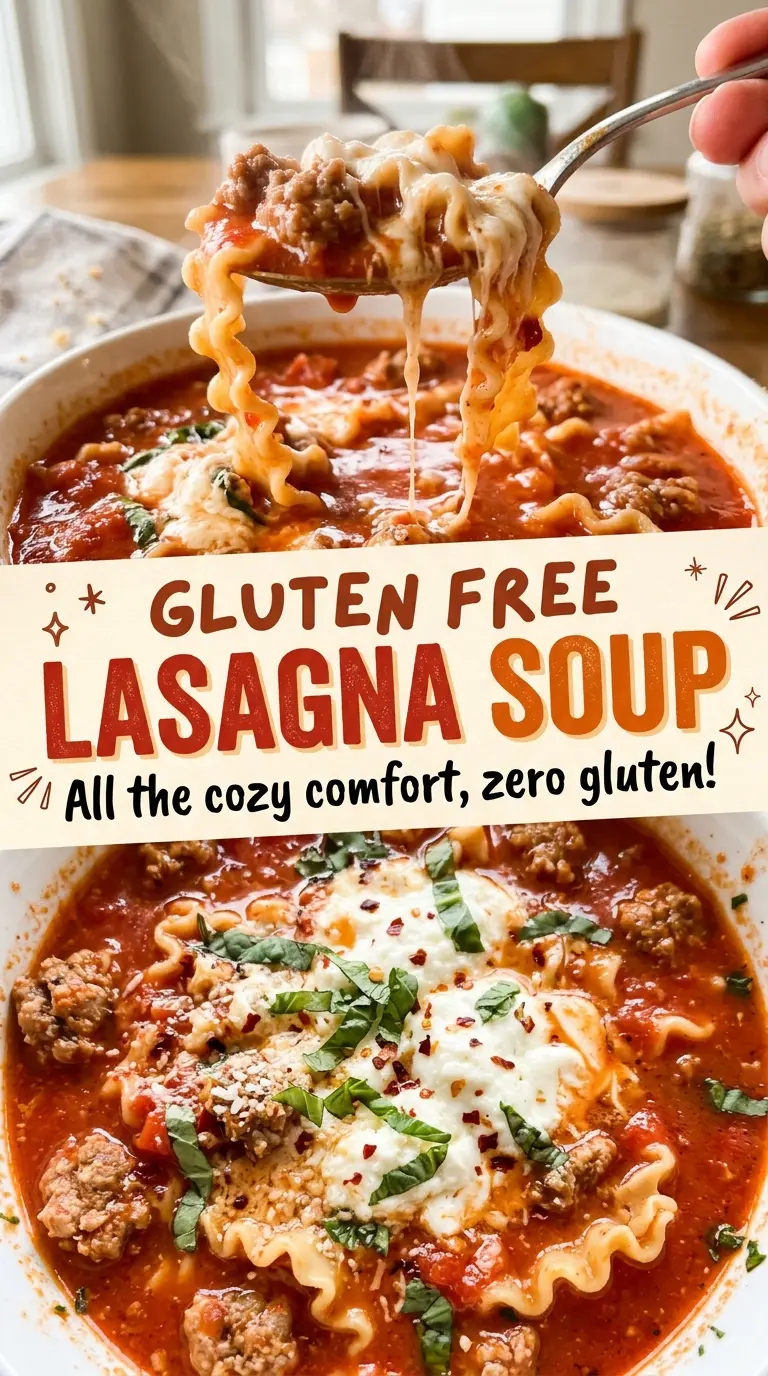
Gluten free lasagna soup gives you all the comfort of a bubbling pan of lasagna without the layering, waiting, or hard edges that can turn dinner into a project. The broth comes out rich and tomato-forward, the sausage adds enough depth to carry the whole pot, and the pasta stays tender instead of collapsing into mush when you time it right. The best part is the ricotta-mozzarella spoonful melting into the center of the bowl, turning each bite into something creamy, savory, and a little luxurious.
This version works because the tomato paste gets cooked before the liquids go in, which keeps the soup from tasting flat. The sausage browns first, then the onion softens in the same pot, so all those browned bits become part of the broth instead of being lost. Gluten free pasta needs a little more attention than regular noodles, though, and that matters here. Cook it just until tender and stop there, because it will keep softening in the hot soup.
Below, I’ve included the timing that keeps the pasta from going too far, the cheese mixture that gives you that classic lasagna finish, and a few useful swaps if you need to adjust for what’s in your pantry.
The broth had that deep lasagna flavor I was hoping for, and the gluten-free noodles held up better than I expected. I added the ricotta topping at the table and it melted into the soup just enough without disappearing.
Save this gluten free lasagna soup for the nights when you want all the lasagna comfort without the layering.
The Trick to Keeping Gluten Free Noodles Tender Instead of Bloated
The biggest mistake in lasagna soup is treating gluten free pasta like it can sit in hot broth forever. It can’t. Brown rice noodles and gluten free penne keep absorbing liquid after the heat is off, so if you cook them until they’re soft in the pot, they’ll turn heavy and swollen by the time you serve the bowls.
This soup works best when the pasta is added late and watched closely. You want the broth at a steady simmer, not a rolling boil, because aggressive boiling can break delicate gluten free noodles and cloud the broth more than it needs to be. If the soup looks a little loose when the pasta is just tender, that’s the right moment to stop cooking and let the bowl do the rest.
What Each Ingredient Is Actually Doing in This Dish
- Italian sausage — This is where the base flavor comes from. Mild or hot both work, but sausage with some fat gives the broth a richer, rounder taste than lean meat alone. If you want a lighter pot, use half sausage and half ground turkey, but you’ll lose some of that built-in seasoning.
- Tomato paste — This is not optional background support; it gives the broth body and a deeper tomato flavor. Cooking it for a minute or two before adding liquid takes away the raw, metallic edge that can make tomato soup taste thin.
- Crushed tomatoes and diced tomatoes — The crushed tomatoes build the broth, while the diced tomatoes leave little soft bites throughout the soup. If you only have one or the other, the soup still works, but the texture changes: all crushed tomatoes give you a smoother finish, and all diced tomatoes make it chunkier.
- Gluten free pasta — Brown rice lasagna noodles hold up better than some gluten free blends, especially if you’re serving leftovers. Penne is the easiest backup because it cooks evenly and doesn’t fall apart when broken lasagna sheets aren’t available.
- Ricotta, mozzarella, and parmesan — This is the part that gives you the lasagna feeling at the table. Ricotta keeps the topping creamy, mozzarella makes it stretch, and parmesan sharpens the whole bowl. Don’t stir the cheese into the pot unless you want a heavier, less distinct finish.
Building the Broth Before the Noodles Go In
Brown the sausage first
Cook the sausage in a large pot until it’s no longer pink and you’ve got browned bits stuck to the bottom. Those bits matter; they dissolve into the broth later and give the soup the depth you’d otherwise be missing. If there’s a lot of grease in the pot, spoon off the excess, but leave enough behind to cook the onion without drying out the base.
Let the tomato paste toast
After the onion softens and the garlic smells fragrant, stir in the tomato paste and give it a short cook. It should darken slightly and lose that raw, concentrated tomato smell. If you add the broth too soon, the paste just disperses without building flavor, and the soup tastes flatter than it should.
Simmer the pasta at the end
Add the broth, tomatoes, seasonings, and sausage, then bring everything to a boil before lowering it to a steady simmer. Stir in the gluten free pasta and keep an eye on the clock rather than walking away. The noodles should be tender with a little bite left in the center, because they’ll keep softening once the soup sits in the bowl.
Finish with the cheese topping
Mix the ricotta, mozzarella, parmesan, and basil in a bowl right before serving. Spoon a generous dollop over each bowl so it melts into the hot soup in patches instead of disappearing into the pot. That contrast between brothy soup and creamy cheese is what makes this taste like lasagna instead of just tomato sausage soup.
What to Change When You Need a Different Version
Dairy-Free Topping That Still Feels Rich
Skip the ricotta-mozzarella-parmesan mix and top each bowl with a spoonful of dairy-free ricotta or cashew cream plus a little fresh basil. You won’t get the same stretch, but you’ll still get that creamy finish that softens the tomato broth.
Vegetarian Version with Real Depth
Use a plant-based sausage or browned mushrooms instead of Italian sausage, and swap in vegetable broth. Mushrooms won’t season the broth the same way sausage does, so add a little extra Italian seasoning and a pinch more salt to keep the soup from tasting thin.
Gluten-Free Pasta That Won’t Fall Apart
Brown rice lasagna noodles or a sturdy gluten free penne are the safest choices here. If your pasta brand tends to get soft quickly, cook it separately and ladle the soup over the noodles at serving time, which protects the texture and gives you more control over leftovers.
Storage and Reheating
- Refrigerator: Store leftovers in an airtight container for up to 4 days. The pasta will keep soaking up broth, so expect a thicker soup the next day.
- Freezer: Freeze the soup without the pasta if you can. Gluten free noodles often turn grainy or overly soft after freezing, so cook fresh pasta when you reheat for the best texture.
- Reheating: Warm gently on the stove over medium-low heat with a splash of broth to loosen it. If you boil it hard, the noodles can break down and the soup turns cloudy and heavy.
Answers to the Questions Worth Asking

Gluten Free Lasagna Soup
Ingredients
Equipment
Method
- Heat a large Dutch oven over medium-high heat, add the Italian sausage, and brown until cooked through; drain excess fat and set sausage aside.
- In the same pot, add the diced onion and sauté for 4 minutes, stirring until softened; keep the heat at medium.
- Add the minced garlic and cook for 1 minute, stirring constantly so it doesn’t brown.
- Stir in the tomato paste and cook for 1-2 minutes to deepen flavor, scraping up any browned bits.
- Add the crushed tomatoes, diced tomatoes, chicken broth, Italian seasoning, dried basil, and red pepper flakes; bring the mixture to a boil.
- Add the gluten-free pasta and return the sausage to the pot, then reduce to a simmer.
- Simmer according to the pasta package instructions (usually 8-12 minutes) until the pasta is tender, stirring occasionally so it doesn’t stick.
- Season with salt and pepper to taste, tasting at the end of simmering.
- Mix ricotta, shredded mozzarella, parmesan, and fresh basil until combined into a thick, scoopable mixture.
- Serve the soup topped with a generous spoonful of the cheese dollop so it melts into the center.