Vegetarian taco soup hits the bowl with that fast, cozy payoff people want from a weeknight dinner: a brothy base that tastes layered, not thin, plus beans, corn, and tomatoes in every spoonful. The broth turns a deep orange-red as the taco seasoning, cumin, and fire-roasted tomatoes simmer together, and the whole pot ends up hearty enough to stand on its own with a handful of chips on top.
What makes this version work is the order. The onion and bell pepper cook first so they soften and sweeten before the spices go in, and that quick toast in the pot wakes everything up. Fire-roasted tomatoes bring a little depth that plain diced tomatoes can’t match, while Rotel gives the soup a gentle kick without needing extra chopping or a separate salsa.
Below you’ll find the small details that matter most: how to keep the beans from tasting canned, why the simmer time matters even though everything is already cooked, and the toppings that turn a good bowl into the one people keep going back for.
The broth thickened up just enough after the simmer, and the mix of black beans, pinto beans, and corn tasted like it had been cooking all afternoon. I added lime and avocado at the end and that made it.
Save this vegetarian taco soup for the nights when you want a hearty Tex-Mex bowl with beans, corn, and a big squeeze of lime.
The Secret to a Brothy Taco Soup That Still Tastes Rich
A soup like this can go flat fast if everything goes into the pot at once and just sits there. The vegetables never get a chance to soften properly, and the spices don’t bloom in the fat, which is why a lot of taco soups taste like canned beans in seasoned water. Starting with the onion and bell pepper changes that. They build a sweeter, more rounded base before the broth ever goes in.
The simmer matters too, even though the beans and tomatoes are already cooked. Those 15 to 20 minutes let the taco seasoning, cumin, chili powder, and smoked paprika settle into the broth and take the sharp edge off the canned tomatoes. If the soup tastes a little thin at first, that’s normal. It tightens up as it rests, especially once you add avocado or sour cream on top.
What Each Ingredient Is Doing in This Bowl
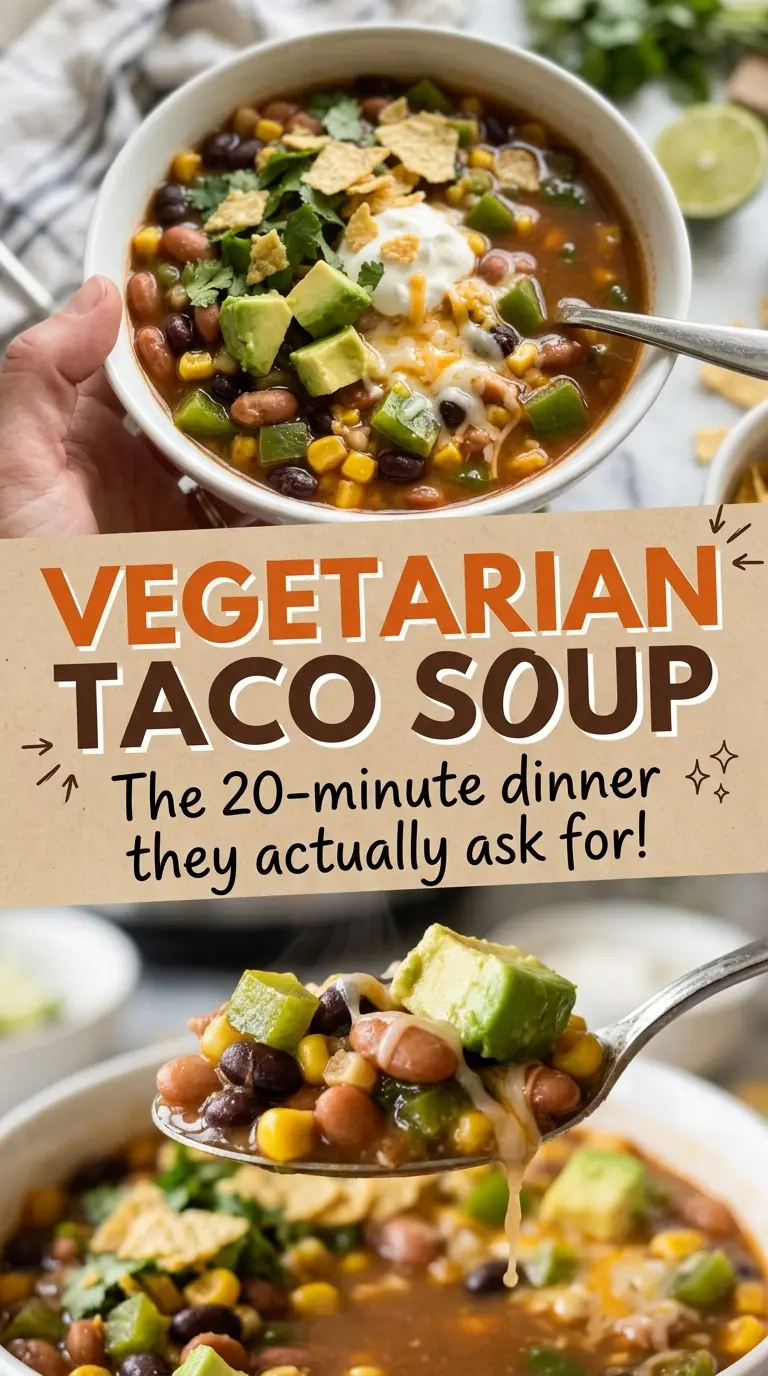
- Black beans, pinto beans, and kidney beans — This is where the soup gets its body and protein. Using three beans gives you different textures: black beans stay a little firmer, pinto beans soften and help thicken the broth, and kidney beans hold their shape. If you only have two kinds, the soup still works, but the mix makes it feel fuller.
- Rotel, diced tomatoes, and fire-roasted tomatoes — The combination gives the soup both brightness and depth. Rotel adds seasoning and a little heat, the diced tomatoes provide volume, and the fire-roasted tomatoes bring a subtle smoky note that keeps the broth from tasting one-note. If you skip the fire-roasted tomatoes, the soup will still be good, just a little less layered.
- Vegetable broth — Use a broth you’d actually drink on its own. Since this soup doesn’t have meat drippings or cream to carry it, the broth does a lot of the background work. A low-sodium version is useful if your taco seasoning is salty, because you can season the pot yourself at the end.
- Taco seasoning, cumin, chili powder, and smoked paprika — The packet gives you the familiar taco-soup backbone, while the extra spices keep the flavor from tasting flat or overly processed. Smoked paprika is the quiet upgrade here; it adds warmth without making the soup spicy. If your taco seasoning is heavy on salt, taste before adding more at the end.
- Bell pepper and onion — These are not filler. They soften into the broth and give the soup a savory base that makes each spoonful taste cooked, not assembled. Dice them small so they disappear into the texture instead of floating around in chunks.
Building the Soup in the Right Order
Softening the vegetables first
Heat the olive oil in a large pot, then add the onion and bell pepper and cook them until the onion turns translucent and the pepper loses its raw bite. You want a little softness at the edges, not browning, because the goal is to sweeten the vegetables before the broth goes in. If you rush this part, the finished soup tastes sharper and less settled.
Blooming the spices in the pot
Add the garlic for just a minute, then stir in the taco seasoning, cumin, chili powder, and smoked paprika. The spices should smell fragrant almost immediately. That short toast in the hot oil pulls more flavor from them than stirring them into liquid later. If the garlic starts turning brown, the heat is too high and the pot is already too hot for the spices.
Letting the beans and tomatoes simmer together
Pour in all the canned ingredients and the vegetable broth, then bring the soup to a boil before lowering it to a simmer. This is the part where everything becomes one soup instead of a pile of separate ingredients. Keep the simmer gentle so the beans stay intact and the tomatoes don’t cook down into mush. Taste near the end and adjust with salt and pepper only after the broth has reduced a little.
Finishing with the toppings
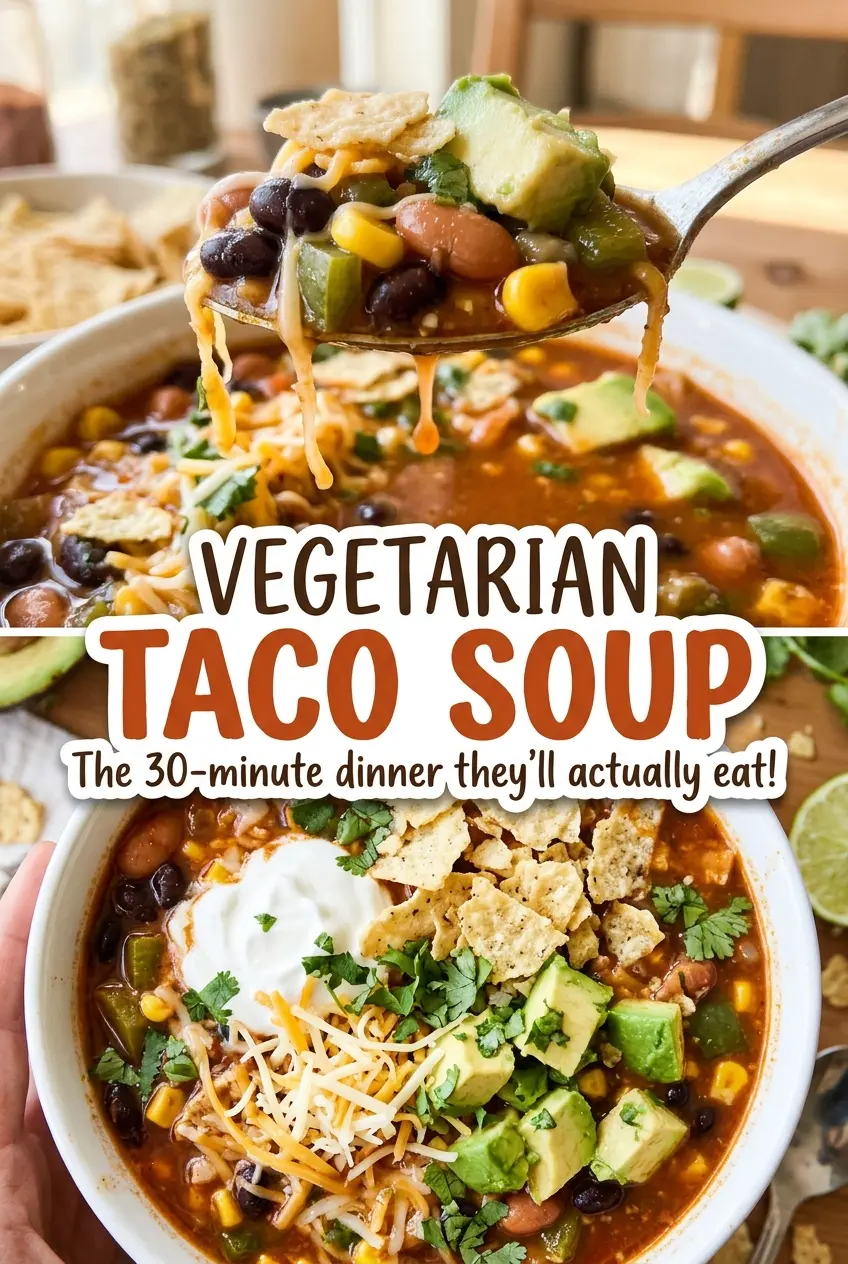
Ladle the soup into bowls and top it while it’s hot. Avocado adds creaminess, cilantro adds freshness, and lime wakes up the whole pot with acid. Sour cream or vegan sour cream cools the heat and gives the broth a silkier finish, while tortilla chips bring the crunch that makes this feel complete.
Three Ways to Adjust This Soup Without Losing What Makes It Good
Make it dairy-free without changing the texture
Skip the regular sour cream and use a good vegan sour cream or just load up on avocado and lime. The soup already has enough body from the beans and tomatoes, so you don’t need dairy to make it feel creamy. A cashew-based sour cream works especially well if you want the same cool finish.
Use what you have in the bean drawer
If you only have two kinds of beans, use them. The soup still works because the tomatoes and spices are carrying the flavor. Just keep the total bean amount close to the original so the broth doesn’t feel too thin. Chickpeas can stand in for one can, though they bring a firmer bite and a slightly different finish.
Make it a little spicier or a lot milder
For more heat, add a pinch of cayenne or use hot Rotel. For a milder soup, use mild Rotel and cut the chili powder slightly. The key is to adjust the heat before serving, because toppings like sour cream and avocado can only calm the fire after the fact.
Stretch it for a bigger crowd
This soup scales up cleanly. Double everything and use a larger pot so the beans and tomatoes can move around instead of packing in too tightly. The simmer time stays about the same, though it may take a little longer to come back to a boil.
Storage and Reheating
- Refrigerator: Store in an airtight container for up to 4 days. The broth thickens a little as it sits because the beans keep absorbing liquid.
- Freezer: It freezes well for up to 3 months. Cool it completely first and leave a little space in the container so the soup can expand.
- Reheating: Warm it on the stove over medium-low heat or in the microwave in short bursts, stirring between rounds. Add a splash of broth or water if it has tightened up too much, because beans keep soaking up liquid after chilling.
Answers to the Questions Worth Asking
Vegetarian Taco Soup
Ingredients
Equipment
Method
- Heat olive oil in a large pot and sauté onion and green bell pepper for 4-5 minutes, stirring until softened and fragrant (no browning needed).
- Add garlic and cook for 1 minute, stirring to prevent sticking and to release aroma.
- Stir taco seasoning, cumin, chili powder, and smoked paprika into the pot for about 30 seconds until fragrant.
- Add black beans, pinto beans, kidney beans, corn, Rotel tomatoes, diced tomatoes, fire-roasted tomatoes, and vegetable broth, then bring everything to a boil.
- Simmer for 15-20 minutes until the flavors meld, then season with salt and pepper to taste.
- Ladle the taco soup into bowls and top with avocado, cilantro, lime wedges, sour cream (or vegan sour cream), and tortilla chips.